A complete issue · 36 pages · 1931
Judge — January 3, 1931
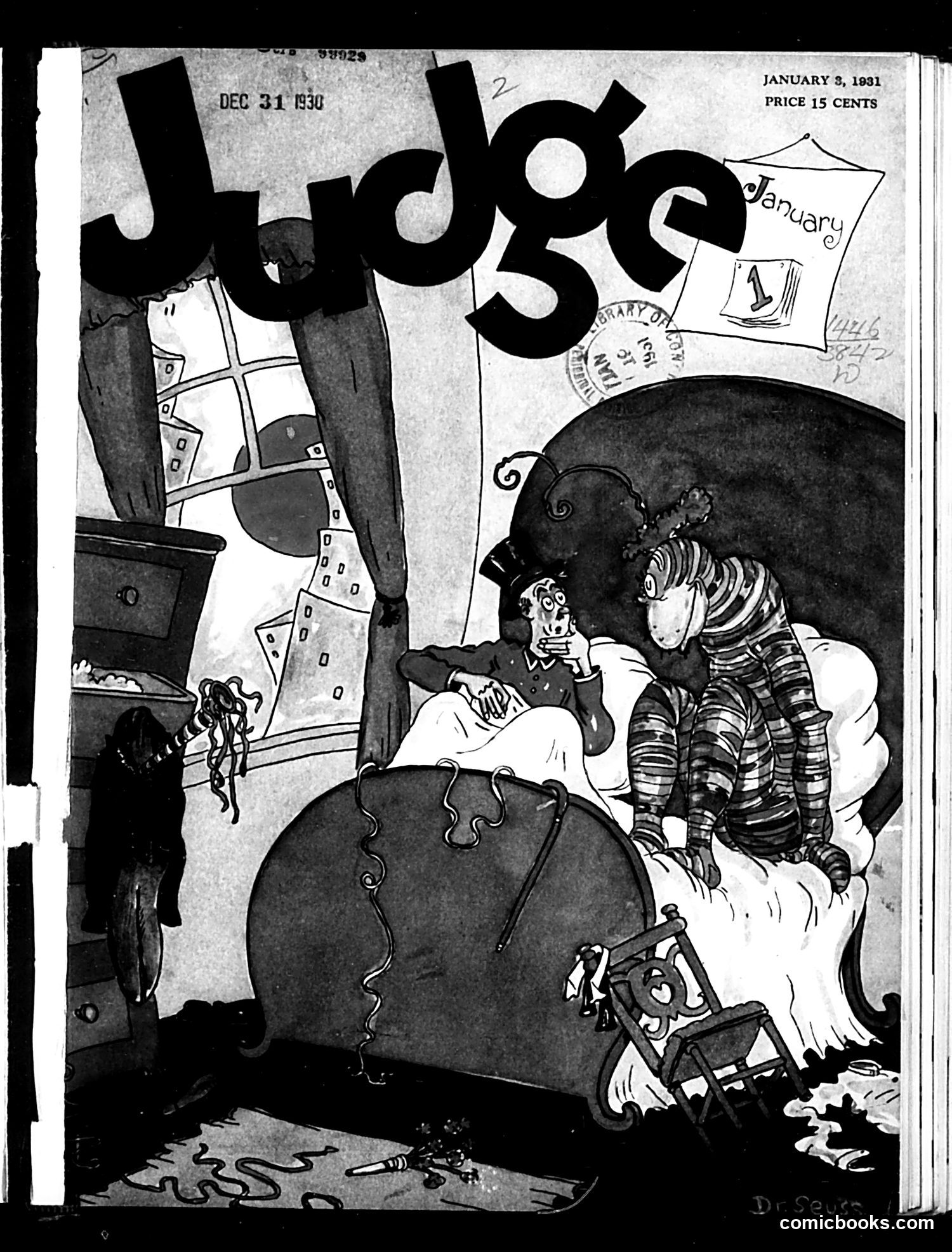
# Judge Magazine Cover Analysis **January 5, 1931 | Price 15 cents** This cover depicts a surreal, grotesque scene with exaggerated figures in bed. The large head with spiral ears and the bizarrely dressed figures appear to be satirizing something contemporary to early 1931, though the specific reference is unclear without additional context. The imagery suggests social or political commentary typical of Judge magazine's satirical approach. The stylized "Judge" masthead dominates the composition. Given the early 1931 date—shortly after the stock market crash of 1929—this may reference economic anxiety or absurdist social conditions of the Depression era, though I cannot definitively identify the specific figures or events being mocked. The grotesque, dreamlike quality was common in Judge's surrealist political commentary of this period.
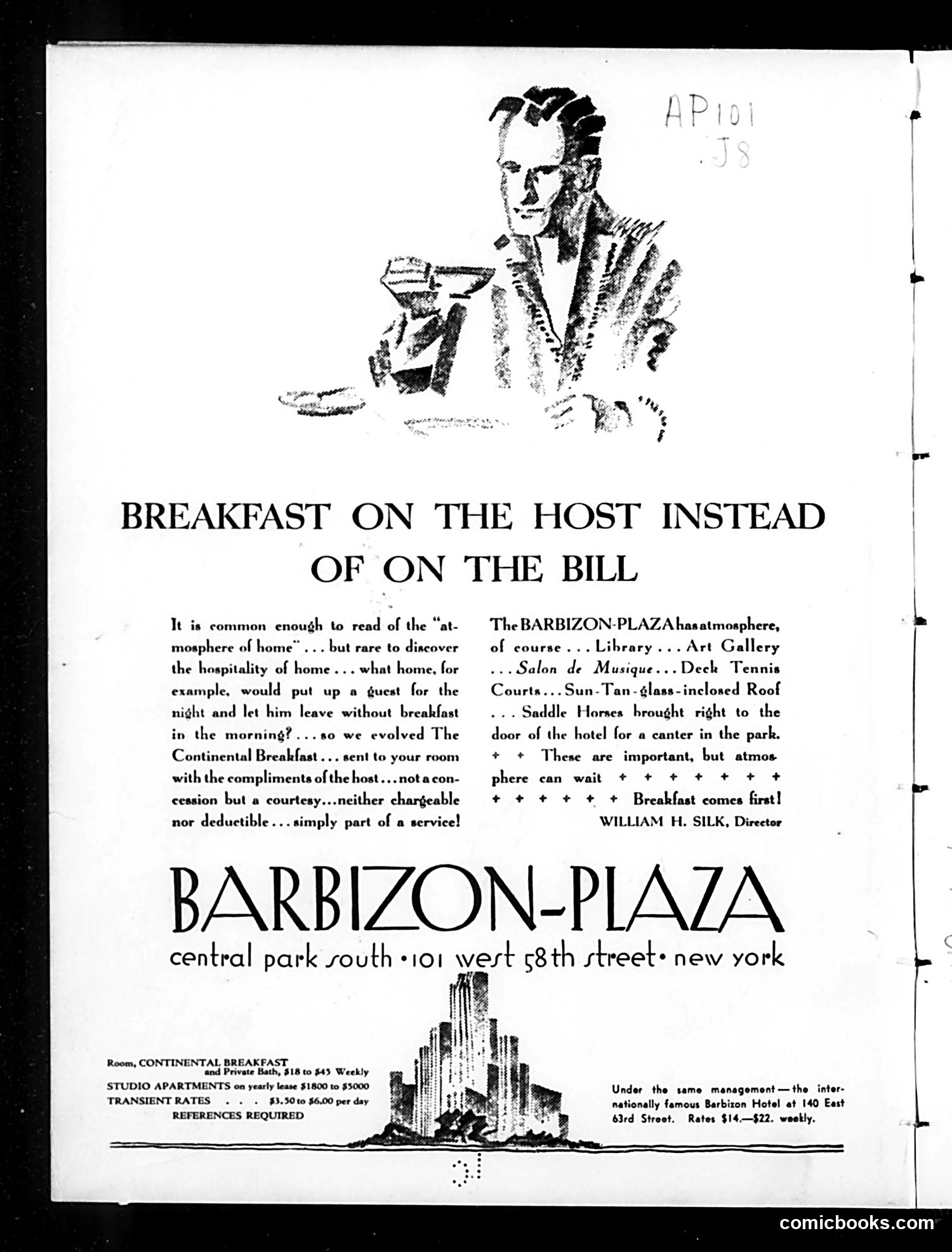
# Analysis This is primarily a **hotel advertisement**, not a political cartoon. The page advertises the Barbizon-Plaza hotel in Manhattan (Central Park South at 101 West 58th Street, New York). The illustration shows a well-dressed man at breakfast, and the headline plays on a common hospitality concept: "Breakfast on the Host Instead of on the Bill." The ad argues that offering complimentary continental breakfast to guests is a courteous service—part of the hotel experience—rather than something to be charged separately. William H. Silk, the Director, emphasizes that the Barbizon-Plaza distinguishes itself through amenities (library, art gallery, restaurant, tennis courts) and this included breakfast service. The ad includes room rates and notes management by the nationally famous Barbizon Hotel at 140 East 63rd Street. This appears to be vintage advertising, likely from the 1920s-1930s era.
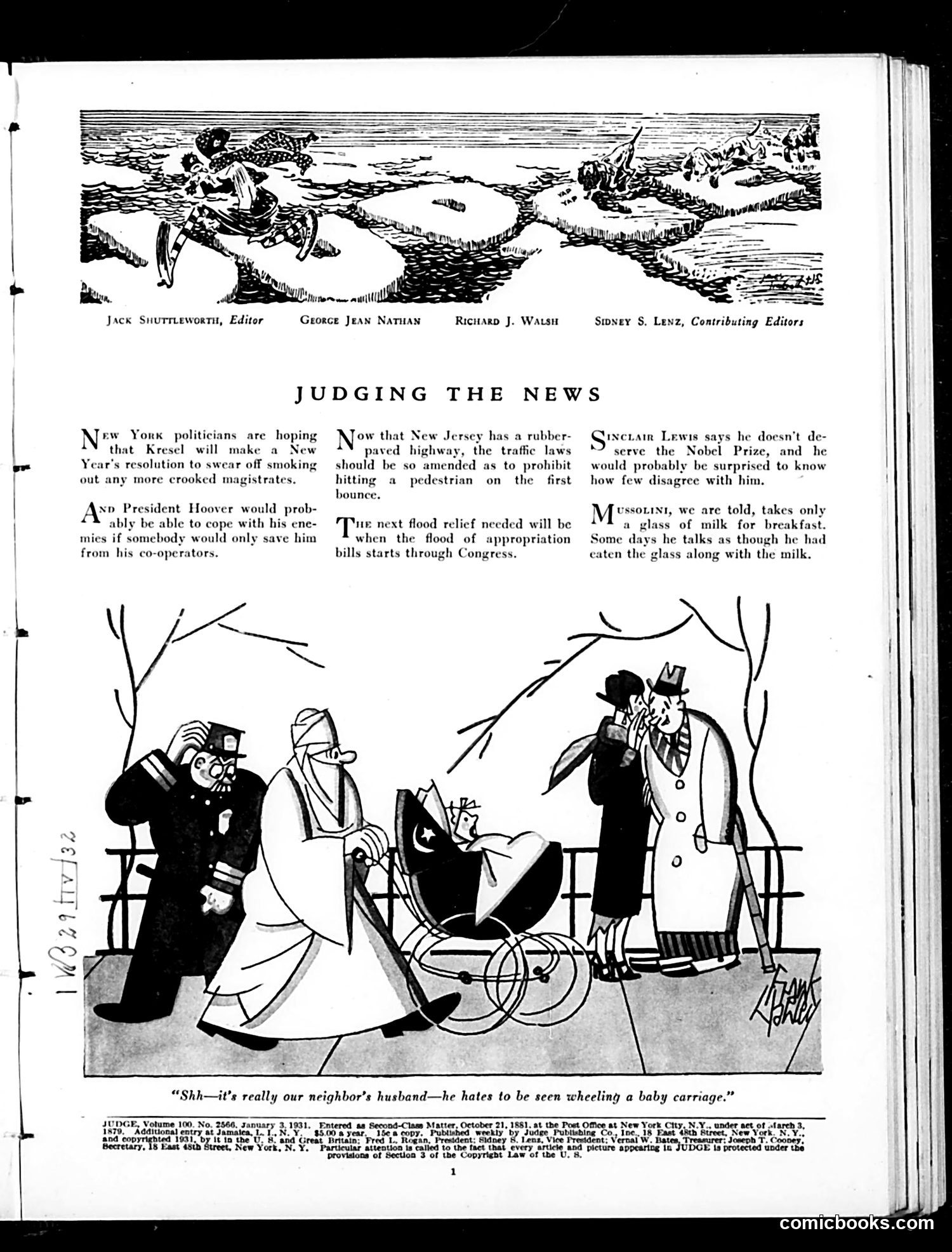
# Analysis of "Judging the News" Page This page from *Judge* magazine contains satirical commentary on contemporary political and social issues, plus one cartoon. **The Text Segments** mock: - New York politicians and police corruption (Kresol reference unclear) - President Hoover's management of the Great Depression - New Jersey traffic laws - Congressional appropriations for flood relief - Mussolini's allegedly austere breakfast habits **The Cartoon** depicts a domestic scene where neighbors discuss a man pushing a baby carriage. The joke's punchline—"he hates to be seen wheeling a baby carriage"—satirizes masculine vanity and social embarrassment about childcare. This reflects 1930s attitudes where such domestic tasks were considered unmanly, making the husband's reluctance a subject of neighborhood gossip and ridicule. The overall page blends political commentary with social satire typical of *Judge*'s approach.
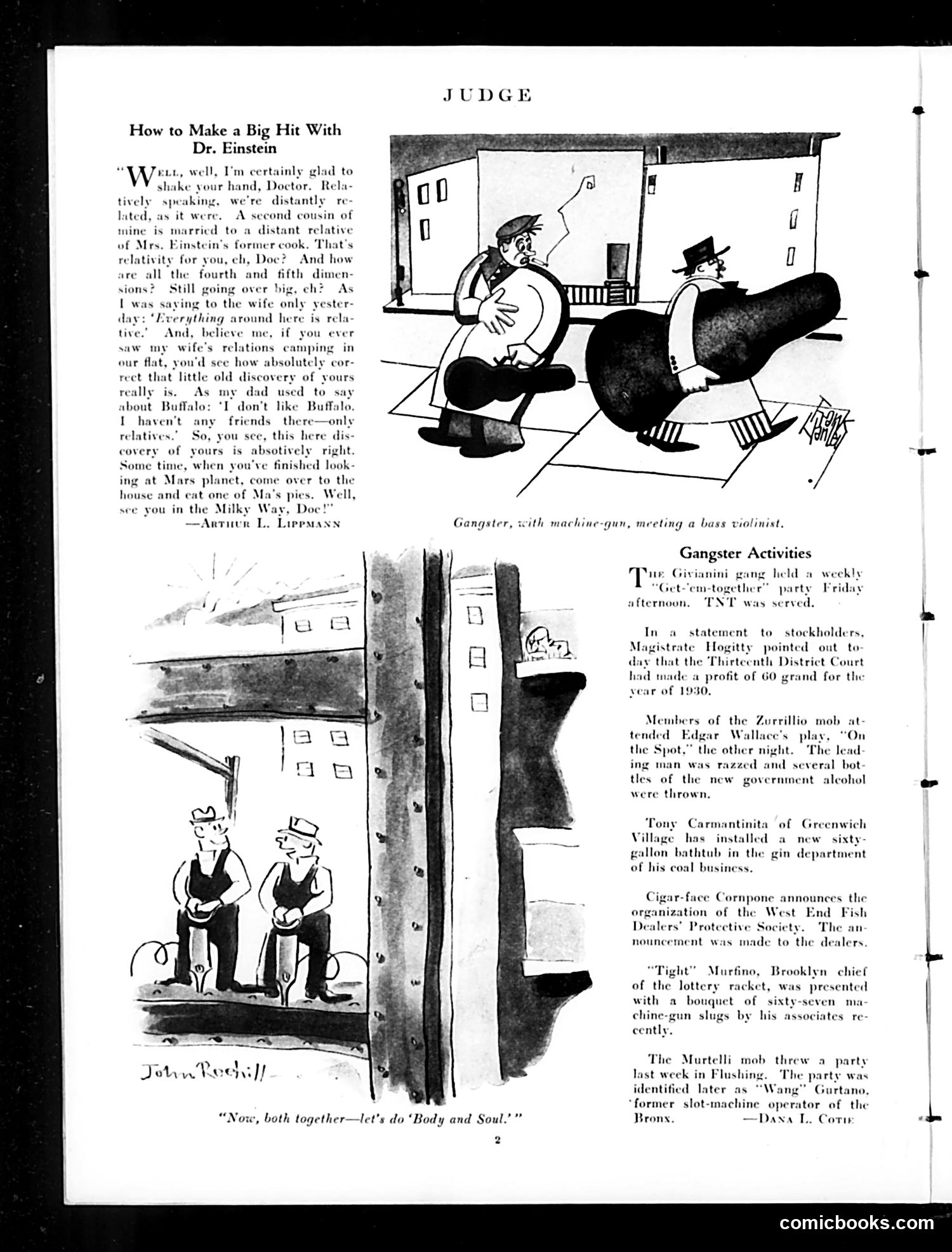
# Analysis of Judge Magazine Page This page contains two distinct elements: **Top cartoon** ("How to Make a Big Hit With Dr. Einstein"): A humorous piece featuring Einstein meeting a gangster with a machine gun. The joke plays on Einstein's fame and the contemporary gangster culture of Prohibition-era America. The caption suggests incongruous social mixing—a respected scientist encountering underworld figures. **Bottom cartoons and "Gangster Activities" section**: Satirical commentary on 1920s-30s organized crime, featuring illustrations of gangsters and a text column documenting criminal exploits (mob parties, lottery operations, violence). The cartoons mock gangster behavior through exaggeration. The overall theme reflects Judge magazine's satirical response to American gangsterism and Prohibition-era criminality—treating serious criminal activity with comedic absurdity to critique its pervasiveness in society.
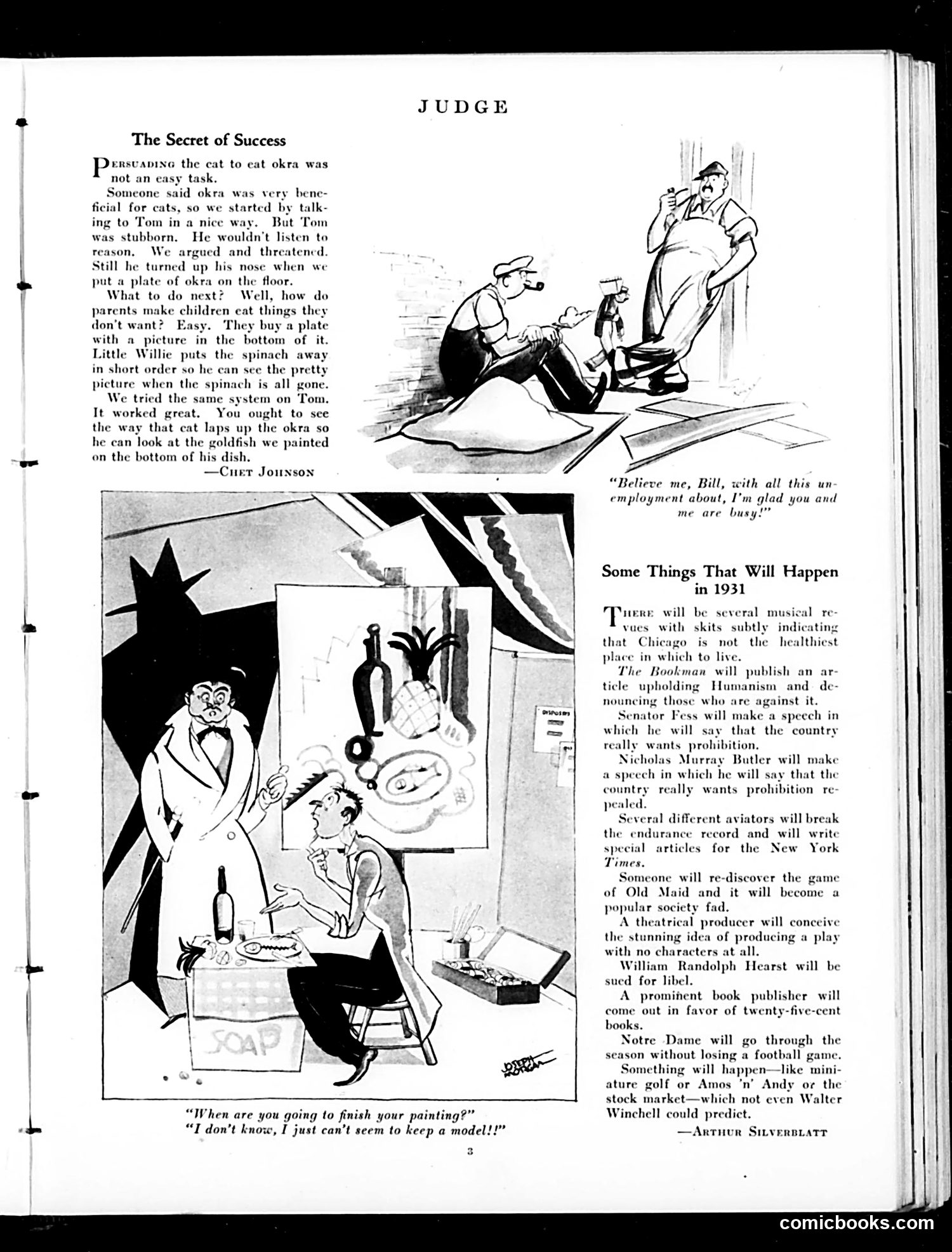
# Analysis of Judge Magazine Page **"The Secret of Success"** (top): This humorous anecdote by Chef Johnson describes persuading a cat to eat okra—a vegetable many find unpalatable. The joke uses parental psychology: putting food in an attractive dish with a picture underneath makes children (and apparently cats) more willing to eat it. The cartoon illustrates a man presenting okra to a skeptical dog, satirizing how presentation manipulates consumption. **"Some Things That Will Happen in 1931"** (right): Arthur Silverblatt's predictions mock 1931 concerns: Chicago's poor air quality, prohibition debates, aviation records, theater trends, and financial speculation (miniature golf, stock market). These reflect contemporary anxieties and social preoccupations of early Depression-era America. **Bottom cartoon**: Depicts an artist struggling to keep a model still for a portrait—a timeless studio comedy.
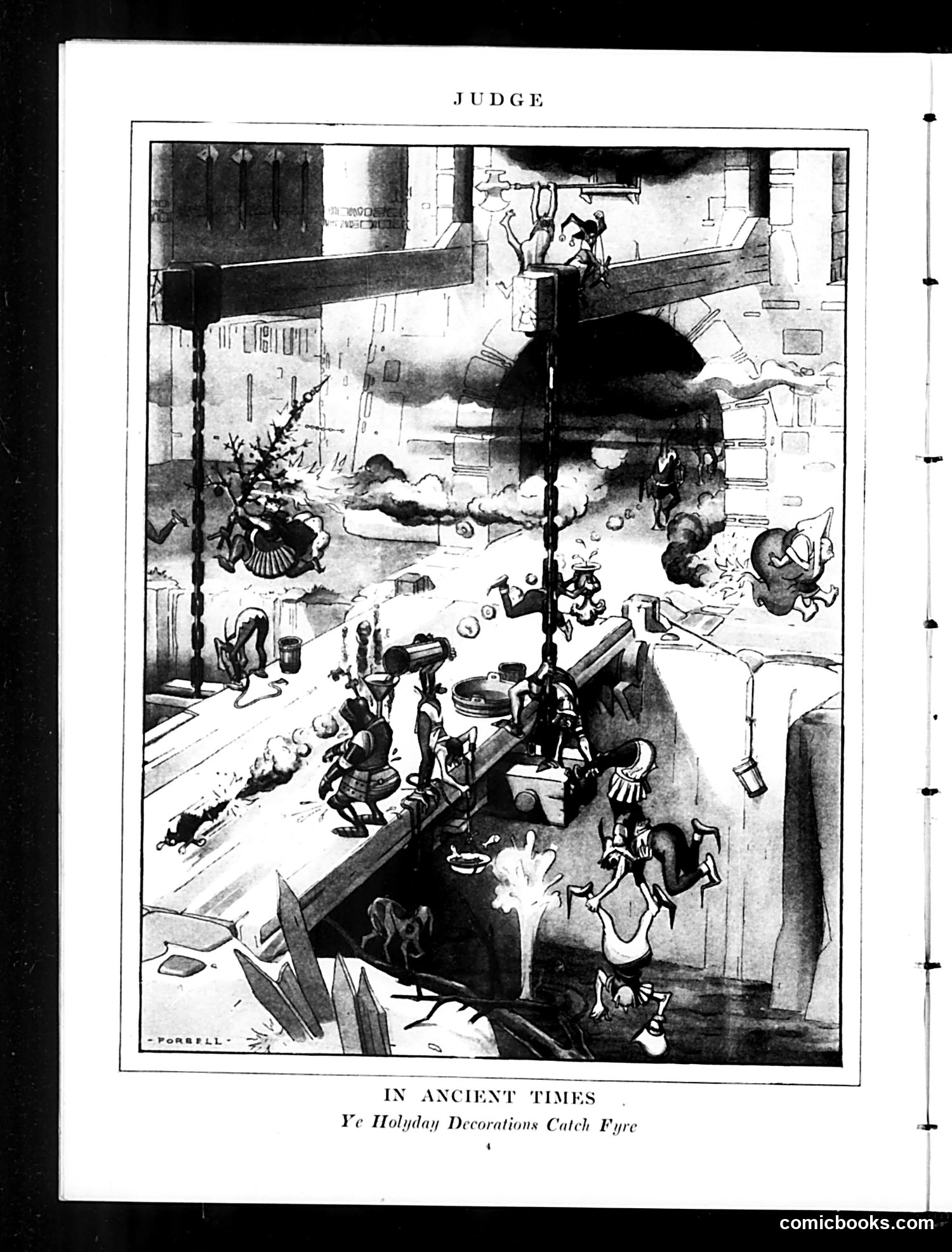
# Analysis of "In Ancient Times: Ye Holyday Decorations Catch Fyreā€¯ This Judge cartoon satirizes holiday safety hazards, specifically fires caused by Christmas decorations. The chaotic scene depicts an ancient Roman interior engulfed in flames, with figures panicking as decorative elements catch fire. The satire likely critiques contemporary (early-to-mid 20th century) holiday practices where people used flammable materials—candles, paper, dried plants—as decorations without adequate fire precautions. By setting the joke in "ancient times," the cartoonist suggests this danger is timeless and foolish. The humor relies on the contrast between festive holiday cheer and domestic disaster, warning viewers about preventable fire hazards during celebrations. The crowded, chaotic composition emphasizes the panic and destruction that accompanies such carelessness.
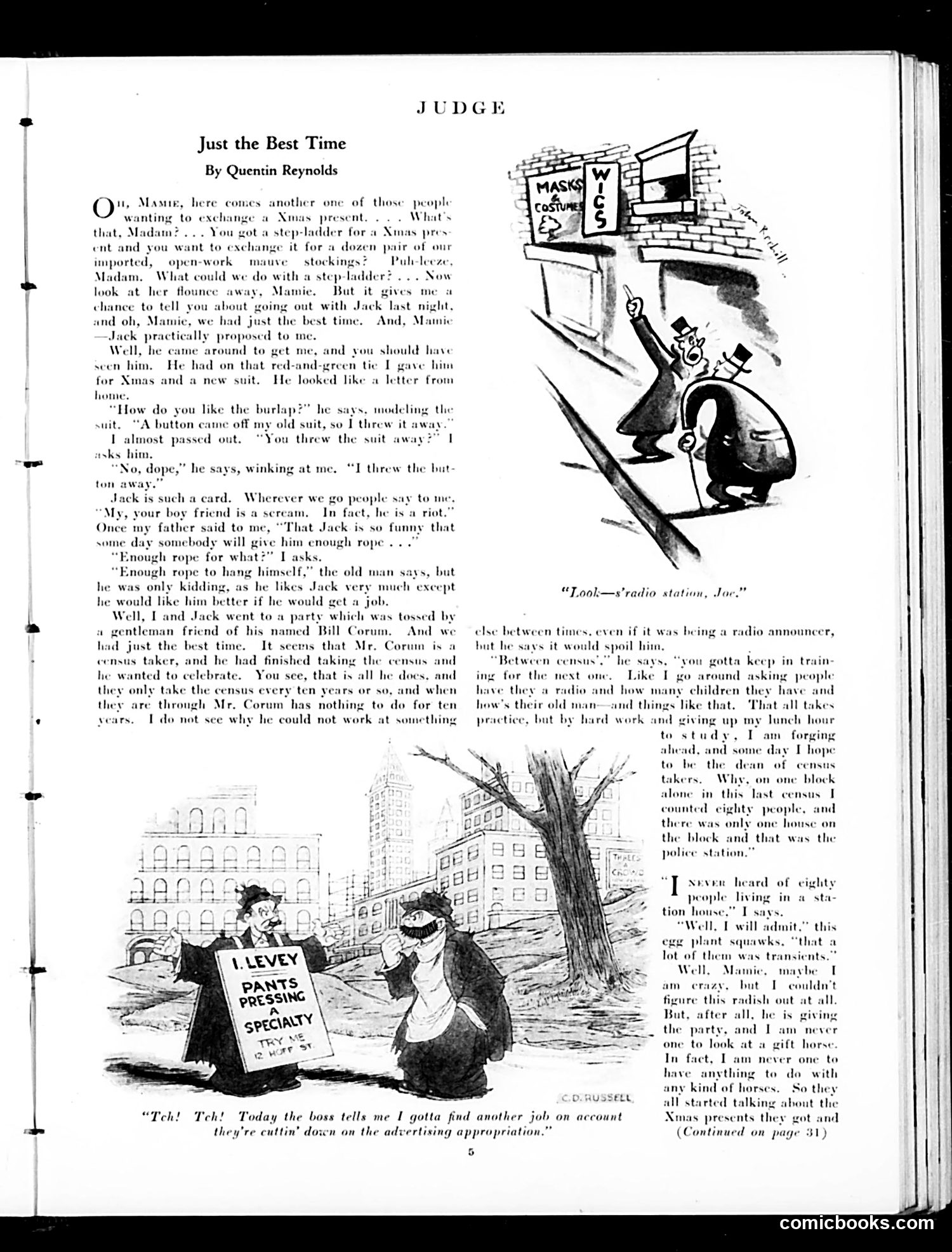
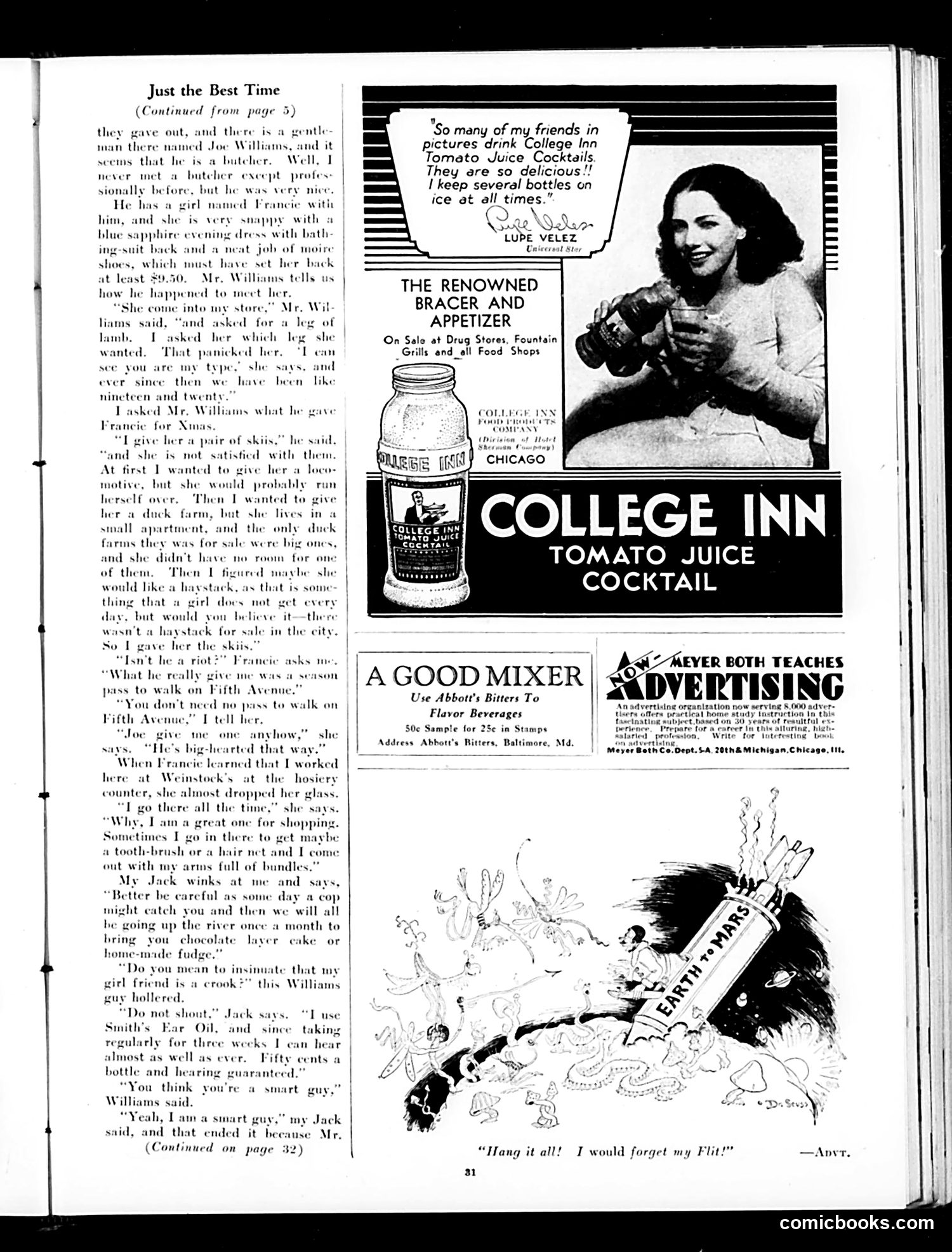
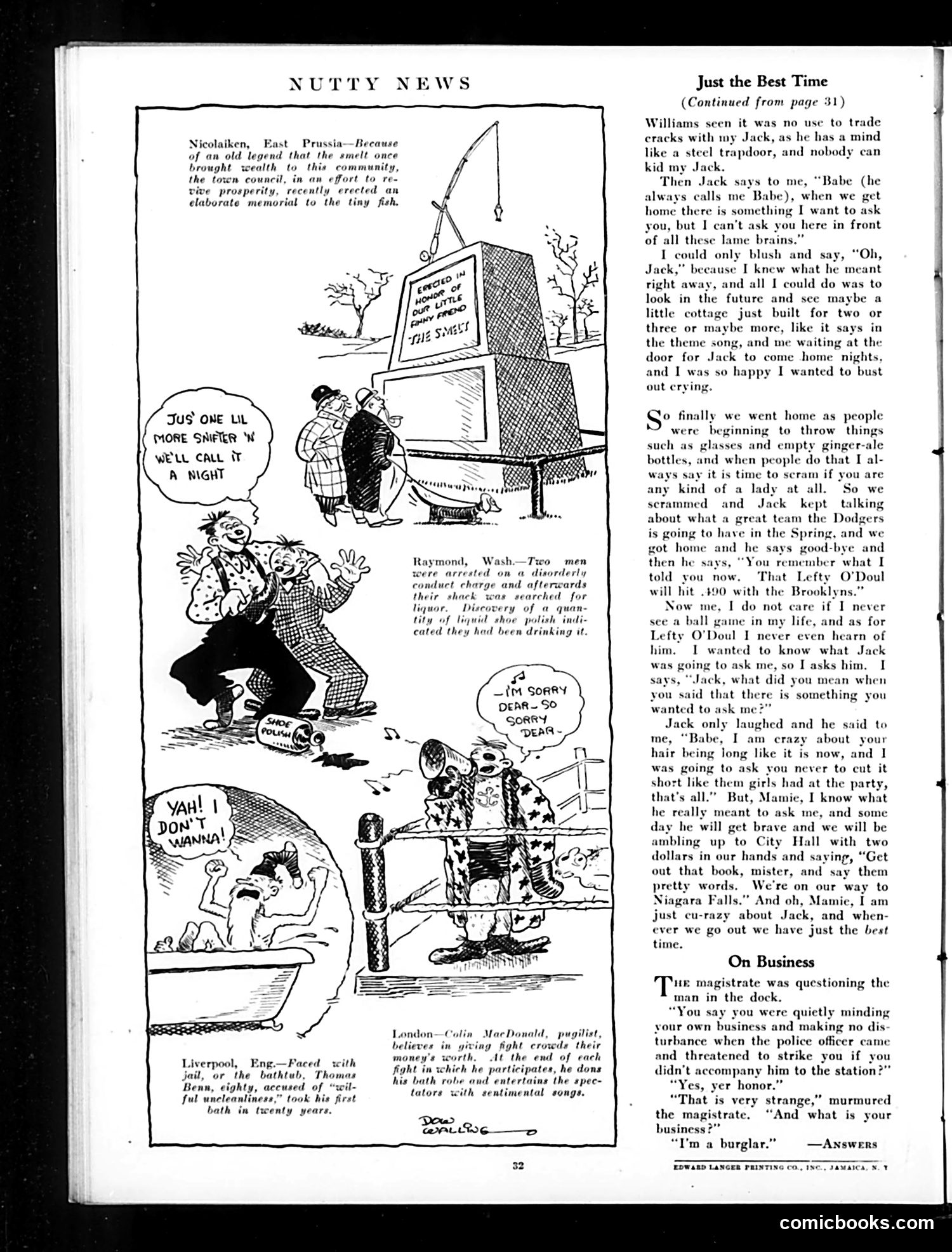
# Analysis of "Just the Best Time" by Quentin Reynolds This page contains a humorous short story about Christmas shopping and socializing, accompanied by two cartoons. The first cartoon (top right) shows someone at a radio station window, illustrating the story's mention of Jack being a radio announcer. The second cartoon (bottom) depicts a man carrying a "Levey Pants Closing Specialty" sign during what appears to be a business liquidation. The caption references the boss "calling down on the advertising appropriation," suggesting satire about department store closings and budget pressures during economic hardship—likely the Great Depression era when Judge magazine published such content. The humor targets both retail business failures and corporate financial mismanagement. The overall page mixes light comedic fiction with social commentary typical of Judge's satirical approach.
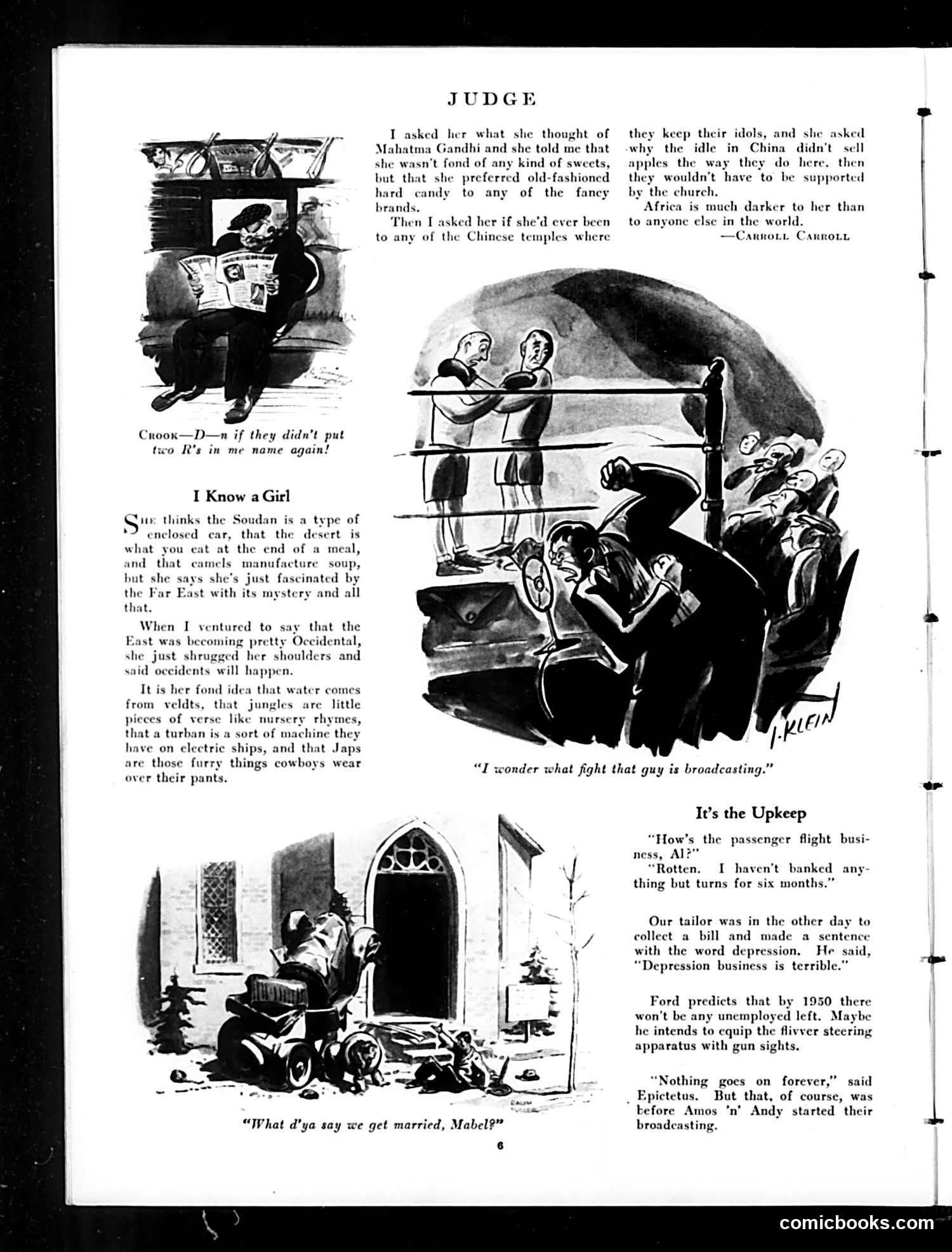
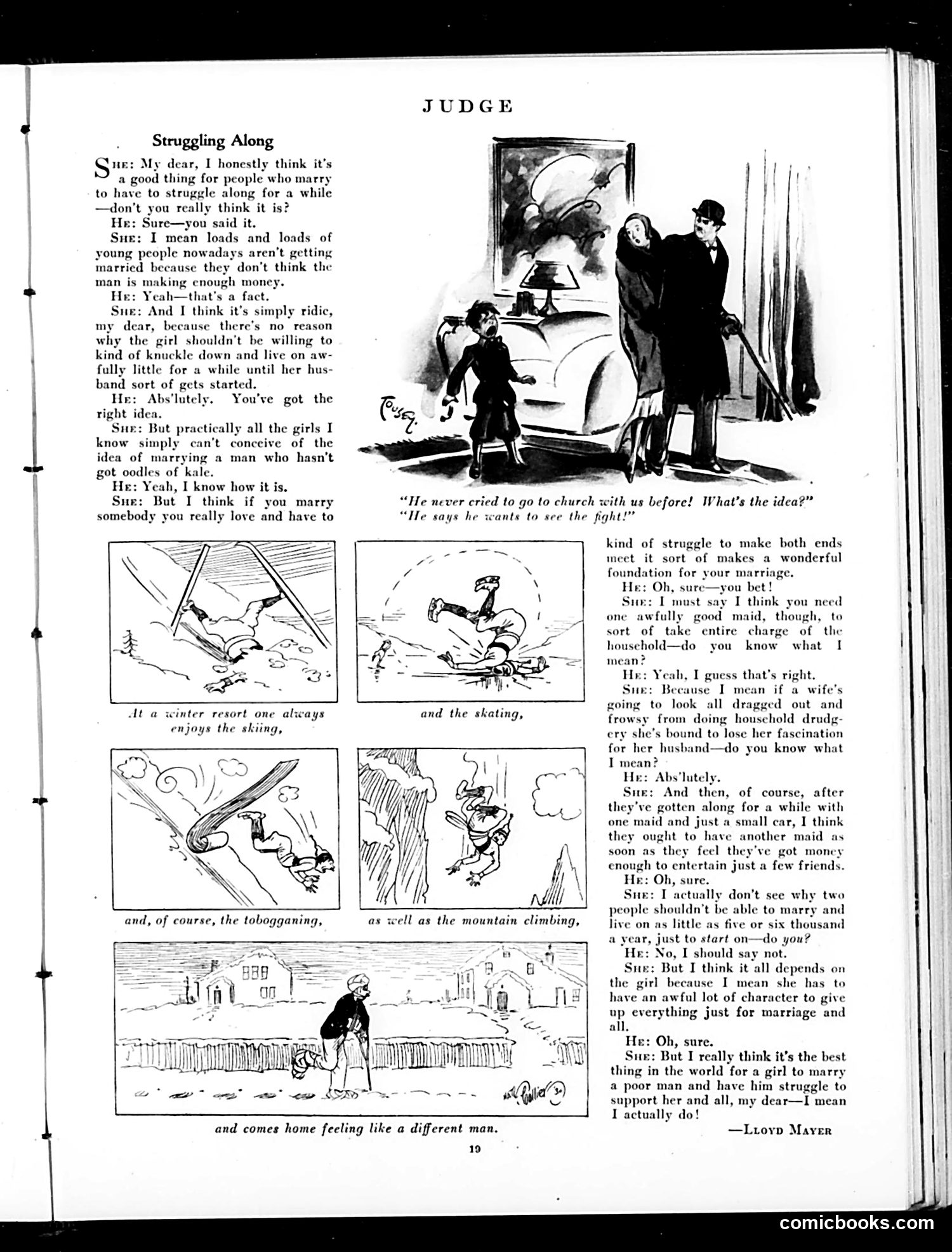
# Analysis of Judge Magazine Page This page contains three separate humorous pieces typical of 1930s satirical commentary: **"I Know a Girl"** mocks a woman's naive, exoticized understanding of the Far East—she conflates vastly different cultures (Sudan, deserts, camels, jungles, turbans, Japanese technology) into one undifferentiated "mysterious" region. The satire targets educated middle-class Americans' superficial knowledge of Asia. **"It's the Upkeep"** jokes about economic hardship during the Depression: an airline passenger hasn't banked money in six months due to constant turns (suggesting financial instability). The cartoon criticizes the high maintenance costs of modern transportation and business during economic crisis. The accompanying sketches feature vintage cartoon humor about domestic life and relationships, typical of Judge's regular offerings.
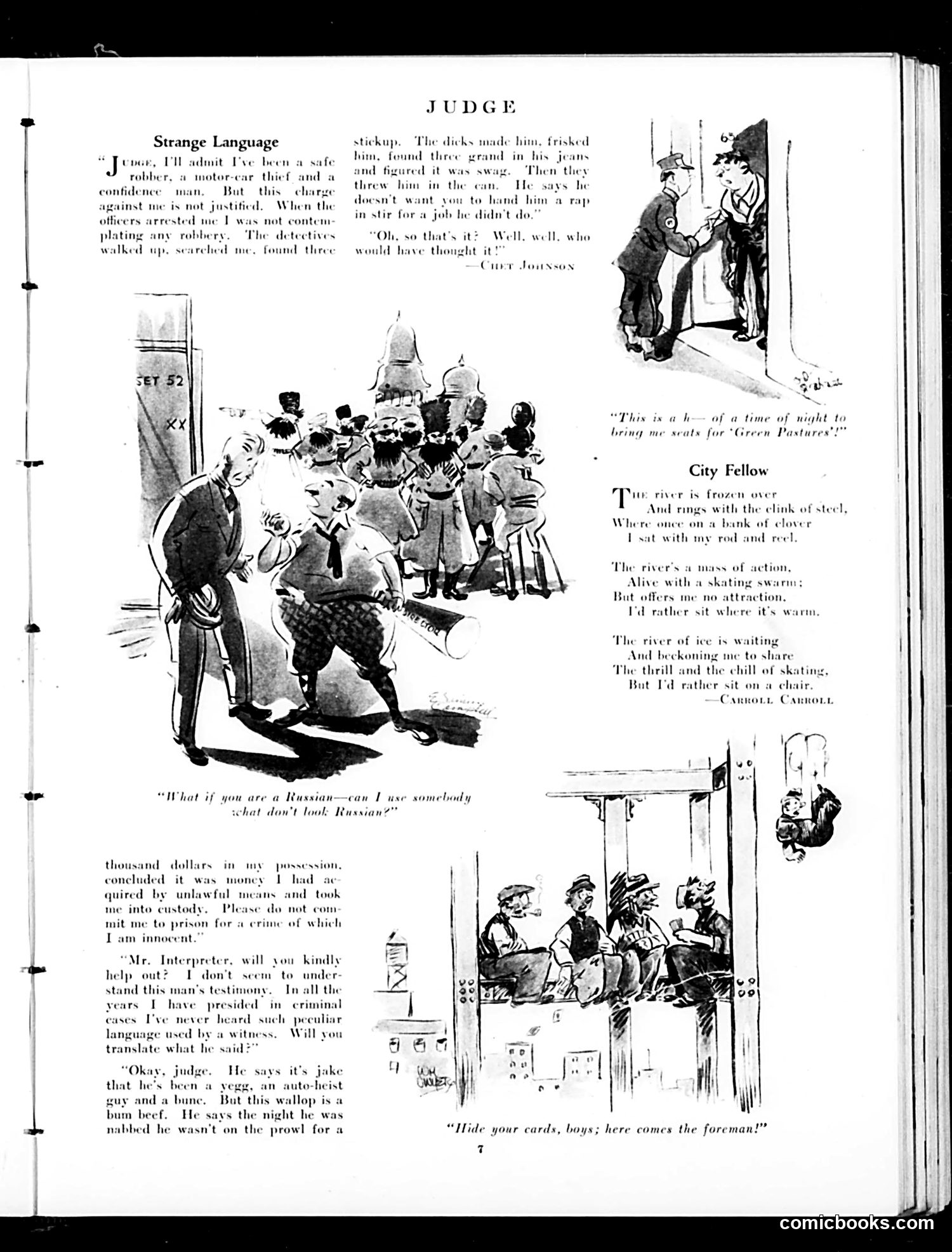
# Judge Magazine Page Analysis This page contains three satirical pieces: **"Strange Language"** (top): A judge struggles to understand criminal slang used by a witness testifying about a defendant arrested with stolen money. The defendant claims he didn't commit the crime he's charged with, but the judge finds the witness's vocabulary ("yeg," "auto-heist guy," "bum beef") incomprehensible. The satire targets the gap between judicial authority and street vernacular—the judge cannot effectively administer justice when he cannot understand the testimony. This reflects early 20th-century anxieties about urban crime slang and immigrant communities. **"City Fellow"** (right): Contrasts a countryman who enjoys fishing and outdoor activities with urban indifference. A city dweller refuses to appreciate a frozen river suitable for skating, preferring his warm chair. It's gentle social satire about urbanization and lost connection to nature. **"Hide your cards, boys"** (bottom): Depicts what appears to be a card game interrupted by authority ("the foreman"), suggesting illegal gambling. The humor relies on shared understanding of underground gaming culture.
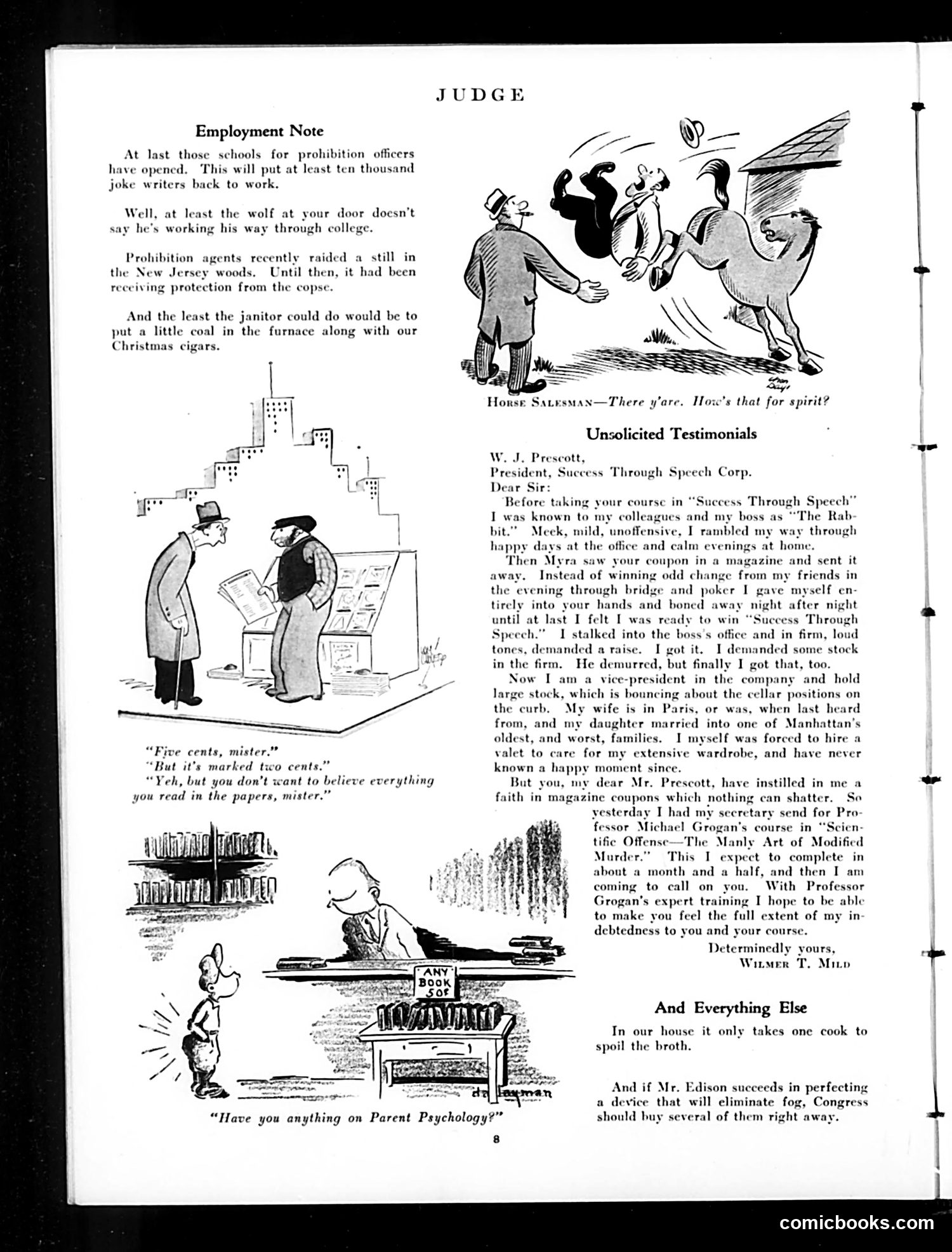
# Judge Magazine Satire Analysis This page contains several pieces of early 20th-century American satire: **Employment Note:** Mocks Prohibition (the ban on alcohol) by joking that closing illegal stills will put "ten thousand joke writers back to work"—suggesting Prohibition itself is absurd enough to be comedic gold. References to "protection from the copse" (corrupt police) and "Christmas cigars" (likely code for smuggled alcohol) satirize widespread corruption during Prohibition enforcement. **Horse Salesman cartoon:** Depicts a salesman's aggressive pitch as excessive "spirit"—a pun on alcohol and enthusiasm, mocking both salesmanship tactics and Prohibition's failure to eliminate drinking culture. **Unsolicited Testimonials:** Parodies fake magazine endorsements for self-help courses. A man transforms from meek employee to aggressive executive through a "Success Through Speech" course, then threatens violence against the course creator. It satirizes both dubious mail-order self-improvement schemes and their exaggerated claims of transformation. The final quips mock Edison's fog-elimination device and Congressional incompetence—standard Judge fare.
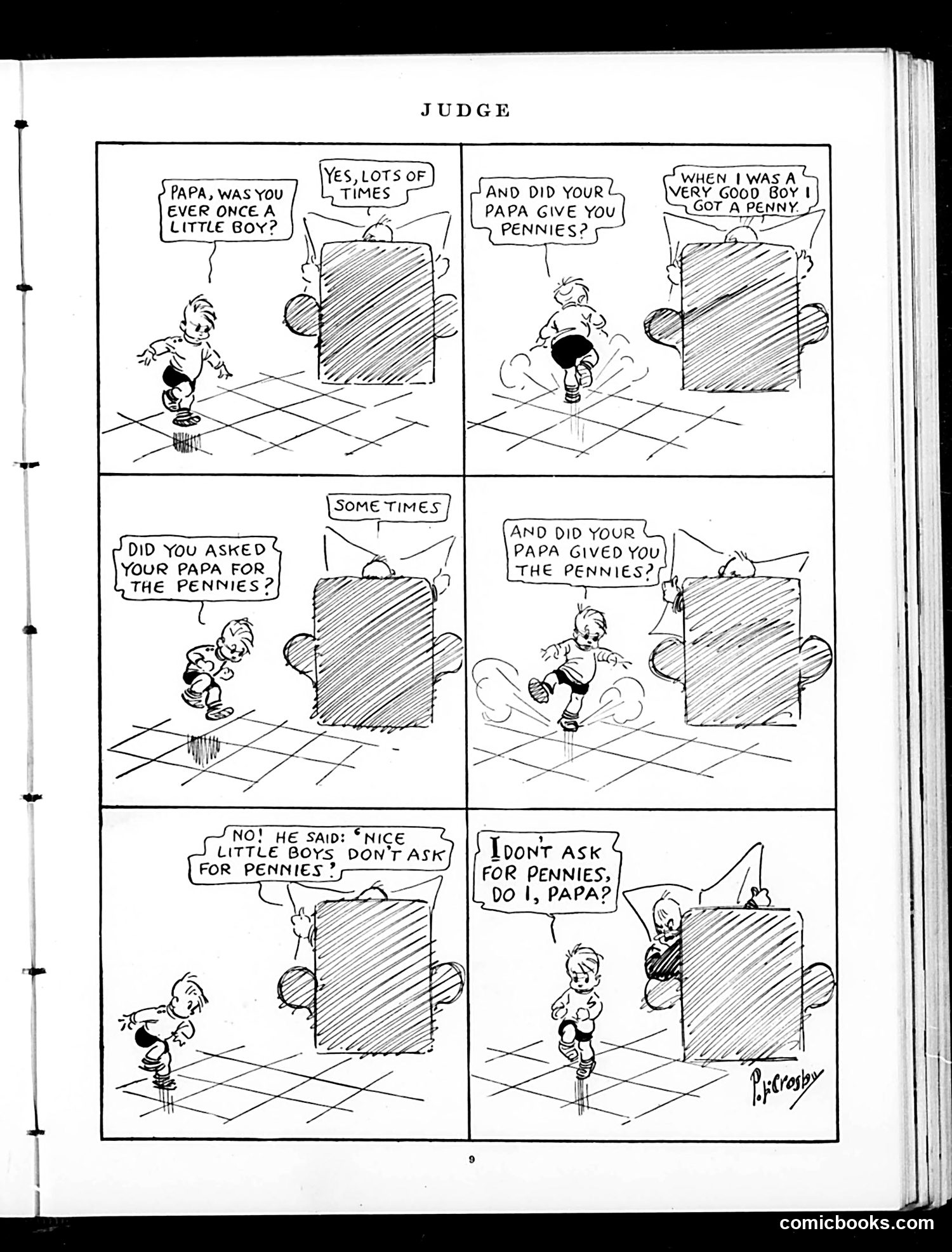
# "Judge" Comic: Generational Contradiction This single-panel comic uses a child's innocent questioning to expose an adult's hypocrisy. A small boy asks his father whether he was ever poor as a child and received pennies. The father answers affirmatively to initial questions but then reveals the contradiction: when he was young, his own father told him "nice little boys don't ask for pennies"—yet apparently gave them to him anyway. The punchline comes when the child asks the obvious follow-up: "I don't ask for pennies, do I, Papa?"—implicitly pointing out that if nice boys don't ask, and he doesn't ask, then why should his father give him pennies? The satire targets parental inconsistency and the gap between what adults preach (self-reliance, not begging) and what they practice (indulgence). It's gentle domestic humor about generational hypocrisy in child-rearing.
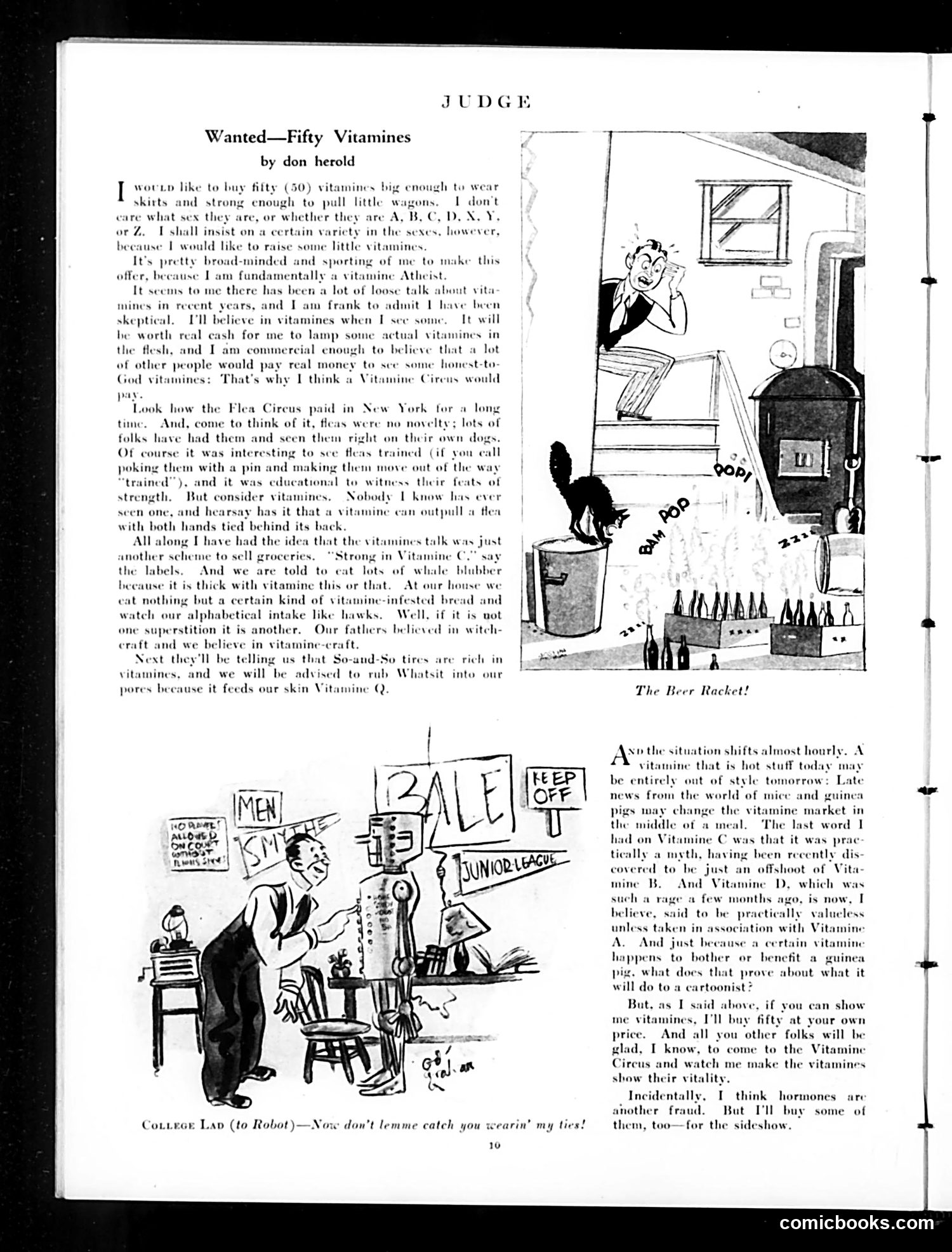
# "Wanted—Fifty Vitamines" by Don Herold This satirical piece mocks the 1920s vitamin craze—a genuinely widespread phenomenon where vitamins were heavily marketed but poorly understood by the public. Herold's narrator feigns skepticism about vitamins' actual existence, sarcastically comparing them to a "Flea Circus" as a novelty act worth paying to see. The satire targets several things: grocery manufacturers' vague marketing claims ("Strong in Vitamine C"), consumers' uncritical acceptance of health advice, and the rapidly shifting nutritional fads (Vitamin C suddenly being debunked, Vitamin D falling in and out of favor). The piece suggests vitamins are merely the latest in superstitions, replacing older beliefs in witchcraft. The accompanying cartoons reinforce the theme of commercial exploitation and absurdity—one shows a college lab "robot," another depicts marketing chaos. Herold's closing joke about buying hormones "for the sideshow" extends the mockery: if vitamins are theater, why not sell everything as spectacle?