A complete issue · 36 pages · 1930
Judge — July 19, 1930
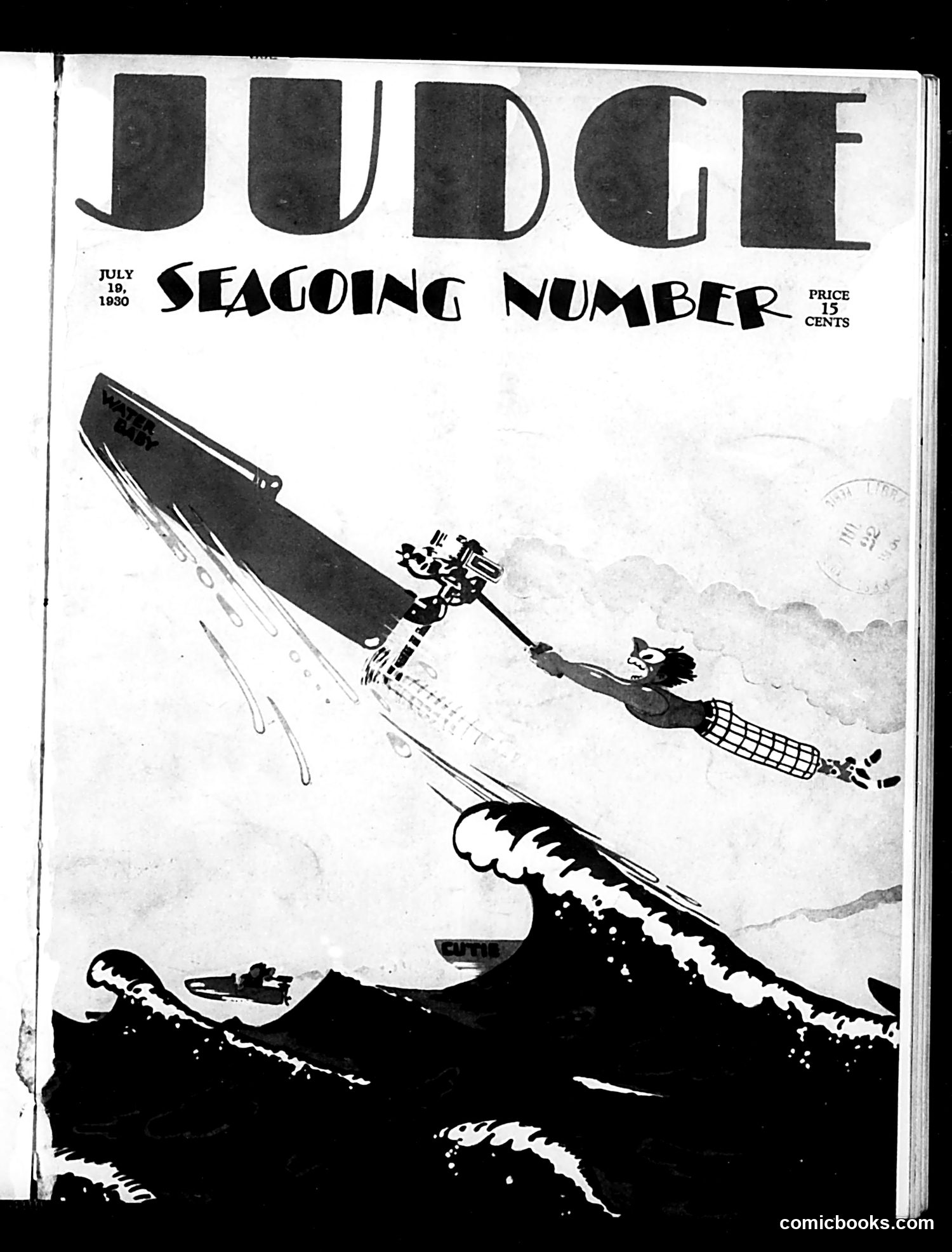
# Analysis of Judge Magazine Cover, July 19, 1930 This cover depicts a dramatic maritime disaster scene—likely referencing a ship or aircraft accident from 1930. The illustration shows a sinking vessel, drowning figures, and what appears to be a rescue attempt involving a person being pulled from the water. The cover's title "JUDGE SEAGOING NUMBER" indicates this was a themed issue focused on nautical content or disasters. The satirical intent remains unclear from the image alone—whether it's commentary on maritime safety, naval policy, or simply exploiting a contemporary tragedy for sensational cover appeal, which was common in 1930s magazines. The dramatic, high-contrast illustration style was typical of Judge's approach to eye-catching covers during this era. Without additional article titles visible, the specific satirical target cannot be definitively determined.

# Analysis This is primarily a **Gillette razor blade advertisement**, not political satire. The page shows a man shaving with the "New Gillette Blade" and promotes the product's superior shaving quality. The advertisement's only potentially humorous element is the exaggerated facial expression of the man being shaved—his wide-eyed, somewhat pained grimace might suggest either the intensity of the shave or discomfort. However, this appears designed to convey the blade's effectiveness rather than serve as satire. The page emphasizes that the New Gillette Blade offers "the keenest shaving edge ever produced" and encourages consumers to purchase genuine blades at $1.00 (or 50¢ for five). This is straightforward commercial promotion typical of *Judge* magazine's advertising content, not editorial cartoon commentary.
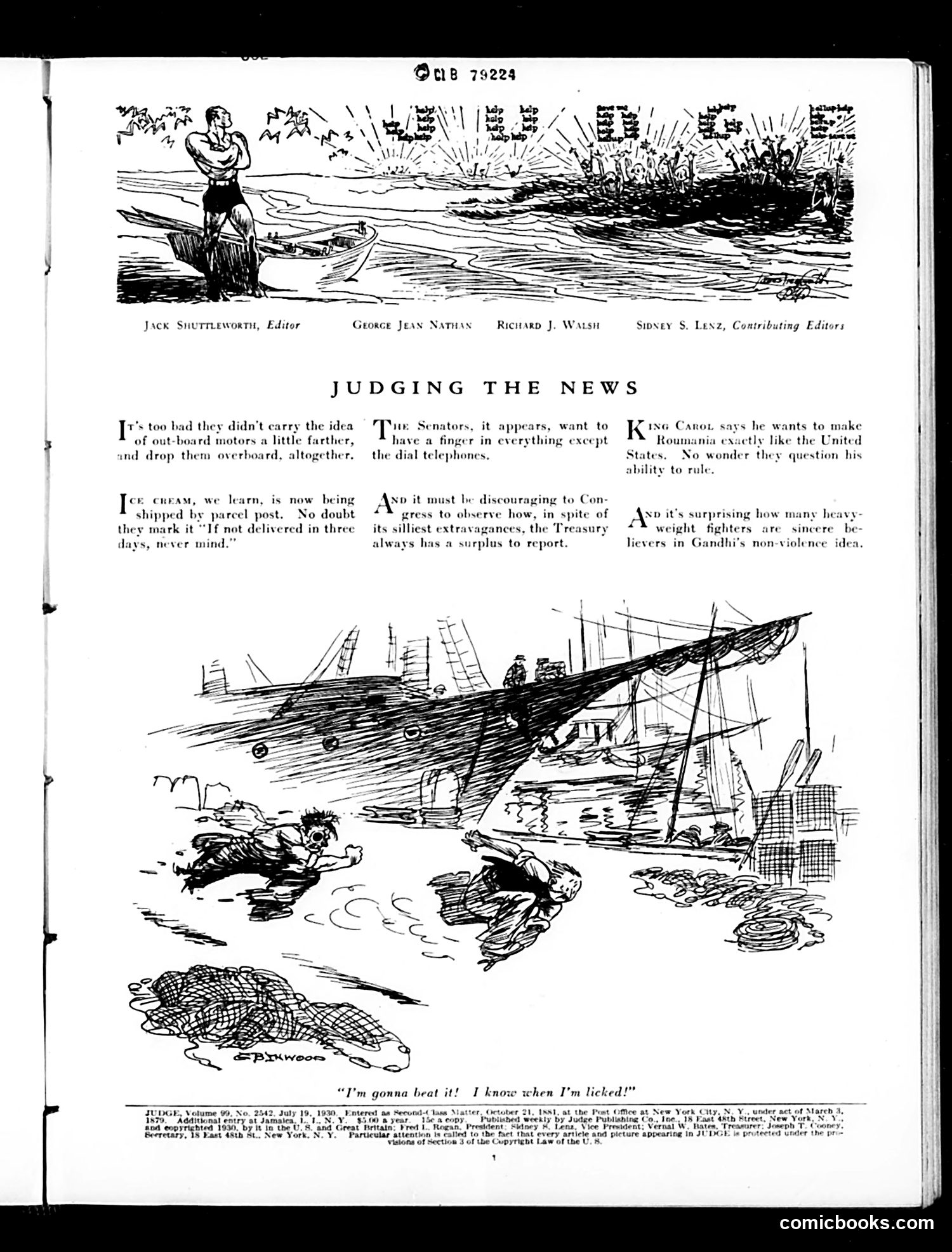
# Analysis of "Judging the News" Page This page contains brief satirical editorial comments on current events alongside a political cartoon showing shipwrecked sailors. **The Editorial Quips:** - Criticizes Congress for wanting to "have a finger in everything except the dial telephones" - Mocks the Treasury always reporting surpluses despite congressional spending - References heavy-weight supporters of Gandhi's non-violence movement **The Cartoon:** Depicts sailors amid wreckage with the caption "I'm gonna beat it! I know when I'm licked!" This appears to be commentary on a maritime disaster or naval defeat, though the specific historical reference is unclear. The sailors' resignation suggests commentary on accepting failure or knowing when to retreat. The page reflects Judge magazine's characteristic approach: punchy political satire on congressional inefficiency and contemporary social movements, paired with illustrative cartoons addressing news events.
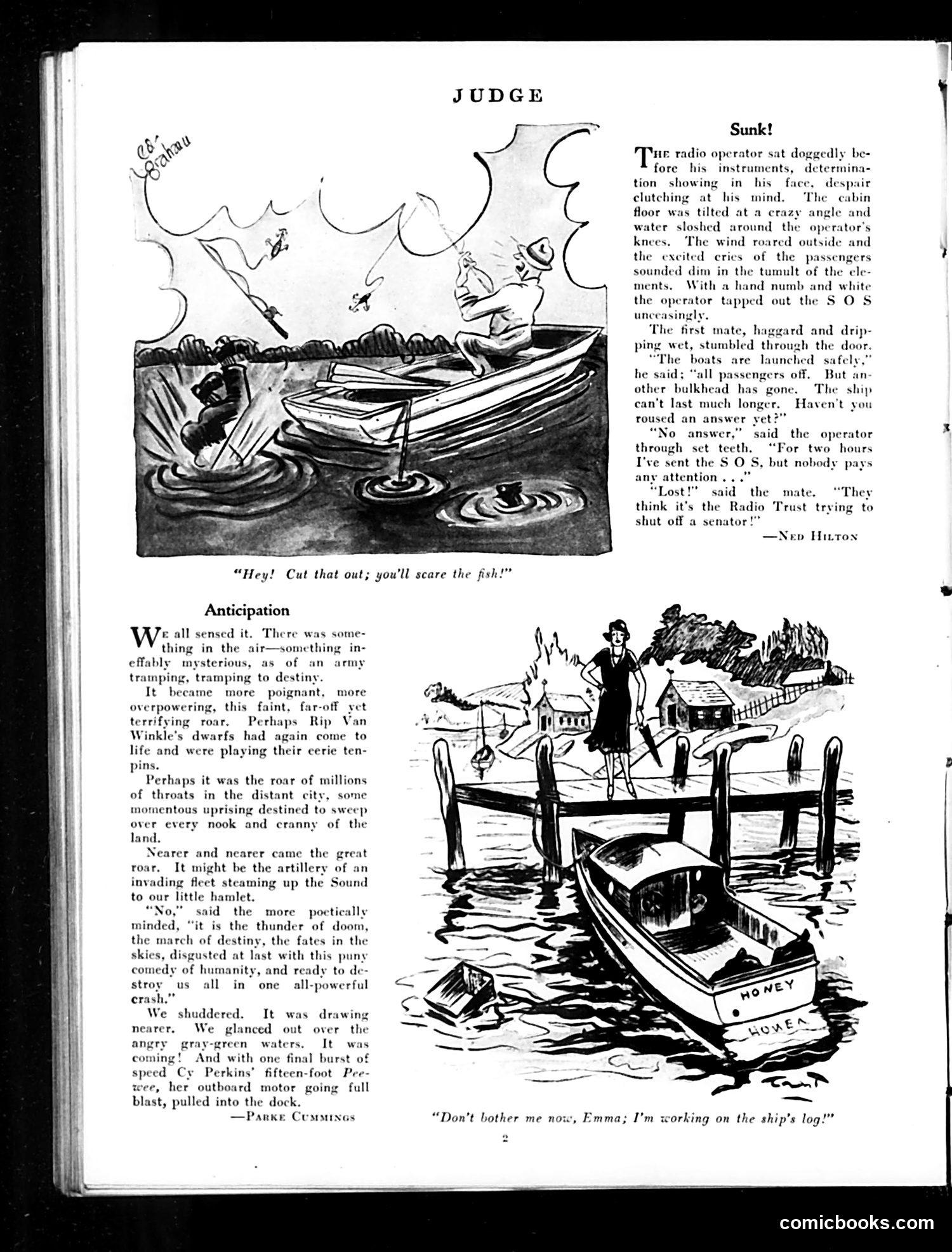
# Analysis of Judge Magazine Page This page contains two separate pieces of satirical content: **"Sunk!" (top)**: A cartoon depicting a ship in distress. The radio operator desperately signals SOS while the first mate dismisses his efforts, claiming the Radio Trust is intentionally ignoring distress calls to "shut off a senator." The satire criticizes monopolistic radio corporations for prioritizing corporate interests over public safety—a relevant concern during the early radio regulation era when the emerging broadcast industry faced scrutiny about its power and accountability. **"Anticipation" (bottom)**: A literary piece accompanied by an illustration of a flooded dock scene. The text poetically describes an ominous atmospheric tension—possibly referencing an impending war or disaster. The sailor character's preoccupation with "the ship's log" suggests wartime concerns, though the specific historical context remains unclear without additional dating information. Both pieces reflect early 20th-century anxieties about corporate power and international instability.
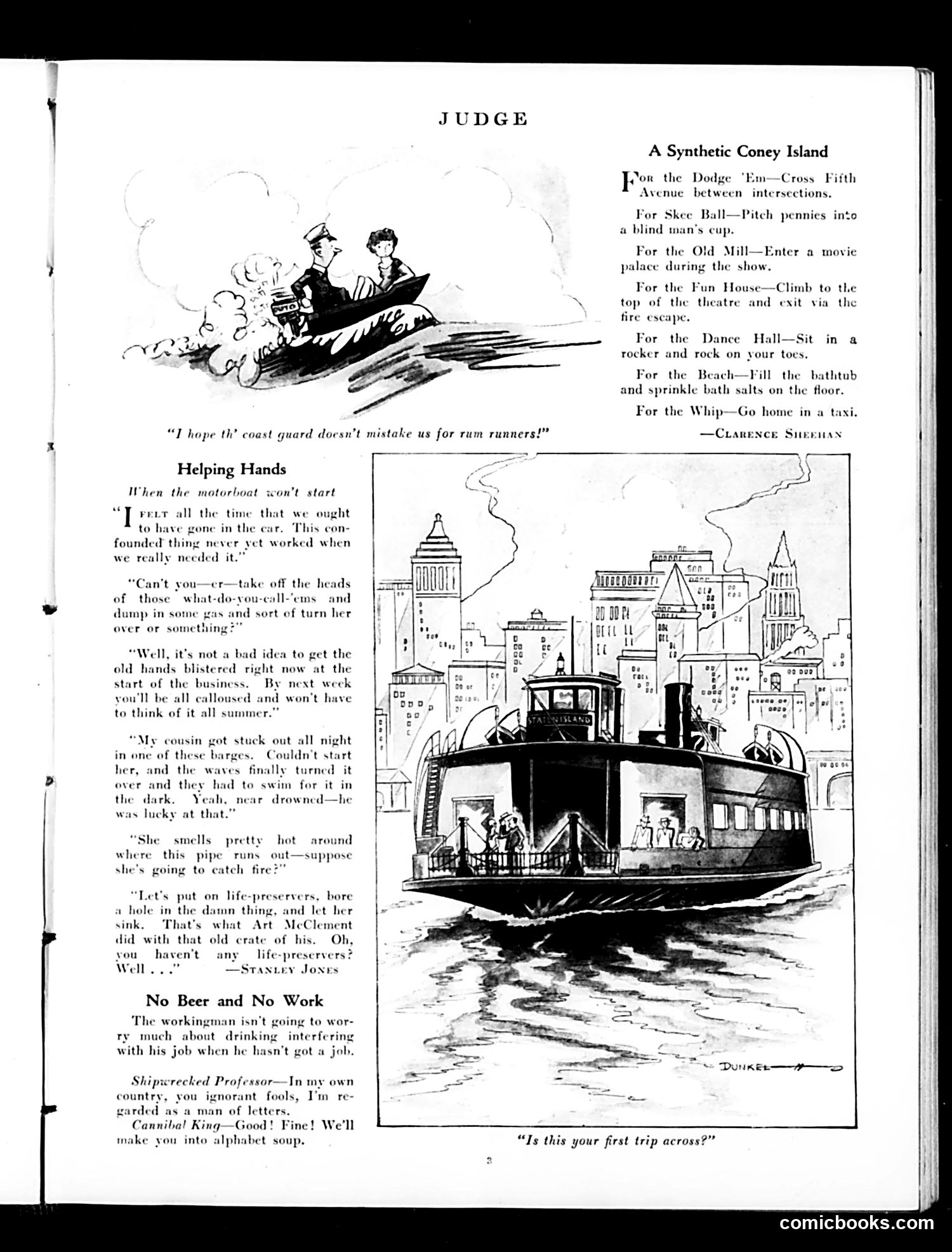
# "A Synthetic Coney Island" - Judge Magazine Page This page satirizes synthetic or artificial recreation of natural attractions on Coney Island (Brooklyn's famous amusement area). The top cartoon mocks creating fake experiences—a "blind man's cup" at the Skee Ball, entering a movie palace during a show, climbing theater fire escapes, and filling bathtubs with salt water to simulate "the Beach." The lower section shows a riverboat cartoon titled "Is this your first trip across?" with accompanying humorous anecdotes about motorboat mishaps and rescue efforts. The satire targets how commercialized entertainment districts substitute artificial imitations for genuine experiences, while the boat section humorously depicts common tourist and working-class recreation mishaps on the waterways near Coney Island.
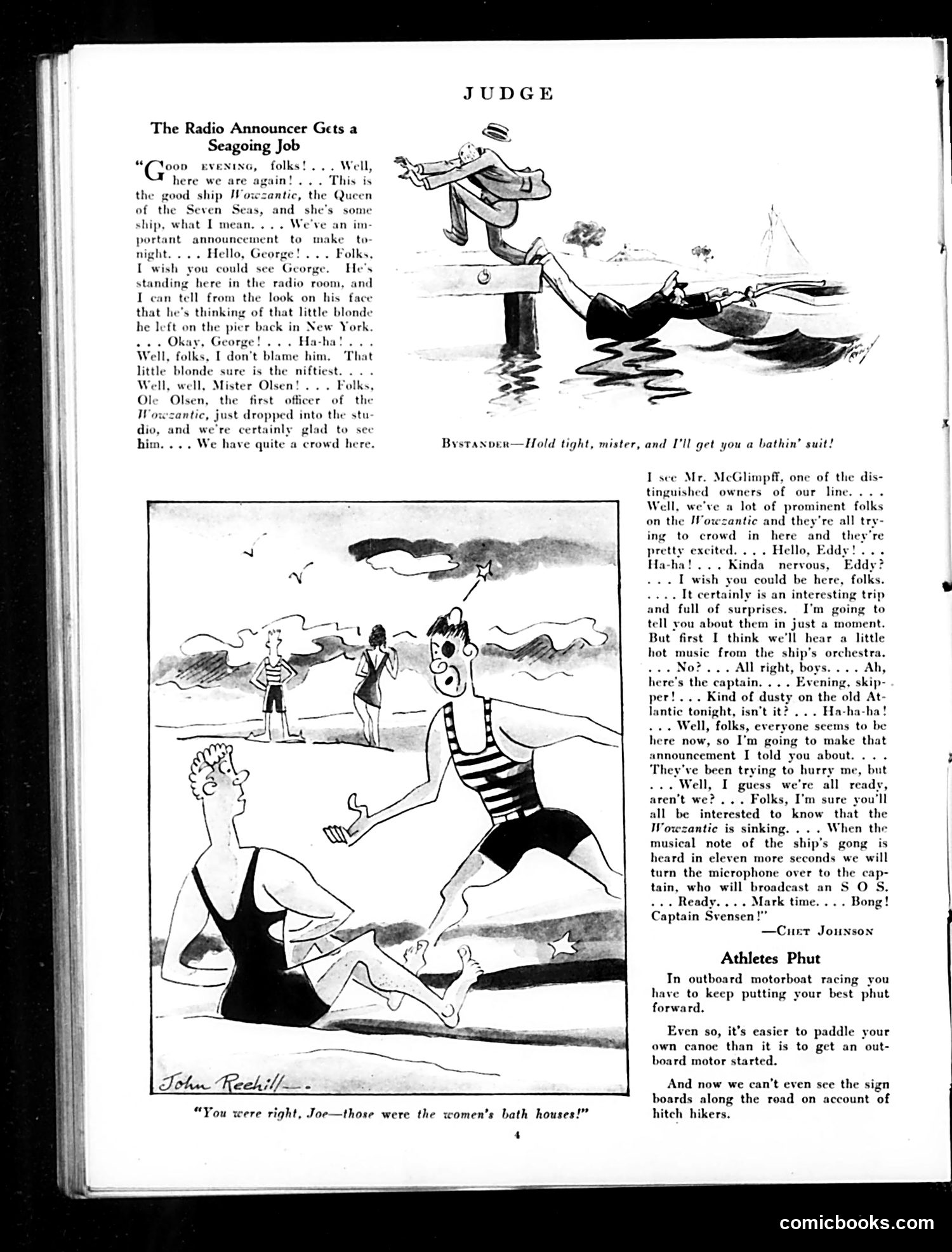
# Analysis of Judge Magazine Page This page contains two unrelated pieces of humor: **"The Radio Announcer Gets a Seagoing Job"** presents a radio broadcaster awkwardly transitioning to announcing a ship's sinking. The humor relies on the announcer's breathless, overly enthusiastic radio delivery style applied to an actual maritime disaster—the ship *Worczantic* is going down. The joke satirizes radio announcers' exaggerated professionalism and artificial excitement, contrasting their studio patter with a genuine emergency where such tone-deafness becomes absurd. **"Athletes Phut"** comments on the difficulty of operating motorboats and starting outboard motors, concluding with a jab at hitchhikers obscuring roadside advertising signs. Both pieces are brief, topical humor reflecting 1920s-30s American leisure culture and emerging mass media conventions.
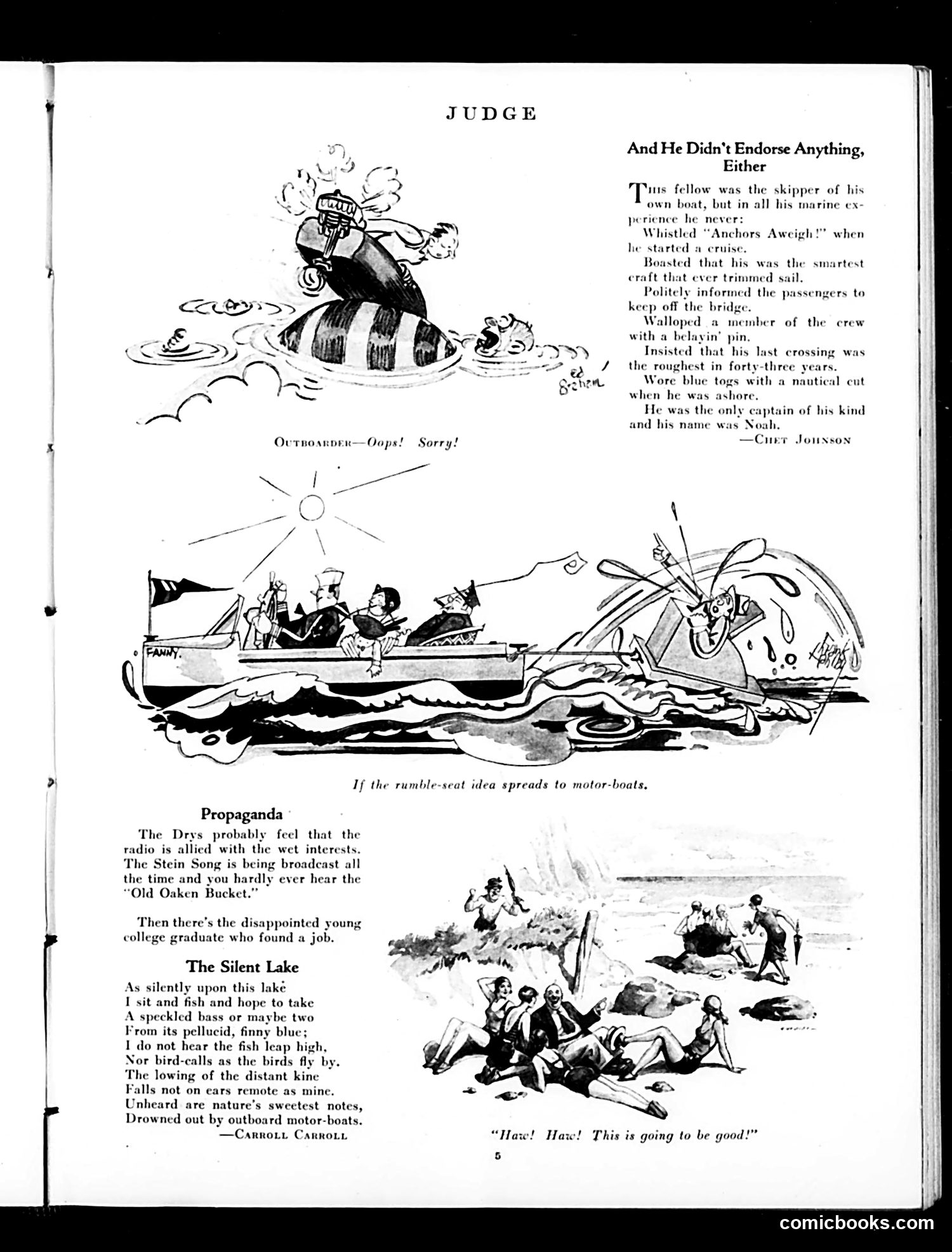
# Analysis of Judge Magazine Page This page satirizes early 20th-century concerns about motorboats disrupting traditional recreation. The top cartoon shows a boat captain going overboard with the caption "Oops! Sorry!"—mocking reckless motorboat operators. The middle cartoon depicts a motorboat collision with a rowboat, captioned "If the rumble-seat idea spreads to motor-boats," suggesting motorboats are as unsafe and frivolous as cars with rumble seats. The "Propaganda" section mocks Dry supporters (Prohibition advocates) who blamed radio broadcasts of popular music on "wet interests." A poem titled "The Silent Lake" laments that motorboats have destroyed peaceful lake recreation, drowning out nature's quiet sounds. The bottom illustration shows beachgoers fleeing the noise, saying "Haw! Haw! This is going to be good!"—likely ironic commentary on recreational chaos.
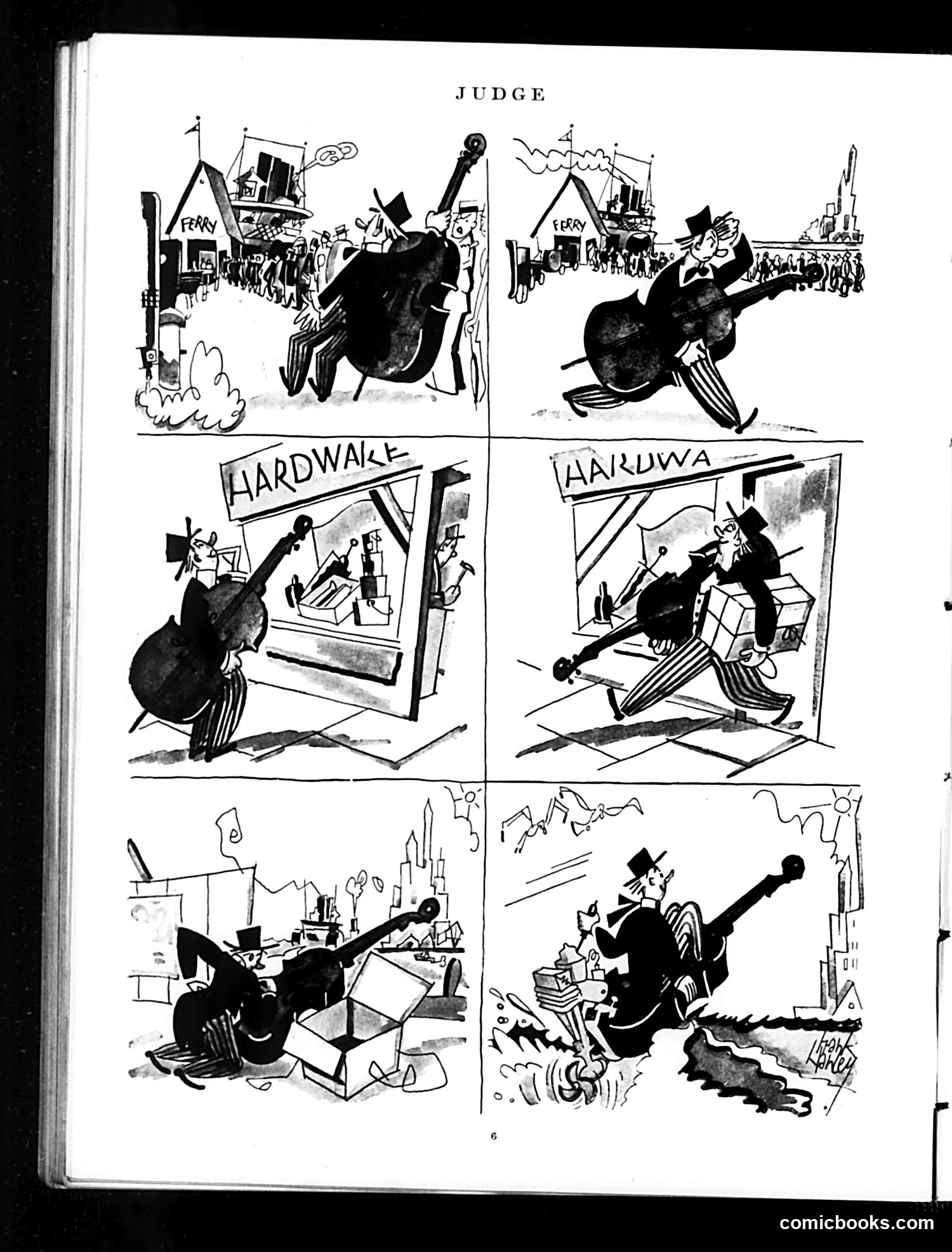
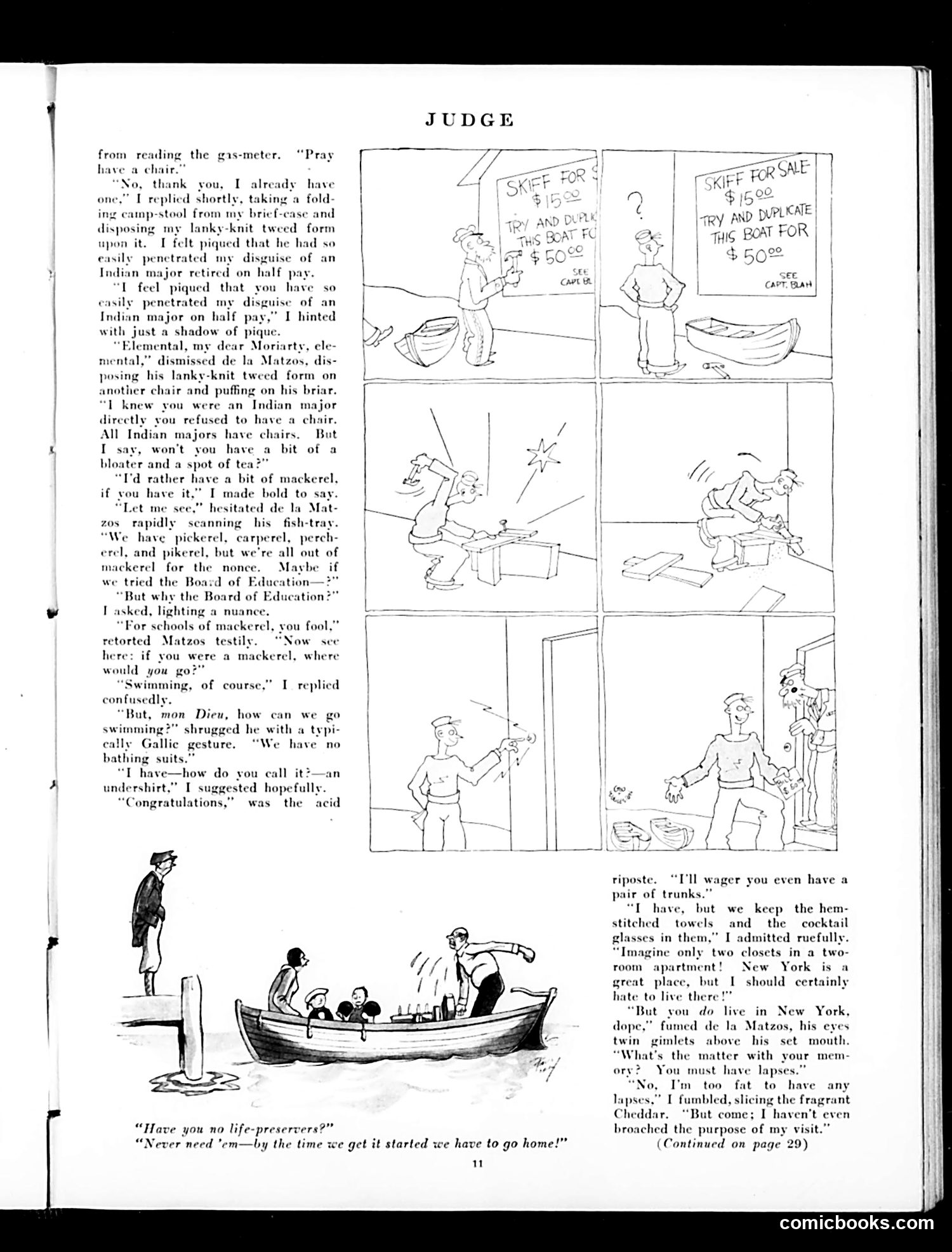
# Judge Political Cartoon Analysis This page titled "JUDGE" presents a six-panel satirical comic sequence. The central character—a man in formal dress wielding a large club or mallet—appears to be literally destroying a "HARDWARE" store through successive panels. The progression shows him smashing the storefront and interior, with increasing destruction. The satire likely critiques judicial overreach or a specific judge's aggressive enforcement actions. The "hardware store" destruction may reference actual property damage from law enforcement or court-ordered seizures during Prohibition era raids (common Judge magazine fodder). The formal "judge" figure attacking commerce suggests commentary on governmental power wielded against private business—a recurring satirical theme in this publication. Without visible date or attribution, specific identification remains unclear.
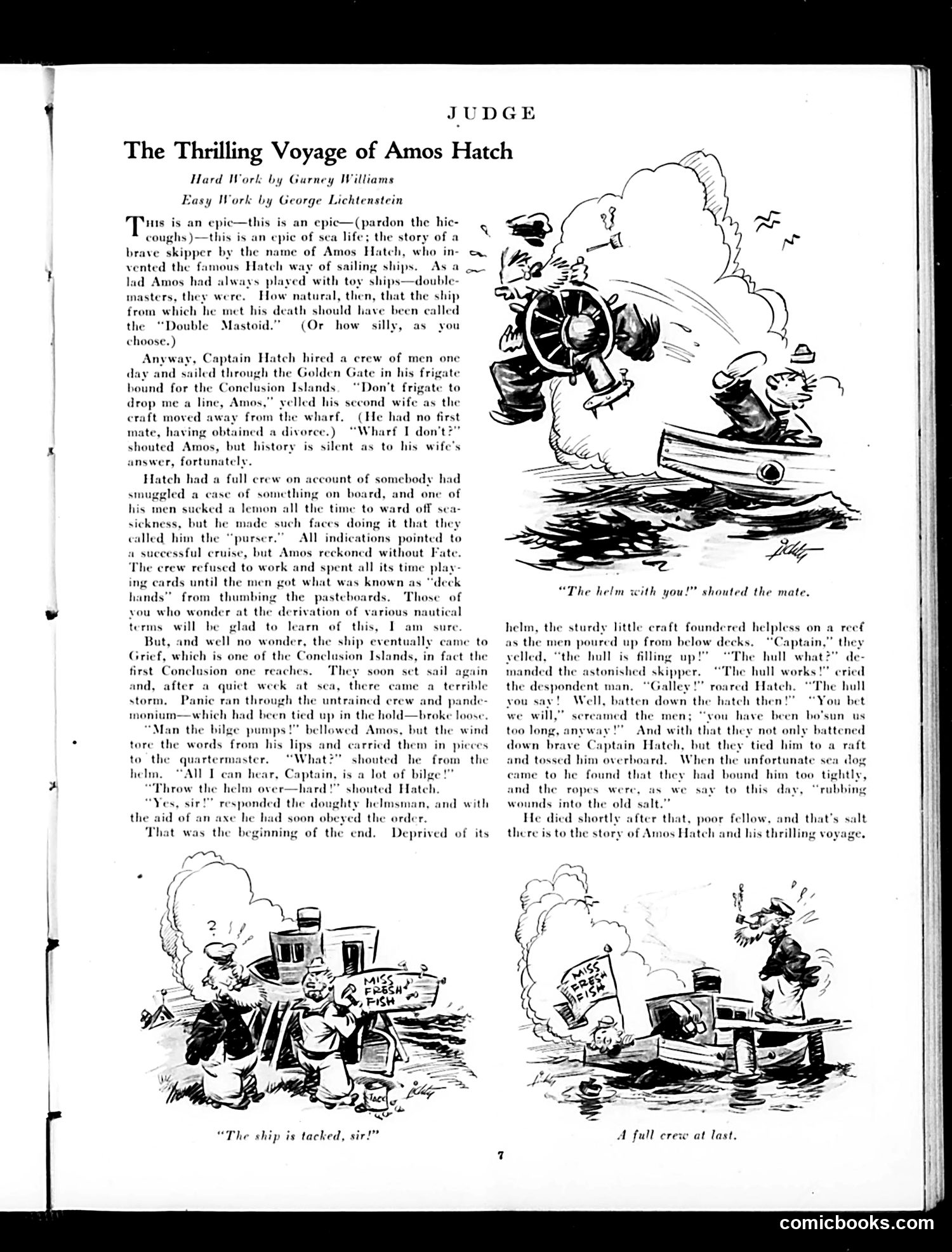
# "The Thrilling Voyage of Amos Hatch" Explained This is a humorous tall tale, not political satire. The story follows Captain Amos Hatch on a doomed sea voyage, illustrated by cartoonist Gurney Williams. The satire works through **puns and absurdist logic**: Hatch invented a peculiar "Hatch way of sailing ships"; his ship is called the "Double Mastoid" (a medical condition); crew members develop "deck hands" from playing cards; someone is called the "purser" for making faces while sucking lemons. The narrative culminates in farce: during a storm, the crew mutinies, ties the captain to a raft and tosses him overboard. When he survives, they bind him "too tightly," creating the idiom "rubbing wounds into the old salt"—a playful etymology of nautical slang. The joke is gentle wordplay and maritime humor rather than commentary on contemporary politics or social issues. It's simply entertainment through linguistic absurdity and slapstick situations.
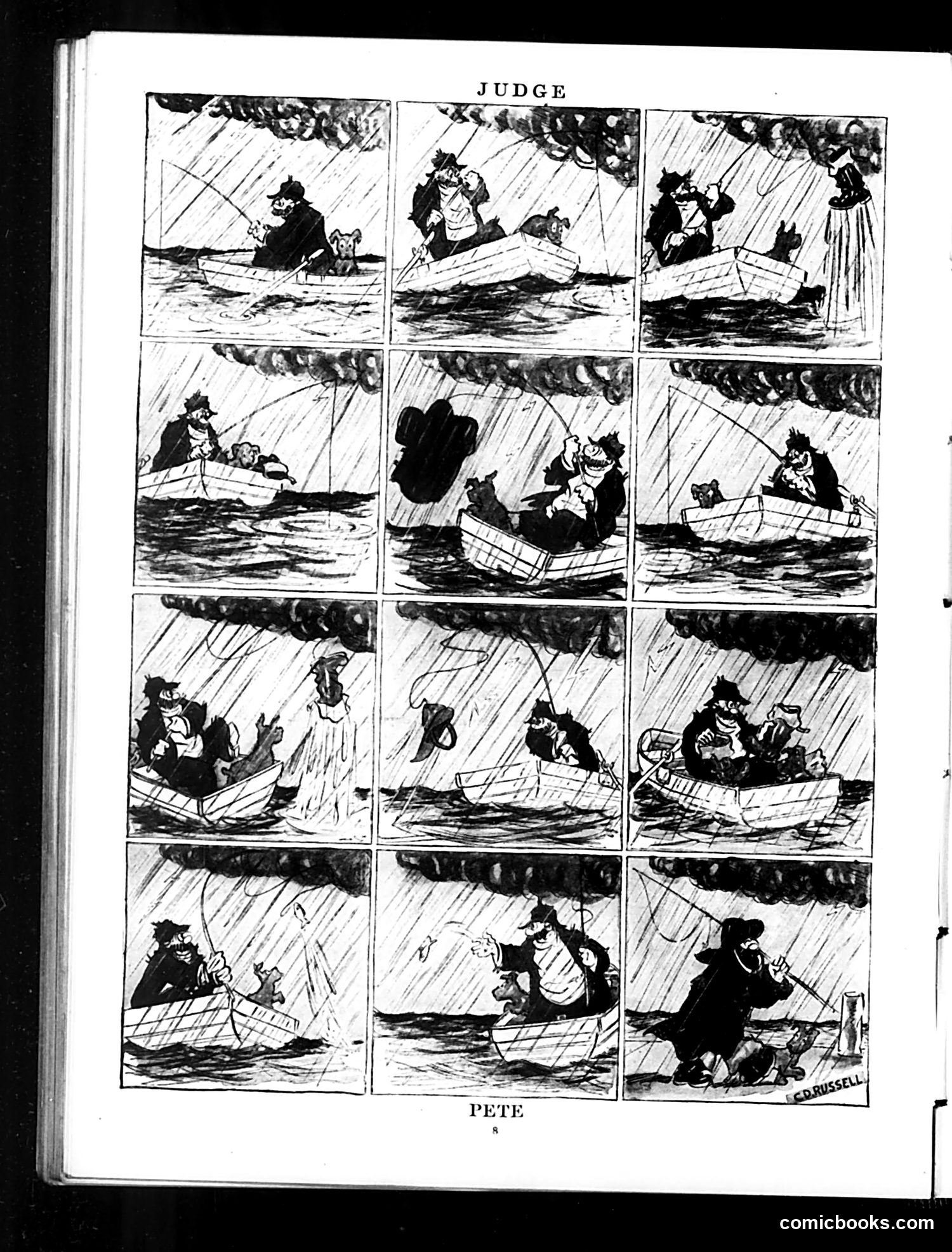
# Analysis of "Judge Pete" Comic Strip This is a sequential comic strip titled "Judge Pete" (credited to C.D. Russell), showing what appears to be a judicial or authority figure navigating a rainstorm in a small boat. The humor seems to derive from the character's predicament—repeatedly encountering water hazards and comedic mishaps while attempting to manage the situation. The strip's satire likely targets a specific public figure nicknamed "Judge Pete," though the historical identity isn't immediately clear from the image alone. The repeated boat-based scenarios suggest commentary on incompetence, being "in over one's head," or poor judgment—ironic given the character's judicial title. Without additional context about Judge magazine's publication date and the specific "Pete" referenced, the precise political target remains unclear.
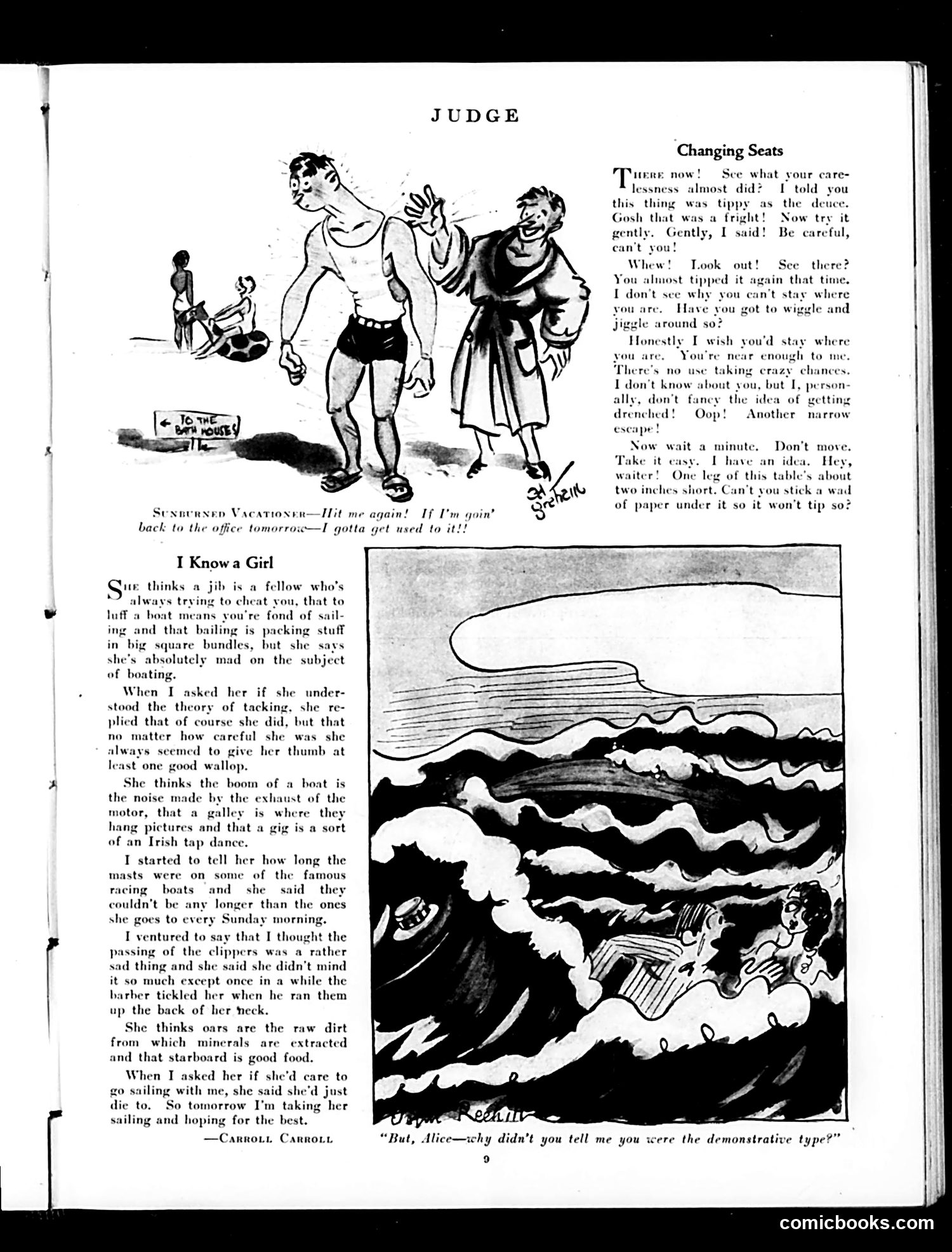
# Page Analysis: Judge Magazine This page contains two distinct humorous pieces typical of early 20th-century Judge magazine: **"Sunburned Vacationer"** (top): A cartoon satirizing vacation exhaustion. A sunburned man requests being hit repeatedly to get accustomed to office life's demands before returning to work—absurdist humor about the shock of re-entering routine. **"I Know a Girl"** (left column): A comedic essay by Carroll Carroll mocking a woman's complete ignorance of nautical terminology and boating concepts. She confuses sailing jargon (jib, tacking, boom, galley, gig, starboard) with unrelated concepts, and thinks "oars" refers to mineral ore. The humor relies on presenting her as enthusiastically incompetent about a subject she claims to love. **"Changing Seats"** (right): A cartoon showing a couple struggling with an unstable boat or canoe. The exasperated narrator repeatedly warns his female companion about dangerous movements while she fidgets, culminating in the caption's revelation that she's simply "the demonstrative type"—physical and expressive by nature, unable to sit still. All three pieces use romantic/recreational scenarios to satirize gender dynamics and personality quirks of the era.
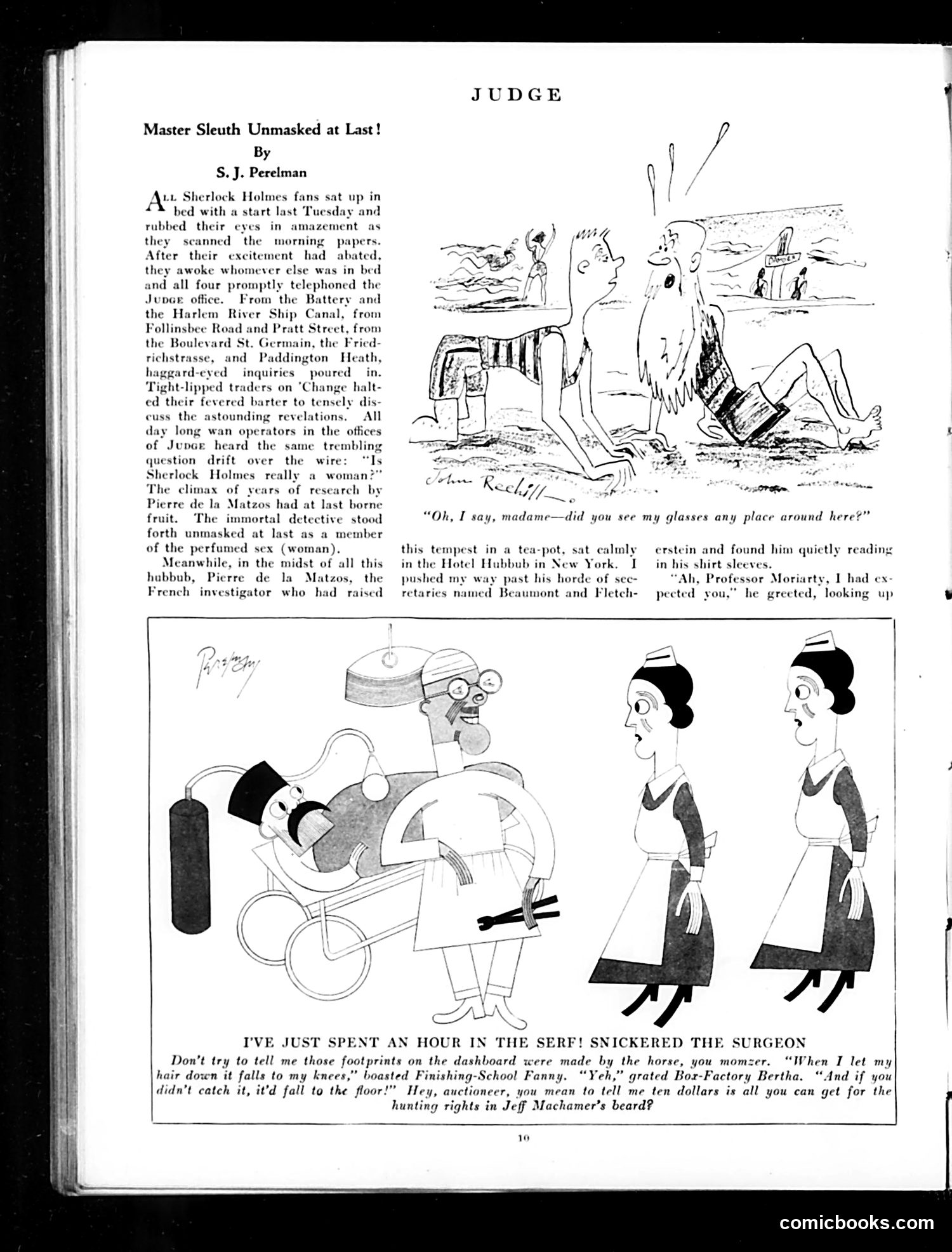
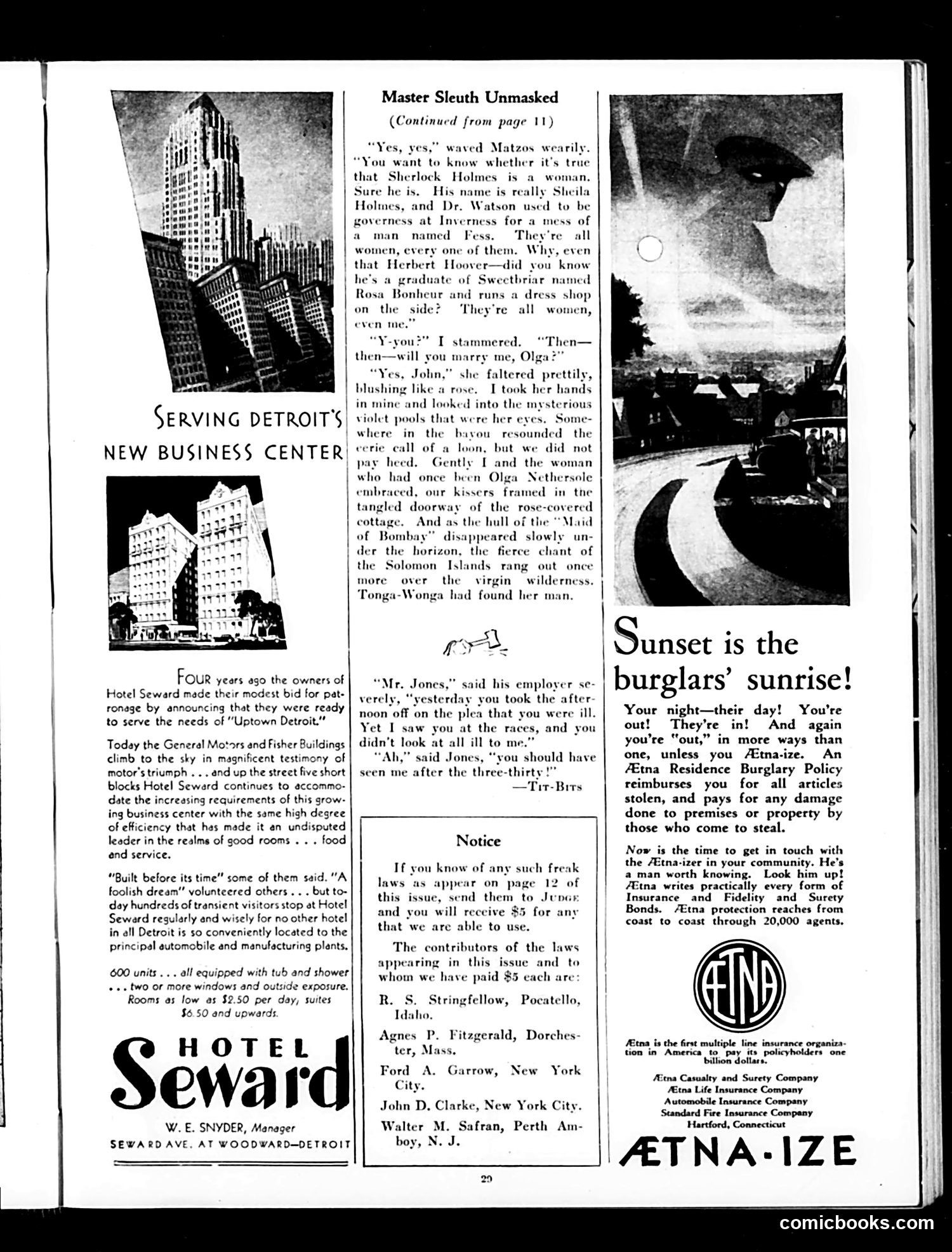
# "Master Sleuth Unmasked at Last!" - Judge Magazine Satire This is S.J. Perelman's humorous short story mocking the Sherlock Holmes literary phenomenon. The premise: fans are shocked to discover that Holmes—the famous detective—is actually a woman. The satire targets the obsessive devotion of Holmes fanatics, who allegedly flood newspapers and stock exchanges with inquiries about this "revelation." The accompanying cartoons appear unrelated to the main story, featuring crude jokes about women's appearance and bodily functions (hair length, beard grooming, etc.)—typical lowbrow humor of the era. The satire's point: mocking both the intense cult following around fictional characters and, implicitly, the absurdity of gender-based mystery-solving abilities. The "French investigator" Pierre de la Matzos serves as the exposer of Holmes's "true identity"—a jab at sensationalized detective fiction.