A complete issue · 36 pages · 1930
Judge — May 31, 1930
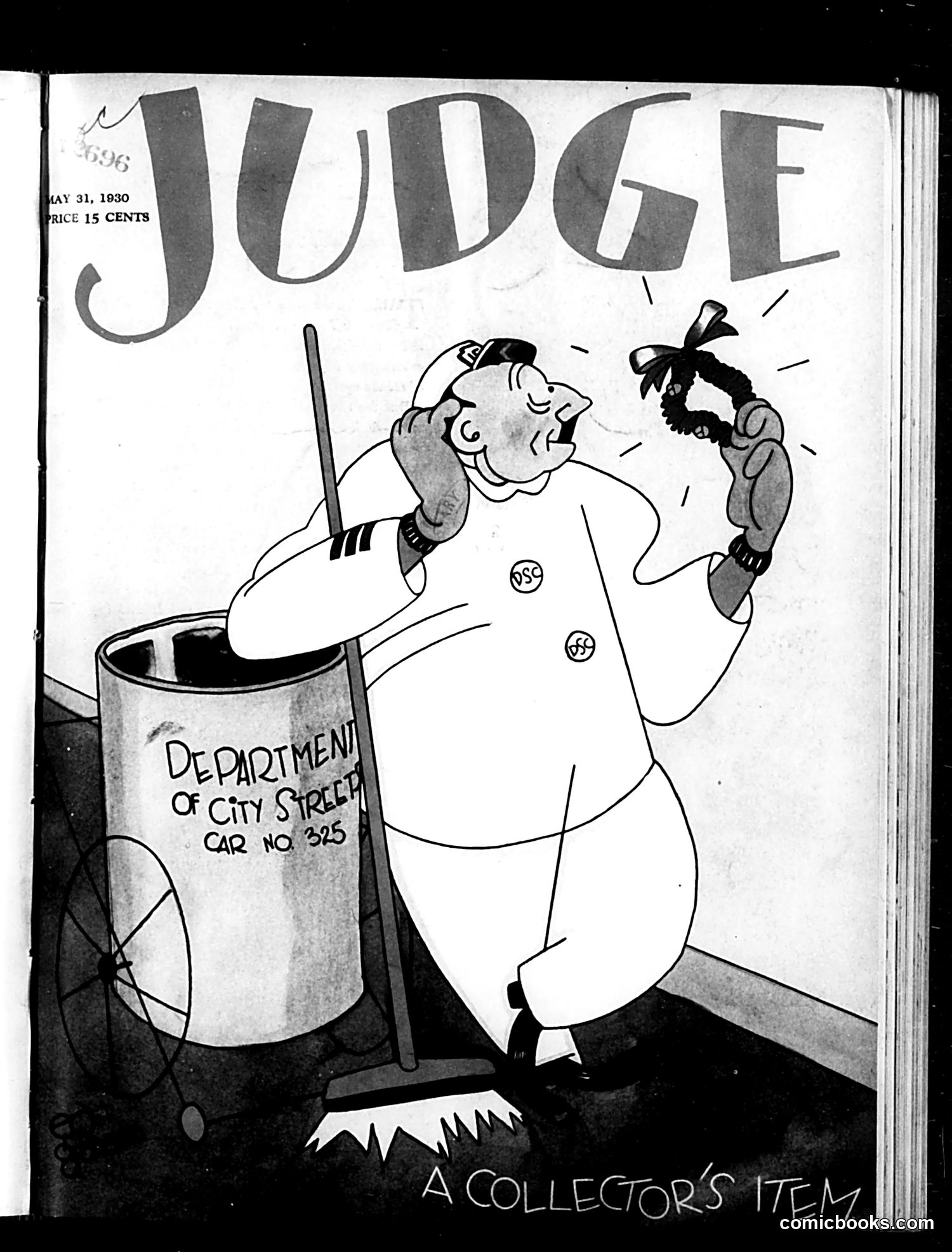
# Judge Magazine Cover Analysis - May 31, 1930 This cover satirizes municipal corruption and waste. A rotund, caricatured figure (appearing to represent a city official or politician) holds a dead bird—likely a symbol of wasted resources or failed governance. He stands next to a large trash can labeled "DEPARTMENT OF CITY STREET CAR NO. 295," suggesting mismanagement of public transit systems. The caption reads "A COLLECTOR'S ITEM," implying the official collects or hoards things wastefully. The dead bird may represent misspent public funds or abandoned municipal services. This reflects 1930s concerns about political corruption and inefficient city government during the Great Depression, when public waste was particularly galling to struggling Americans.
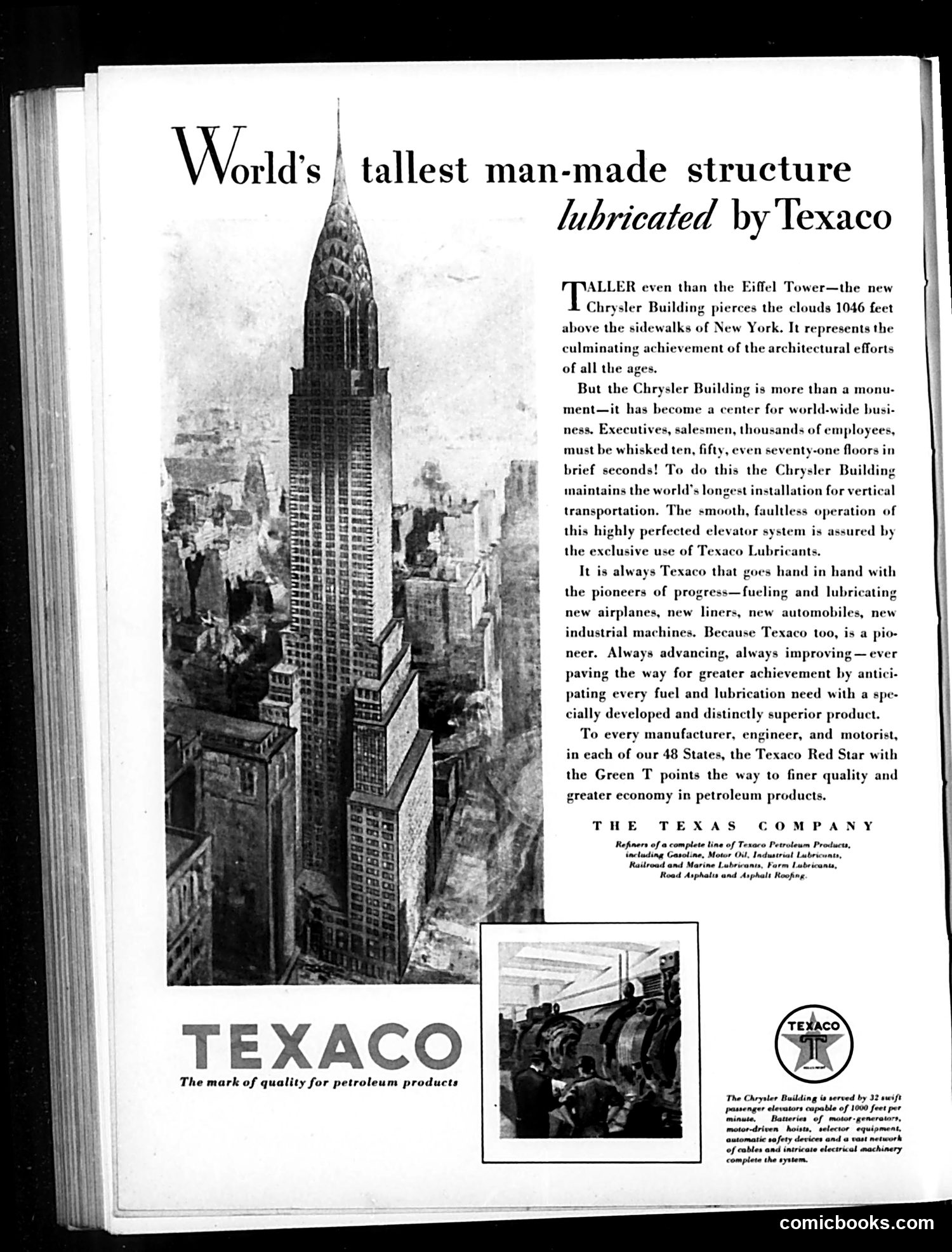
# Analysis This is not a cartoon or satire—it's a **straightforward advertisement** for Texaco petroleum products. The page features a large photograph of the Chrysler Building in New York City (completed 1930), which Texaco promotes as "the world's tallest man-made structure" lubricated by their products. The ad claims Texaco lubricants operate the building's elevator system—described as the world's longest vertical transportation installation. The copy emphasizes Texaco's role in fueling progress across industries (airplanes, automobiles, machinery), positioning the brand as essential to modern achievement. A smaller photograph shows industrial machinery. The Texaco Red Star logo appears prominently. This is corporate advertising, not political satire. Judge magazine, while satirical, accepted paid advertisements like any publication of its era.
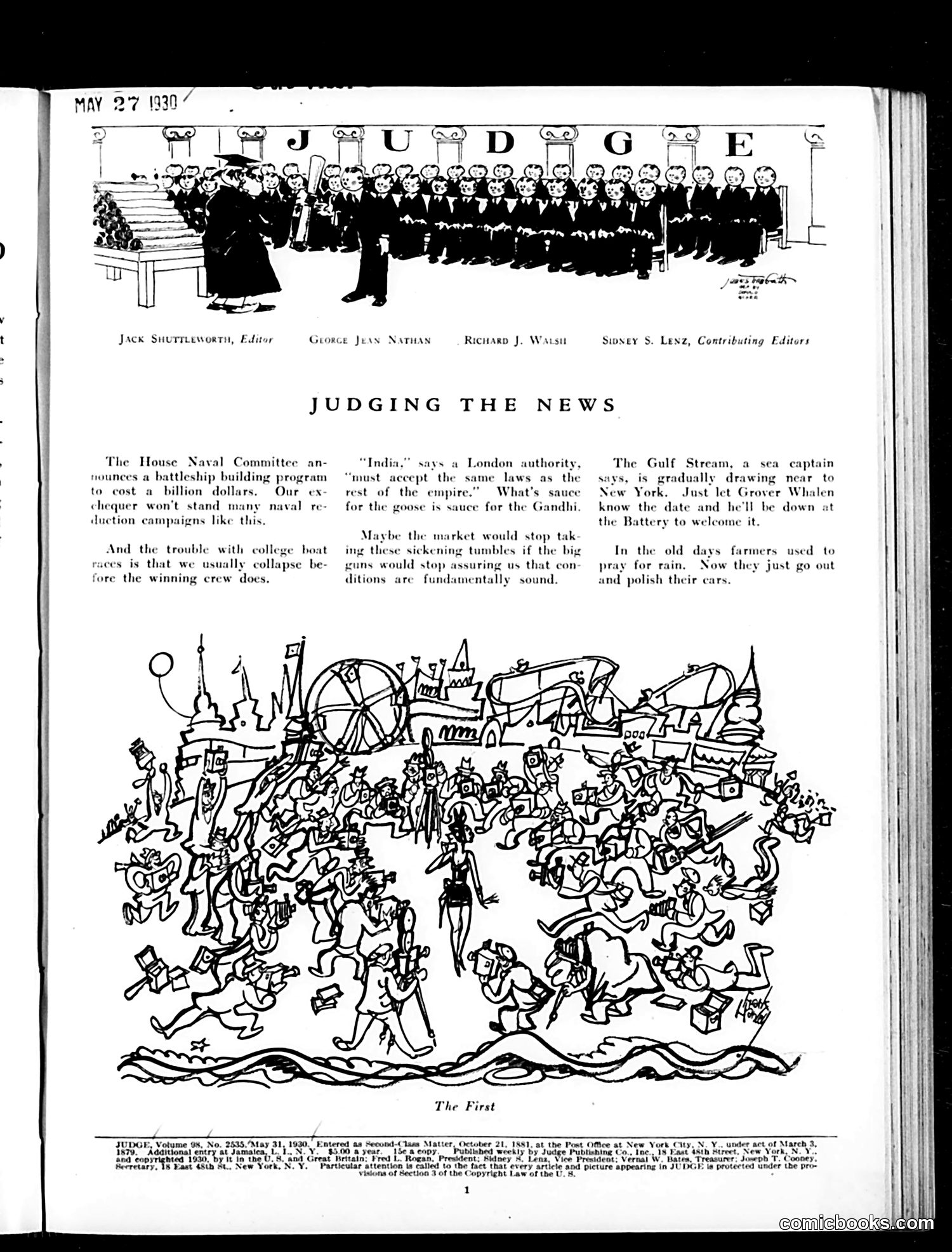
# Analysis of Judge Magazine Page (May 27, 1930) This page features editorial commentary titled "Judging the News" addressing three contemporary issues: 1. **Naval spending**: Critiques a House Naval Committee proposal for a billion-dollar battleship program, questioning whether such expenditure makes strategic sense. 2. **Colonial governance**: References India's relationship to the British Empire, sarcastically comparing British rule to condiments (goose sauce/Gandhi), suggesting India faces unfair treatment. 3. **Agricultural crisis**: Notes farmers have shifted from prayer for rain to washing their cars—a joke about changing practices during economic hardship (the Depression era). The large cartoon below titled "The First" depicts a chaotic industrial/urban scene with numerous figures, machinery, and activity. Its exact satirical target is unclear from the visible context, though it likely comments on modern American industrial society or economic conditions circa 1930.
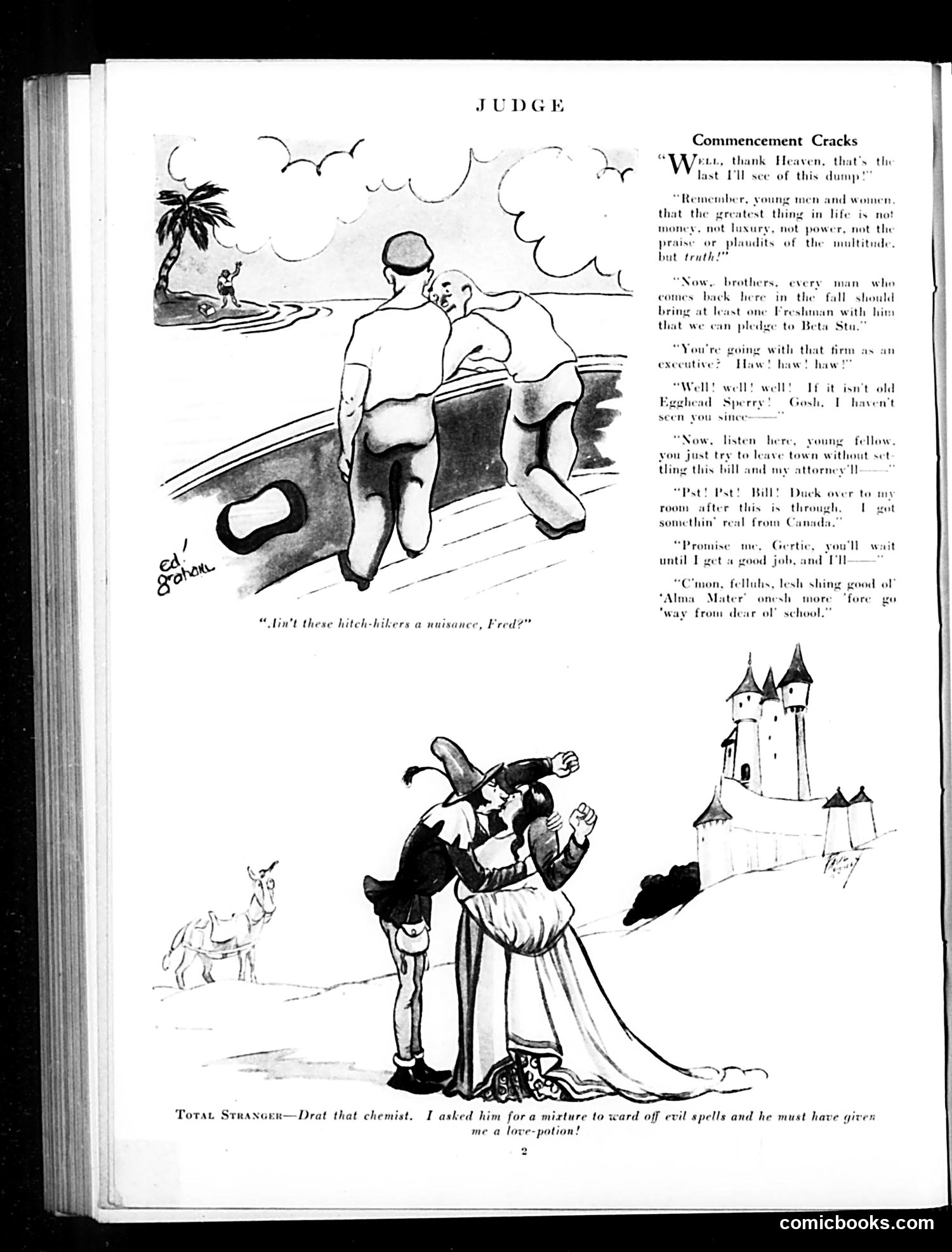
# Analysis of Judge Magazine Page This page contains two satirical cartoons addressing college life and social conventions. The top cartoon, captioned "Isn't these hitch-hikers a nuisance, Fred?" depicts two men in a car encountering hitchhikers on a tropical beach. The accompanying dialogue mocks recent college graduates attempting to enter the workforce—one character mentions an "Egghead Sperry" and discusses leaving town without settling bills. The bottom cartoon, titled "Total Stranger," shows a medieval scene with a woman and diminutive man, captioned about requesting a chemist for a "love-potion" to ward off evil spells. Both cartoons appear to satirize anxieties about young people (graduates and courtship prospects) and social propriety. The humor relies on period-specific concerns about financial responsibility, employment, and romantic conventions that would resonate with Judge's educated, affluent readership.
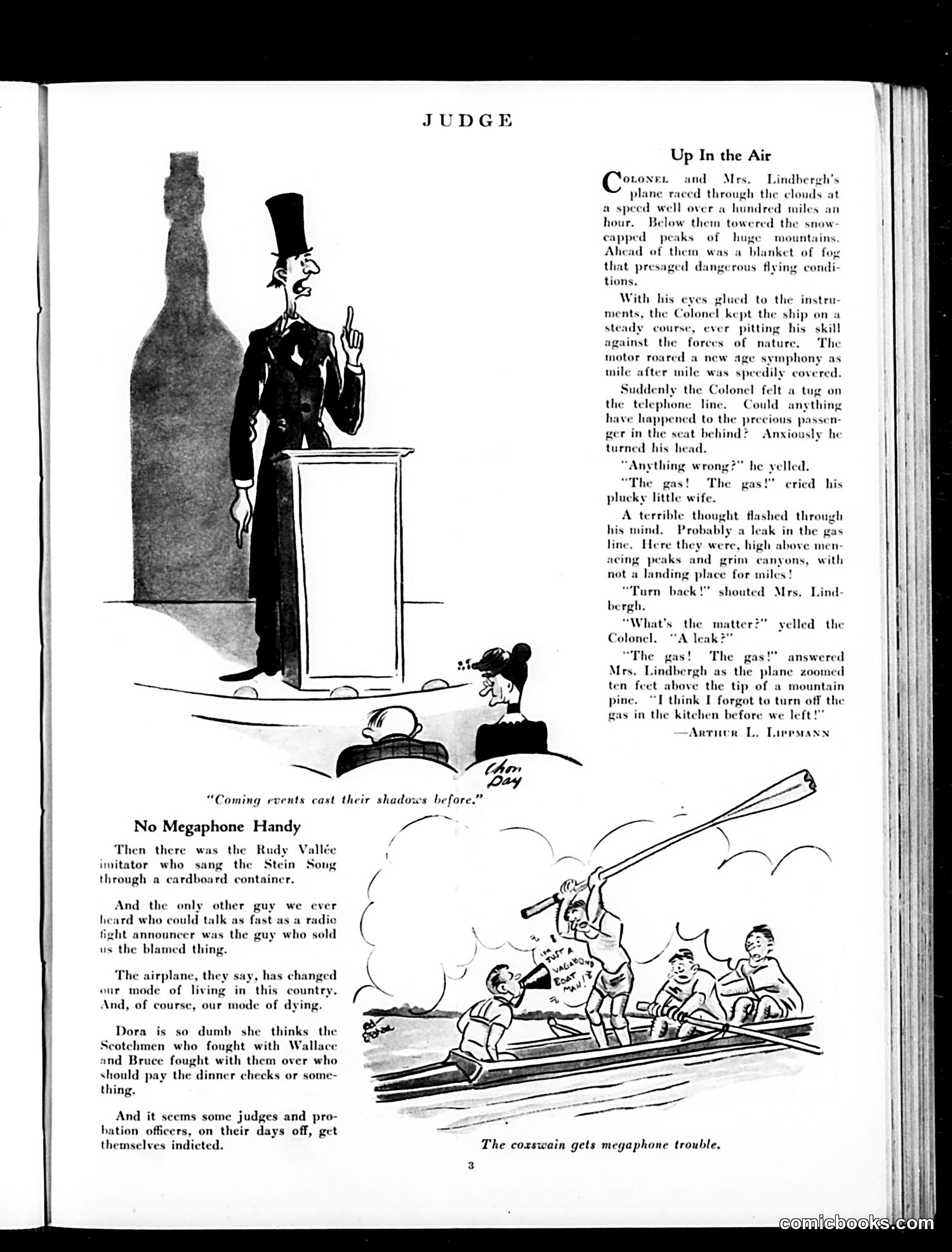
# Analysis of Judge Magazine Page This page contains two separate satirical pieces: **"Up in the Air"** (top): A cartoon mocking Colonel and Mrs. Lindbergh's transatlantic flight. The Colonel, depicted in formal attire, stands nervously at controls while his wife panics about a gas leak during their dangerous journey over mountains and fog. The satire targets both the mechanical unreliability of early aviation and the anxiety such flights provoked in the public. **"No Megaphone Handy"** (bottom): A commentary on how modern technology—radio, airplanes—has transformed American life and communication. The text sardonically notes that rapid change has made traditional institutions (dinner checks, judicial decorum) seem quaint. The illustration shows children playing with a naval gun, suggesting technology's pervasive cultural impact. Both pieces reflect 1920s-30s ambivalence about rapid technological change.
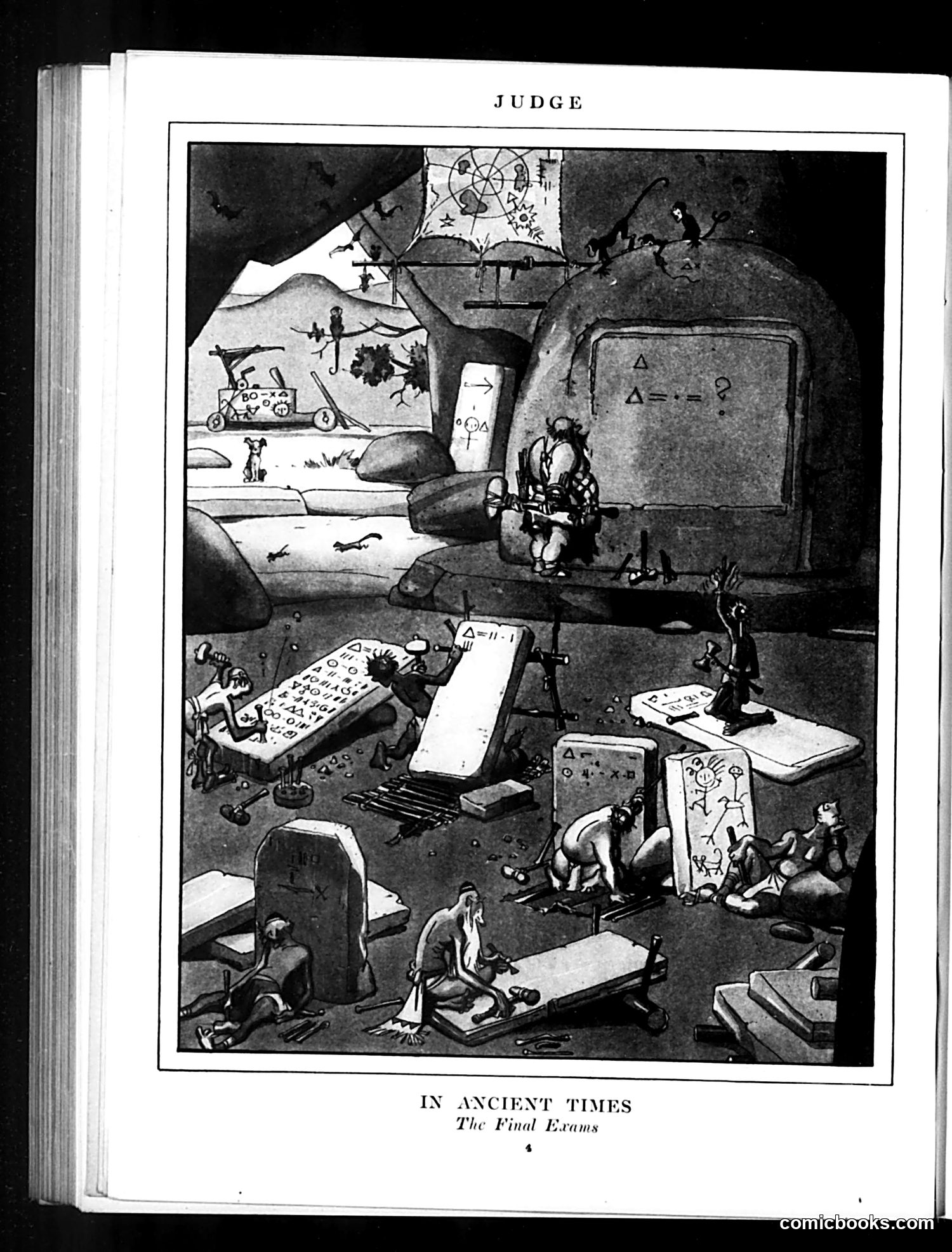
# "In Ancient Times: The Final Exams" This cartoon satirizes academic examinations by depicting them as chaotic, primitive rituals. Tiny human figures struggle with oversized mathematical equations, writing tablets, and study materials scattered across a surreal landscape. The scale distortion—with enormous pencils, papers, and blackboards dwarfing the students—suggests exams feel overwhelming and absurdly difficult to test-takers. The "ancient times" framing implies that rigorous final examinations are an archaic, barbaric practice. The anarchic scene with figures climbing, crawling, and appearing distressed conveys that exam preparation is torturous and bewildering rather than educational. The satire mocks both the severity of academic testing and students' desperate struggles to master complex material under examination pressure.
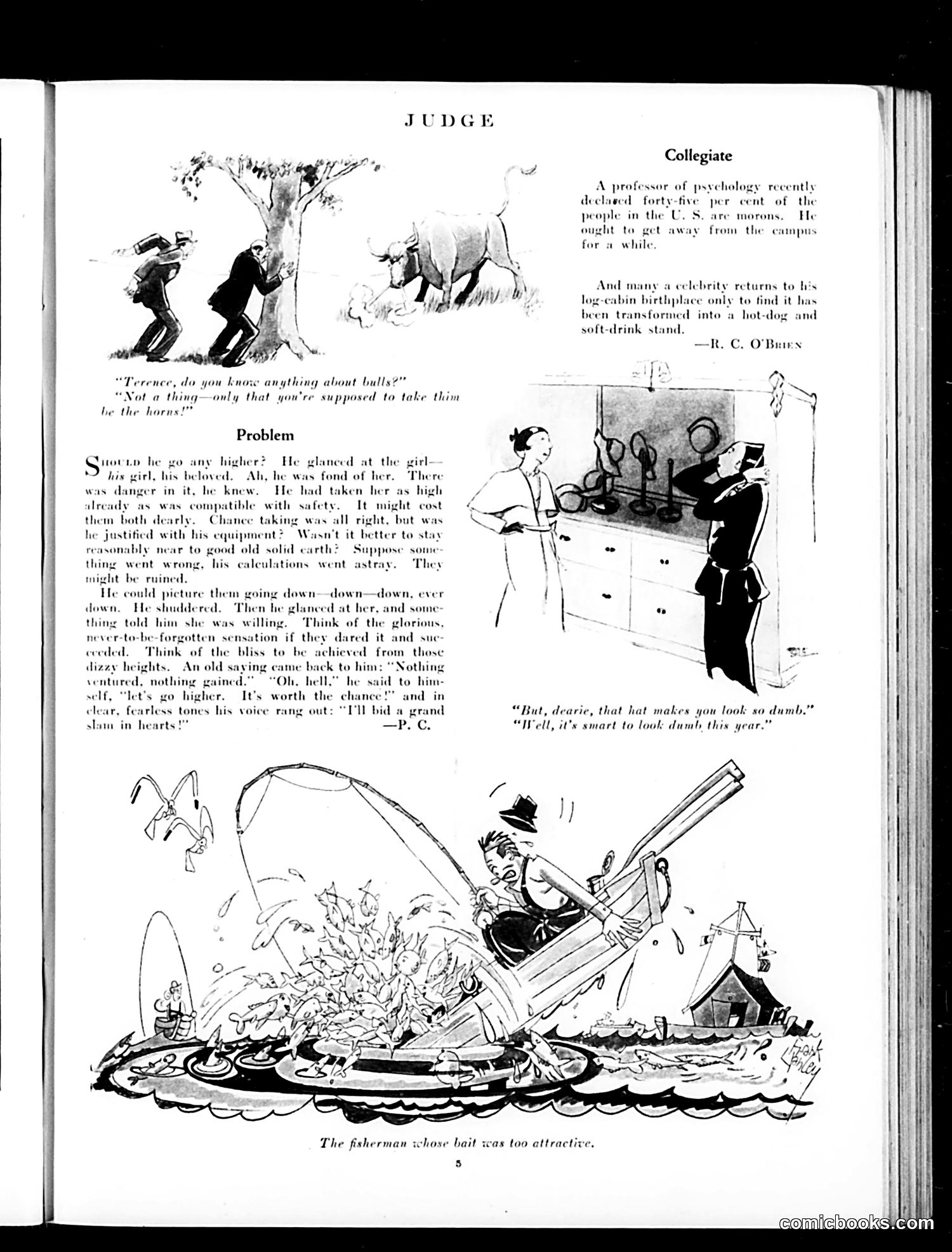
# Analysis of Judge Magazine Page This page contains three satirical pieces: **"Collegiate"** (top): A quote from R.C. O'Brien mocking that 45% of U.S. college students are "morons" who should leave campus. The accompanying cartoon shows two figures observing someone acting foolishly, criticizing collegiate morality. **"Problem"** (center-left): A narrative about a man tempted to take dangerous risks with his girlfriend for thrilling sensations, ultimately deciding to attempt something reckless ("I'll bid a grand slam in hearts!"). This satirizes youthful recklessness and competitive male ego. **"The fisherman whose bait was too attractive"** (bottom): A chaotic cartoon showing a fisherman's catch overwhelming him—his bait attracted so many fish simultaneously that he's buried under them. This is a visual pun about attractiveness having unintended consequences. All three pieces reflect early 20th-century satirical humor targeting contemporary social behaviors.
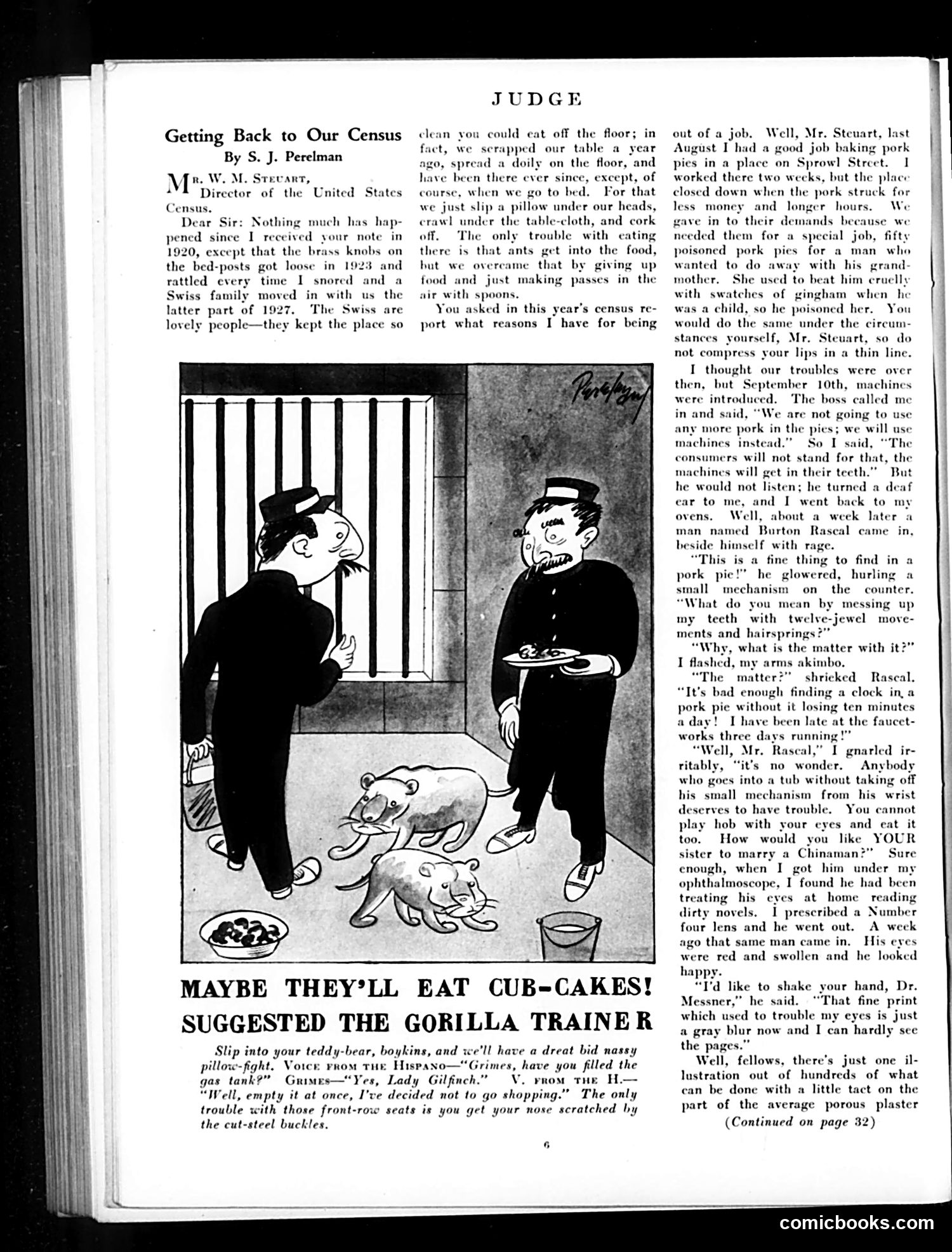
# Analysis of This Judge Magazine Page This page contains a letter to the census director about living conditions, paired with a cartoon satirizing urban poverty and pest control. **The Letter & Cartoon:** Mr. W.M. Stewart, the U.S. Census Director, receives a complaint about apartment living conditions—specifically rats and ants infesting homes so badly that residents must eat meals on the floor. The accompanying cartoon depicts two men discussing a pork pie while rats and mice feast from bowls below them, illustrating the satirical caption: "Maybe They'll Eat Cub-Cakes! Suggested the Gorilla Trainer." **The Satire:** The joke mocks the absurdity of the situation: suggesting feeding the pests cub-cakes (small cakes) is as ridiculous as a gorilla trainer's logic. The cartoon critiques both urban housing conditions and the helplessness of residents who must coexist with vermin. It's social commentary on tenement-dwelling poverty in 1920s America.
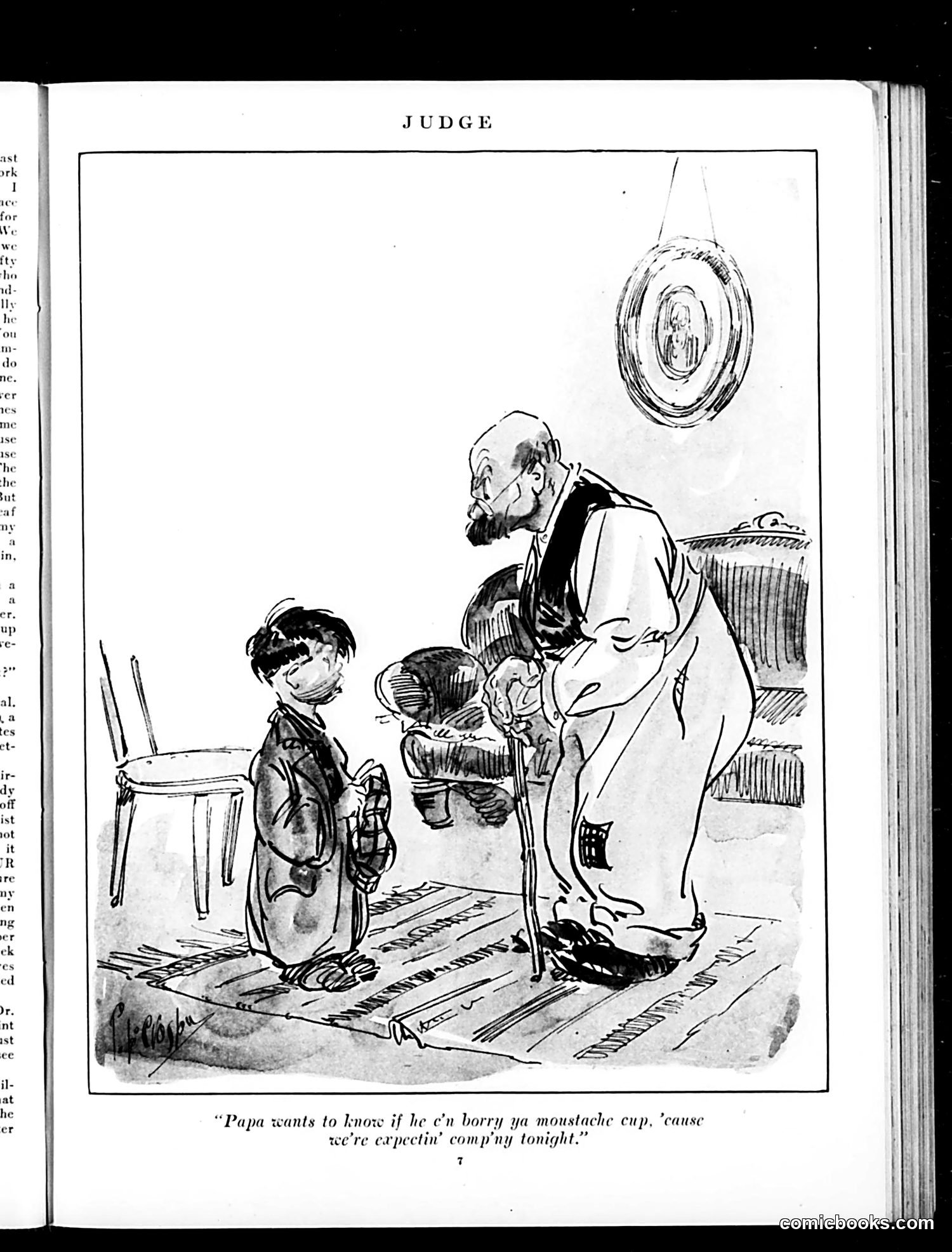
# Analysis of Judge Cartoon This is a single-panel cartoon titled "JUDGE" depicting a domestic humor scene. An adult man with a prominent beard is shown with two young boys in what appears to be a modest home. One boy is asking to borrow a "moustache cup" for an expected visitor. A moustache cup was a practical Victorian-era drinking vessel with an interior guard to protect a man's facial hair from getting wet. The humor relies on the contrast between the father's obvious, impressive beard and the need to borrow such a cup—suggesting either vanity, a social-climbing desire to appear refined, or the family's modest circumstances requiring them to borrow items for entertaining guests. The satirical target appears to be working-class pretension or the aspirations of ordinary people attempting to present themselves as more genteel than their circumstances warrant.
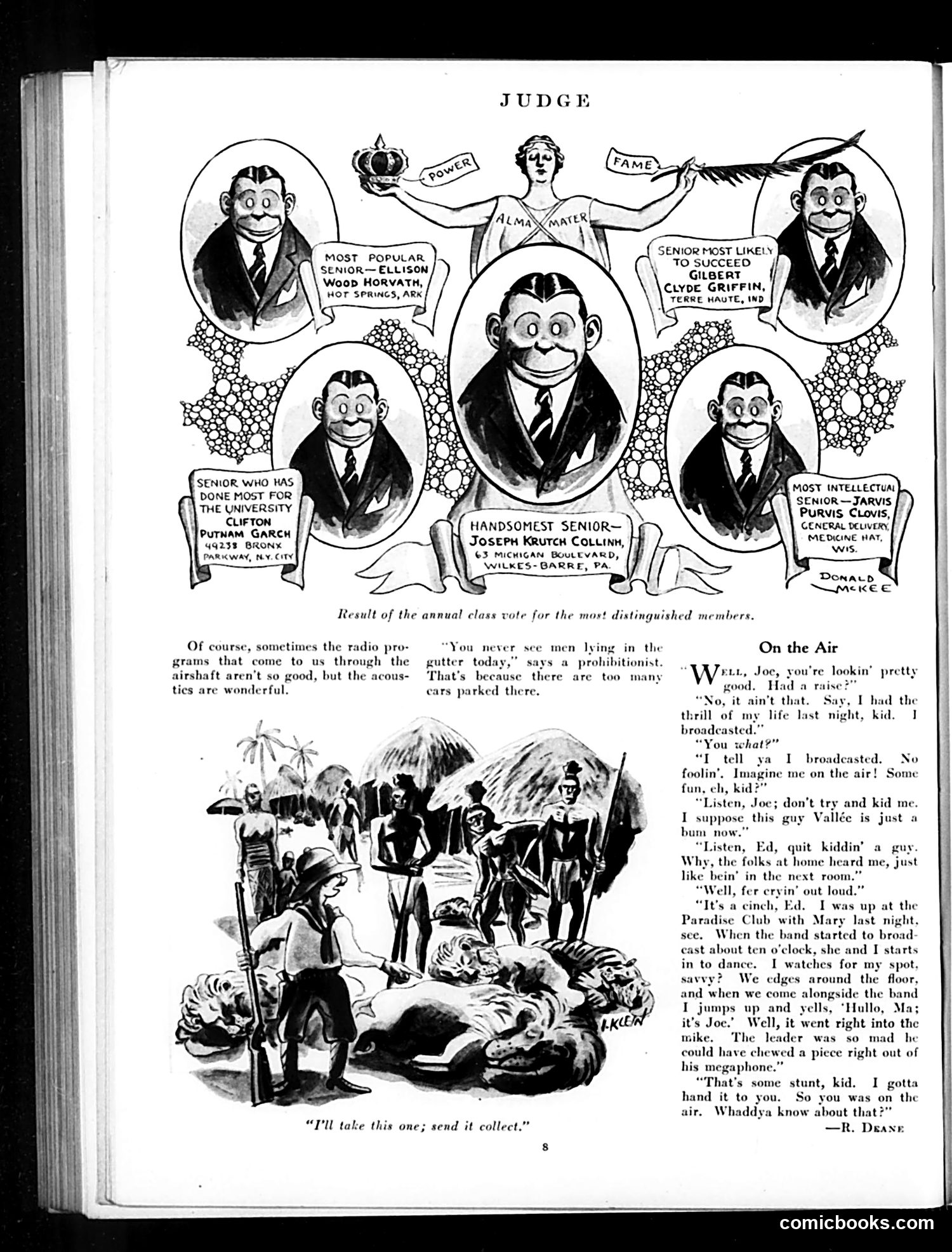
# Analysis of Judge Magazine Page **Top Section - "Judge":** This depicts results of a college class vote for "most distinguished members." The central figure is Joseph Krutch Collinin, voted "Handsomest Senior." Surrounding him are peers voted "Most Popular" (Ellison Wood Horvath), "Most Likely to Succeed" (Gilbert Clyde Griffin), and "Most Intellectual" (Jarvis Purvis Crovis). This satirizes college yearbook superlatives and the superficial honors colleges bestow—implying these aesthetic/social categories matter more than actual achievement. **Bottom Section - "On the Air":** A dialogue between two men discussing early radio broadcasting. One brags about shouting into a microphone during a dance broadcast, reaching his mother at home. The satire mocks early radio's novelty and people's excitement about this new technology, while also poking fun at the poor audio quality and technical limitations—the band leader's anger suggests the unexpected outburst disrupted the broadcast. Both sections humorously critique American popular culture's obsession with fame and emerging mass media.
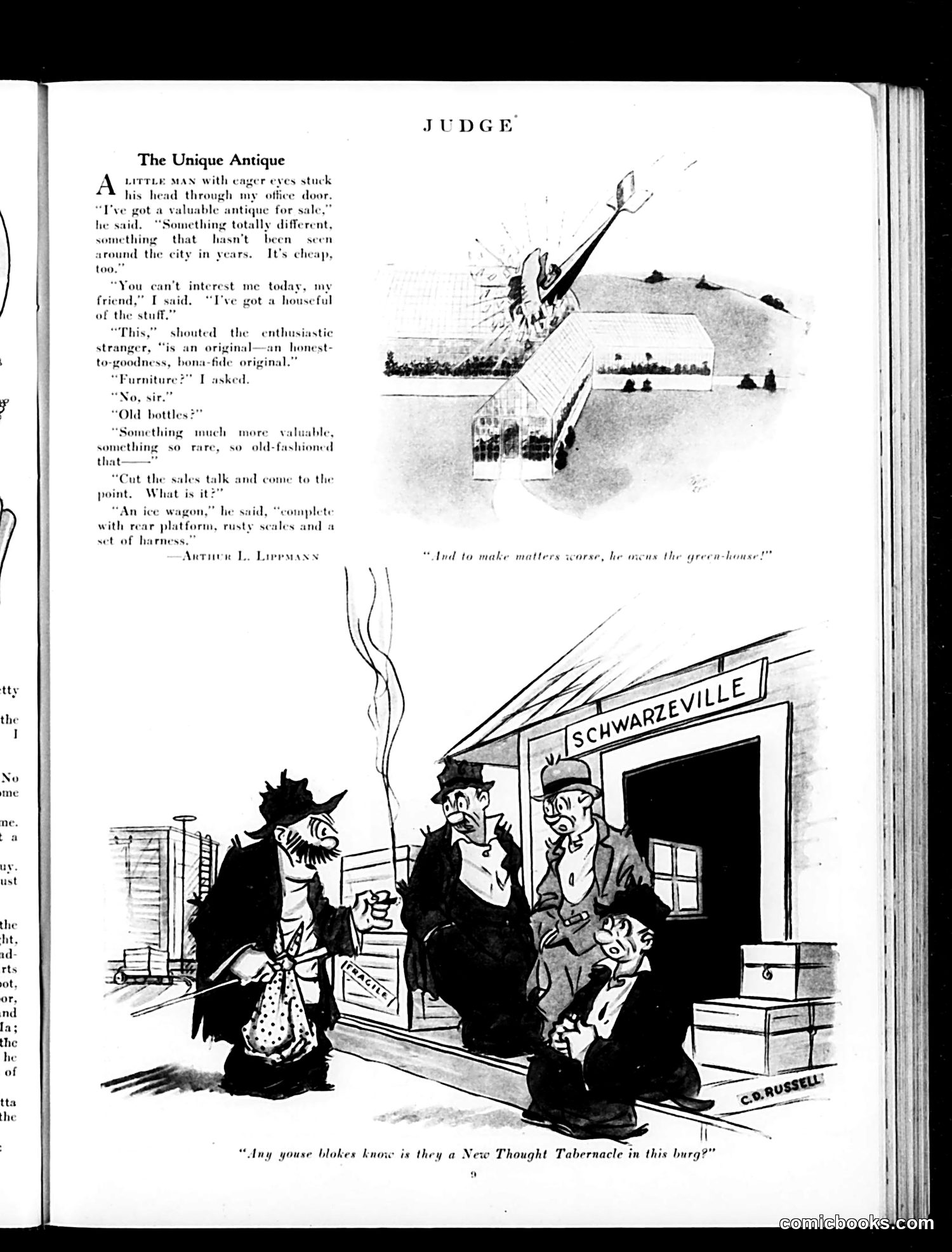
# "The Unique Antique" - Judge Magazine Satire This page satirizes two contemporary concerns: **Top story & cartoon**: A salesman peddles a supposedly rare "antique"—revealed to be an old ice wagon with scales and harness. The joke mocks both con-artist salesmen and the public's gullible appetite for "authentic" antiques. The phrase "original—an honest-to-goodness, bona-fide original" parodies overwrought sales pitches. **Bottom cartoon**: Drawn by C.B. Russell, this depicts men outside "Schwarzeville" asking if there's a "New Thought Tabernacle" nearby. "New Thought" was an early 1900s spiritual movement emphasizing positive thinking and mental healing. The caricatured faces and "burg" (small town) setting suggest Judge is mocking both the movement's popularity and the stereotyped followers it attracted in small-town America. Both pieces ridicule contemporary American gullibility—whether toward commercial fraud or fashionable spiritual trends.
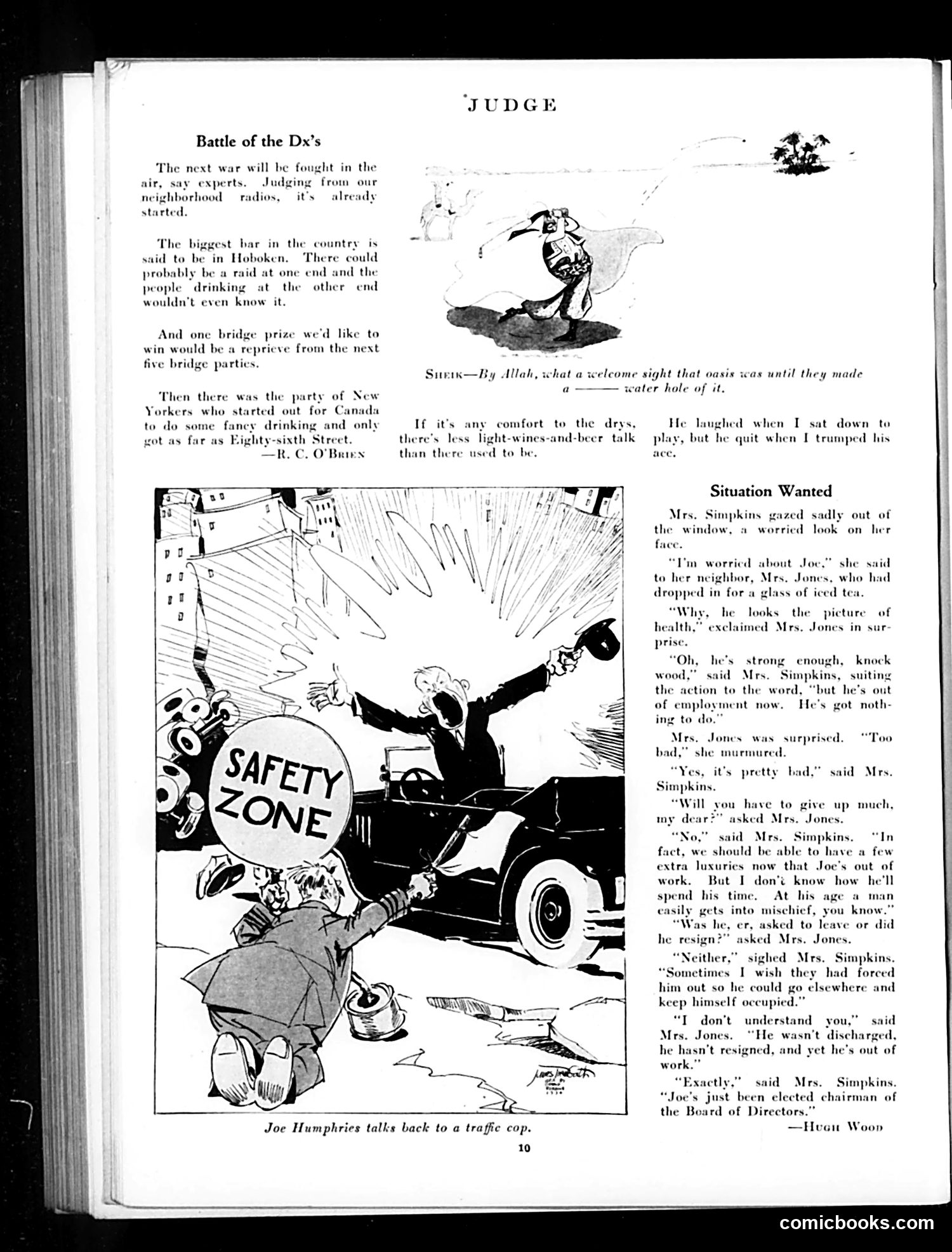
# Judge Magazine Page Analysis This page contains humor reflecting Prohibition-era America (likely 1920s-early 1930s). **"Battle of the Dx's"** mocks the debate between "drys" (Prohibition supporters) and "wets" (opponents). References to bars in Hoboken, Canadian drinking trips, and the consolation that "light wines and beer talk" has decreased suggest anxieties about alcohol enforcement and underground drinking culture. **The cartoon "Joe Humphries talks back to a traffic cop"** shows a car crash at a "Safety Zone," depicting Joe arguing with law enforcement—typical Judge satire about traffic safety and authority. **"Situation Wanted"** is comedic domestic dialogue: Mrs. Simpkins worries her newly unemployed husband Joe will cause trouble, yet paradoxically hopes to avoid giving up luxuries. The punchline—Joe has been elected Board chairman, making him *still* unemployed in terms of actual work—satirizes corporate board positions as sinecures requiring no real labor. The humor relies on period anxieties: Prohibition enforcement, traffic safety modernization, and corporate inefficiency.