A complete issue · 36 pages · 1930
Judge — January 11, 1930
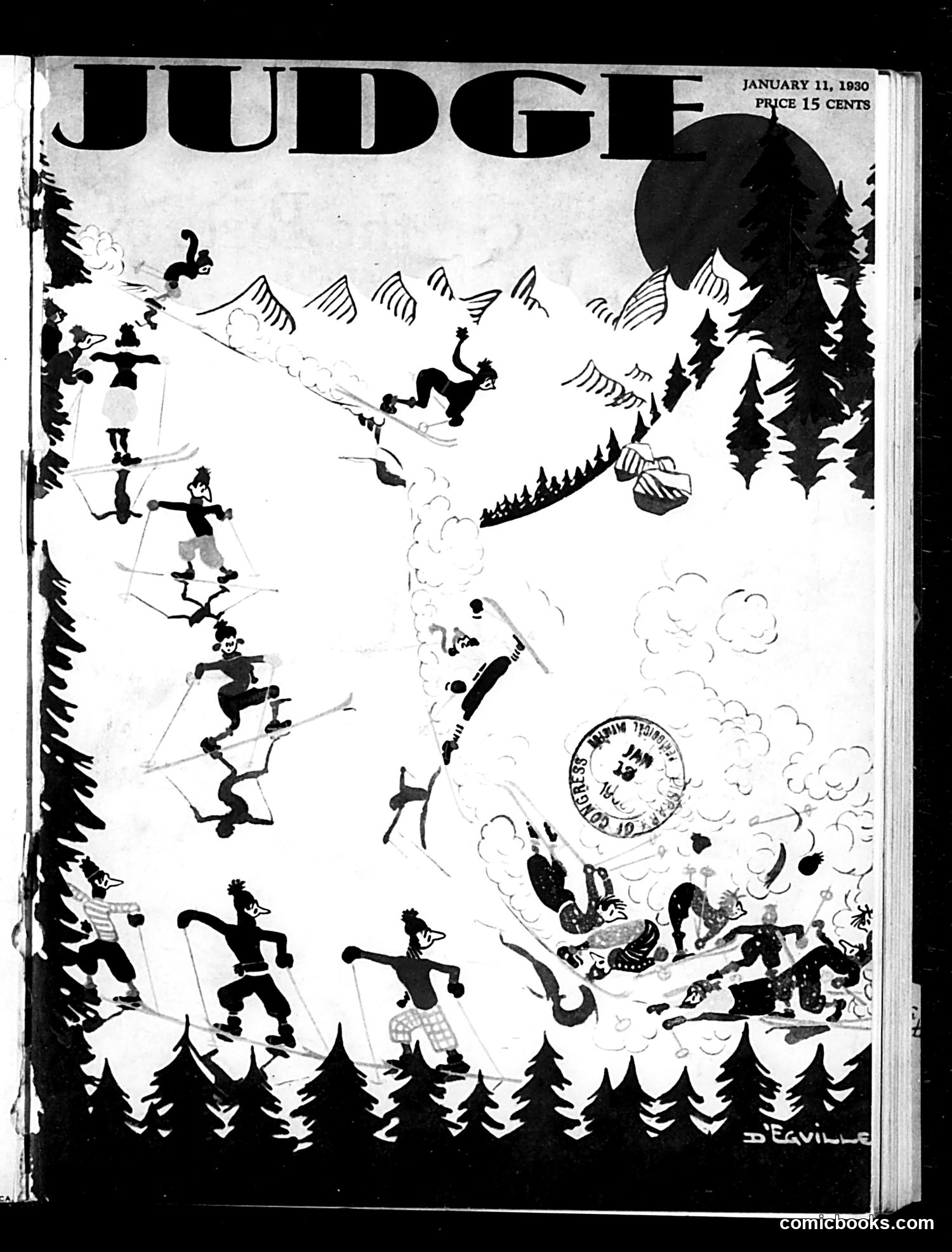
# Judge Magazine Cover, January 11, 1930 This satirical cover depicts a chaotic winter skiing scene with multiple figures tumbling, colliding, and crashing down a snowy mountain. The exaggerated, slapstick style emphasizes the dangerous and comical nature of ski accidents. The timing is significant: January 1930 places this just weeks after the 1929 stock market crash. While the image doesn't explicitly reference the financial crisis, the avalanche-like chaos of bodies and the general disorder could serve as visual metaphor for the economic catastrophe unfolding in America. The skiing motif may also reference winter resort culture associated with wealthy Americans—potentially satirizing their sudden misfortune. The cover illustrates Judge's use of physical comedy and visual pandemonium to comment on contemporary events.
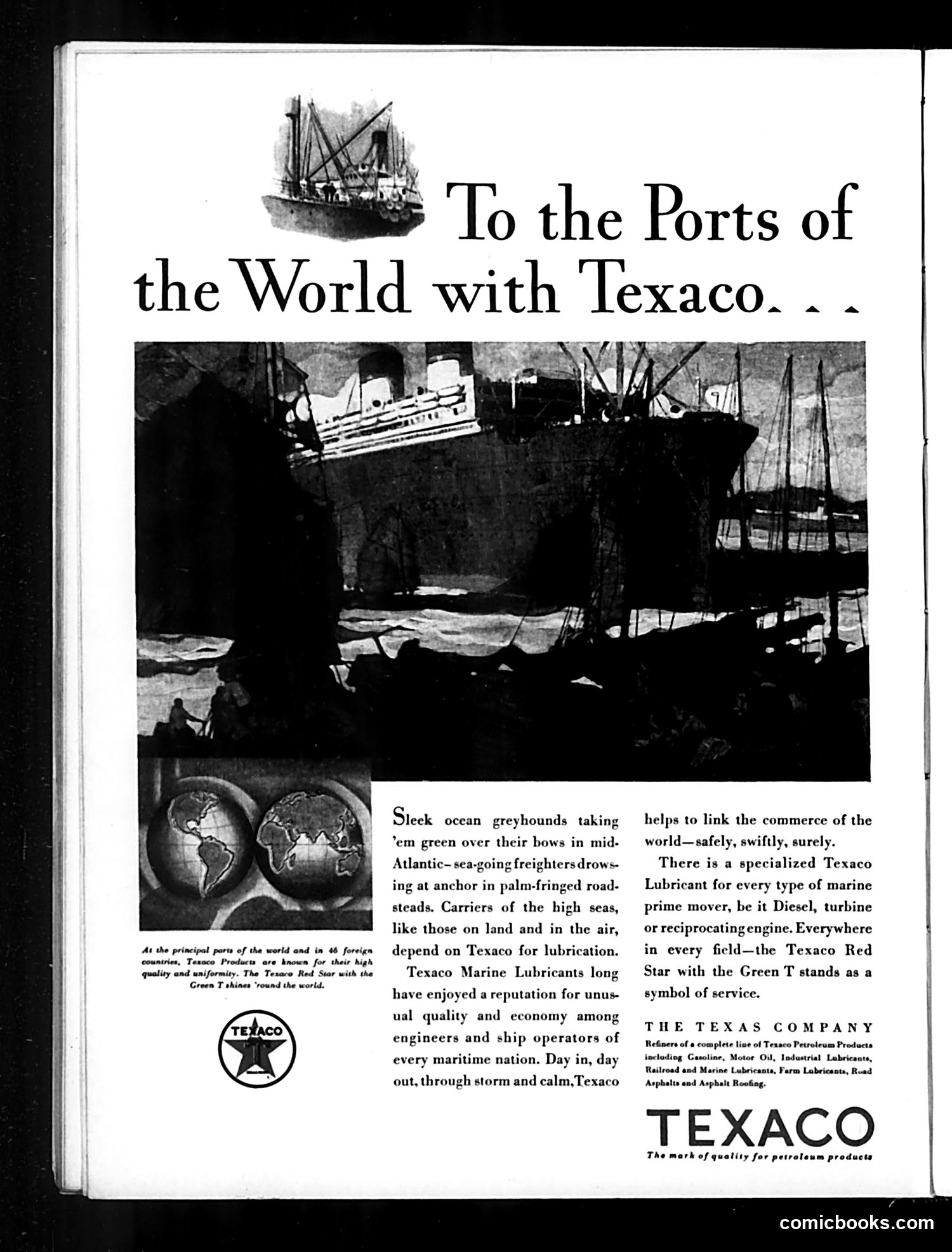
# Analysis This page is **primarily a Texaco advertisement**, not political satire. It promotes Texaco marine lubricants to ship operators worldwide. The imagery shows commercial ocean freighters in port, emphasizing international maritime commerce. The globes in the lower left represent worldwide shipping routes. The ad's message: Texaco lubricants are essential for keeping ships running reliably across all seas and conditions. The tagline "The mark of quality for petroleum products" and references to the "Texaco Red Star" symbol establish brand identity. There is **no political cartoon or satire** on this page—Judge magazine simply carried paid advertisements like this one alongside its satirical content. This reflects early 20th-century advertising's emphasis on industrial reliability and global commerce.
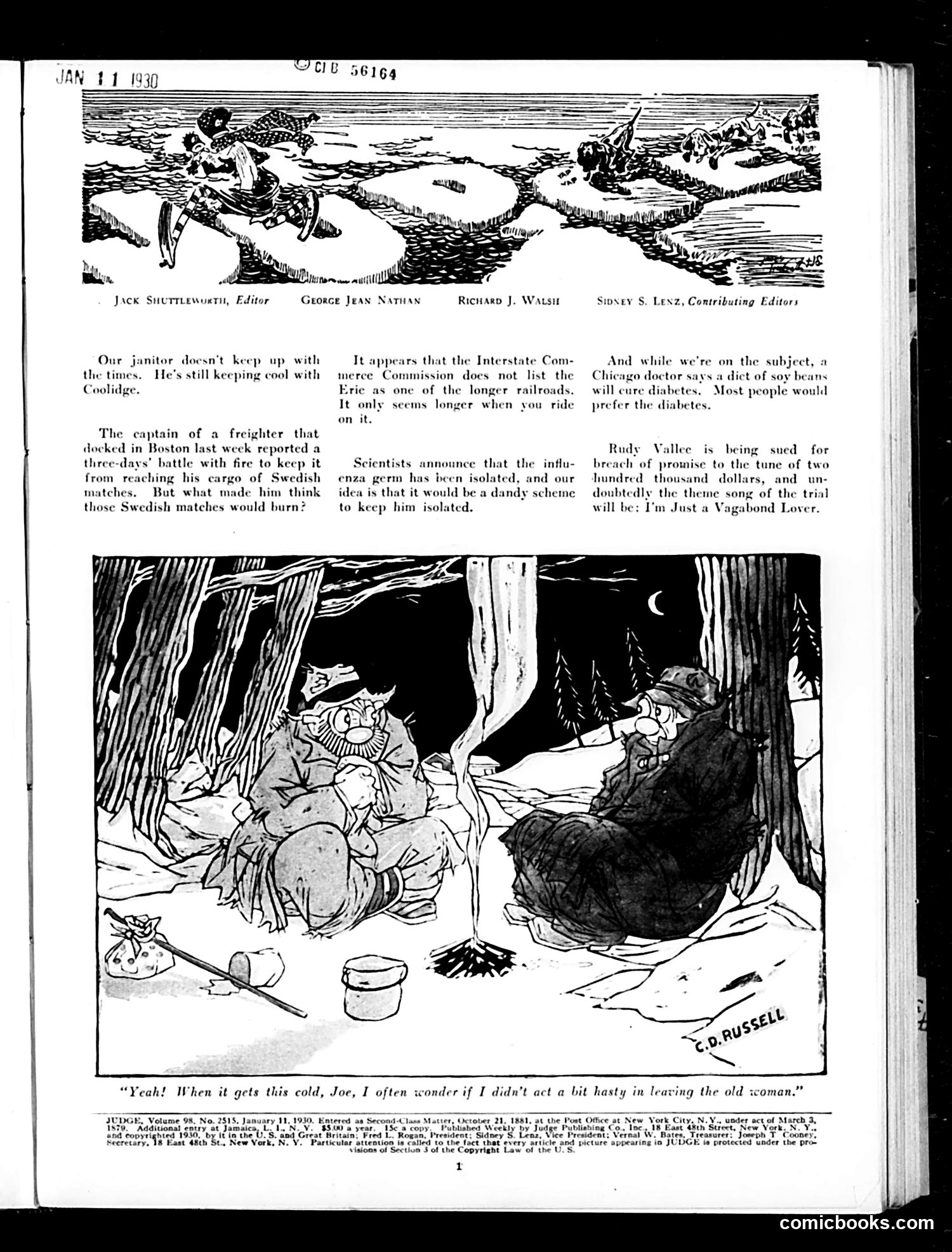
# Analysis of Judge Magazine Page (January 11, 1930) The main cartoon by C.D. Russell depicts two men camping in a snowy forest. The caption reads: "Yeah! When it gets this cold, Joe, I often wonder if I didn't get a bit hasty in leaving the old woman." This is a domestic humor joke playing on the common trope of husbands escaping their wives for outdoor adventure, only to regret it during hardship. The irony—that leaving his wife now seems foolish when facing severe cold—was relatable to Depression-era readers. The text snippets above are brief jokes about transportation (railroad comfort), a shipping accident, influenza isolation, and a lawsuit against actor Rudy Vallée. These are typical of Judge's miscellaneous humor section, offering topical commentary mixed with universal observations.
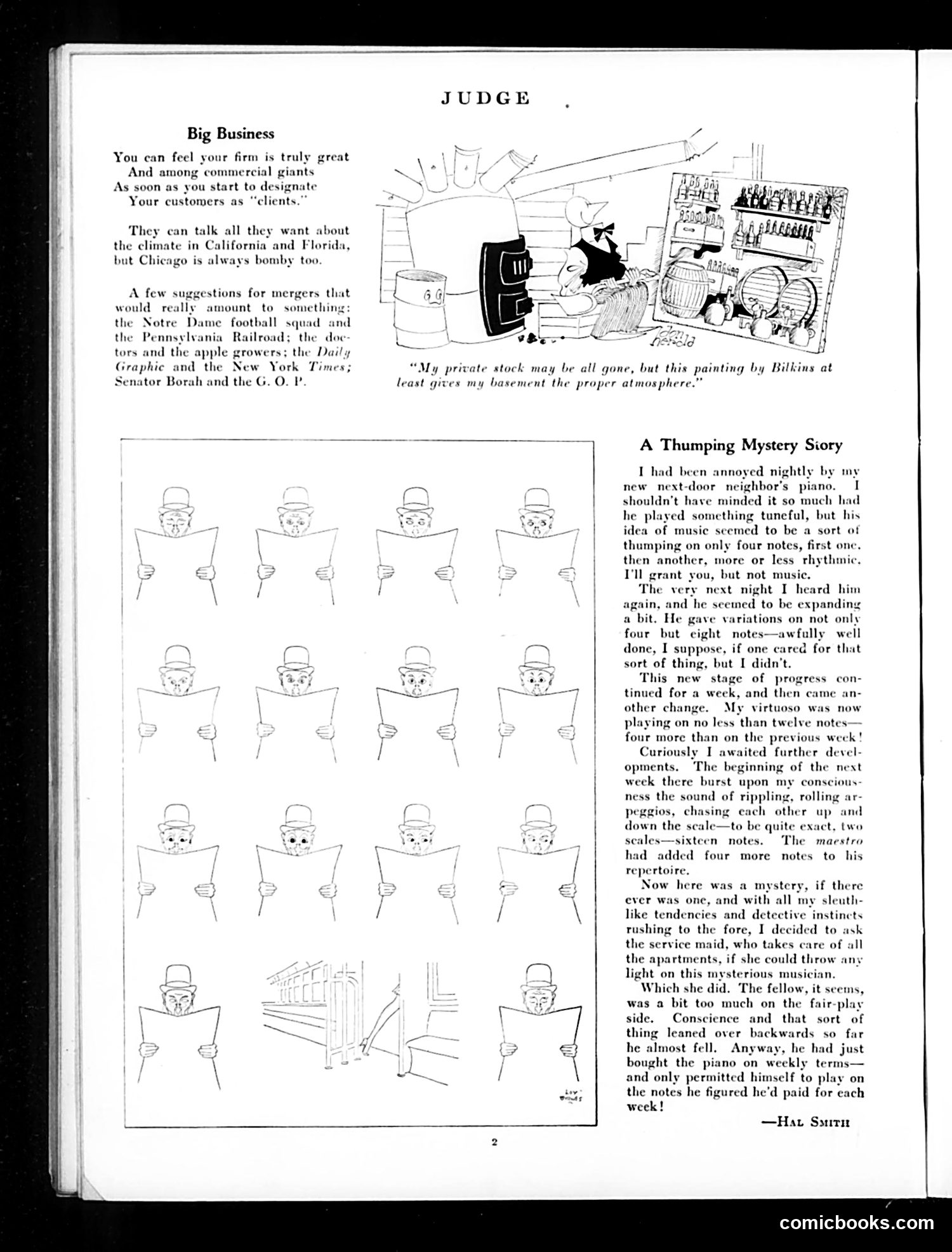
# Analysis of Judge Page This page contains two unrelated pieces: **"Big Business"** (top): A satirical article mocking corporate expansion, suggesting that once a firm becomes large enough to call customers "clients," it considers itself among commercial giants. The accompanying cartoon shows a businessman with a painting, joking that while his stock portfolio has vanished, at least the artwork gives his basement "proper atmosphere"—likely referencing the 1929 stock market crash and resulting economic devastation. **"A Thumping Mystery Story"** (right): A humorous narrative by Hal Smith about a neighbor's increasingly elaborate piano playing. The accompanying cartoon grid shows repeated figures reading newspapers with mounting frustration, illustrating the escalating musical annoyance. The joke satirizes both intrusive neighbors and the neighbor's financial constraint—he can only play notes he's "paid for."
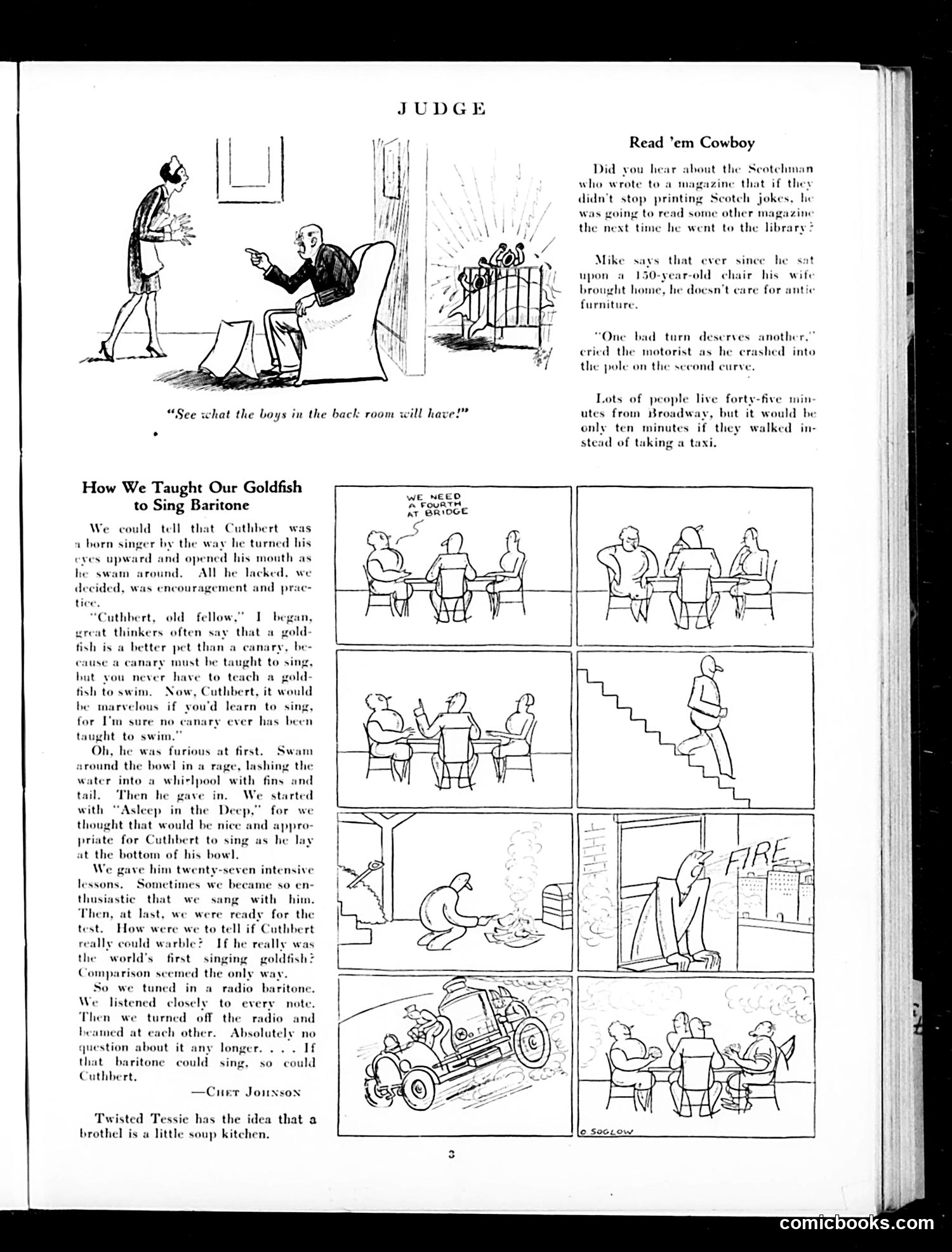
# Analysis of Judge Magazine Page This page contains two distinct pieces of humor: **"See what the bags in the back room will have!"** (top cartoon): A boss sits at his desk pointing at papers while a secretary stands nearby. The joke appears to reference office gossip or workplace rumors—the boss is sarcastically suggesting scandalous items will be discovered in storage, likely mocking how office workers exaggerate or fabricate stories about workplace drama. **"How We Taught Our Goldfish to Sing Baritone"** (article with comic strip): A humorous account claiming to document training a goldfish to sing. The accompanying sequential comic strip shows absurd training methods—the fish eventually sings along with a radio baritone, then causes chaotic scenes (fire, car crash). The satire mocks pseudoscientific pet-training claims popular in the era while celebrating the absurd results.
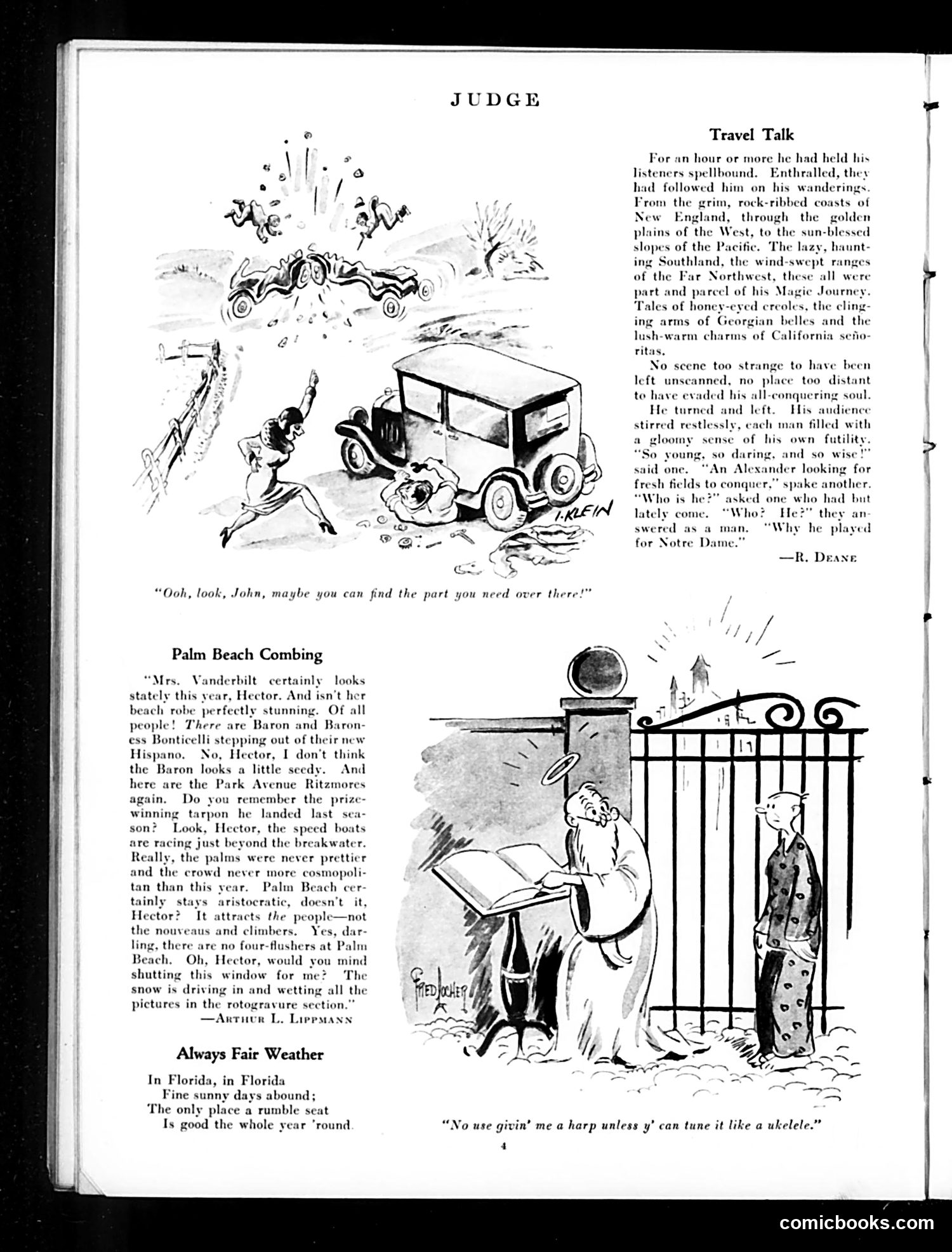
# Page Analysis: Judge Magazine This page contains three separate pieces of humor content: 1. **"Travel Talk"** (top): A narrative poem by R. Deane about a young traveler captivating an audience with stories of American landscapes and adventures. The accompanying cartoon shows a broken-down car surrounded by animated listeners—likely satirizing the "magical journey" narrative versus automotive reality. 2. **"Palm Beach Combing"** (middle): A society-page satire by Arthur L. Lipscomb mocking wealthy Palm Beach residents and their pretensions. References to "Vanderbilt," "Baron and Baroness Bontelli," and aristocratic name-dropping suggest commentary on nouveau riche tourists and social climbing in this exclusive destination. 3. **"Always Fair Weather"** (bottom): A brief poem about Florida's perpetual sunshine, paired with a cartoon about a street musician playing harp. The overall tone is lighthearted social commentary on American leisure and aspiration.
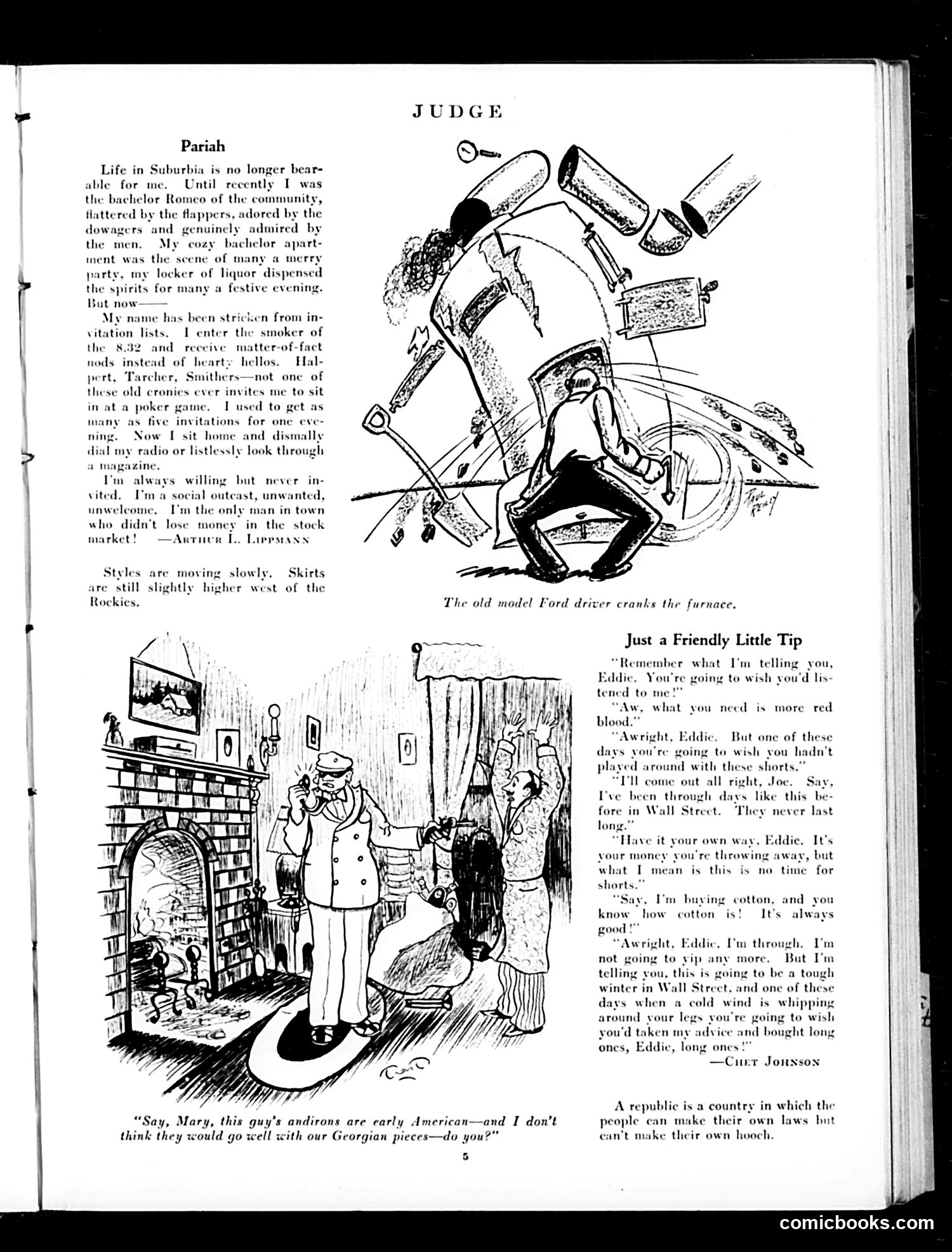
# Analysis of Judge Magazine Page This page contains three distinct pieces: 1. **"Pariah"** - A social commentary by Arthur I. Lippmann about being excluded from Suburbia's social scene despite wealth, unable to attend poker games or parties. 2. **Top cartoon** - Shows an old Model Ford driver struggling to start the furnace (likely the car's crank starter), humorously depicting the mechanical difficulties of early automobiles. 3. **"Just a Friendly Little Tip"** - A dialogue between Joe and Eddie about financial advice during what appears to be the pre-1929 stock market boom. Joe warns Eddie to invest conservatively in cotton rather than speculate on Wall Street, predicting economic hardship ahead—likely prescient commentary on the impending Great Depression. The closing quote about republics suggests political commentary on American governance and individual liberty.
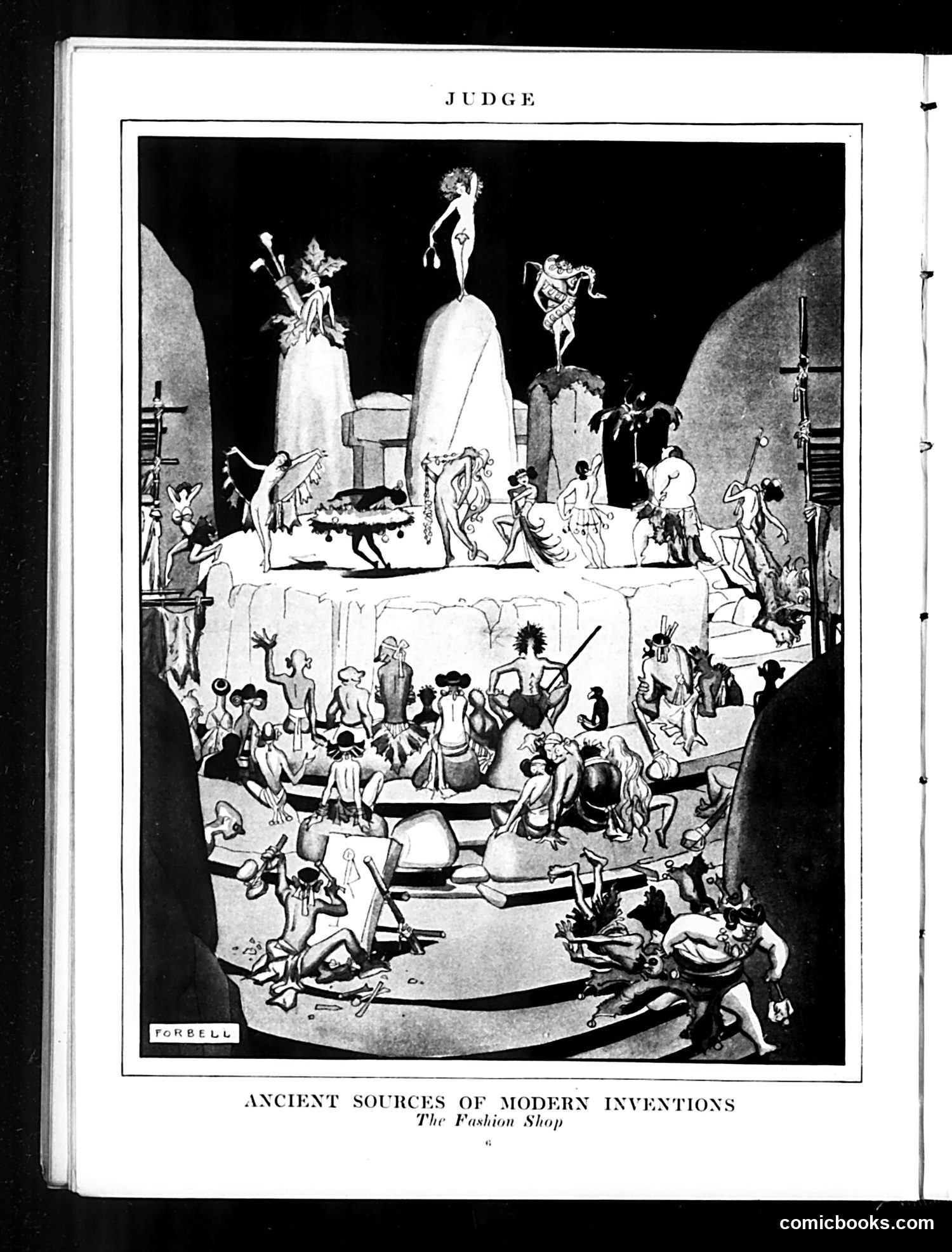
# "Ancient Sources of Modern Inventions: The Fashion Shop" This satirical illustration depicts a chaotic underworld or hellish scene labeled as the supposed origin of modern fashion. The artwork uses a classic device: suggesting that contemporary fashion trends come from demonic or infernal sources rather than legitimate design. The crowded composition shows numerous demons, imps, and supernatural creatures engaged in various activities on tiered platforms, with fashionably-dressed figures observing above. The satire mocks the fashion industry itself—implying designers and fashionable people are either foolish for following ridiculous trends, or complicit with vice and sin. This represents common early-20th-century social criticism of fashion as frivolous, morally suspect, or absurdly trend-driven, using humor to critique both the industry and its consumers.
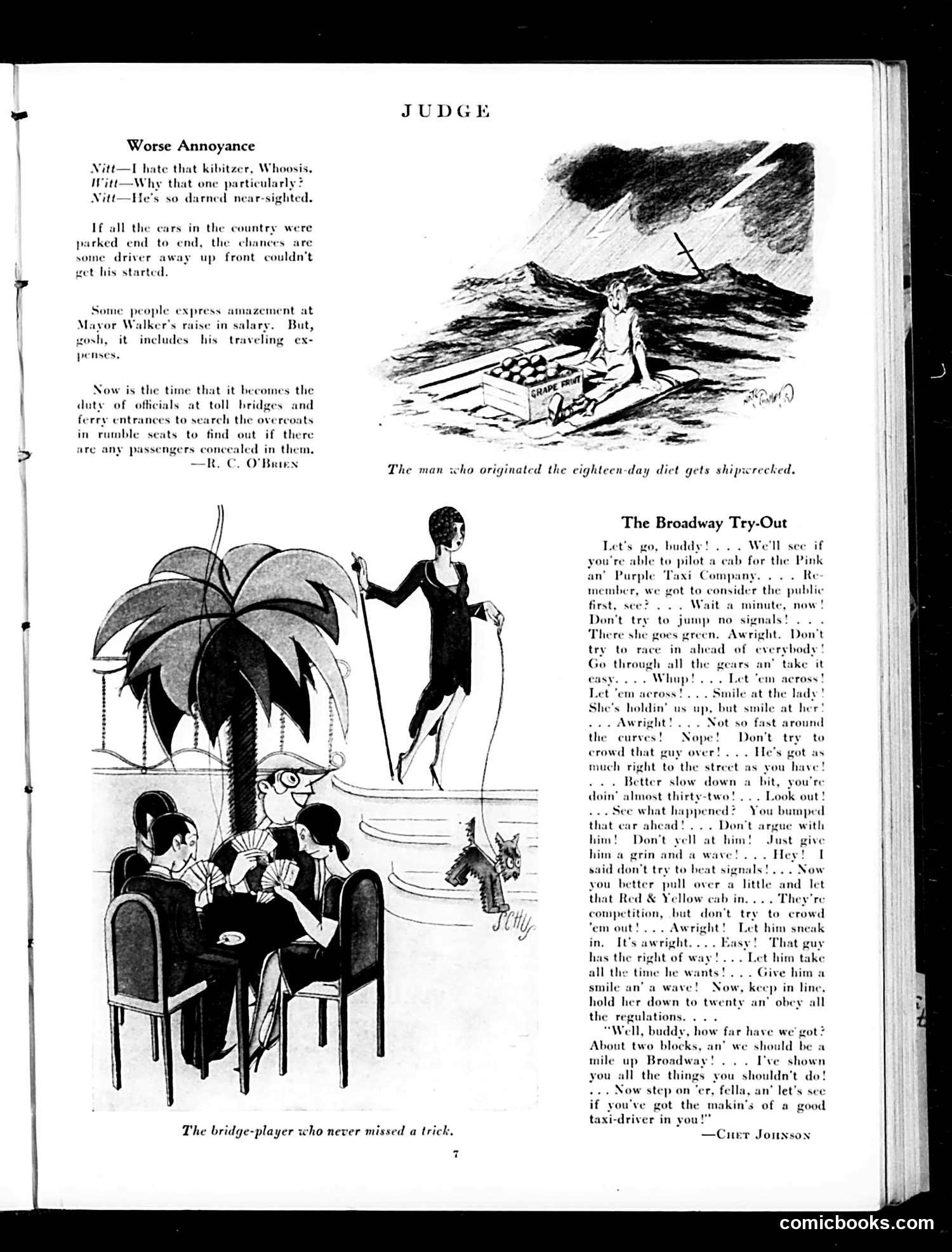
# Judge Magazine Page Analysis This page contains three distinct satirical pieces from Judge magazine: **"Worse Annoyance"** mocks a bridge/card player who is near-sighted, with a quip about toll bridge officials needing to search rumble seats for stowaways during Prohibition (implied by the reference to concealed passengers). **The shipwreck cartoon** illustrates an ironic caption: "The man who originated the eighteen-day diet gets shipwrecked"—mocking fad diet trends by showing the originator literally wrecked at sea. **"The Broadway Try-Out"** is the main piece, satirizing taxi driver instruction. Written by Chet Johnson, it humorously depicts an instructor lecturing a new cabbie on contradictory rules: be polite to pedestrians, follow signals, yet also be aggressive and competitive. The joke is the impossibility of the task—after exhaustively listing what *not* to do, the instructor asks the driver to "show" his taxi skills in just two blocks. It's satire on New York City traffic chaos and unreasonable expectations. All pieces reflect 1920s urban American humor and social commentary.
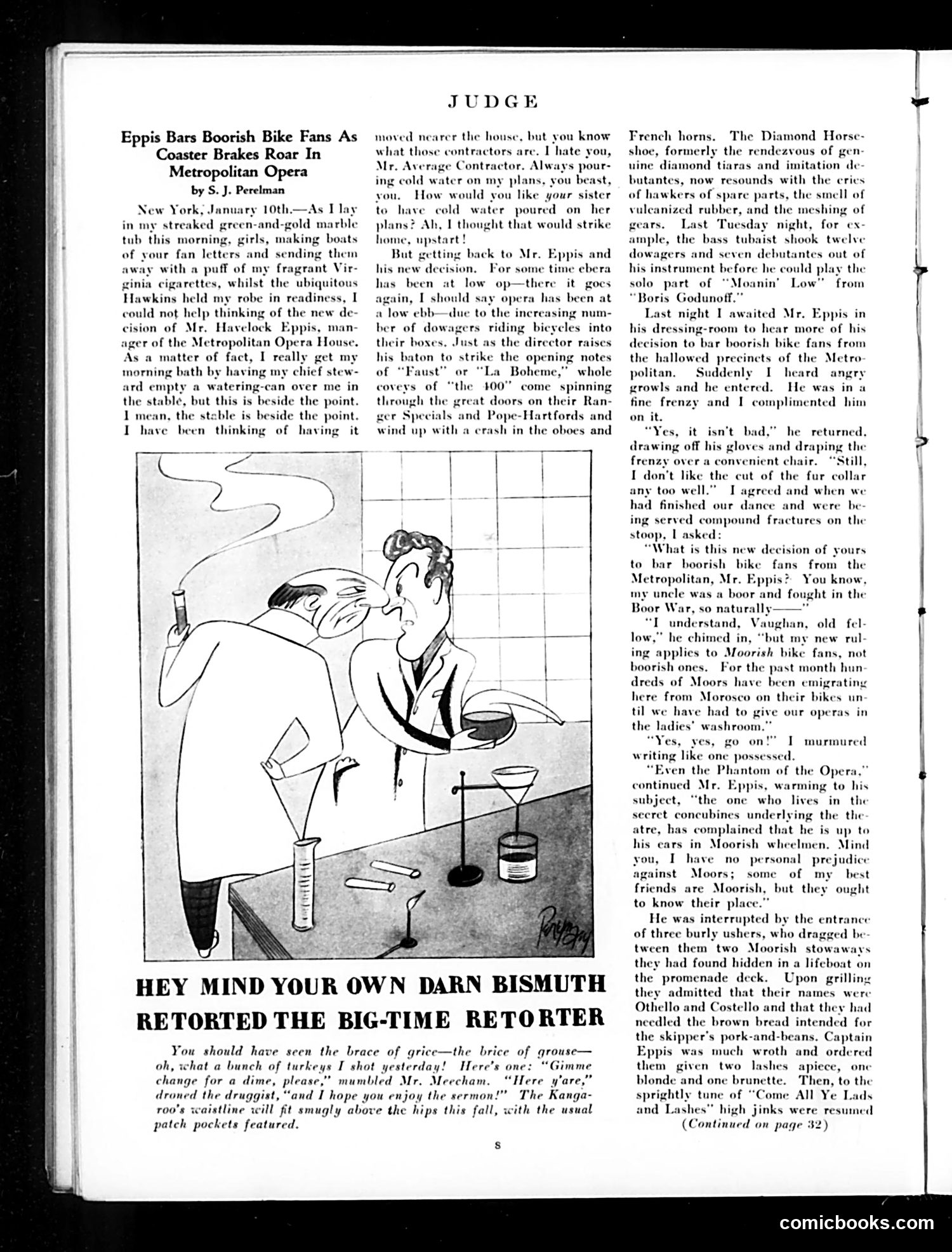
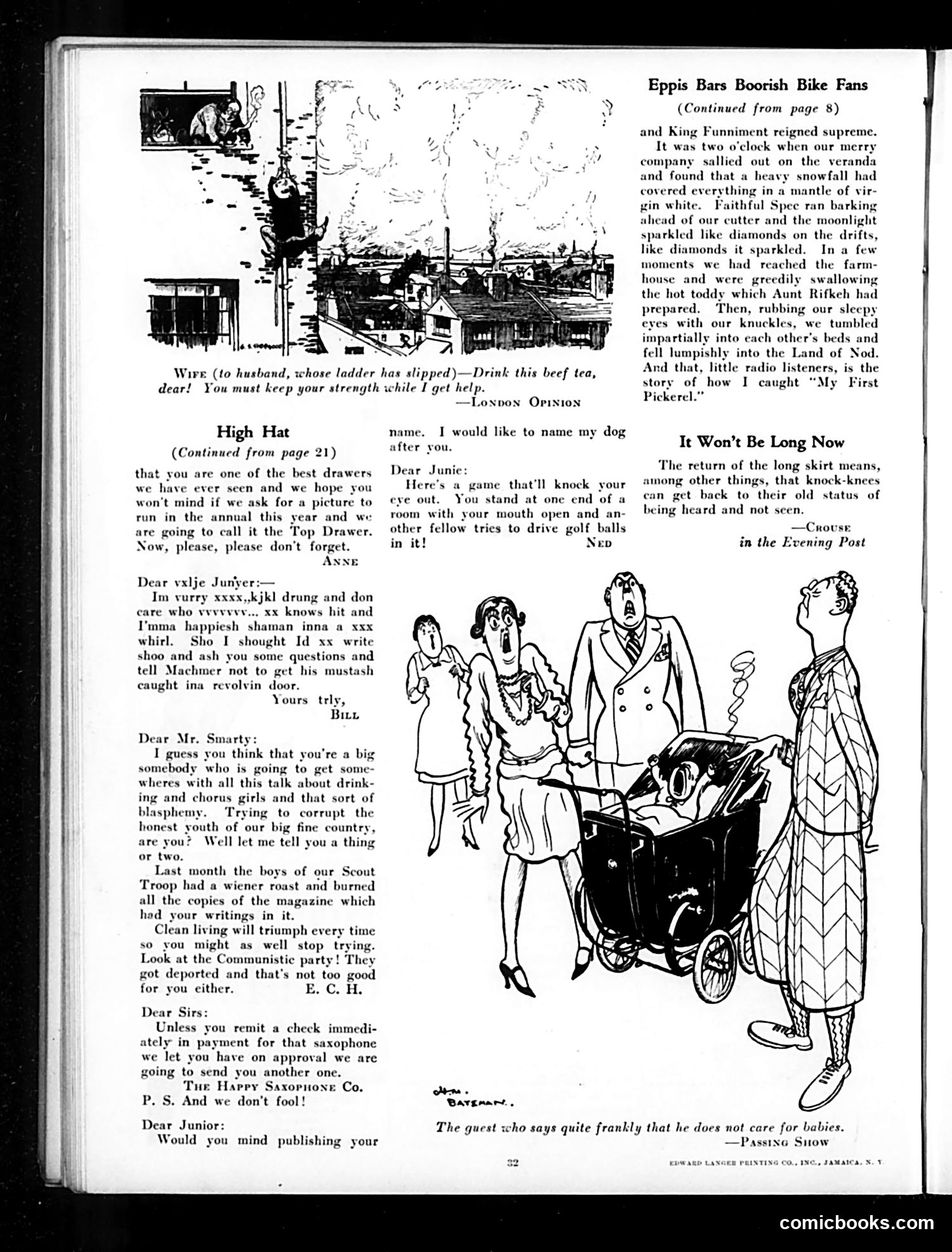
# Judge Magazine Satire Analysis This is a humorous piece by S.J. Perelman satirizing the Metropolitan Opera House and its manager (likely based on a real figure). The central joke concerns opera's declining prestige: wealthy socialites ("dowagers" and debutantes from "the 400"—old money society) have begun arriving to performances on bicycles rather than in carriages, creating literal chaos during performances—they crash their bikes into the orchestra pit. The cartoon shows a man (presumably the opera manager) gesticulating dramatically while bathing or dressing, illustrating his exasperated response. The satire mocks both the pretentiousness of high society and opera's fall from cultural dominance. The closing section adds a pun: Eppis has barred "Moorish" (not "boorish") bike fans—playing on the similar-sounding words while referencing immigrants from Morocco arriving by bicycle. The piece reflects 1920s-30s anxieties about social change, immigration, and the declining authority of traditional cultural institutions.
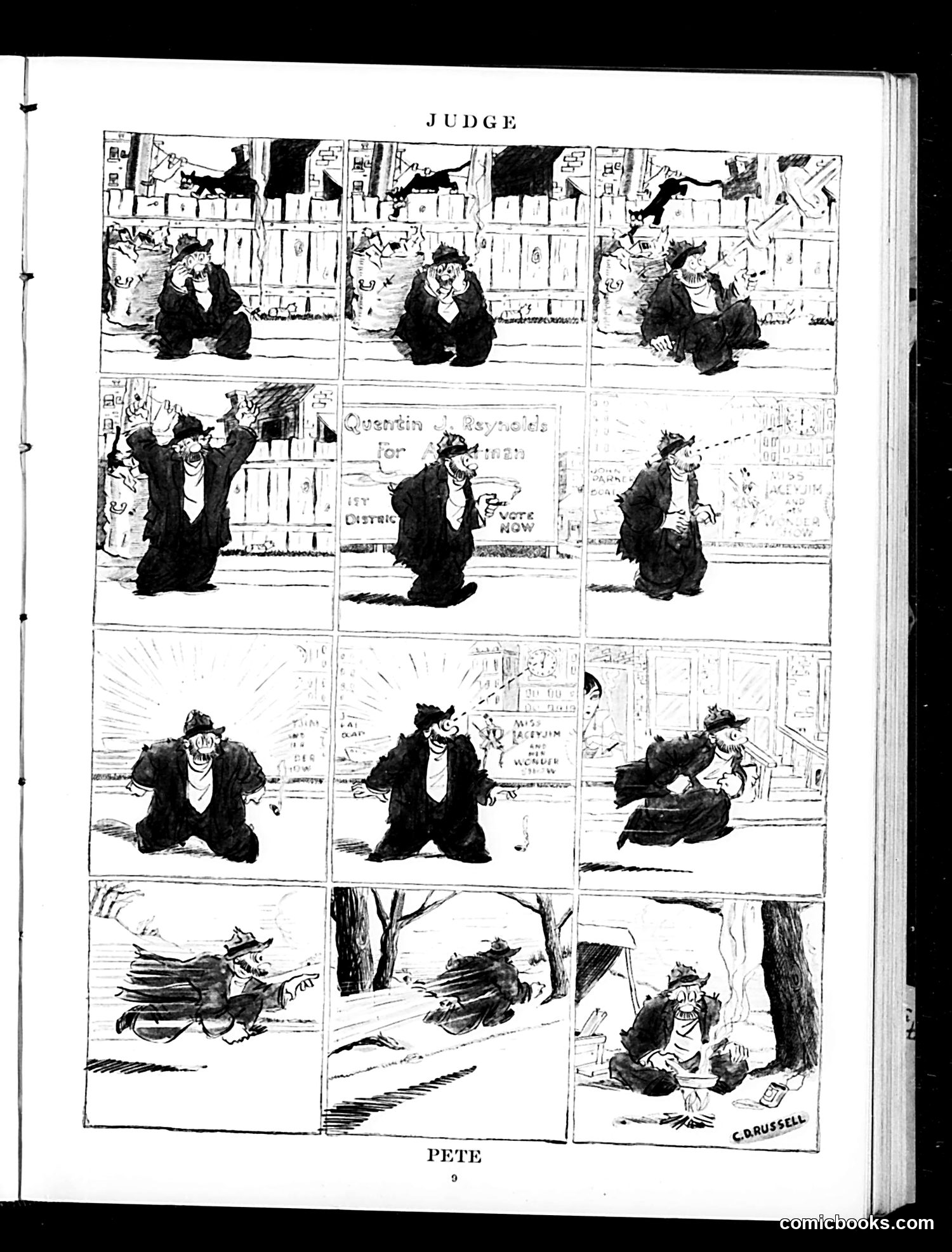
# Judge Magazine Comic: "Judge" and "Pete" This is a satirical comic strip titled "Judge" and "Pete" (credited to C.B. Russell). The strip depicts a judge character experiencing escalating chaos and misfortune across multiple panels. In the opening panels, the judge sits calmly in what appears to be a courtroom or office. Progressively, he becomes increasingly disheveled and distressed—his composure dissolving through exaggerated facial expressions and body language. By the bottom panels, he's literally fleeing or collapsed outdoors, surrounded by scattered papers. The satire appears to mock judicial authority and dignity, showing how the demands or absurdities of the judge's role reduce an authority figure to chaos and desperation. The humor relies on visual slapstick and the contrast between the judge's initial composure and final degradation, typical of early 20th-century American comic sensibilities.
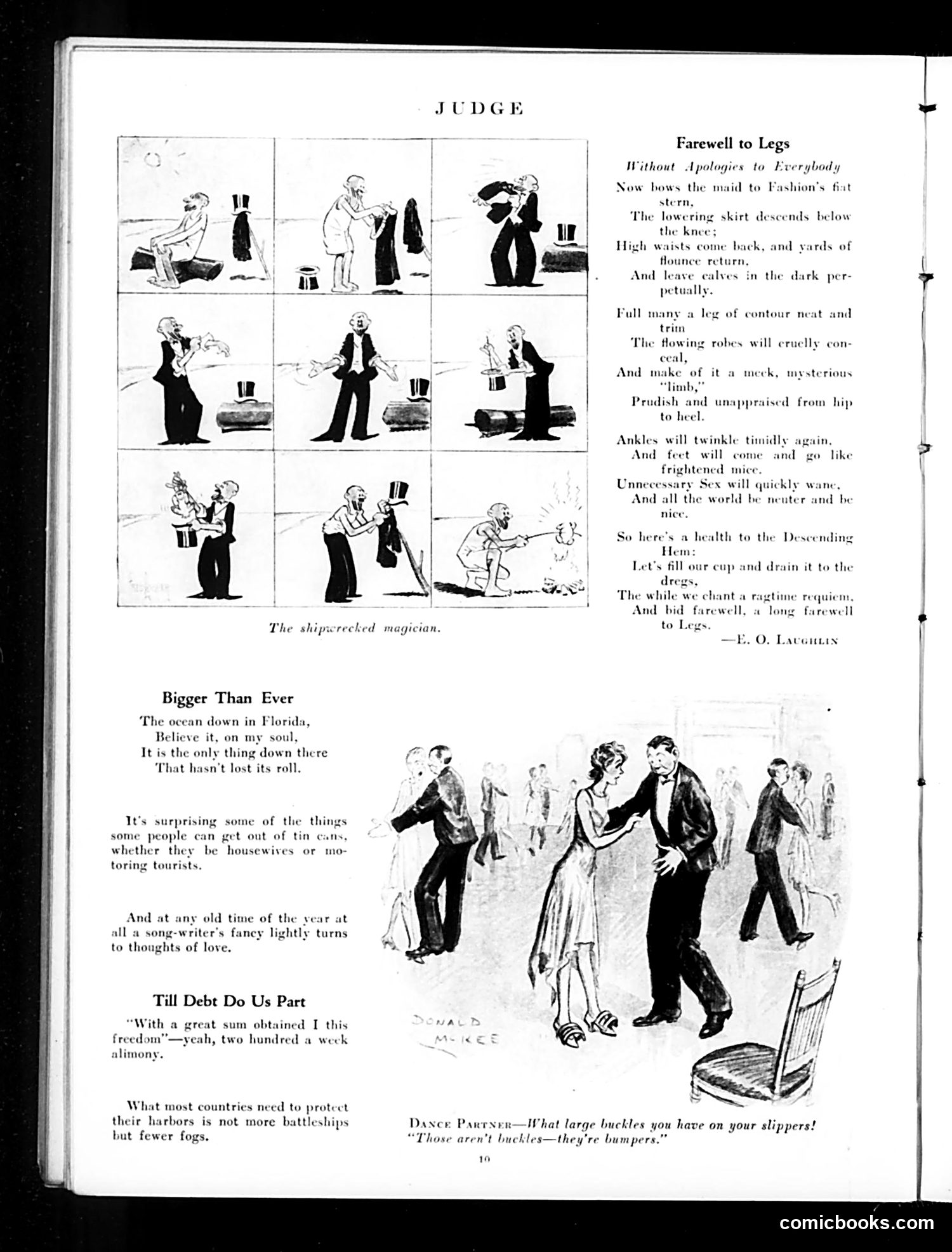
# Explanation for Modern Readers This page from *Judge* magazine contains three satirical pieces commenting on 1920s social trends: **"Farewell to Legs"** mocks the shift toward longer hemlines and higher waistlines in women's fashion. The poem satirizes how modest dress trends will hide women's legs and reduce sexual appeal, suggesting society will become prudish and "neuter." This reflects anxiety about changing fashion standards during the era. **"Bigger Than Ever"** appears to be short satirical quips about Florida tourism and economic conditions—likely referencing the 1920s Florida real estate boom. **"Till Debt Do Us Part"** jokes about alimony obligations ($200/week), suggesting divorce and financial burdens on men were contemporary concerns. **The cartoon** at bottom shows a couple dancing. The "bumpers" joke about oversized shoe buckles references both fashion details and the physical contact involved in dancing—possibly ribald humor about modern dance behavior. The overall tone criticizes social and fashion changes perceived as restrictive or economically burdensome.
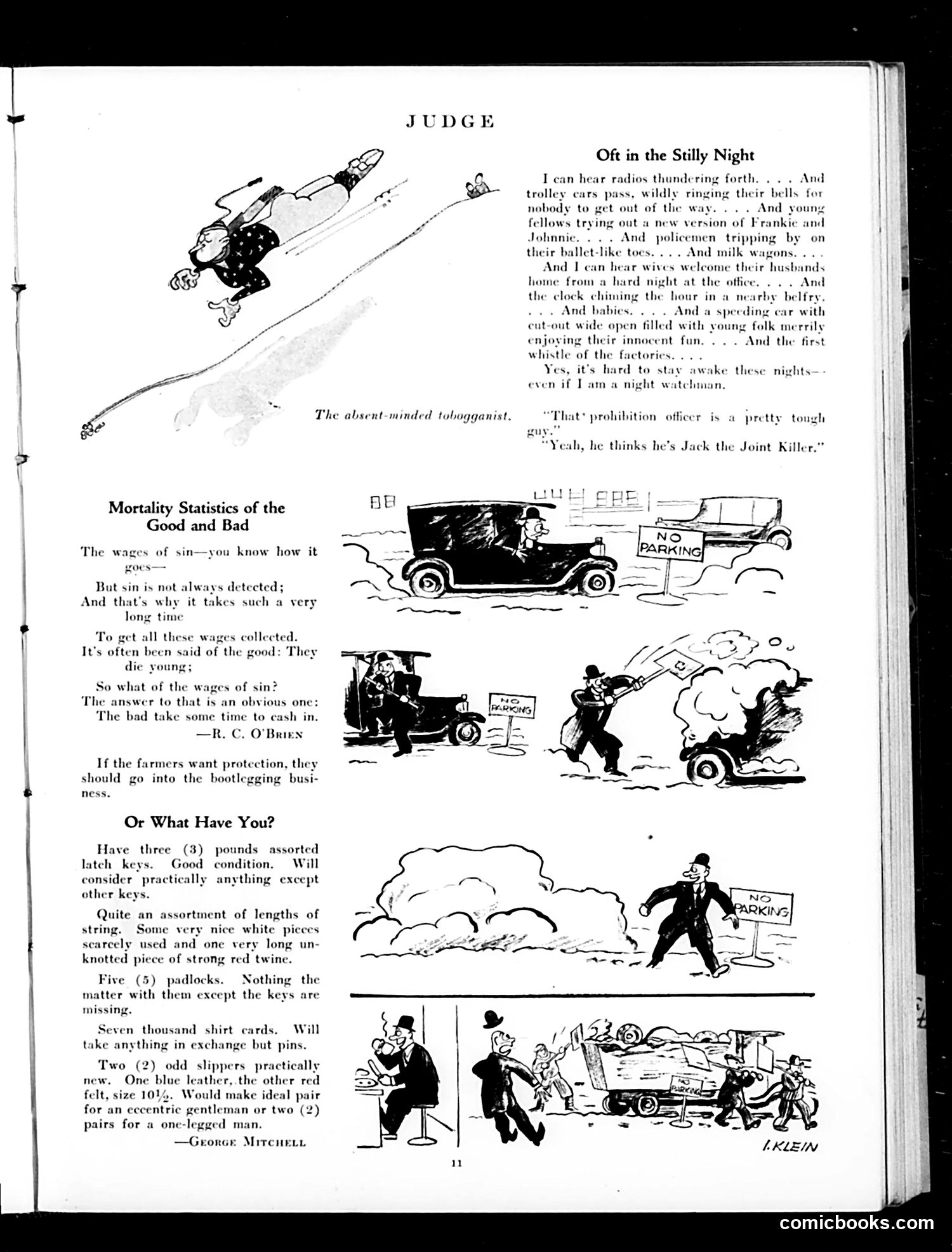
# Judge Magazine Page Analysis This page contains satirical commentary on Prohibition-era American life (likely 1920s-early 1930s). **"Mortality Statistics of the Good and Bad"** is a philosophical poem by R.C. O'Brien playing on the proverb "the good die young"—arguing that sinners take longer to face consequences, so bad people accumulate wealth before punishment arrives. **"Or What Have You?"** by George Mitchell is a humorous classified-ad section listing absurd items for trade: broken keys, string, padlocks without keys, mismatched slippers, and shirt cards. This satirizes both Depression-era scavenging and the bizarre barter economy created by Prohibition's illegal bootlegging. **"Oft in the Stilly Night"** satirizes a night watchman's insomnia amid urban chaos—radios, trolleys, police raids, milk wagons, and speeding cars with "cut-outs" (modified exhausts). **The cartoons** (credited to Klein) depict Prohibition enforcement: police raiding bootleggers' operations, cars being seized, and a joke about a "tough" prohibition officer being "Jack the Joint Killer"—slang for someone who shuts down illegal bars. The overall theme: Prohibition's chaotic social consequences.