A complete issue · 36 pages · 1929
Judge — October 12, 1929
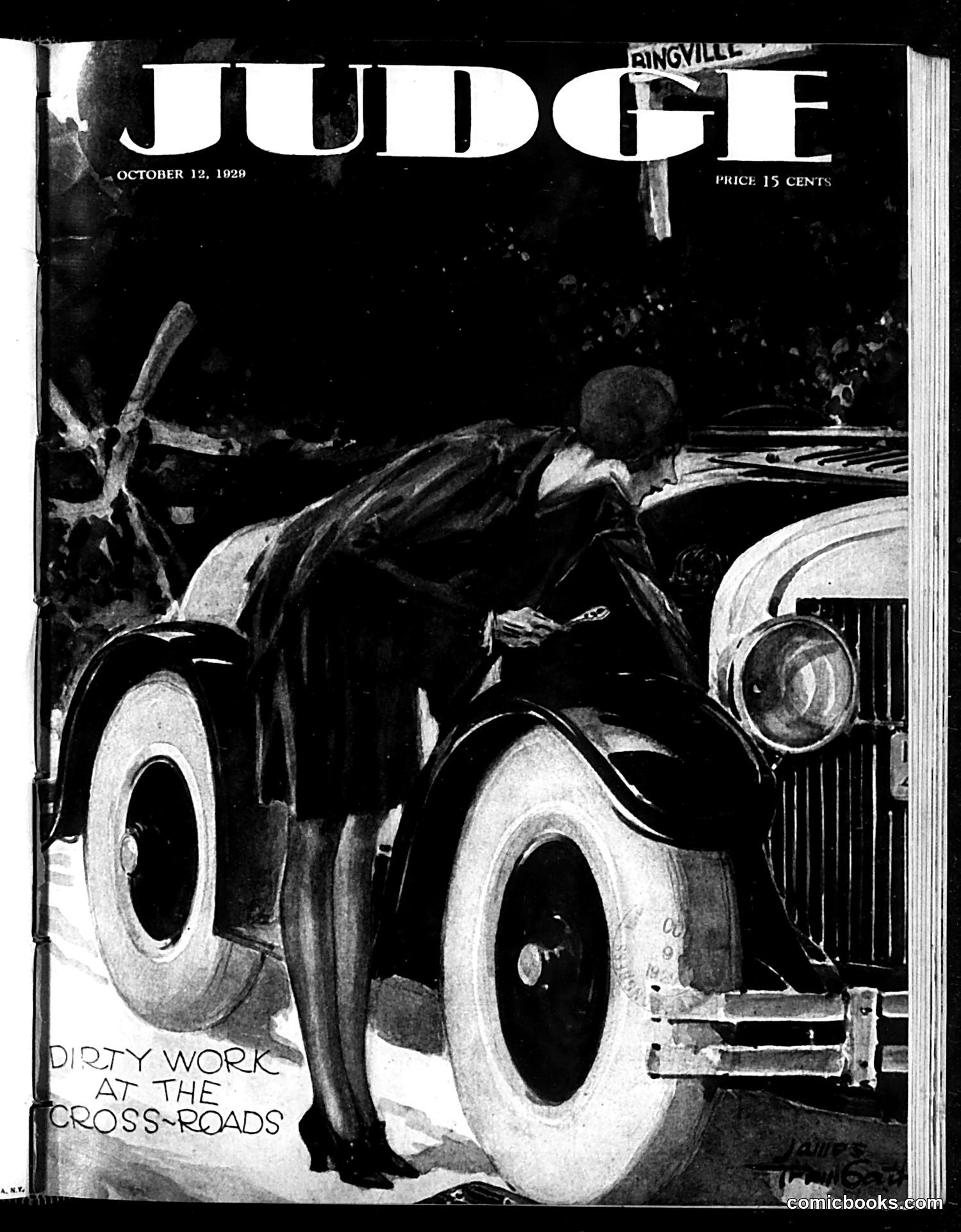
# Analysis of Judge Magazine Cover (October 12, 1929) This cover depicts a woman examining two automobiles at a crossroads, captioned "Dirty Work at the Cross-Roads." The image appears to be satirizing automotive industry competition or consumer choice during the late 1920s boom period. The woman, dressed in 1920s fashion, seems to be deciding between vehicles—likely representing competing car manufacturers of the era. The "cross-roads" setting symbolizes a pivotal decision point, while "dirty work" suggests underhanded business tactics or aggressive marketing competition. This timing is significant: published October 12, 1929, just days before the stock market crash, the cover may be commenting on cutthroat automotive sales practices that characterized pre-Depression American business culture. The specific manufacturers referenced remain unclear from the image alone.
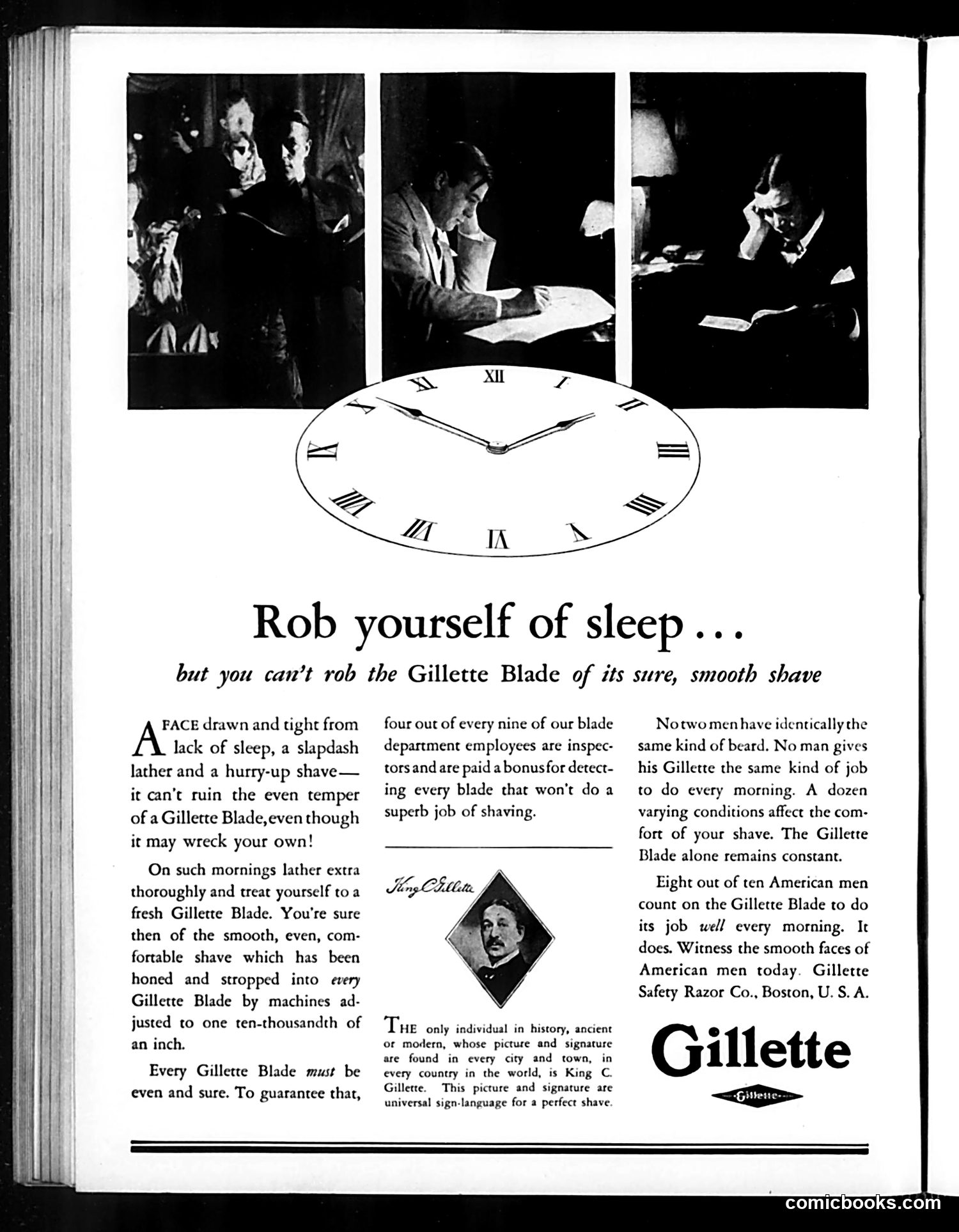
# Analysis This is **not satire or political commentary**—it's a straightforward **Gillette razor advertisement** from an early 20th-century magazine. The page features three black-and-white photographs showing men in various states of shaving (preparing, shaving, finished), arranged above a large clock face. The advertisement's central claim is that Gillette blades maintain consistent quality despite a user's varying conditions—sleep deprivation, stress, or haste won't compromise shaving results. The text emphasizes quality control ("four out of every nine" inspectors) and includes a portrait of King C. Gillette (the founder), described as "the only individual in history...whose picture and signature are found in every city and town." The headline "Rob yourself of sleep..." ironically suggests that even if a man is exhausted, a Gillette blade delivers reliable performance.
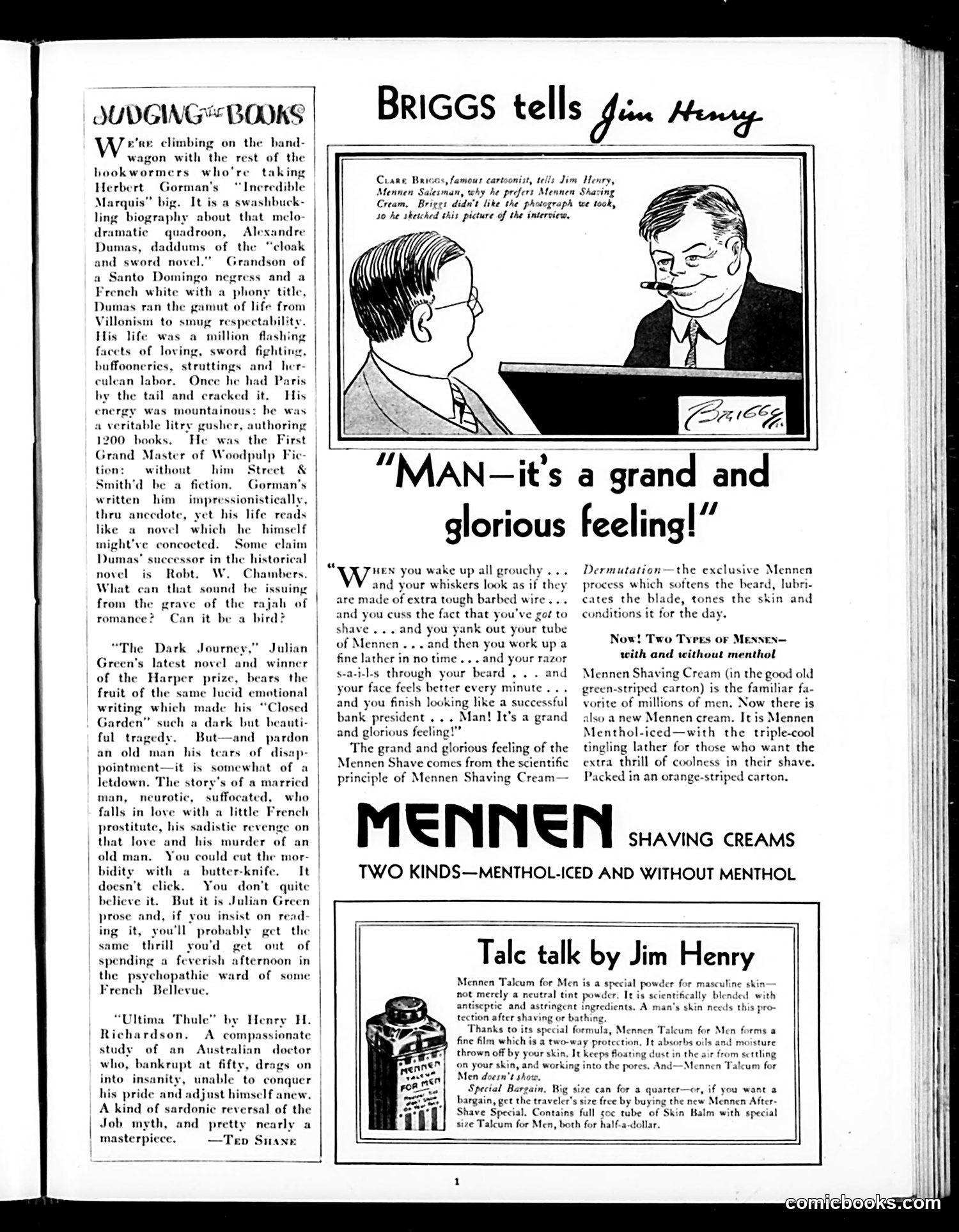
# Analysis This page is primarily **advertising** for Mennen Shaving Cream, not political satire. The top section titled "Briggs tells Jim Henry" features a cartoon dialogue between two men—one identified as "Clark Hardie, famous cartoonist" speaking to Jim Henry. The caption quotes Henry saying the feeling of using Mennen products is "grand and glorious." This is a celebrity endorsement strategy: using a recognized figure (apparently cartoonist Jim Henry) to promote the shaving cream. The bulk of the page consists of product advertisements for Mennen Shaving Cream (two varieties: mentholated and non-mentholated) and Mennen Talcum Powder. The "Tale talk by Jim Henry" section further promotes Mennen Talcum as protective powder for men's skin. There is no political commentary or satire on this page—it's entirely commercial advertisement disguised as editorial content, a common practice in early 20th-century magazines.
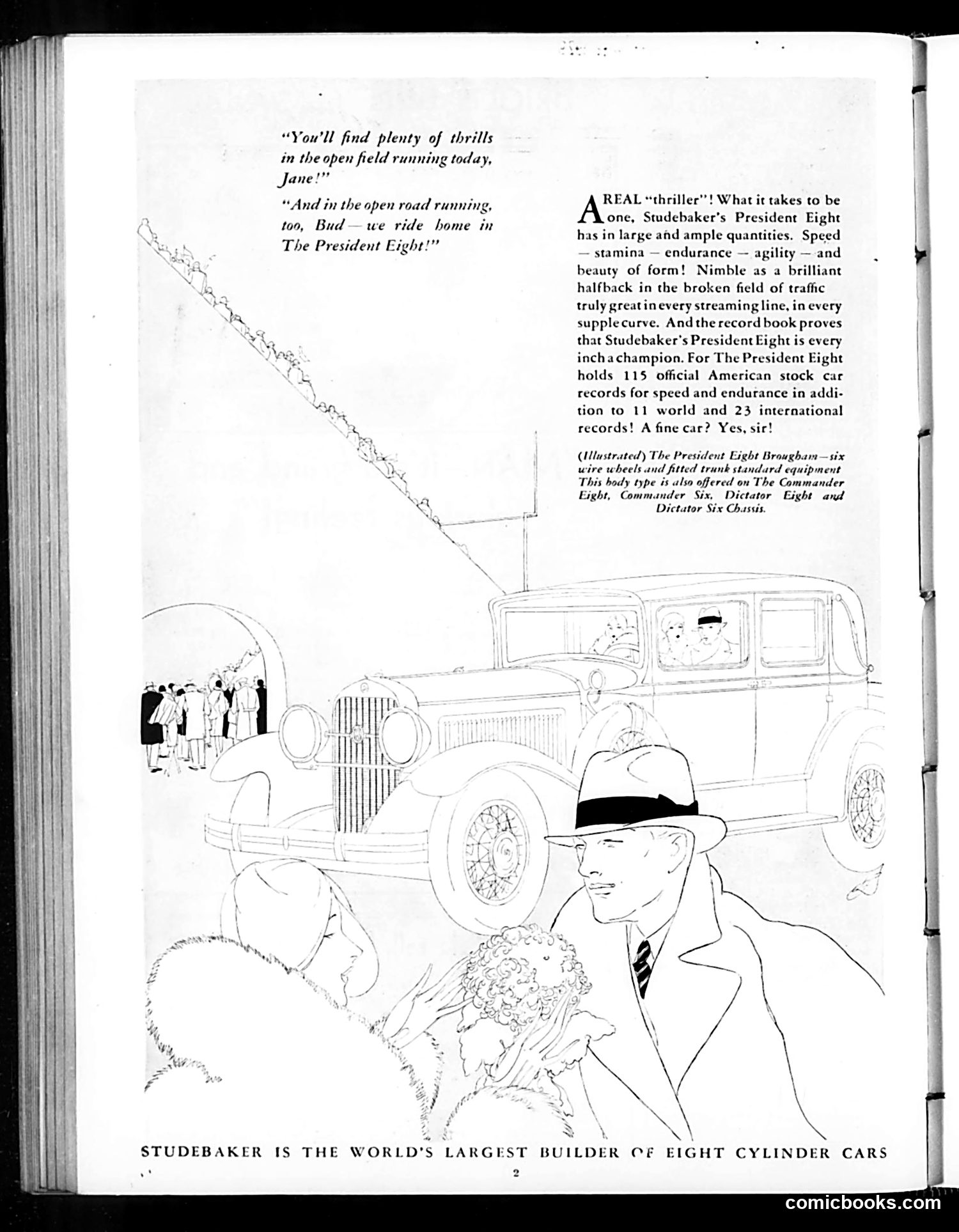
# Analysis This page is **primarily advertising**, not political satire. It promotes the Studebaker President Eight automobile. The dialogue at top references leisurely driving ("open field," "open road") rather than satirizing any political figure or event. The illustration shows a well-dressed man with a small dog admiring the car, with other figures in the background. The text emphasizes the President Eight's performance records: "115 official American stock car records for speed and endurance" plus additional world and international records. The final line reads: "STUDEBAKER IS THE WORLD'S LARGEST BUILDER OF EIGHT CYLINDER CARS." This is a **commercial advertisement** using aspirational imagery—the gentleman, the automobile's prestige, and competitive achievements—to market the vehicle. No political or social satire is evident on this page.
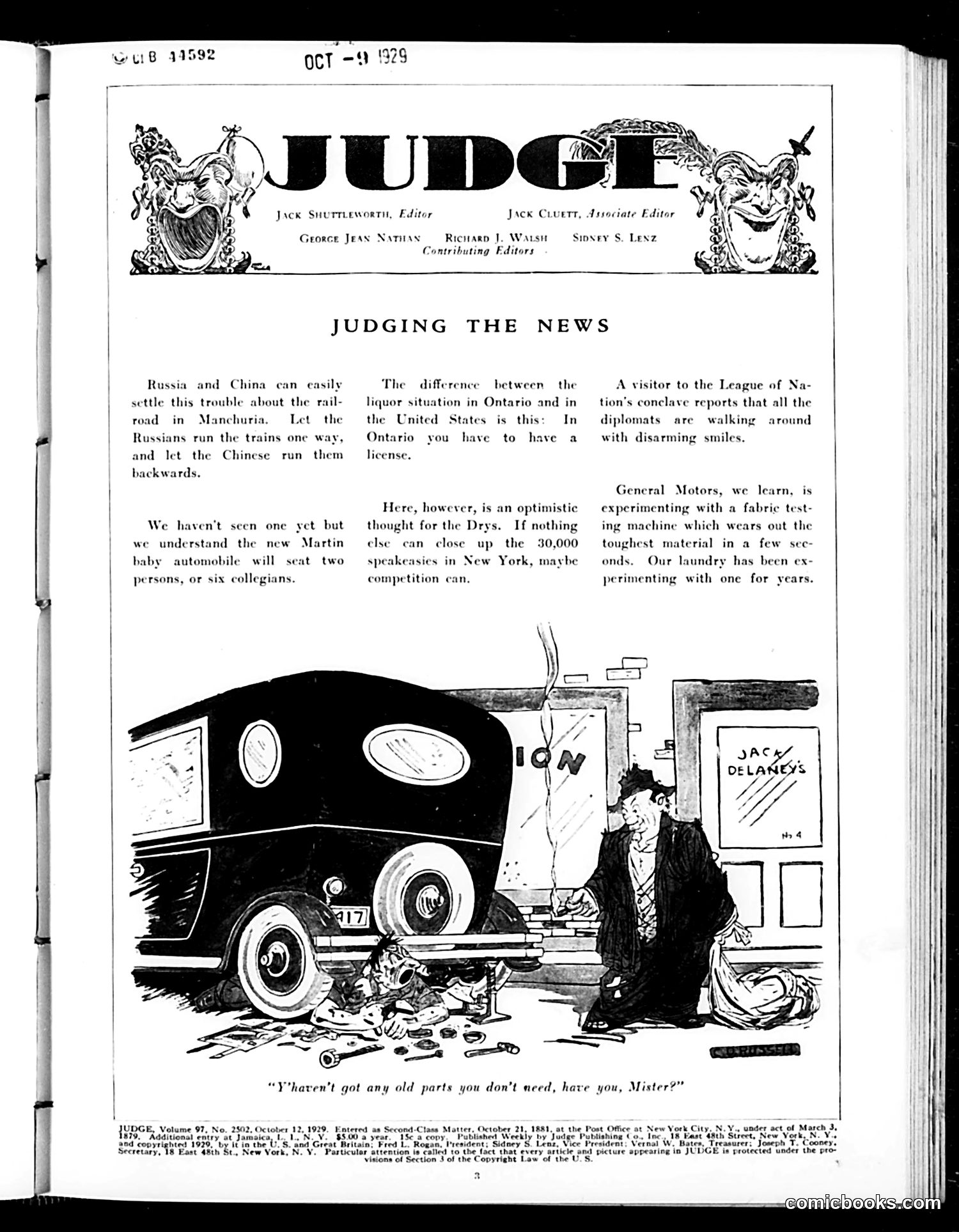
# Judge Magazine Cartoon Analysis (October 12, 1929) This page contains editorial commentary ("Judging the News") and a cartoon about automobile repair. The cartoon depicts a shabby mechanic examining a dilapidated car, asking the owner: "Haven't got any old parts you don't need, have you, Mister?" The joke satirizes the era's car repair culture—mechanics' tendency to upsell unnecessary parts replacements. The mechanic's worn appearance and the ramshackle garage suggest economic desperation, implying he profits by convincing customers they need repairs they don't actually require. The publication date (October 12, 1929) is historically significant—this appeared just before the Stock Market Crash (October 29), making the economic anxiety visible in the mechanic's desperation particularly pointed for contemporary readers facing imminent financial crisis.
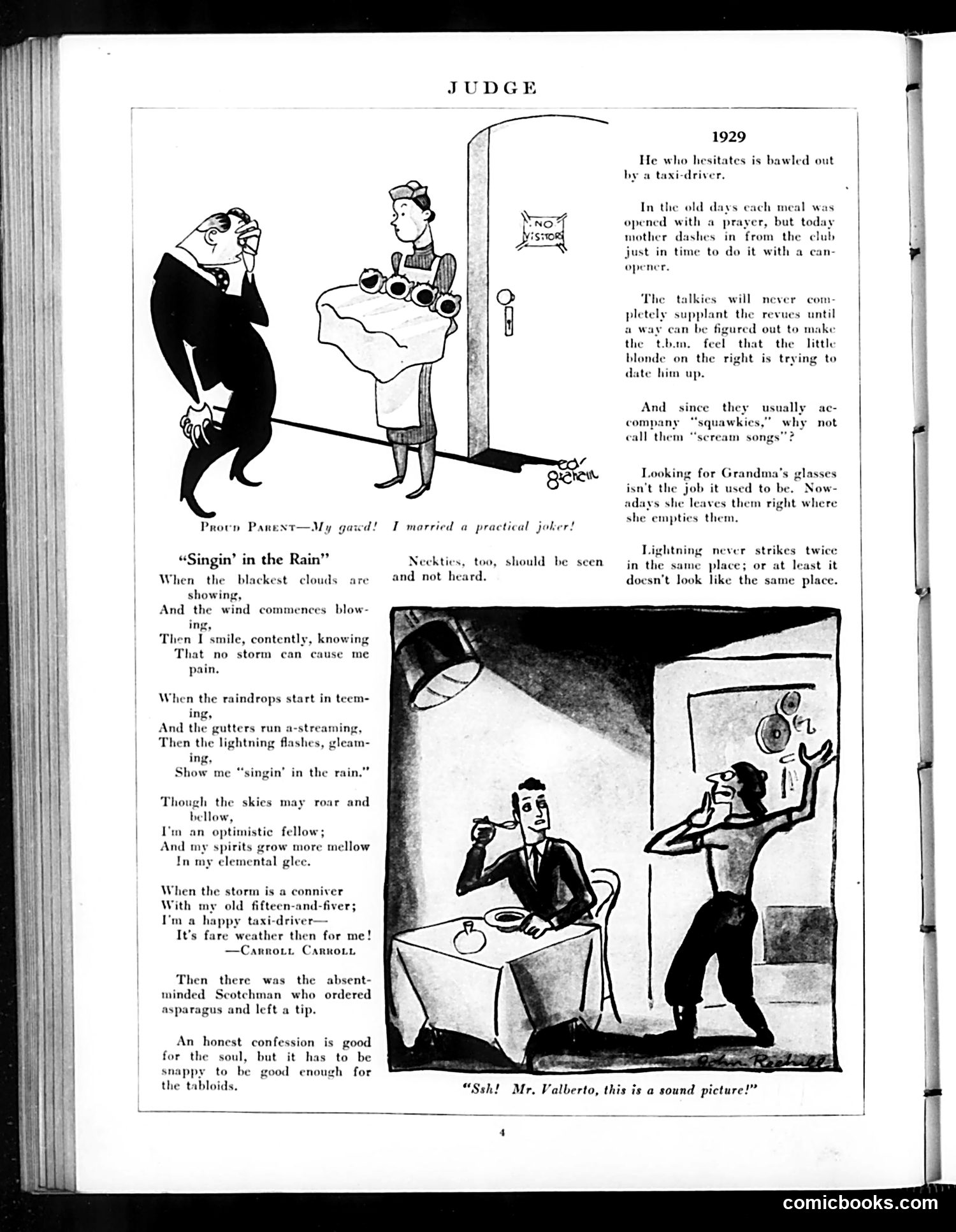
# Analysis of Judge Magazine Page (1929) This page contains several unrelated humor pieces typical of Judge's format: 1. **Top cartoon**: Shows a man in formal wear telling a woman "Proud Parent—My gad! I married a practical joker!" The joke relies on visual wordplay—the man appears distressed, though the specific prank isn't entirely clear from the image. 2. **"Singin' in the Rain" poem**: A sentimental verse about optimism during storms, attributed to Carroll Carroll. This appears unrelated to political satire. 3. **Bottom cartoon**: Depicts a waiter saying "Ssh! Mr. Valberto, this is a sound picture!" The humor references the recent transition from silent to sound films (talkies), suggesting the character is making noise in a theater. The page mixes poetry, observational humor about 1920s social customs, and cinema-related jokes rather than political commentary.
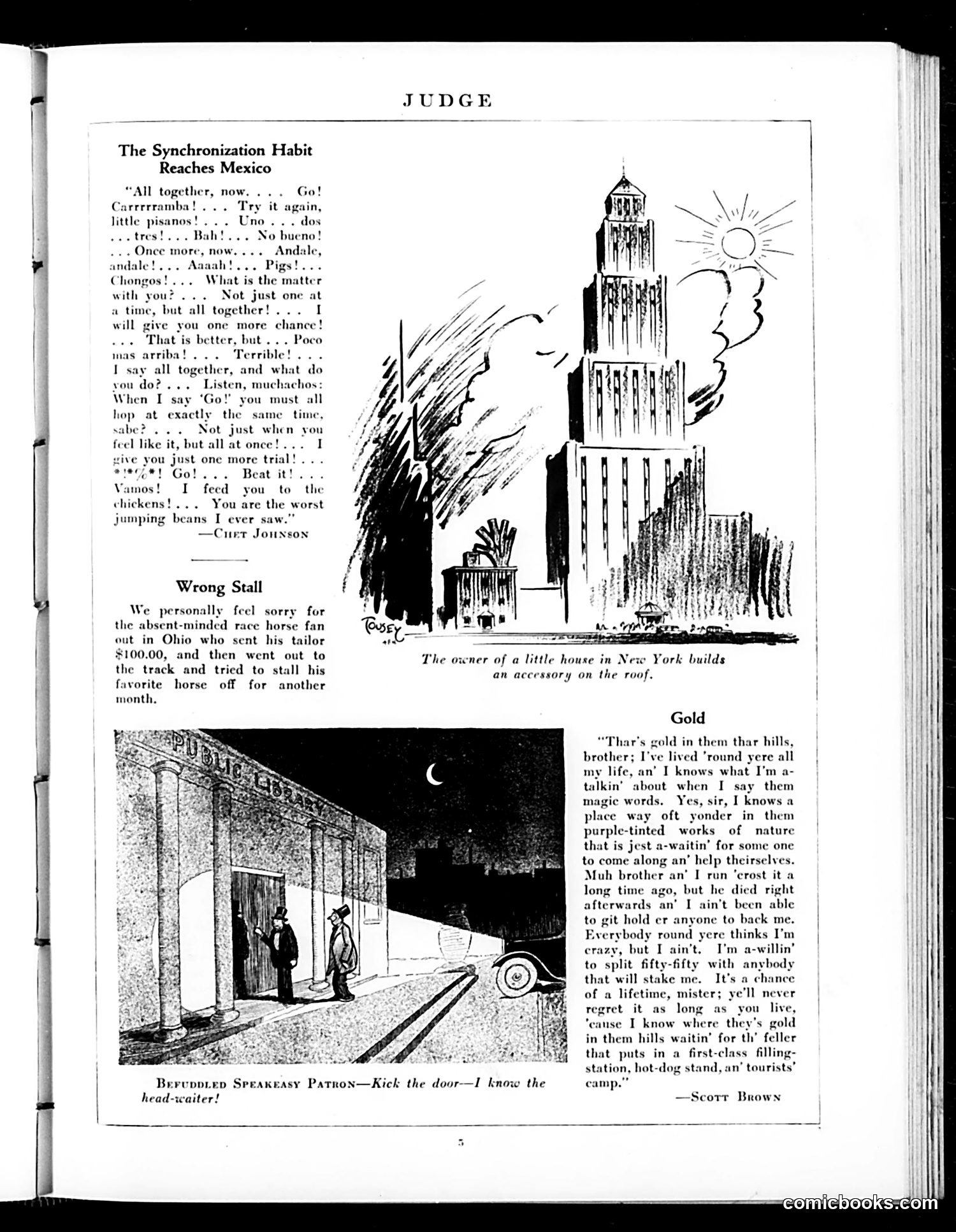
# Analysis of Judge Magazine Page This page contains three separate humor pieces rather than a unified political cartoon: 1. **"The Synchronization Habit Reaches Mexico"**: A comedic piece mocking coordinated group activities, with quoted dialogue about synchronized jumping. The humor appears to satirize fad behaviors or group conformity. 2. **"Wrong Stall"**: A brief anecdote about a race horse owner trying to stall his horse for another month, playing on the double meaning of "stall." 3. **"Gold"**: Features a nighttime illustration of what appears to be speakeasy patrons ("Bruddled Speakeasy Patron") and an accompanying monologue by Scott Brown about hidden gold in hills—likely referencing gold rush mythology and frontier dreams. The darker tone suggests social commentary on desperation or false hopes during uncertain times.
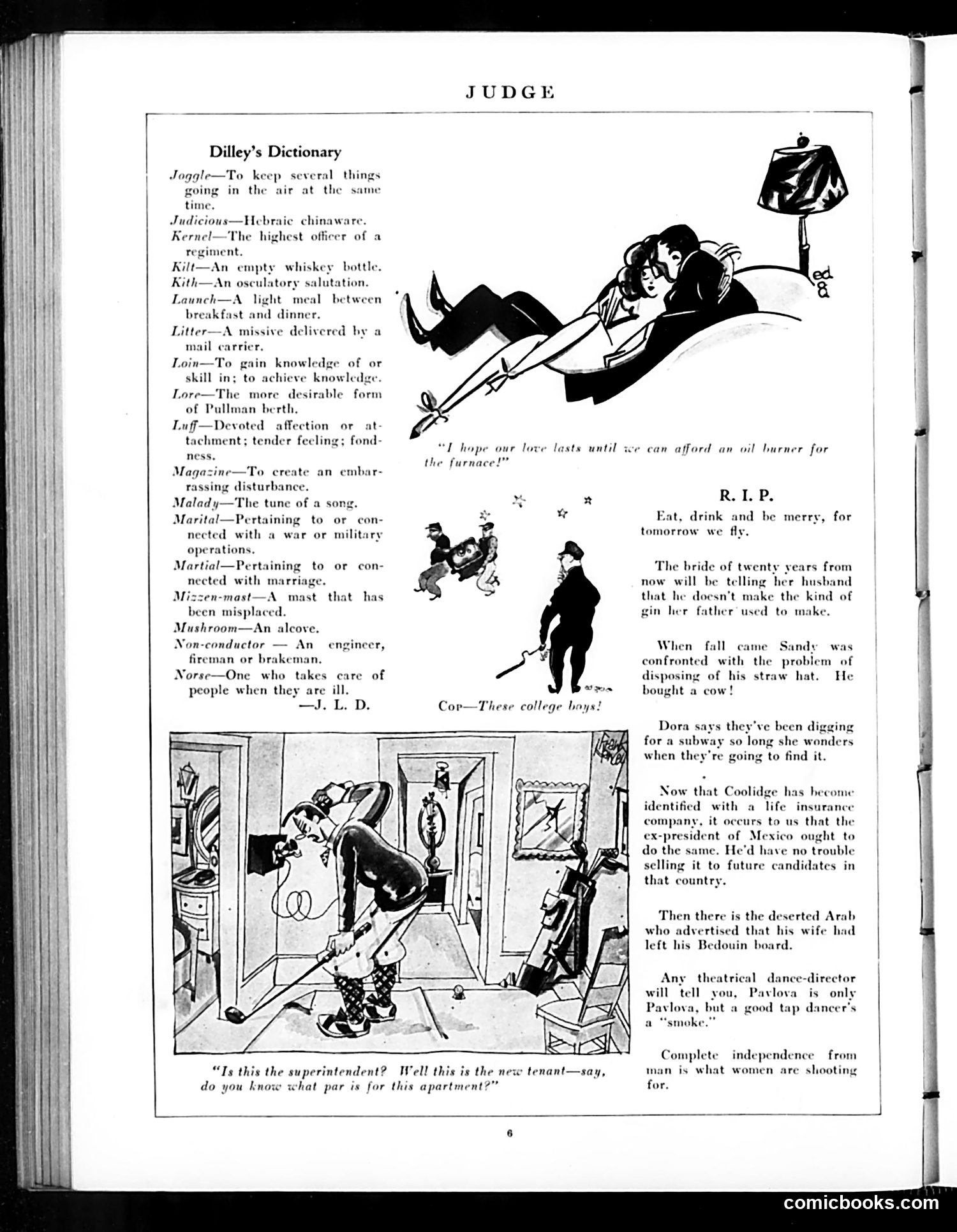
# Analysis of Judge Page This page contains **Dilley's Dictionary** (humorous word definitions), brief jokes labeled "R.I.P.," and a cartoon depicting apartment chaos. The main cartoon shows a chaotic domestic scene where a tenant appears to be causing damage—possibly exploding or collapsing fixtures—while an exasperated superintendent or landlord questions what "par is for this apartment." The joke satirizes the tension between tenants and building management over property damage and maintenance responsibility, a perennial urban housing complaint. The scattered jokes reference contemporary 1920s concerns: gin-making (Prohibition era), insurance companies, subway construction, and gender independence—typical Judge magazine content mocking modern life's absurdities and social changes. The page exemplifies Judge's formula: dictionary wordplay, one-liners, and cartoon humor targeting middle-class anxieties.
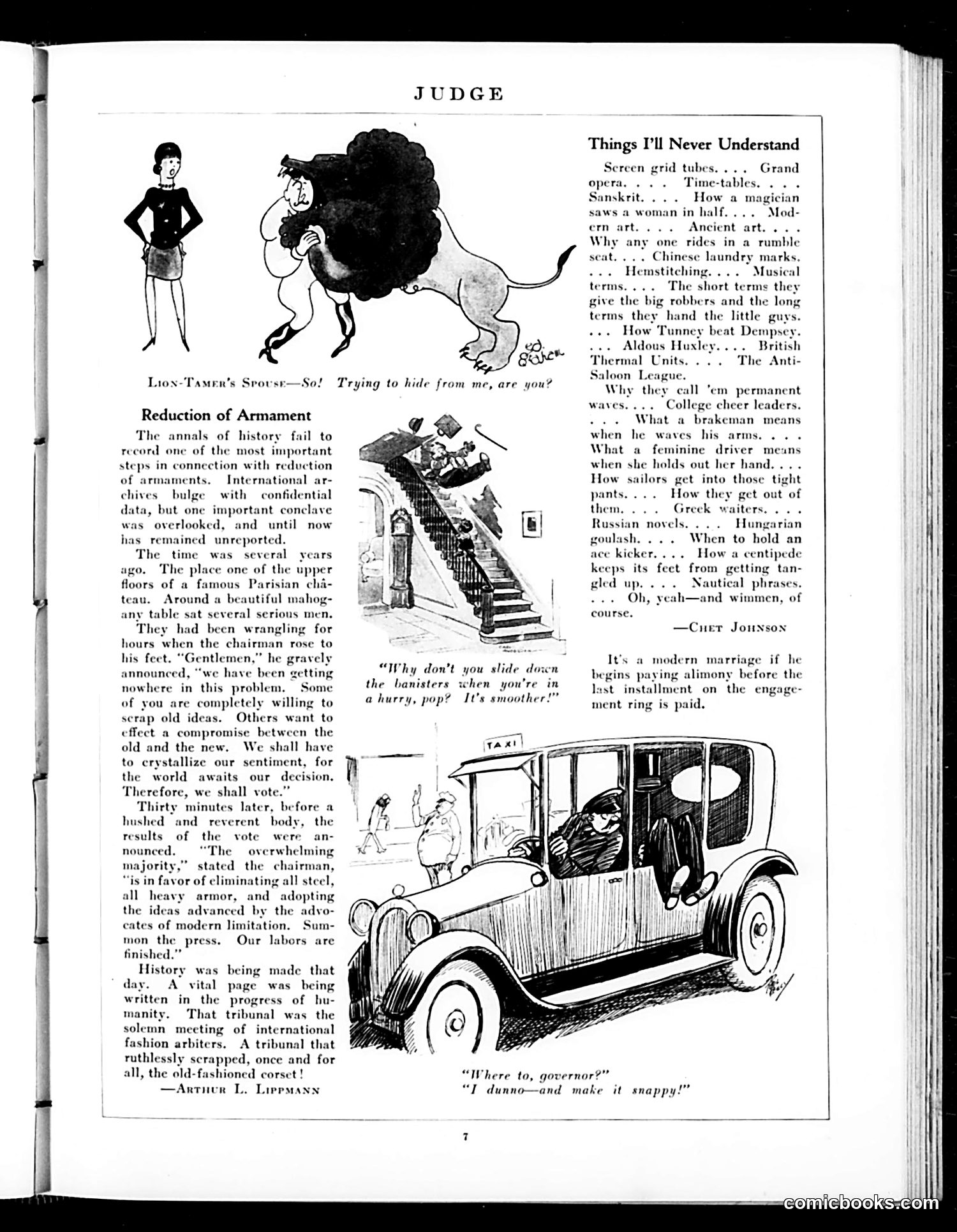
# Analysis of Judge Magazine Page This page contains three satirical pieces: **"Lion-Tamer's Spoils"** (top): A simple visual gag showing a man trying to hide from an aggressive woman (labeled a "lion-tamer"), suggesting women are dangerous or domineering. **"Reduction of Armament"** (left): A political satire by Arthur L. Lippmann. It mocks international disarmament conferences by describing a "solemn tribunal" of fashion arbiters who dramatically "voted" to eliminate the corset as their contribution to reducing armaments. The joke: while diplomats negotiate serious military treaties, fashion leaders treat the obsolete corset's demise as a major historical moment. This reflects 1920s debates about women's liberation and changing fashion. **"Things I'll Never Understand"** (right): A humorous list by Chet Johnson of everyday mysteries (seven-grid tubes, opera, Sanskrit, modern art, etc.), including social observations like why small criminals get long sentences while major criminals get short ones, and commentary on marriage/alimony. The taxi cartoon at bottom shows a driver rushing passenger, making a joke about impatience.
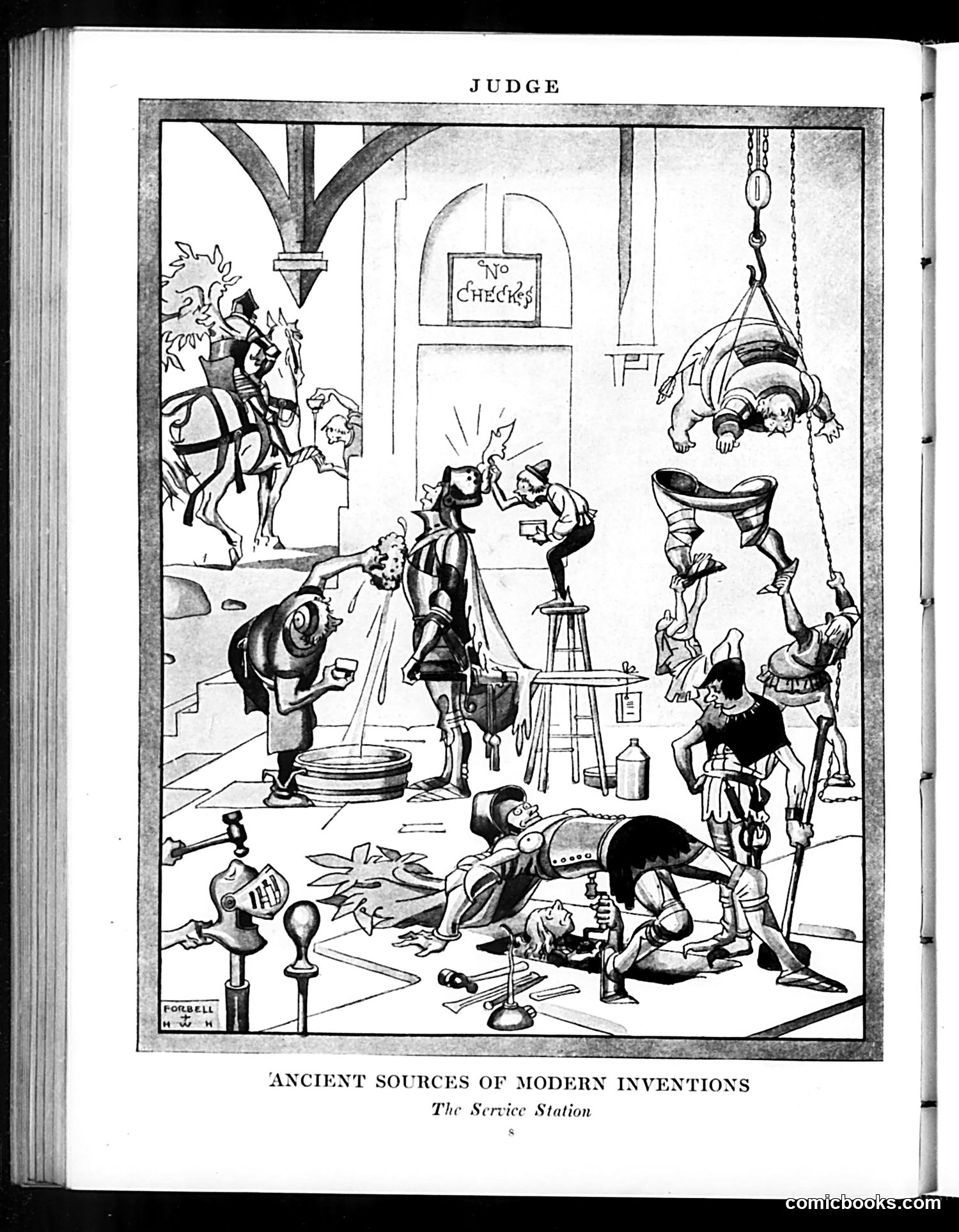
This satirical cartoon from Judge magazine presents a humorous comparison between ancient judicial torture and modern automobile service stations. Titled "Ancient Sources of Modern Inventions: The Service Station," it depicts a medieval torture chamber where figures in period dress operate various torture devices alongside a central figure being stretched on a rack. The satire equates the painful experience of getting an automobile serviced with medieval torture—suggesting that visiting a service station is financially and physically taxing. Various torture implements appear throughout the scene, with attendants operating them much like modern mechanics. The "No Checks" sign emphasizes the expense involved. This reflects early 20th-century automotive anxiety, when car maintenance was unpredictable, costly, and often excessive.
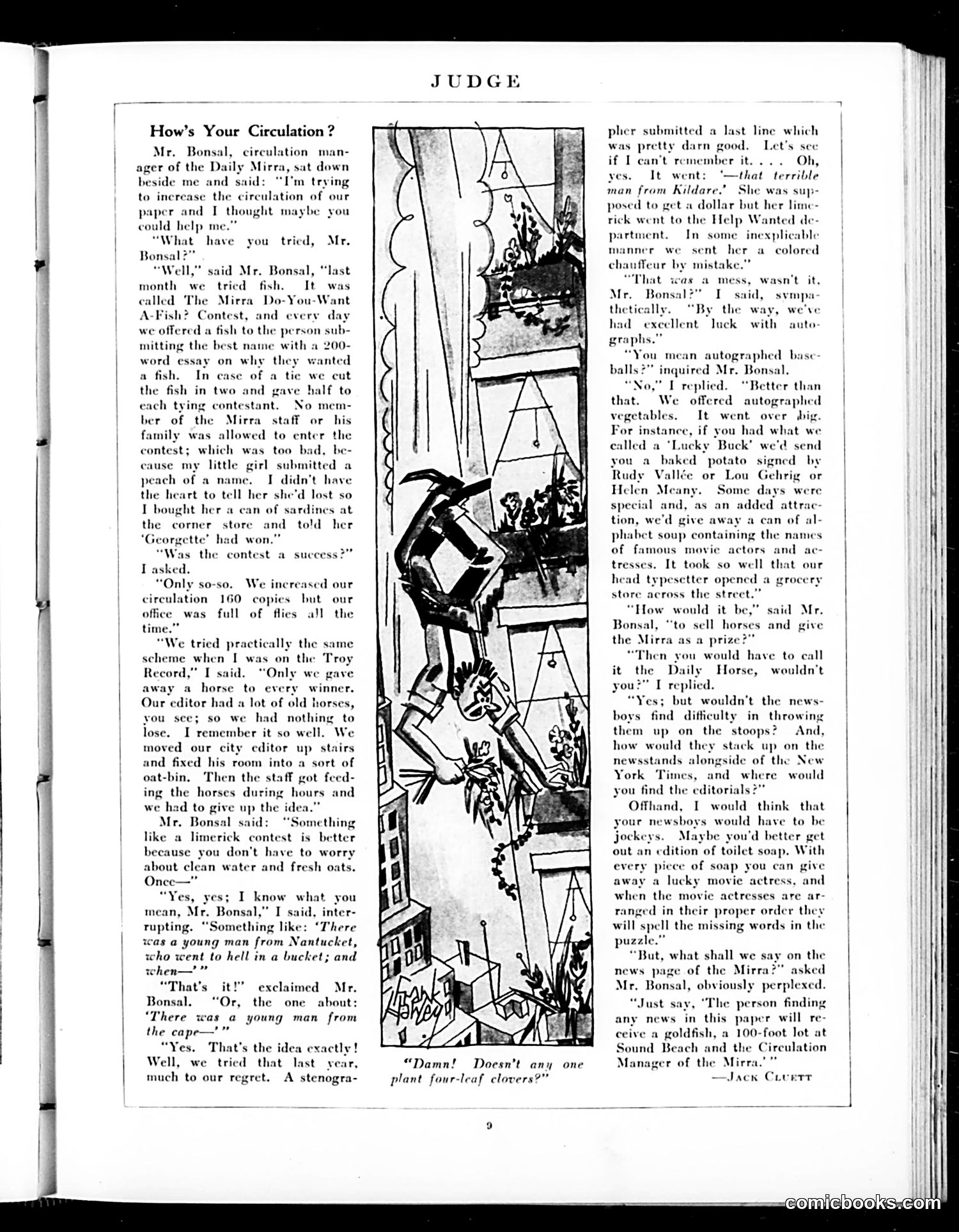
# Judge Magazine Satire Analysis This page satirizes newspaper circulation-building schemes of the early 20th century. The protagonist, Mr. Bonsal (circulation manager of the fictional "Daily Mirra"), describes increasingly absurd promotional contests to boost readership. The joke escalates through increasingly ridiculous giveaways: fish, horses, limericks, and autographed vegetables (including "Lucky Buck" potatoes signed by celebrities like Rudy Vallée and Lou Gehrig). Each scheme backfires comically—flies infest the office, horses must be fed during work hours, a stenographer accidentally receives a chauffeur instead of prize money. The cartoon illustration shows these chaos-creating animals and objects tumbling chaotically from a building, visualizing the disasters described. The satire mocks the desperation of newspapers to gain circulation through gimmicks rather than quality journalism. The final punchline—that no actual news appears in the paper—crystallizes the critique: circulation stunts have replaced real reporting as the industry's priority.
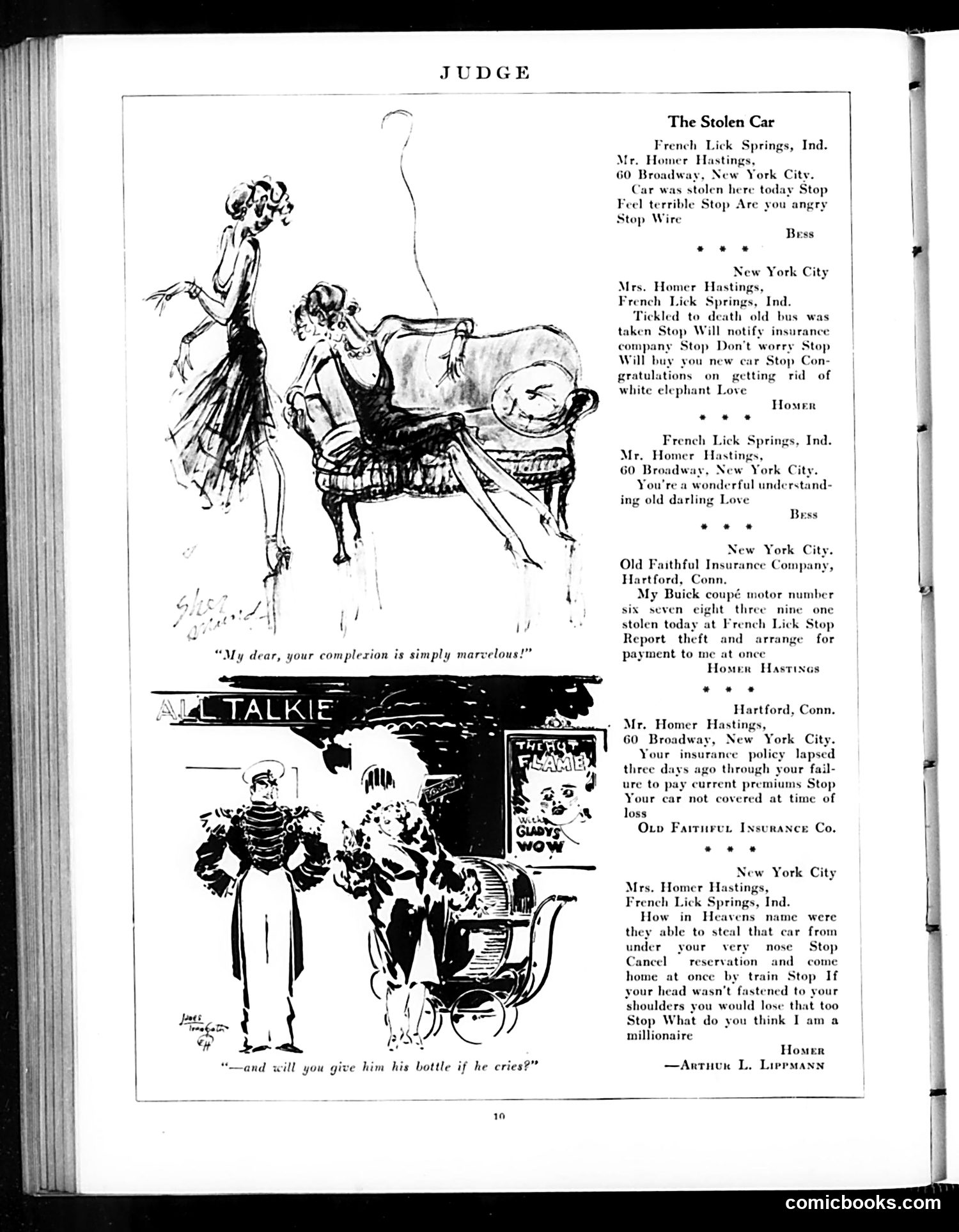
# "The Stolen Car" - Judge Magazine Satire This satirical piece uses a series of telegrams to mock marital dynamics and insurance company bureaucracy. Mr. Hastings' car is stolen at French Lick Springs (a resort town), but his wife Bess responds with delight—calling the old vehicle a "white elephant" she's glad to be rid of. Her enthusiasm suggests the marriage is strained and the car was unwanted. The humor escalates when Hastings tries to claim insurance, only to learn the policy lapsed. His frantic attempts to file are thwarted by insurance company fine print. The accompanying cartoons (with text "My dear, your complexion is simply marvelous!" and "and will you give him his bottle if he cries?") appear unrelated, possibly advertisements or separate comic bits typical of Judge's format. The satire targets both unhappy marriages and the frustrating complexity of insurance claims—everyman complaints that remain relatable today.