
A complete issue · 16 pages · 1905
Judge — January 28, 1905
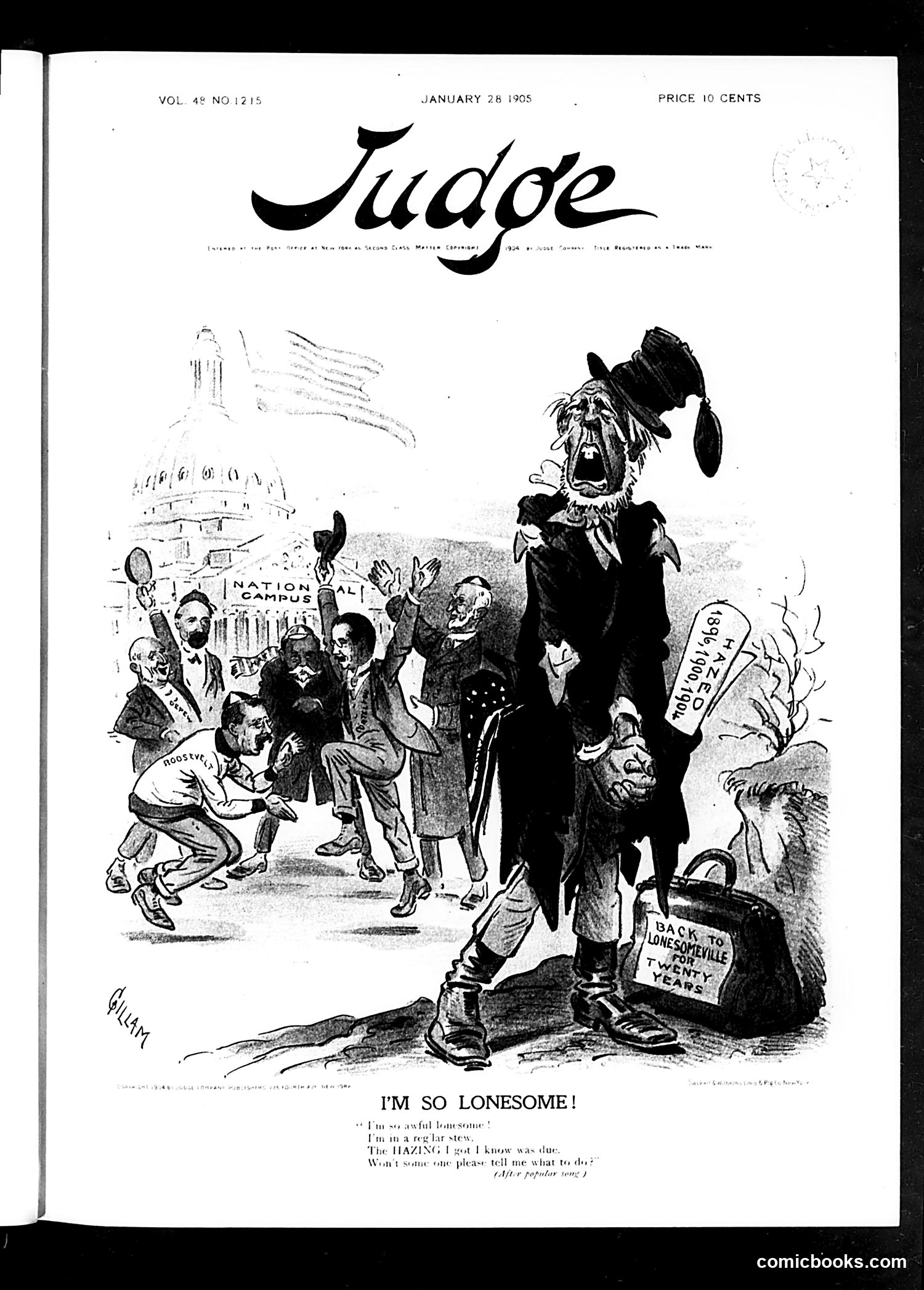
This Judge magazine cartoon from January 28, 1905, depicts a tall, disheveled figure labeled "BACK TO LONDONSVILLE FOR TWENTY YEARS" standing amid a crowd of smaller figures near what appears to be a Capitol building. The central figure wears a top hat and formal dress despite appearing distressed, suggesting a prominent political or social figure. The caption "I'm so lonesome!" with lyrics about being "awfully lonesome" and "in a regular stew" indicates satirical commentary on someone's exile, banishment, or forced departure from Washington society. The "twenty years" reference suggests a legal sentence or long-term political disgrace. Without additional context, the specific identity of the figure remains unclear, though the cartoon critiques his removal from power or influence.
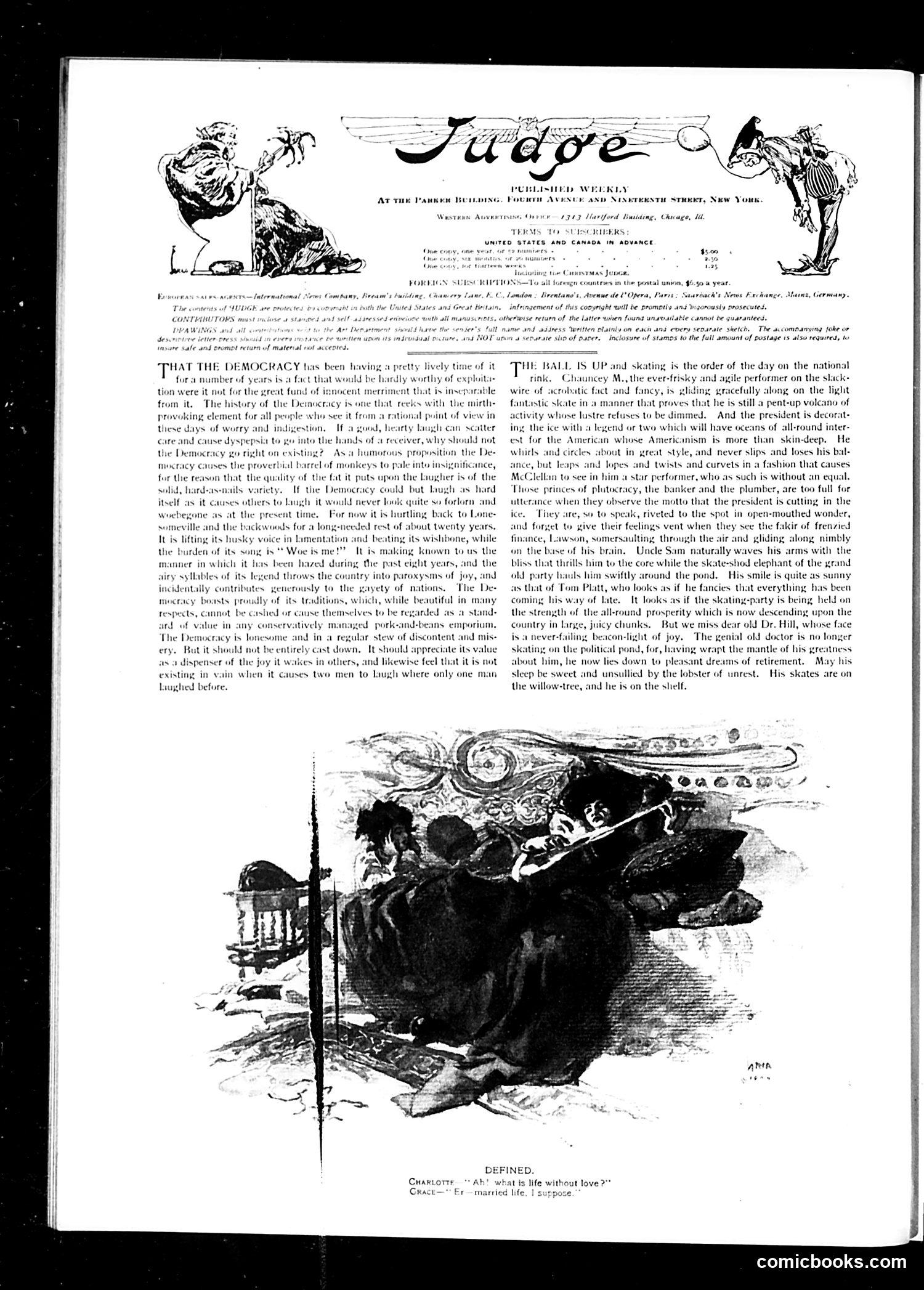
This page contains two editorial pieces defending democracy and social institutions against criticism. The left column argues democracy, despite current troubles, remains valuable and shouldn't be abandoned. The right column defends ice-skating as wholesome recreation, praising a performer (possibly named McClellan) as a skilled skater who brings joy to audiences. Below these texts is an illustration labeled "DEFINED" showing what appears to be a domestic scene with a couple, accompanied by dialogue: "Charlotte: 'Ah! what is life without love?' Crack: 'For married life, I suppose.'" This cynical joke about marriage reflects Judge's satirical tone—mocking romantic ideals versus marital reality. The specific historical context of these pieces remains unclear without publication date information.
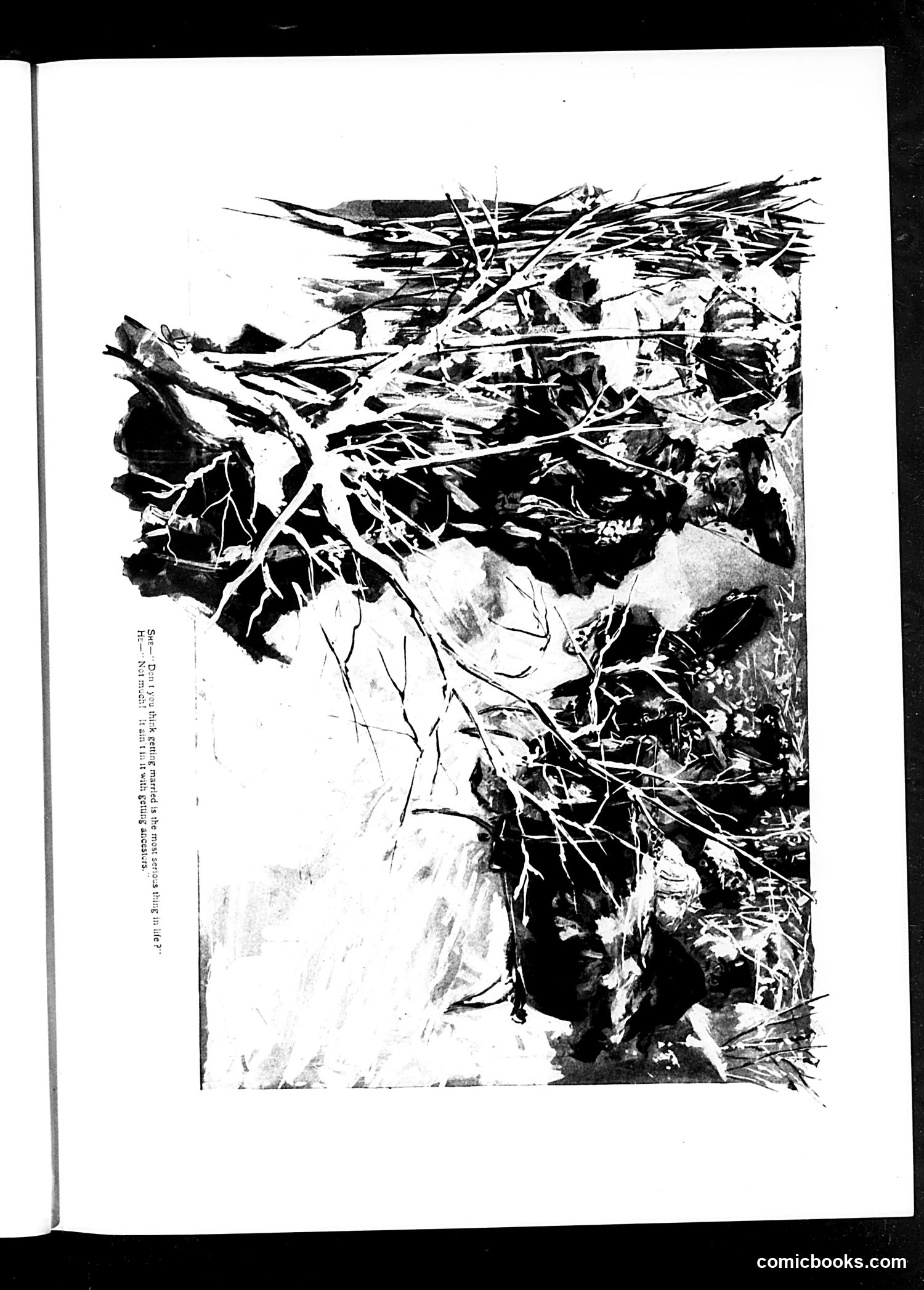
I can see this is a black and white photograph or illustration showing tangled branches, debris, and what appears to be natural destruction—possibly storm damage, fallen trees, or overgrown vegetation. However, the image quality is quite poor, making it difficult to discern specific details or identify whether this is meant as political satire. The OCR text appears incomplete or illegible on this page. Without clearer text or visual elements identifying specific political figures, events, or captions that would anchor the satire, I cannot reliably explain what social or political commentary Judge magazine intended here. To properly analyze this as political satire, I would need either clearer OCR text, visible captions, or more distinguishable representational elements in the image itself. I cannot responsibly speculate beyond what's visible.
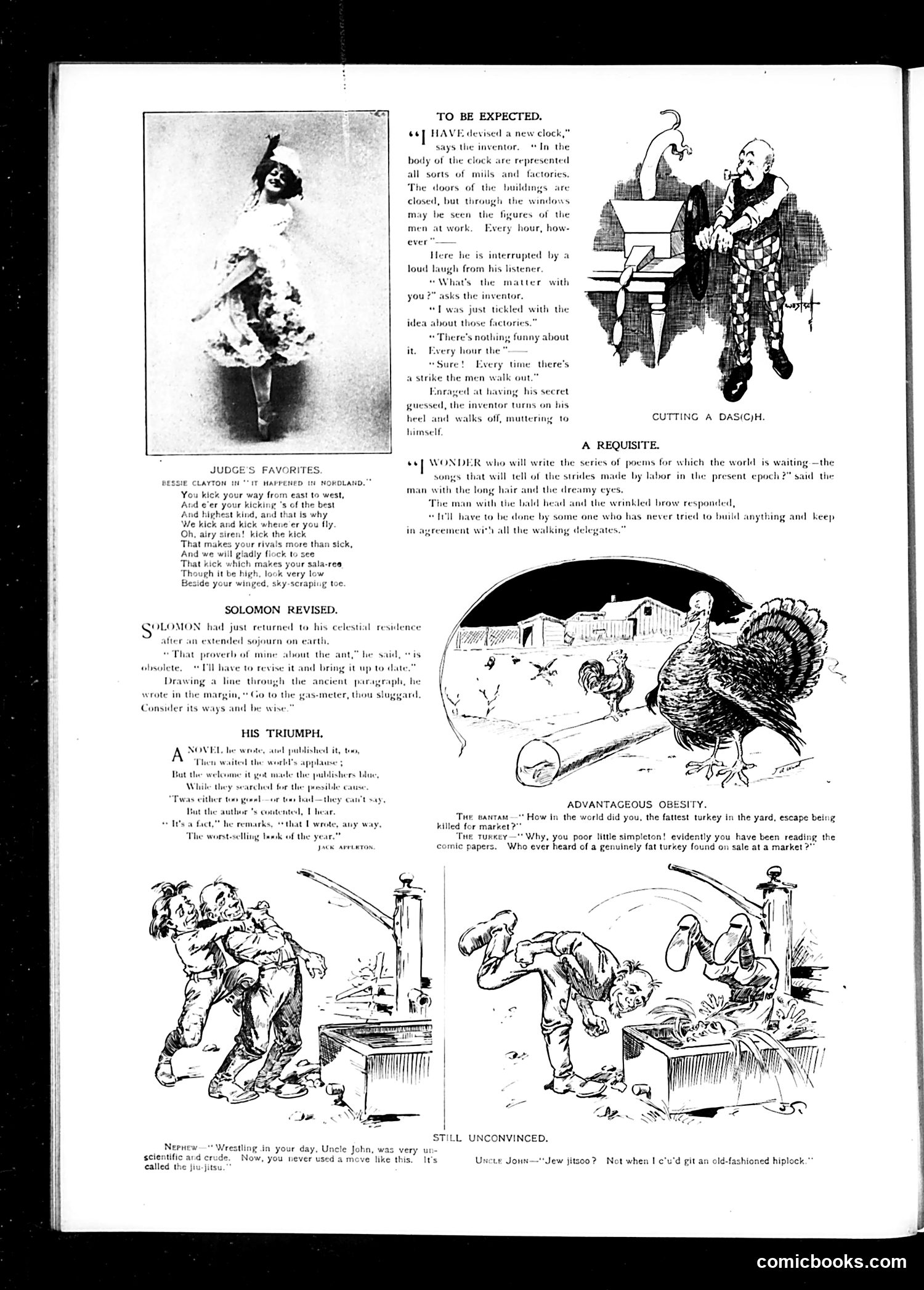
This page contains several unrelated humorous sketches typical of Judge's satirical format: **"To Be Expected"** depicts an inventor frustrated by factory workers striking every hour—a commentary on labor disputes and union organizing in the industrial era. **"Judge's Favorites"** quotes Bessie Clayton from "It Happened in Hoboland," apparently a theatrical production. **"Solomon Revised"** and **"His Triumph"** offer literary and philosophical humor without clear political reference. **"Advantageous Obesity"** shows a fat turkey escaping market, joking that obesity makes it unsaleable—satirizing both the turkey and attitudes about body size. **"Still Unconvinced"** depicts Uncle John resisting modern "jiu-jitsu" martial arts techniques, preferring old-fashioned fighting methods—mocking generational resistance to new trends. The page reflects early 20th-century concerns: labor unrest, technological change, and social modernization.
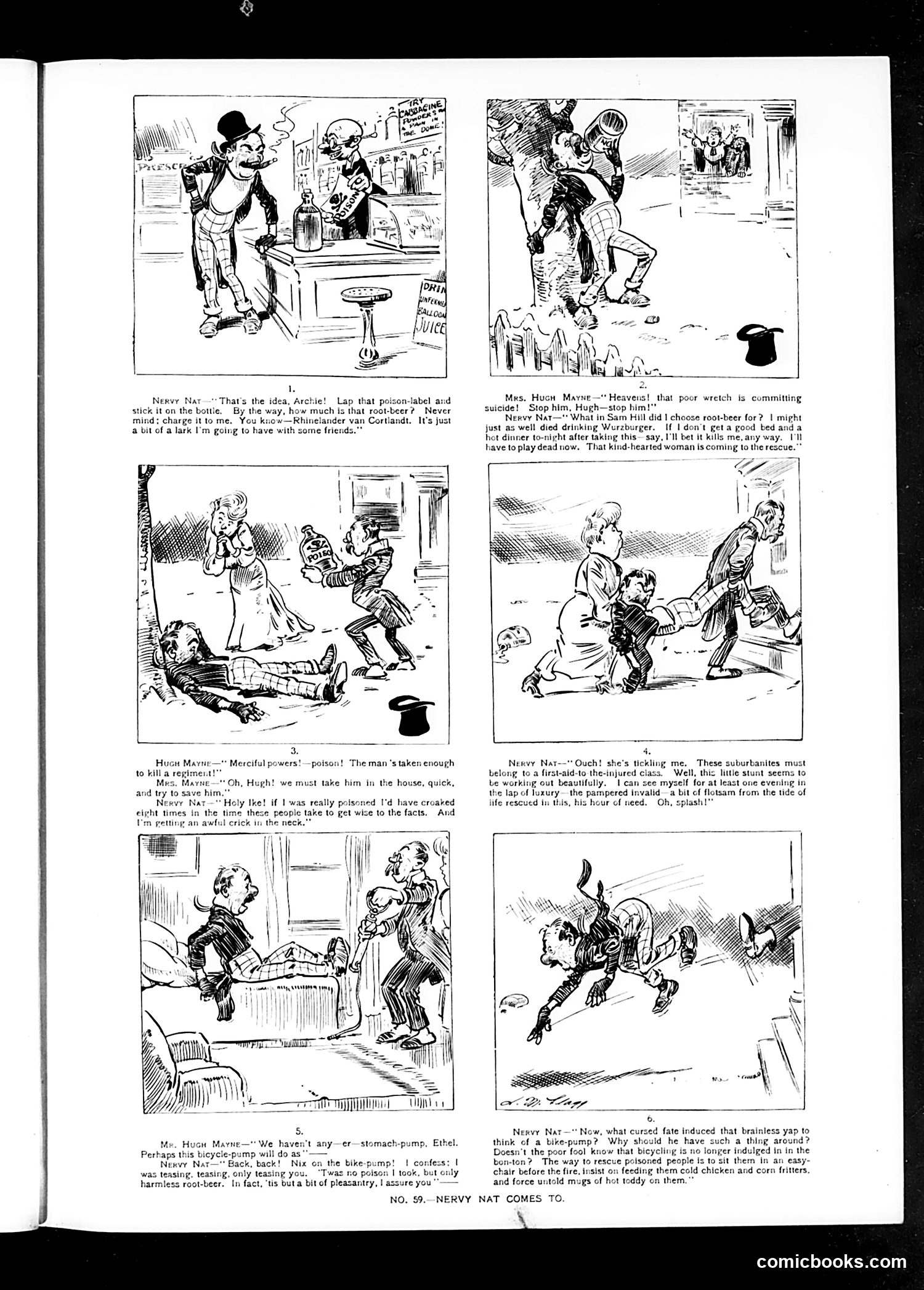
This is a slapstick comedy strip about **Nervy Nat**, a scheming character who fakes suicide by drinking root beer to con sympathetic suburbanites into caring for him as a pampered invalid. The satire targets **wealthy suburbanites' pretentiousness**: they're portrayed as foolishly eager to demonstrate first-aid knowledge and play nurse to someone they believe poisoned, despite obvious signs of fakery. Nat exploits their desire to appear cultured and helpful. The joke hinges on class humor—Nat views the suburban household as an easy mark for free bed, meals, and luxurious treatment. He's cynical about their "rescue" efforts, treating the whole situation as entertainment at their expense. The references to specific beers (Wurzburger) and social customs suggest this mocks actual turn-of-century suburban affectation and the gap between working-class schemes and middle-class naïveté.
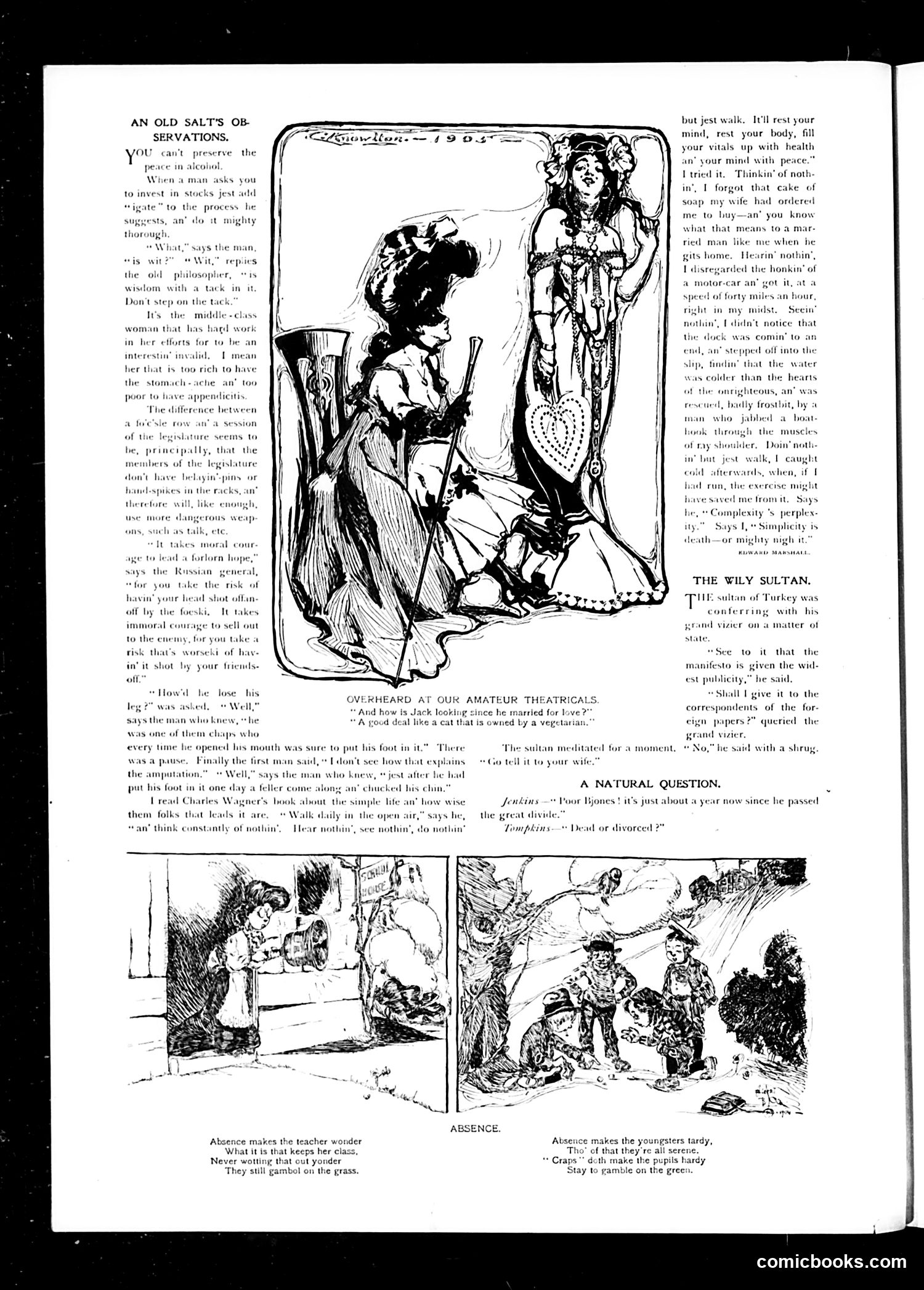
This page from *Judge* magazine contains satirical commentary on early 20th-century American life and politics. **"An Old Salt's Observations"** features a garrulous sailor offering folksy wisdom about life—preserved "in alcohol." His observations mock pretentious self-help philosophy (the "simple life" movement was popular then) by describing how following such advice backfired comically: forgetting his wife's errand, getting hit by a motorcar, falling into the dock. The satire targets naive faith in simplistic life-improvement schemes. **"The Wily Sultan"** jokes about Turkish governance and press relations. The Sultan's decision to tell his wife the news instead of foreign correspondents satirizes how gossip spreads faster than official channels—implying the Ottoman government's communications were ineffective or that wives were notorious gossips. **"Absence"** presents two simple captioned illustrations about school life, showing how a teacher's absence creates classroom chaos while students run wild. The overall tone is gentle domestic and political satire typical of *Judge*'s humor—poking fun at pretension, marital dynamics, and foreign governance through exaggeration and wordplay rather than harsh critique.
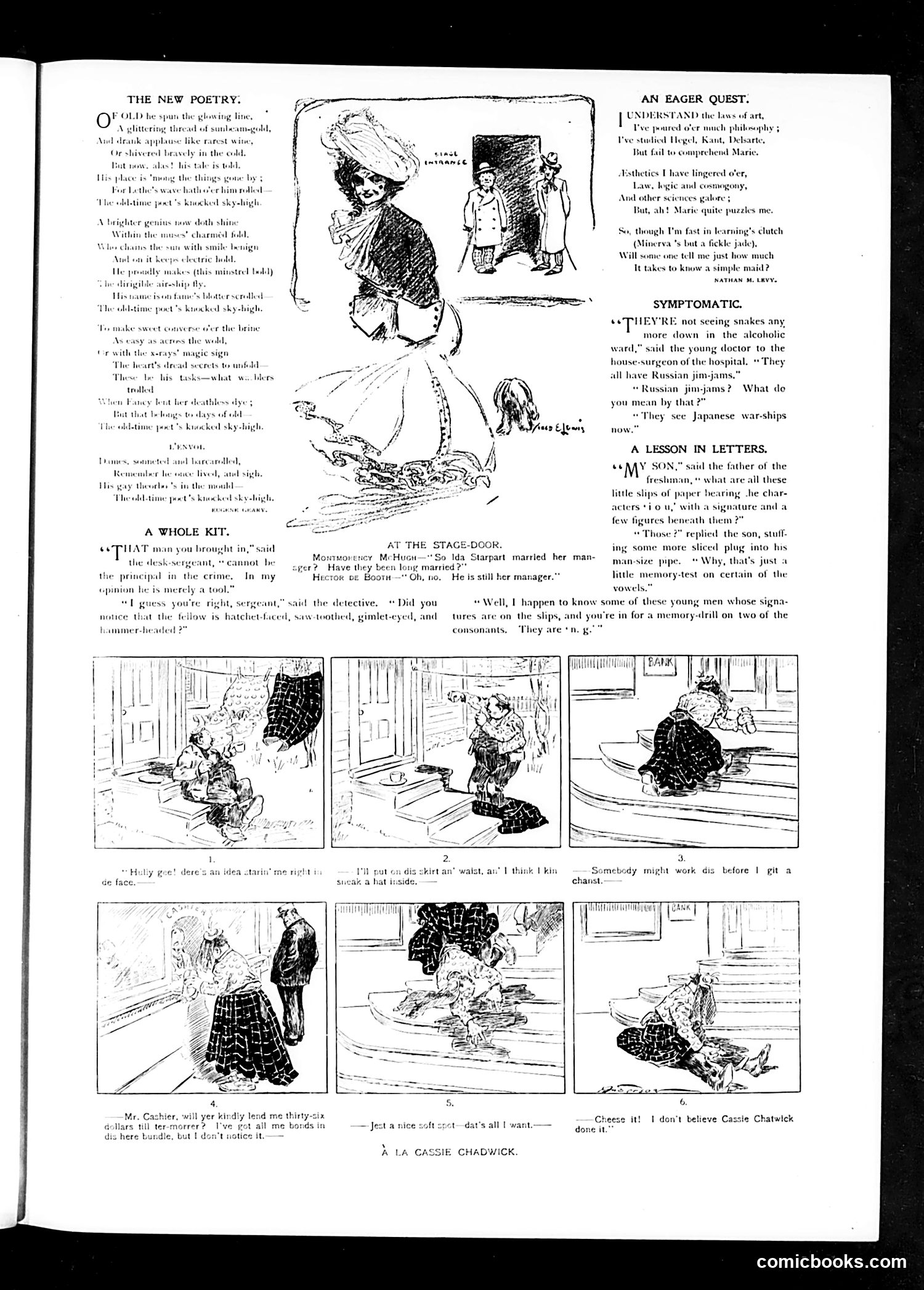
This page contains several short humorous pieces satirizing turn-of-the-century American life: **"The New Poetry"** mocks modern poets who abandon traditional romantic themes for trivial, contemporary subjects—the "old-time poet's knocked sky-high." **"A Whole Kit"** is a detective story joke playing on physiognomic caricature: the sergeant describes a suspect as "hatchet-faced, saw-toothed, gimlet-eyed, hammer-headed"—criminal stereotypes that proved unreliable. **"Symptomatic"** references the Russo-Japanese War (1904-05), satirizing alcoholics who've shifted from seeing snakes (classic alcohol hallucination) to seeing Japanese warships—suggesting the war dominated public consciousness so thoroughly it even invaded drunk delirium. **"A Lesson in Letters"** jokes about college promissory notes ("I.O.U.") disguised as vowel exercises. **"À la Cassie Chadwick"** references the notorious Cassie Chadwick fraud case (early 1900s), where the con artist swindled banks by claiming to be Andrew Carnegie's illegitimate daughter. The comic strip shows someone committing petty larceny.
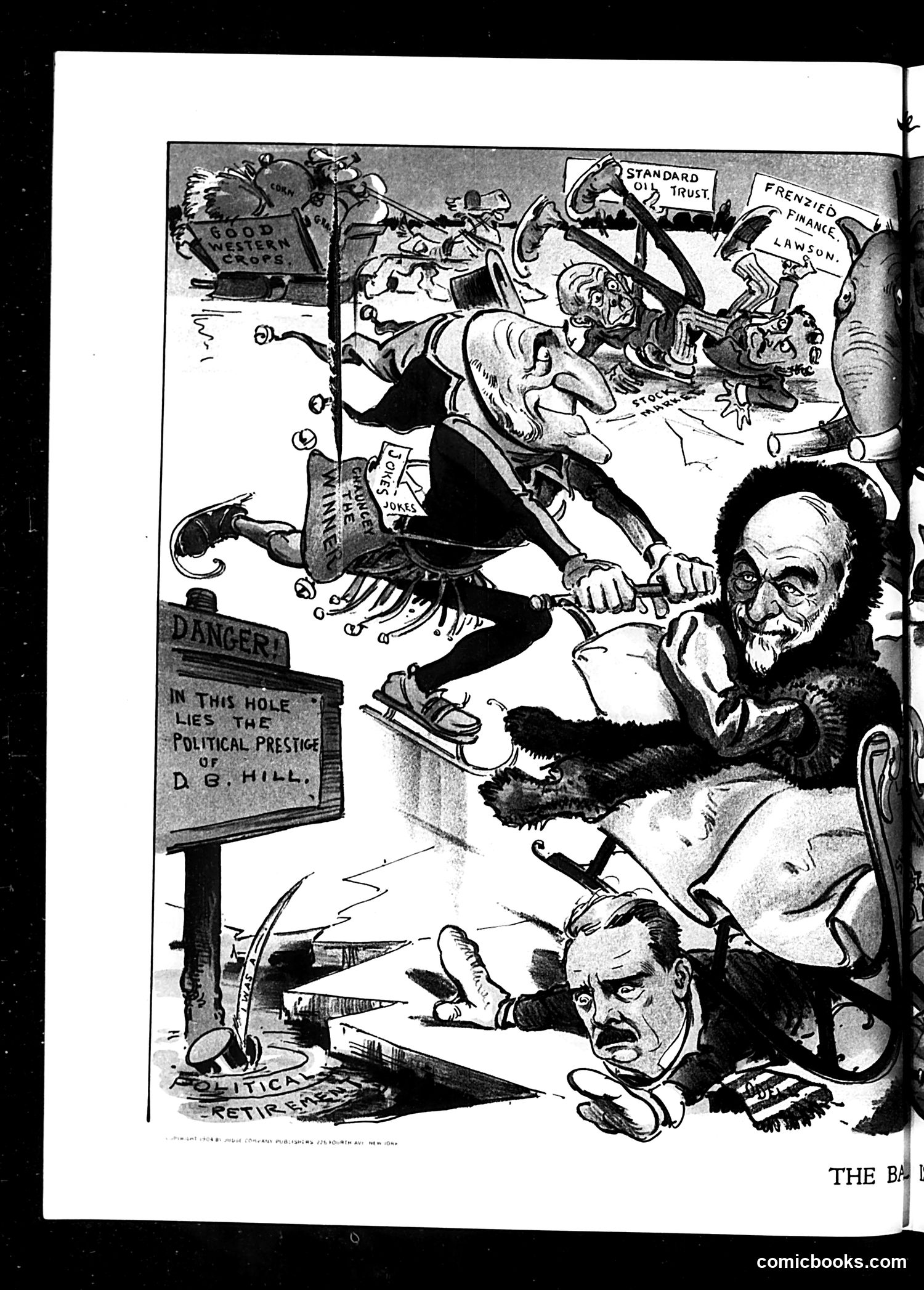
This appears to be a satirical cartoon from *Judge* magazine depicting a dangerous political situation. A sign warns of "DANGER! IN THIS HOLE LIES THE POLITICAL PRESTIGE OF D.G. HILL"—identifying the cartoon's target as someone named D.G. Hill. The cartoon shows figures falling into or struggling near this hole, with labels visible including "STANDARD OIL TRUST," "FRENZIED FINANCE," and references to "STOCK." The imagery satirizes Hill's political downfall, likely caused by association with corporate scandals or financial impropriety involving the Standard Oil Trust—a major monopoly scandal of the Progressive Era. The grotesque caricatured faces suggest contemporaries or associates implicated in the controversy. The overall message criticizes Hill's entanglement with corporate corruption.
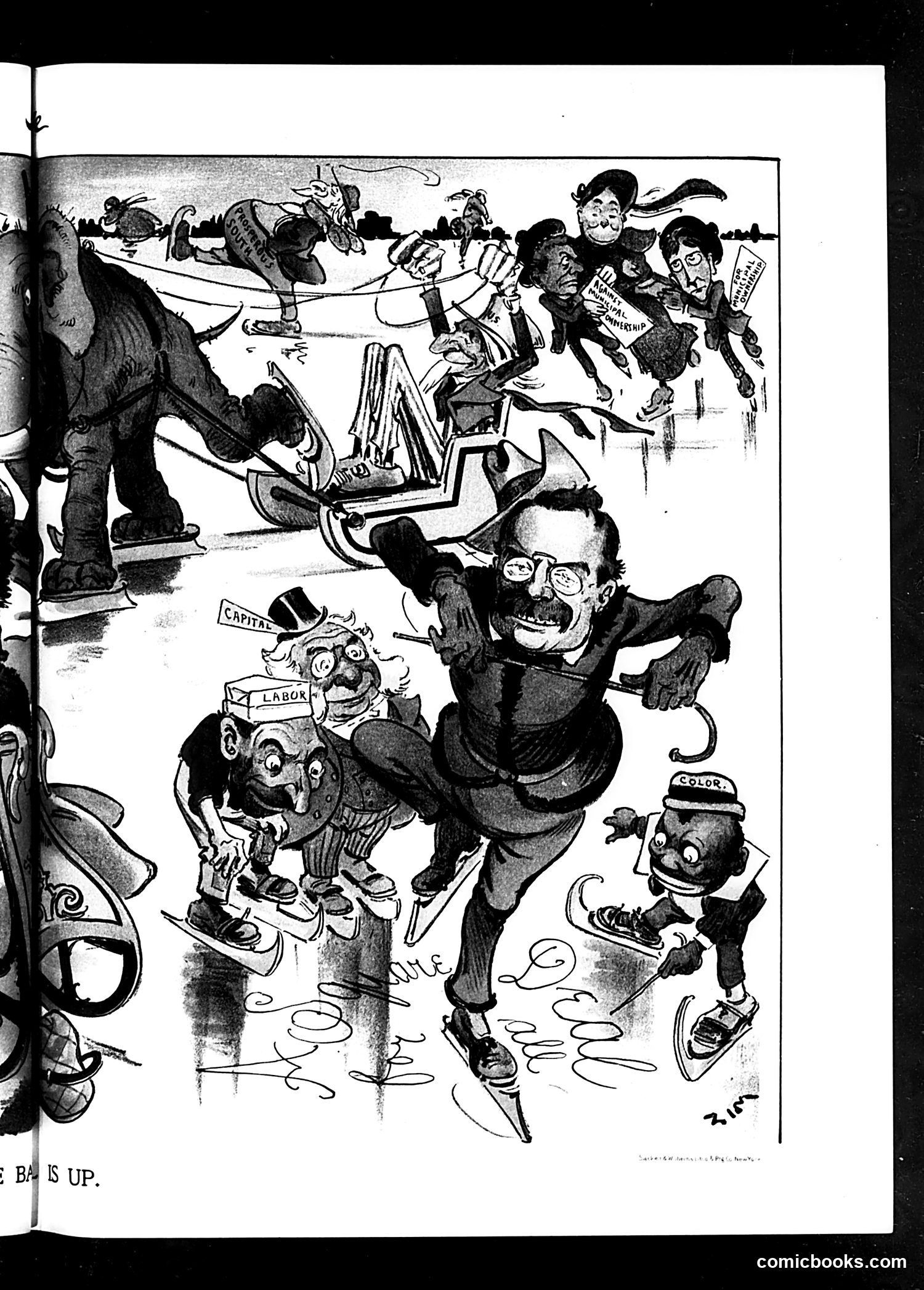
This appears to be a satirical cartoon from *Judge* magazine depicting a tug-of-war scene. The central figure is a large man being pulled in opposite directions by groups of smaller figures labeled "CAPITAL" and "LABOR." The caricatured figures at both ends appear to be political or business leaders of the era. The cartoon satirizes the tension between capitalist interests and labor movements—a major social conflict in early 20th-century America. The central figure, caught between these powerful forces, likely represents either the government, public interest, or a specific political leader being pulled by competing interests. The exaggerated facial features and caricature style are typical of period political satire, though I cannot definitively identify specific individuals without clearer text or additional context.
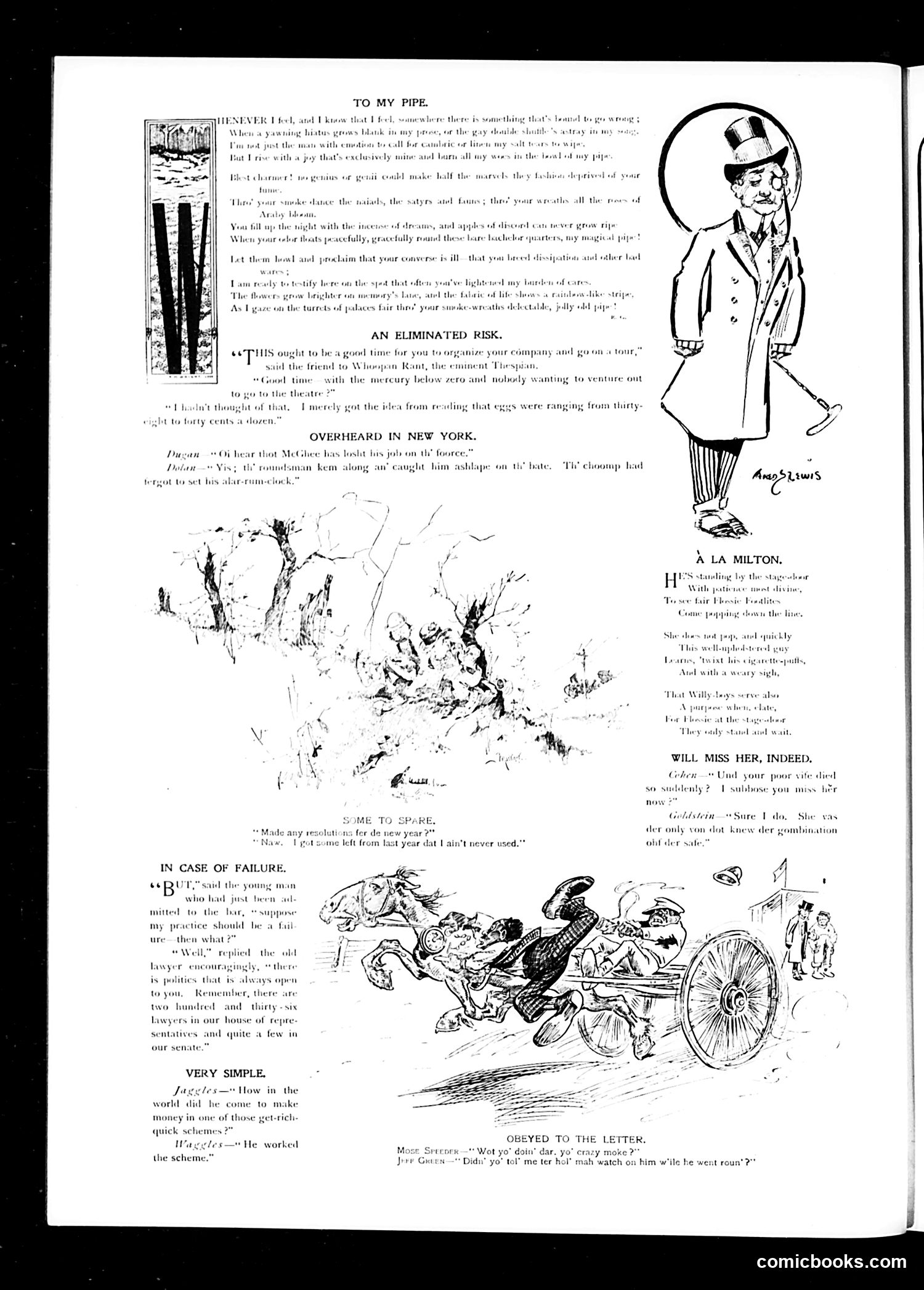
This page contains several satirical pieces typical of early 20th-century American humor: **"To My Pipe"** is a romantic poem celebrating pipe smoking—common leisure activity for gentlemen of the era, presented here with deliberately overwrought sentiment for comedic effect. **"An Eliminated Risk"** mocks theatrical impresarios considering winter tours when weather and low egg prices (apparently a economic indicator) discourage public outings. **"Overheard in New York"** uses ethnic dialect humor (common in period Judge cartoons) about a policeman falling asleep on duty. **"A La Milton"** references John Milton with theatrical/poetic pretension. **"In Case of Failure"** satirizes a newly-admitted lawyer being told he can always enter politics—a joke about perceived corruption/incompetence in Congress and state legislatures. **"Very Simple"** and **"Obeyed to the Letter"** appear to be brief comic exchanges about get-rich-quick schemes and literal interpretation of instructions. The cartoons rely heavily on period-specific social anxieties and ethnic stereotyping now considered offensive.
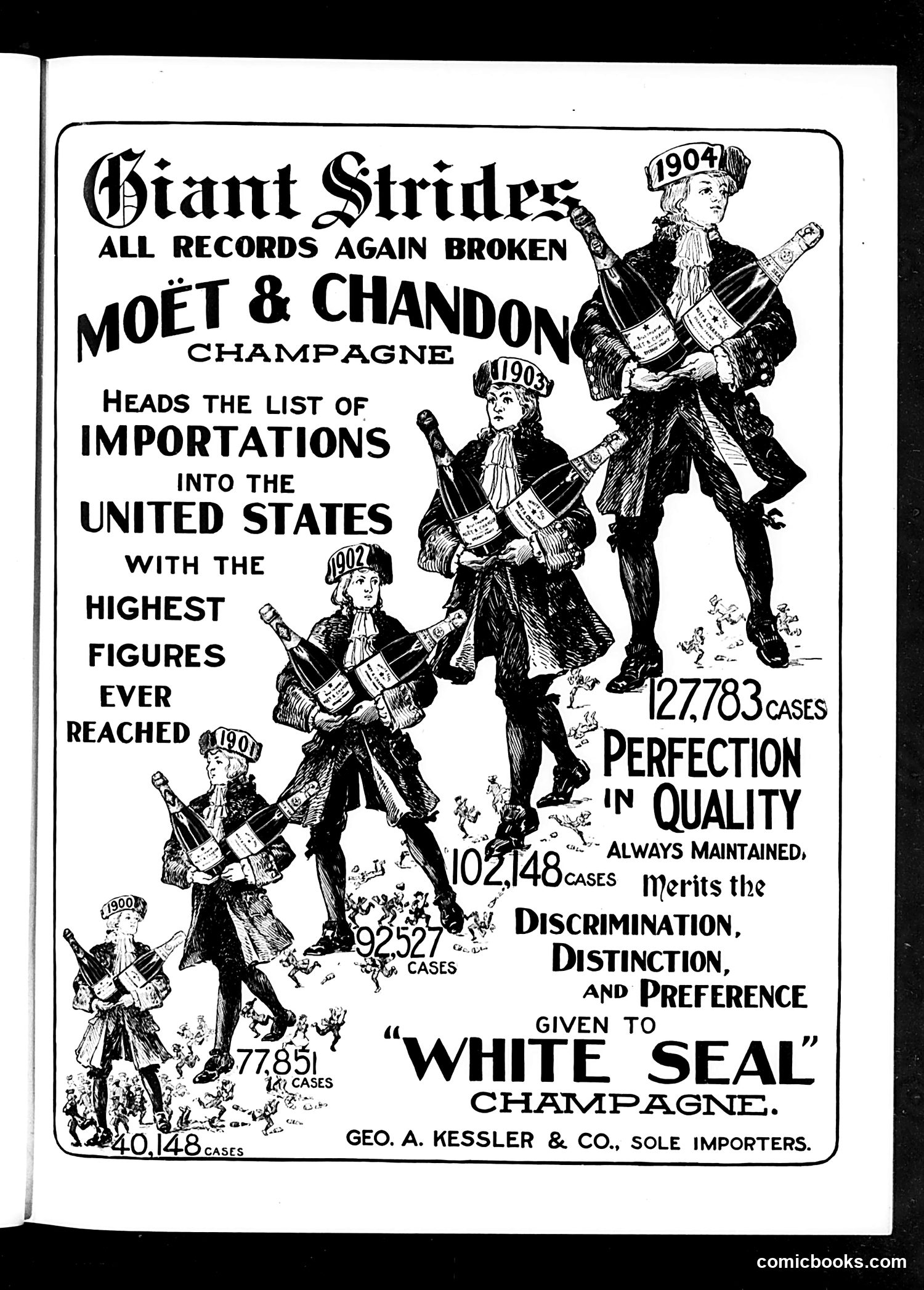
This is a **champagne advertisement**, not political satire. It appears in *Judge* magazine (likely early 1900s, based on the "1904" visible on one figure's crown). The "Giant Strides" shows anthropomorphized champagne bottles in period dress, each labeled with years (1900-1904), depicting growing import volumes into the United States. The figures march upward, symbolizing increasing sales success. The advertisement claims Moët & Chandon "White Seal" champagne leads U.S. imports with record-breaking numbers (127,783 cases cited). It emphasizes "perfection in quality" and "discrimination, distinction, and preference" — marketing language suggesting luxury and sophistication to wealthy consumers. Geo. A. Kessler & Co. was the sole American importer. This is straightforward commercial advertising using visual metaphor to celebrate sales growth, not commentary on politics or social issues.
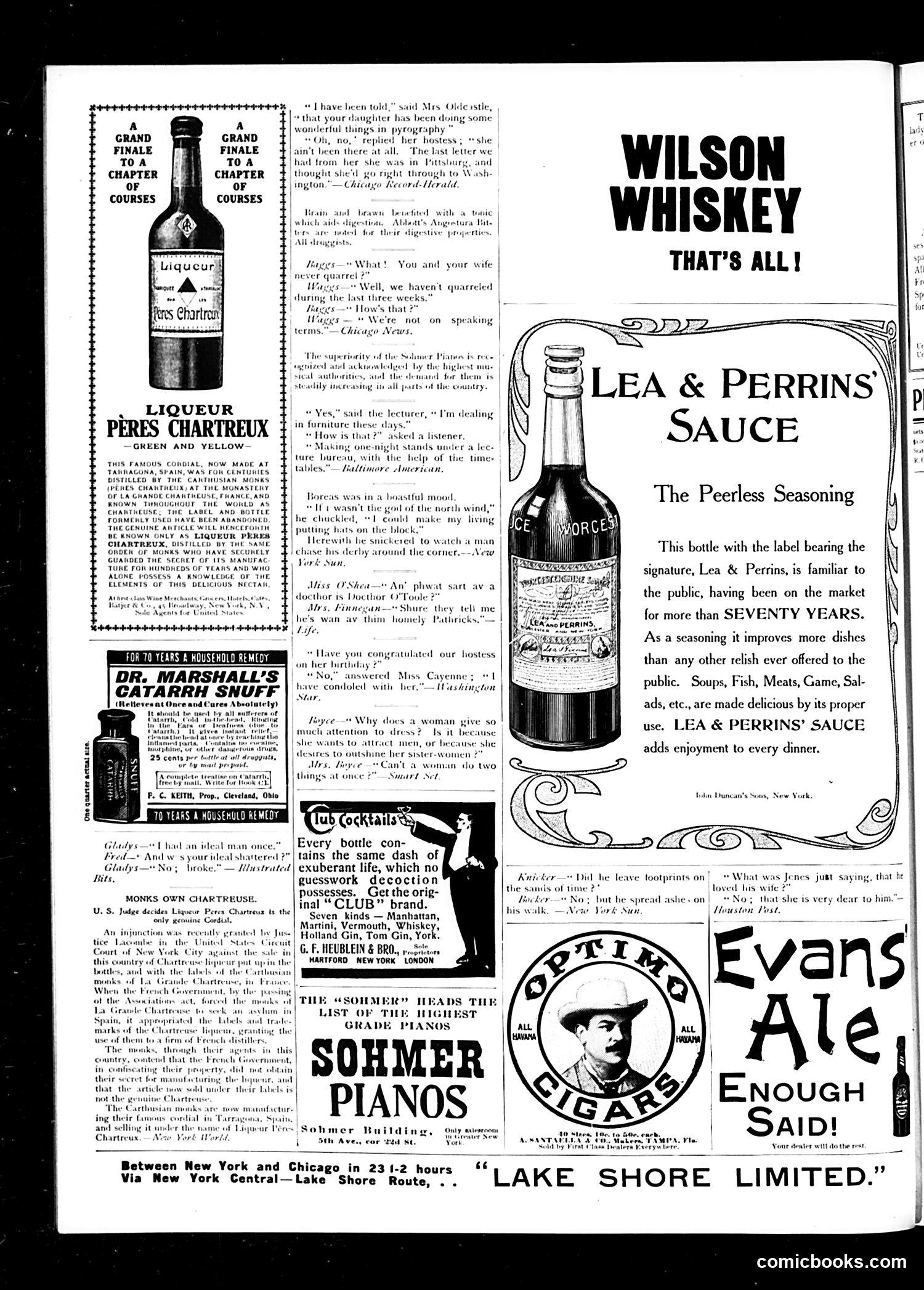
This page is primarily **advertising**, featuring product promotions for liqueurs, sauces, pianos, cigars, and whiskey interspersed with short humor pieces. The small jokes scattered throughout are typical early 20th-century conversational humor with no apparent political content. They rely on domestic situations (a couple not quarreling, a woman's attention to dress) and Irish-accented dialogue that was common in period publications. The advertisements themselves reflect pre-Prohibition era marketing (liqueurs, whiskey, cordials) and reflect contemporary consumer culture. The lengthy text about "Liqueur Pères Chartreux" notes a U.S. court decision regarding the genuine article versus imitations—a legal dispute over authenticity. **No identifiable political cartoons or caricatures appear on this page.** The content is primarily commercial rather than satirical, representing Judge magazine's revenue model of mixing light entertainment with paid advertising.
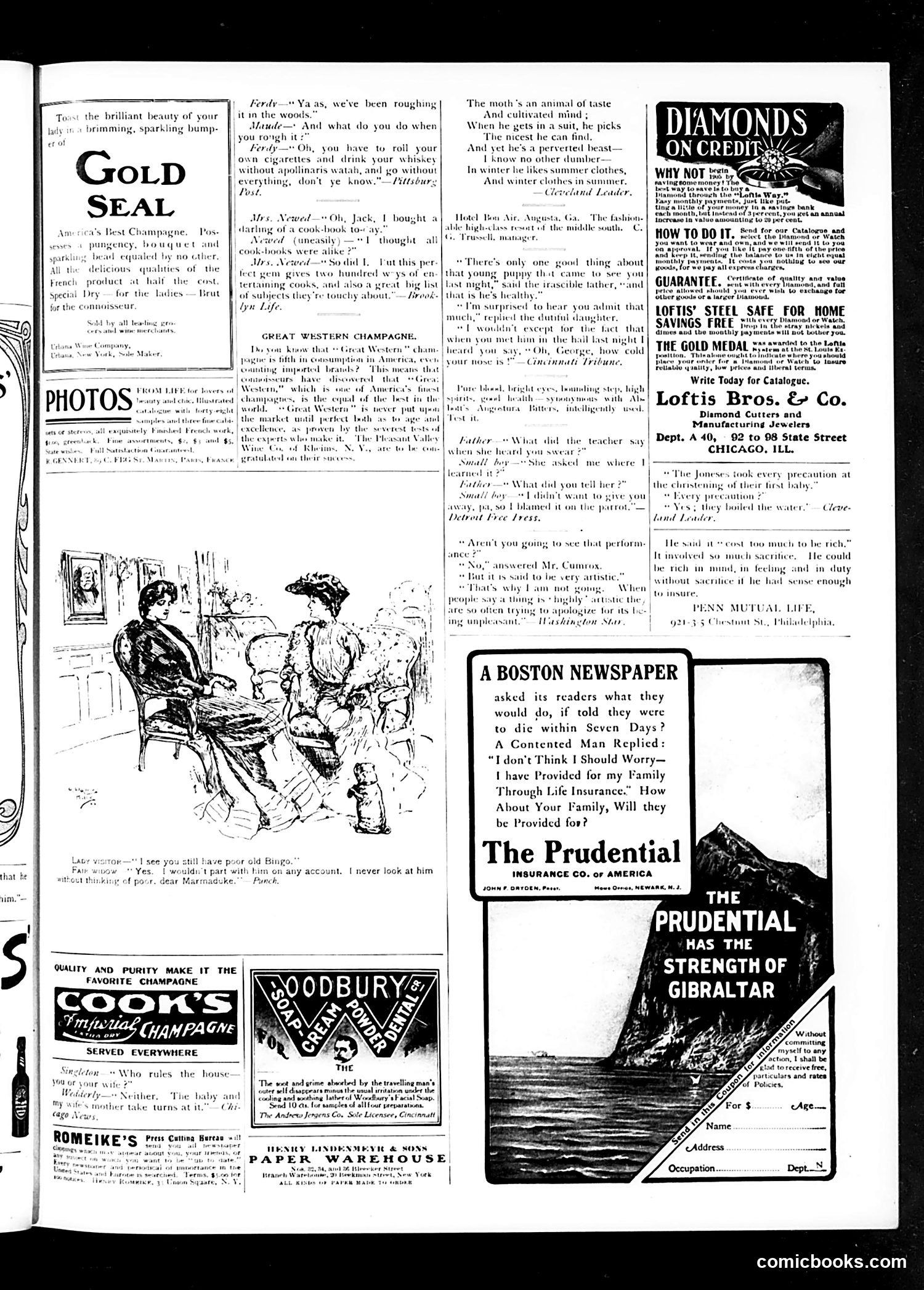
This page is primarily **advertising**, dominated by champagne and insurance ads. The modest cartoon content consists of brief domestic humor vignettes: **The cartoons** show married couples in playful disagreements—wives asking husbands about roughing it in woods, swearing, or financial extravagance. The humor targets **gender roles and marital dynamics**: wives portrayed as practical and disapproving, husbands as reckless. One joke involves a parrot blamed for the husband's swearing. **Social context**: These reflect early 20th-century assumptions about gender—husbands controlling finances, wives managing household behavior. The "moth" poem satirizes fastidious aesthetes. **The advertising** reveals period concerns: life insurance (Prudential, Penn Mutual) appealing to family breadwinners with mortality anxiety; diamonds and safes marketed as status symbols and security; champagne as luxury goods for "connoisseurs." The page represents Judge's dual function: satirical commentary on social customs alongside commercial exploitation of consumer anxieties about wealth, status, and family security.
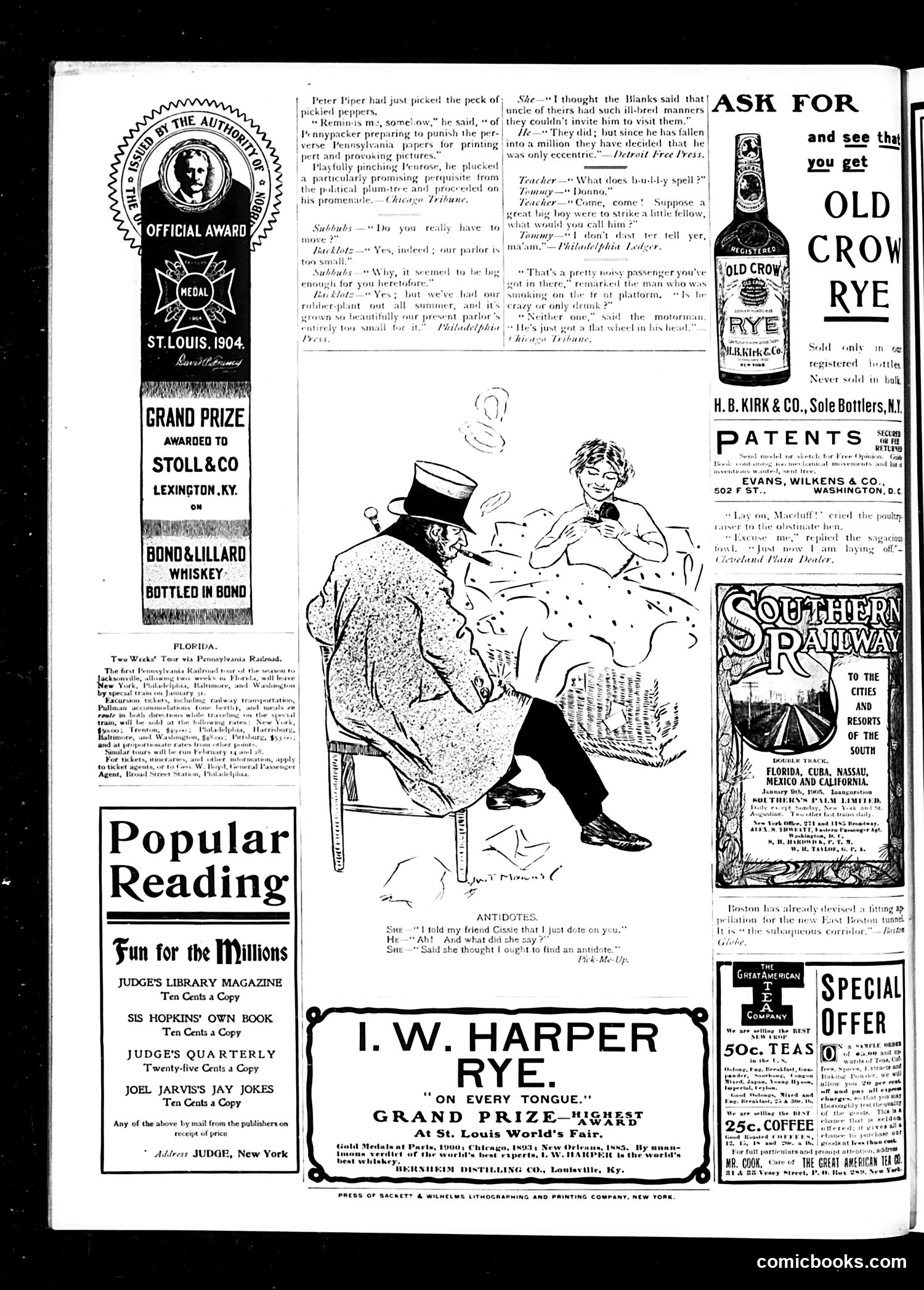
This page is primarily **advertising and promotional content** rather than political satire. The central cartoon depicts a rotund man in a top hat with an oversized belly labeled "I.W. HARPER RYE" whiskey—a visual pun equating the product with abundance and prosperity. The figure appears to be a generic "everyman" type rather than a specific political figure. The page emphasizes I.W. Harper's 1904 St. Louis World's Fair Grand Prize award, a major marketing claim. Surrounding advertisements promote Judge magazine's various publications, competing whiskey brands (Old Crow Rye, Bond & Lillard), patent services, railroad travel, and tea/coffee offers. The scattered text snippets labeled "ANTIDOTES" appear to be mild jokes unrelated to the main cartoon. Overall, this is a **commercial advertising page** using humor and an inflated-belly visual gag to market alcohol products to Judge's readers—reflecting early 1900s advertising practices and the magazine's dual nature as both satire publication and advertising vehicle.
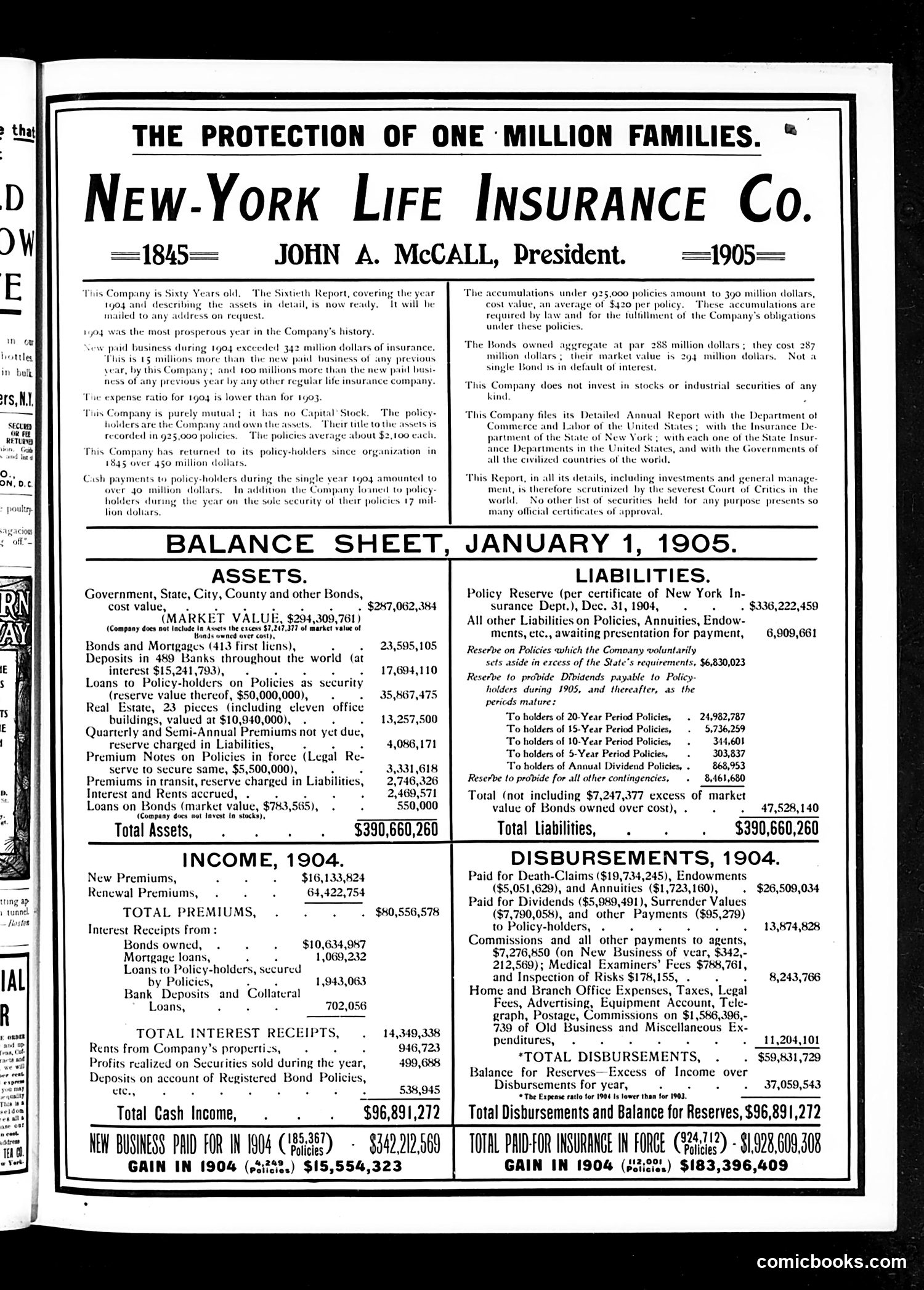
This page is primarily **advertising**, not satire or editorial content. It's a full-page promotional statement by the New York Life Insurance Company, presented as their 1905 annual report summary. The document showcases the company's financial health and stability to potential customers: $390 million in assets, $16+ million in new premiums during 1904, and claimed protection for "one million families." The detailed balance sheet, income statements, and disbursements aim to demonstrate trustworthiness and sound management under President John A. McCall. Key selling points emphasized: the company is "purely mutual" (owned by policyholders, not stockholders), has returned $450+ million to policyholders since 1845, maintains conservative investments (bonds and mortgages only—no stocks), and submits to rigorous government oversight. For a modern reader: this represents how major financial institutions built credibility in the early 1900s—through transparent disclosure of assets, earnings, and regulatory compliance, presented as reassurance during an era of frequent bank failures and insurance company collapses.
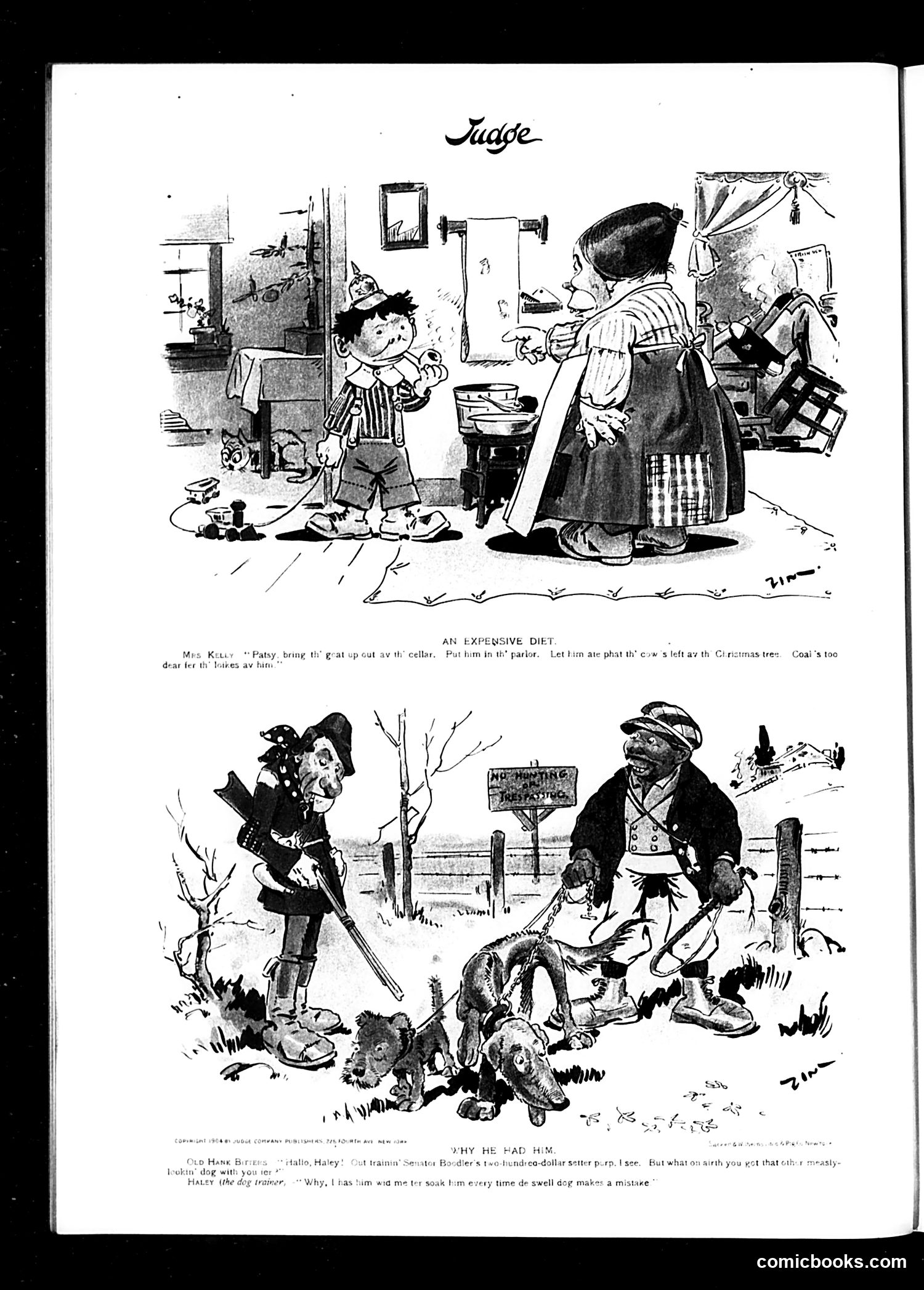
This page contains two satirical cartoons labeled "An Expensive Diet." **Top cartoon**: Shows a working-class Irish immigrant family (identifiable by dialect and caricature style typical of the era) discussing feeding their child. The satire mocks the contrast between wealthy people's elaborate diets and poor families' meager options—the mother suggests feeding the child scraps left by a cow or Christmas tree, highlighting poverty and food insecurity. **Bottom cartoon**: Depicts a wealthy man (appearing to be a politician or businessman based on his formal dress) with hunting dogs, referencing the phrase "Why, I can aim and fire to break him every time or smell dog makes a misture." This likely satirizes excessive wealth and leisure activities of the rich while working people struggle. The overall theme critiques class inequality and the "expensive diet" disparity between rich and poor during what appears to be the early 20th century.