
Pulp Fiction, 1865 · page 41 of 399
The Argosy — page 41: what you’re looking at
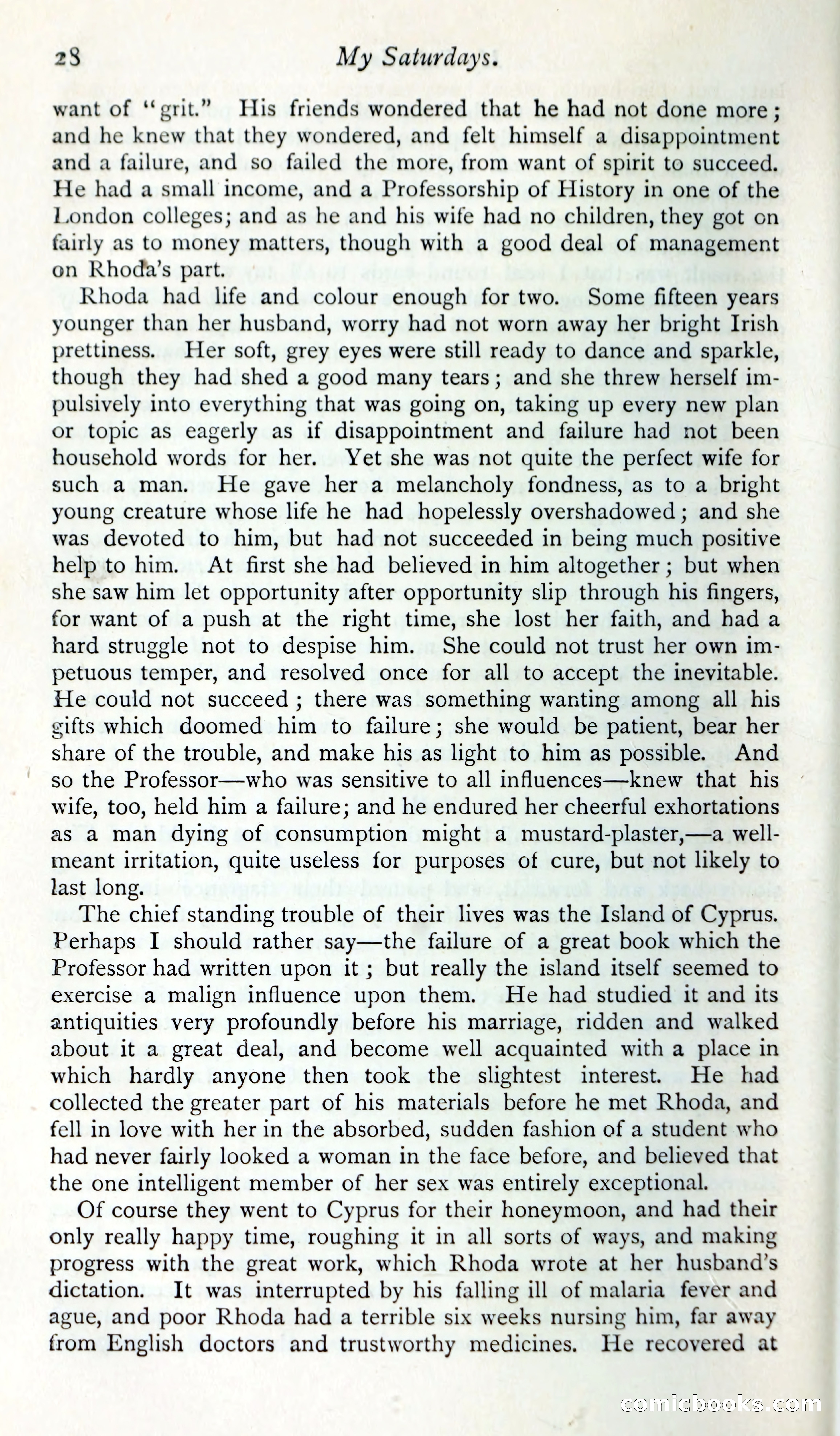
A restored page from Pulp Fiction, 1865. Page through the whole issue in the reader above.
📄 Transcribed text from this page (OCR, searchable)
Machine-transcribed from the original scan — historical spelling and the odd misread are preserved.
28 My Saturdays. want of ‘‘grit.” His friends wondered that he had not done more; and he knew that they wondered, and felt himself a disappointment and a failure, and so failed the more, from want of spirit to succeed. He had a small income, and a Professorship of History in one of the London colleges; and as he and his wife had no children, they got on fairly as to money matters, though with a good deal of management on Rhoda’s part. Rhoda had life and colour enough for two. Some fifteen years younger than her husband, worry had not worn away her bright Irish prettiness. Her soft, grey eyes were still ready to dance and sparkle, though they had shed a good many tears; and she threw herself im- pulsively into everything that was going on, taking up every new plan or topic as eagerly as if disappointment and failure had not been household words for her. Yet she was not quite the perfect wife for such a man. He gave her a melancholy fondness, as to a bright young creature whose life he had hopelessly overshadowed; and she was devoted to him, but had not succeeded in being much positive help to him. At first she had believed in him altogether ; but when she saw him let opportunity after opportunity slip through his fingers, for want of a push at the right time, she lost her faith, and had a hard struggle not to despise him. She could not trust her own im- petuous temper, and resolved once for all to accept the inevitable. He could not succeed ; there was something wanting among all his eifts which doomed him to failure; she would be patient, bear her share of the trouble, and make his as light to him as possible. And so the Professor—who was sensitive to all influences—knew that his wife, too, held him a failure; and he endured her cheerful exhortations as a man dying of consumption might a mustard-plaster,—a well- meant irritation, quite useless for purposes of cure, but not likely to last long. The chief standing trouble of their lives was the Island of Cyprus. Perhaps I should rather say—the failure of a great book which the Professor had written upon it ; but really the island itself seemed to exercise a malign influence upon them. He had studied it and its antiquities very profoundly before his marriage, ridden and walked about it a great deal, and become well acquainted with a place in which hardly anyone then took the slightest interest. He had collected the greater part of his materials before he met Rhoda, and fell in love with her in the absorbed, sudden fashion of a student who had never fairly looked a woman in the face before, and believed that the one intelligent member of her sex was entirely exceptional. Of course they went to Cyprus for their honeymoon, and had their only really happy time, roughing it in all sorts of ways, and making progress with the great work, which Rhoda wrote at her husband’s dictation. It was interrupted by his falling ill of malaria fever and ague, and poor Rhoda had a terrible six weeks nursing him, far away from English doctors and trustworthy medicines. He recovered at ECOPMICDOOKS. EO)