
Pulp Fiction, 1865 · page 42 of 399
The Argosy — page 42: what you’re looking at
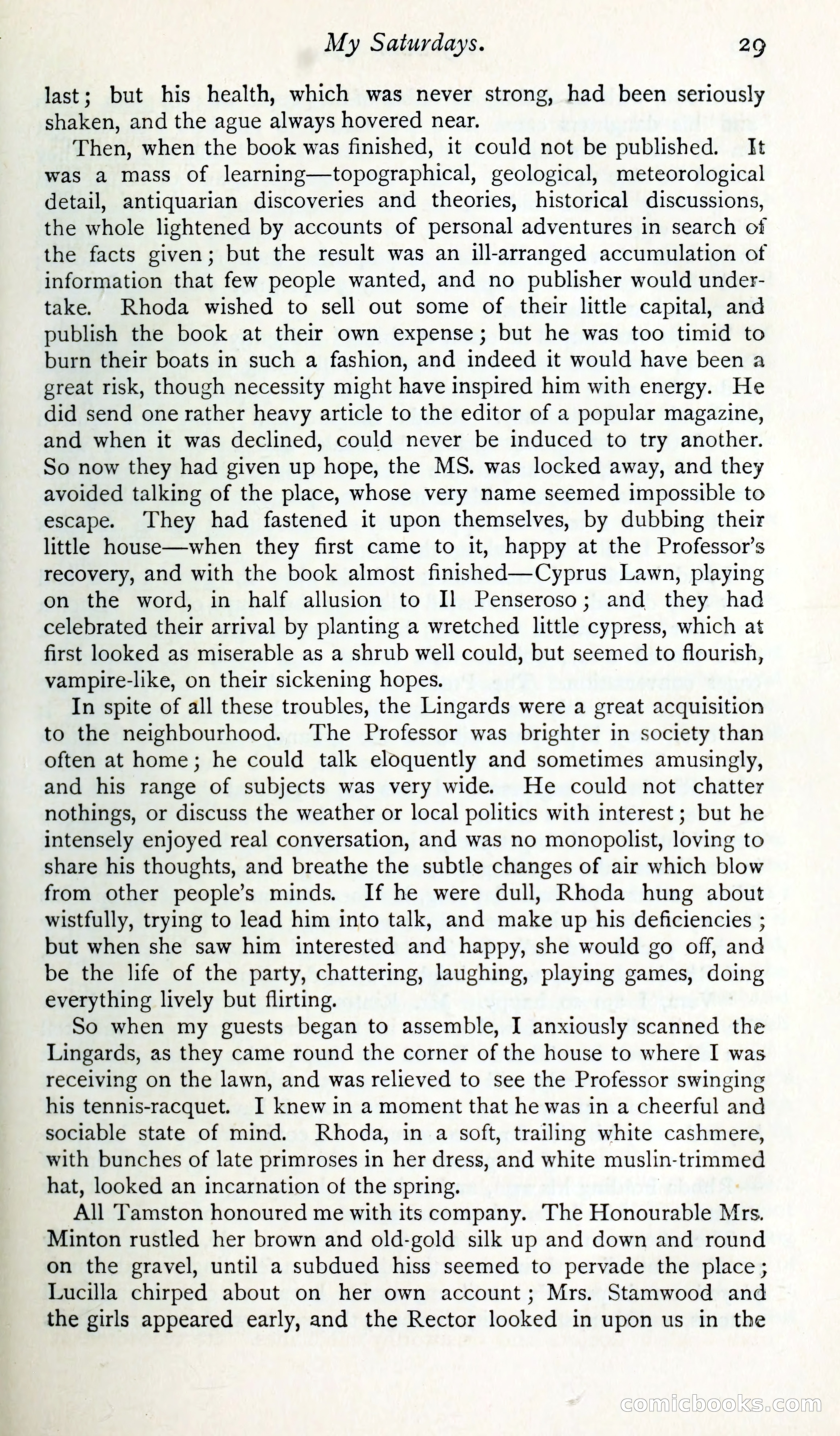
A restored page from Pulp Fiction, 1865. Page through the whole issue in the reader above.
📄 Transcribed text from this page (OCR, searchable)
Machine-transcribed from the original scan — historical spelling and the odd misread are preserved.
My Saturdays. 29 last; but his health, which was never strong, had been seriously shaken, and the ague always hovered near. Then, when the book was finished, it could not be published. It was a mass of learning—topographical, geological, meteorological detail, antiquarian discoveries and theories, historical discussions, the whole lightened by accounts of personal adventures in search of the facts given; but the result was an ill-arranged accumulation of information that few people wanted, and no publisher would under- take. Rhoda wished to sell out some of their little capital, and publish the book at their own expense; but he was too timid to burn their boats in such a fashion, and indeed it would have been a great risk, though necessity might have inspired him with energy. He did send one rather heavy article to the editor of a popular magazine, and when it was declined, could never be induced to try another. So now they had given up hope, the MS. was locked away, and they avoided talking of the place, whose very name seemed impossible to escape. They had fastened it upon themselves, by dubbing their little house—when they first came to it, happy at the Professor’s recovery, and with the book almost finished—Cyprus Lawn, playing on the word, in half allusion to Il Penseroso; and they had celebrated their arrival by planting a wretched little cypress, which at first looked as miserable as a shrub well could, but seemed to flourish, vampire-like, on their sickening hopes. In spite of all these troubles, the Lingards were a great acquisition to the neighbourhood. ‘The Professor was brighter in society than often at home; he could talk eloquently and sometimes amusingly, and his range of subjects was very wide. He could not chatter nothings, or discuss the weather or local politics with interest ; but he intensely enjoyed real conversation, and was no monopolist, loving to share his thoughts, and breathe the subtle changes of air which blow from other people’s minds. If he were dull, Rhoda hung about wistfully, trying to lead him into talk, and make up his deficiencies ; but when she saw him interested and happy, she would go off, and be the life of the party, chattering, laughing, playing games, doing everything lively but flirting. So when my guests began to assemble, I anxiously scanned the Lingards, as they came round the corner of the house to where I was receiving on the lawn, and was relieved to see the Professor swinging his tennis-racquet. I knew in a moment that he was in a cheerful and sociable state of mind. Rhoda, in a soft, trailing white cashmere, with bunches of late primroses in her dress, and white muslin-trimmed hat, looked an incarnation of the spring. All Tamston honoured me with its company. The Honourable Mrs. Minton rustled her brown and old-gold silk up and down and round on the gravel, until a subdued hiss seemed to pervade the place; Lucilla chirped about on her own account; Mrs. Stamwood and the girls appeared early, and the Rector looked in upon us in the GOnlGaooks (GO