
Pulp Fiction, 1865 · page 386 of 399
The Argosy — page 386: what you’re looking at
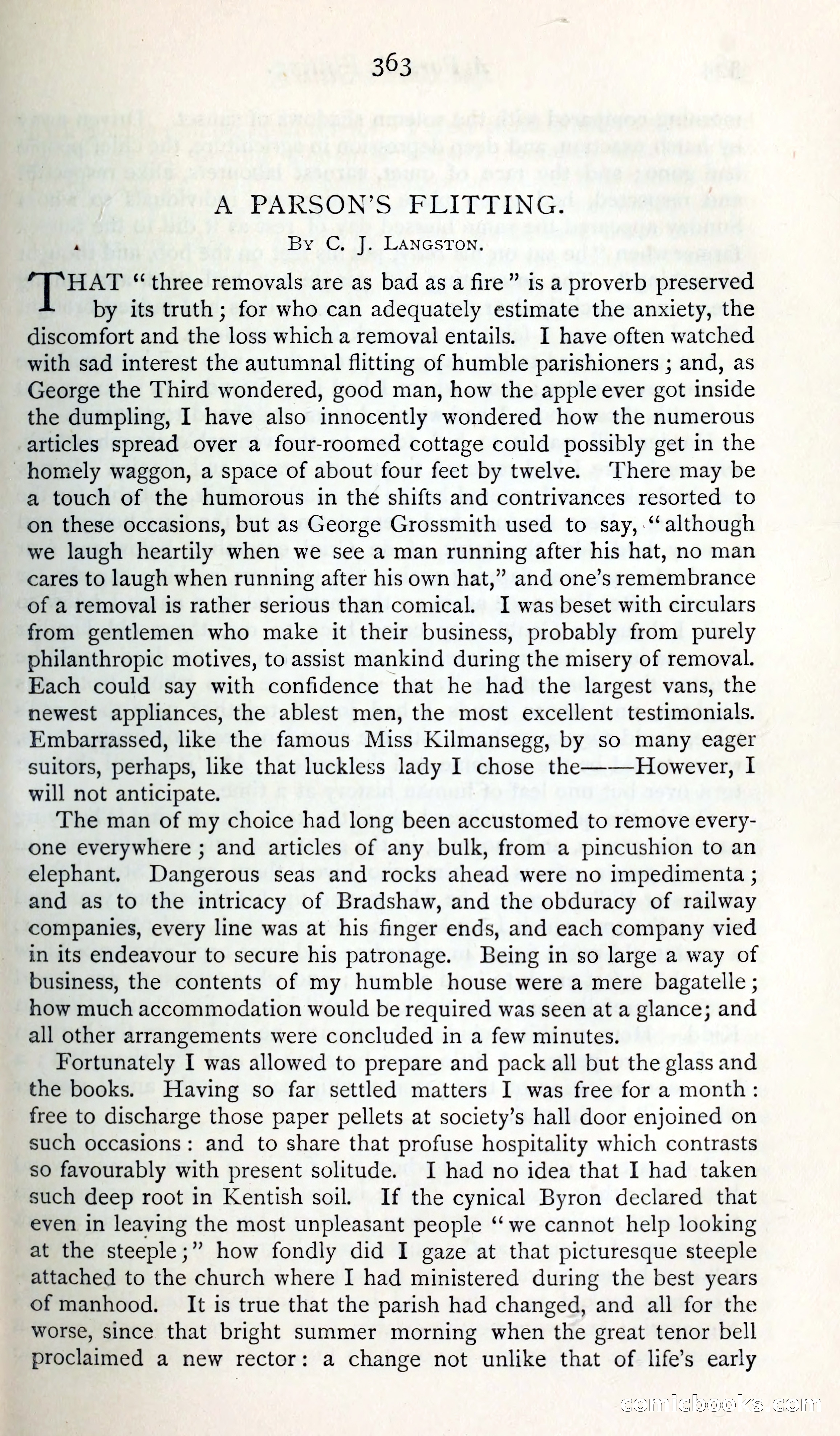
A restored page from Pulp Fiction, 1865. Page through the whole issue in the reader above.
📄 Transcribed text from this page (OCR, searchable)
Machine-transcribed from the original scan — historical spelling and the odd misread are preserved.
303 my PARSONS “FLITTING: p By C, J. LANGSTON. HAT “three removals are as bad asa fire” is a proverb preserved by its truth; for who can adequately estimate the anxiety, the discomfort and the loss which a removal entails. I have often watched with sad interest the autumnal flitting of humble parishioners ; and, as George the Third wondered, good man, how the apple ever got inside the dumpling, I have also innocently wondered how the numerous articles spread over a four-roomed cottage could possibly get in the homely waggon, a space of about four feet by twelve. There may be a touch of the humorous in the shifts and contrivances resorted to on these occasions, but as George Grossmith used to say, “although we laugh heartily when we see a man running after his hat, no man cares to laugh when running after his own hat,” and one’s remembrance of a removal is rather serious than comical. I was beset with circulars from gentlemen who make it their business, probably from purely philanthropic motives, to assist mankind during the misery of removal. Each could say with confidence that he had the largest vans, the newest appliances, the ablest men, the most excellent testimonials. Embarrassed, like the famous Miss Kilmansegg, by so many eager suitors, perhaps, like that luckless lady I chose the———However, I will not anticipate. The man of my choice had long been accustomed to remove every- one everywhere ; and articles of any bulk, from a pincushion to an elephant. Dangerous seas and rocks ahead were no impedimenta ; and as to the intricacy of Bradshaw, and the obduracy of railway companies, every line was at his finger ends, and each company vied in its endeavour to secure his patronage. Being in so large a way of business, the contents of my humble house were a mere bagatelle ; how much accommodation would be required was seen at a glance; and all other arrangements were concluded in a few minutes. Fortunately I was allowed to prepare and pack all but the glass and the books. Having so far settled matters I was free for a month: free to discharge those paper pellets at society’s hall door enjoined on such occasions: and to share that profuse hospitality which contrasts so favourably with present solitude. I had no idea that I had taken such deep root in Kentish soil. If the cynical Byron declared that even in leaving the most unpleasant people ‘‘ we cannot help looking at the steeple;” how fondly did I gaze at that picturesque steeple attached to the church where I had ministered during the best years of manhood. It is true that the parish had changed, and all for the worse, since that bright summer morning when the great tenor bell proclaimed a new rector: a change not unlike that of life’s early ECOnniclooOoks (CO)