
Pulp Fiction, 1865 · page 387 of 399
The Argosy — page 387: what you’re looking at
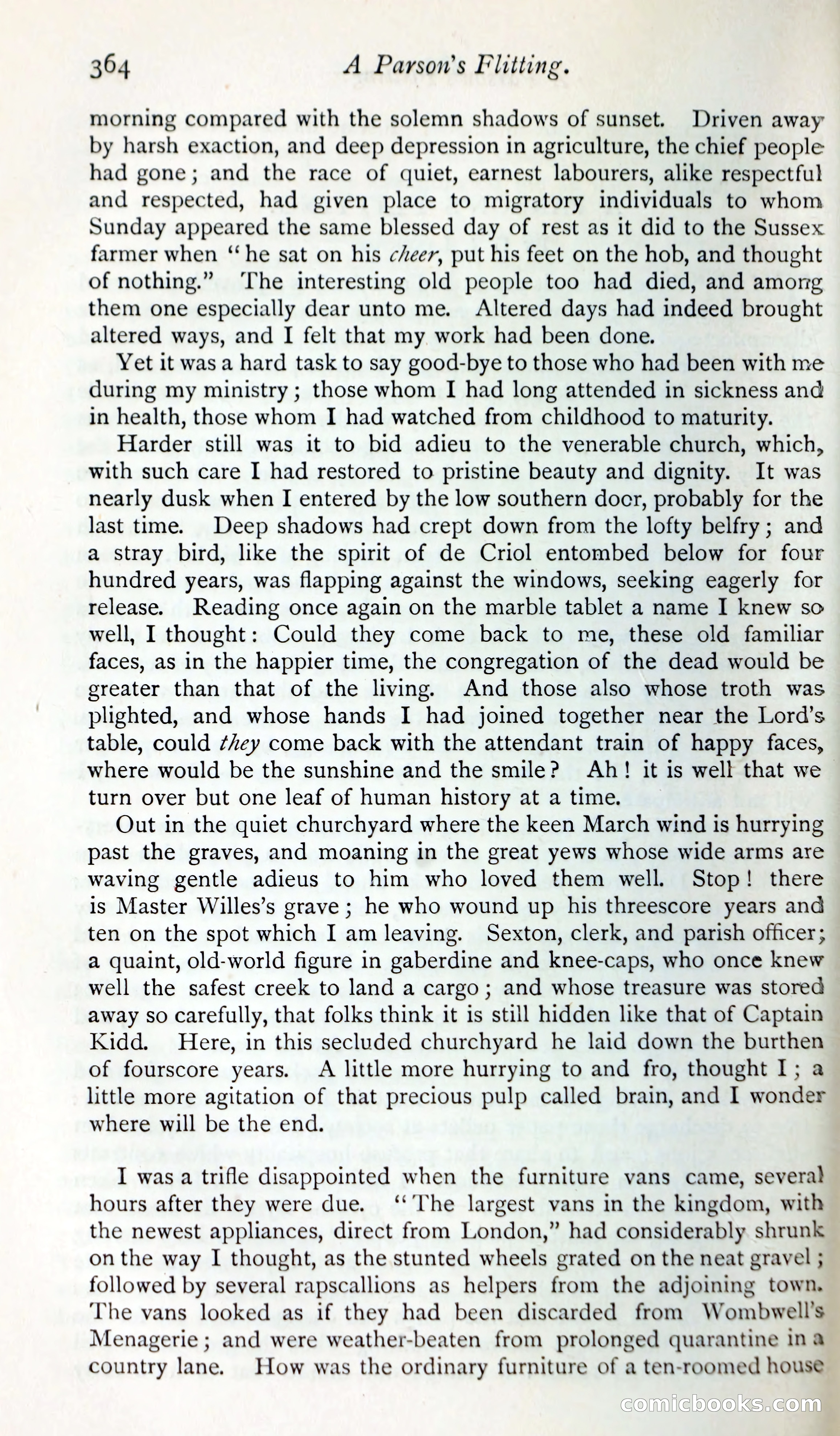
A restored page from Pulp Fiction, 1865. Page through the whole issue in the reader above.
📄 Transcribed text from this page (OCR, searchable)
Machine-transcribed from the original scan — historical spelling and the odd misread are preserved.
364 A Parson's Flitting. morning compared with the solemn shadows of sunset. Driven away by harsh exaction, and deep depression in agriculture, the chief people had gone; and the race of quiet, earnest labourers, alike respectful and respected, had given place to migratory individuals to whom Sunday appeared the same blessed day of rest as it did to the Sussex farmer when ‘‘he sat on his cheer, put his feet on the hob, and thought of nothing.” ‘The interesting old people too had died, and among them one especially dear unto me. Altered days had indeed brought altered ways, and I felt that my work had been done. Yet it was a hard task to say good-bye to those who had been with me during my ministry ; those whom I had long attended in sickness and in health, those whom I had watched from childhood to maturity. Harder still was it to bid adieu to the venerable church, which, with such care I had restored to pristine beauty and dignity. It was nearly dusk when I entered by the low southern docr, probably for the last ttme. Deep shadows had crept down from the lofty belfry ; and a stray bird, like the spirit of de Criol entombed below for four hundred years, was flapping against the windows, seeking eagerly for release. Reading once again on the marble tablet a name I knew so well, I thought: Could they come back to me, these old familiar faces, as in the happier time, the congregation of the dead would be greater than that of the living. And those also whose troth was plighted, and whose hands I had joined together near the Lord’s table, could ¢ey come back with the attendant train of happy faces, where would be the sunshine and the smile? Ah! it is well that we turn over but one leaf of human history at a time. Out in the quiet churchyard where the keen March wind is hurrying past the graves, and moaning In the great yews whose wide arms are waving gentle adieus to him who loved them well. Stop! there is Master Willes’s grave ; he who wound up his threescore years and ten on the spot which I am leaving. Sexton, clerk, and parish officer; a quaint, old-world figure in gaberdine and knee-caps, who once knew well the safest creek to land a cargo; and whose treasure was stored away so carefully, that folks think it is still hidden like that of Captain Kidd. Here, in this secluded churchyard he laid down the burthen of fourscore years. A little more hurrying to and fro, thought I; a little more agitation of that precious pulp called brain, and I wonder where will be the end. I was a trifle disappointed when the furniture vans came, several hours after they were due. ‘‘’The largest vans in the kingdom, with the newest appliances, direct from London,” had considerably shrunk on the way I thought, as the stunted wheels grated on the neat gravel 5 followed by several rapscallions as helpers from the adjoining town. The vans looked as if they had been discarded from Wombwell’s Menagerie ; and were weather-beaten from prolonged quarantine in a country lane. How was the ordinary furniture of a ten-roomed house COPMICMIOOKS EO La 9)