
Pulp Fiction, 1865 · page 385 of 399
The Argosy — page 385: what you’re looking at
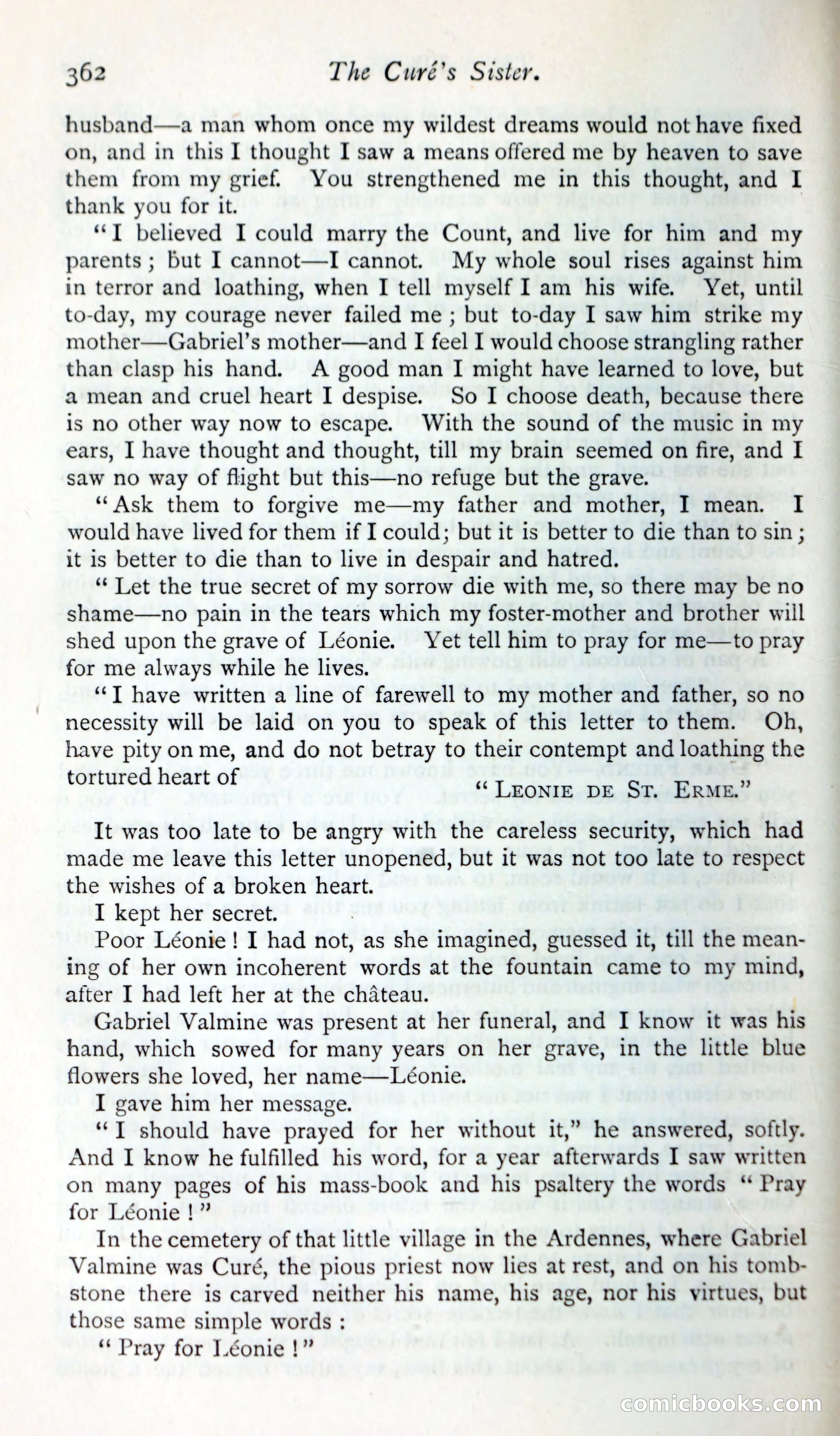
A restored page from Pulp Fiction, 1865. Page through the whole issue in the reader above.
📄 Transcribed text from this page (OCR, searchable)
Machine-transcribed from the original scan — historical spelling and the odd misread are preserved.
362 The Curé’s Sister. husband—a man whom once my wildest dreams would not have fixed on, and in this I thought I saw a means offered me by heaven to save them from my grief. You strengthened me in this thought, and I thank you for it. | ““T believed I could marry the Count, and live for him and my parents ; but I cannot—I cannot. My whole soul rises against him in terror and loathing, when I tell myself I am his wife. Yet, until to-day, my courage never failed me ; but to-day I saw him strike my mother—Gabriel’s mother—and I feel I would choose strangling rather than clasp his hand. A good man I might have learned to love, but a mean and cruel heart I despise. So I choose death, because there is no other way now to escape. With the sound of the music in my ears, I have thought and thought, till my brain seemed on fire, and I saw no way of flight but this—no refuge but the grave. ‘“Ask them to forgive me—my father and mother, I mean. I would have lived for them if I could; but it is better to die than to sin ; it is better to die than to live in despair and hatred. ‘‘ Let the true secret of my sorrow die with me, so there may be no shame—no pain in the tears which my foster-mother and brother wiil shed upon the grave of Léonie. Yet tell him to pray for me—to pray for me always while he lives. ‘‘T have written a line of farewell to my mother and father, so no necessity will be laid on you to speak of this letter to them. Oh, have pity on me, and do not betray to their contempt and loathing the tortured heart of ‘ LEONIE DE ST. ERME.” It was too late to be angry with the careless security, which had made me leave this letter unopened, but it was not too late to respect the wishes of a broken heart. I kept her secret. Poor Léonie! I had not, as she imagined, guessed it, till the mean- ing of her own incoherent words at the fountain came to my mind, after I had left her at the chateau. Gabriel Valmine was present at her funeral, and I know it was his hand, which sowed for many years on her grave, in the little blue flowers she loved, her name—Leéonie. I gave him her message. ‘‘T should have prayed for her without it,” he answered, softly. And I know he fulfilled his word, for a year afterwards I saw written on many pages of his mass-book and his psaltery the words “ Pray for Léonie !” In the cemetery of that little village in the Ardennes, where Gabriel Valmine was Curé, the pious priest now lies at rest, and on his tomb- stone there is carved neither his name, his age, nor his virtues, but those same simple words : ‘“* Pray for Léonie !” COPMICMOOOKS Oi)