
Pulp Fiction, 1865 · page 372 of 399
The Argosy — page 372: what you’re looking at
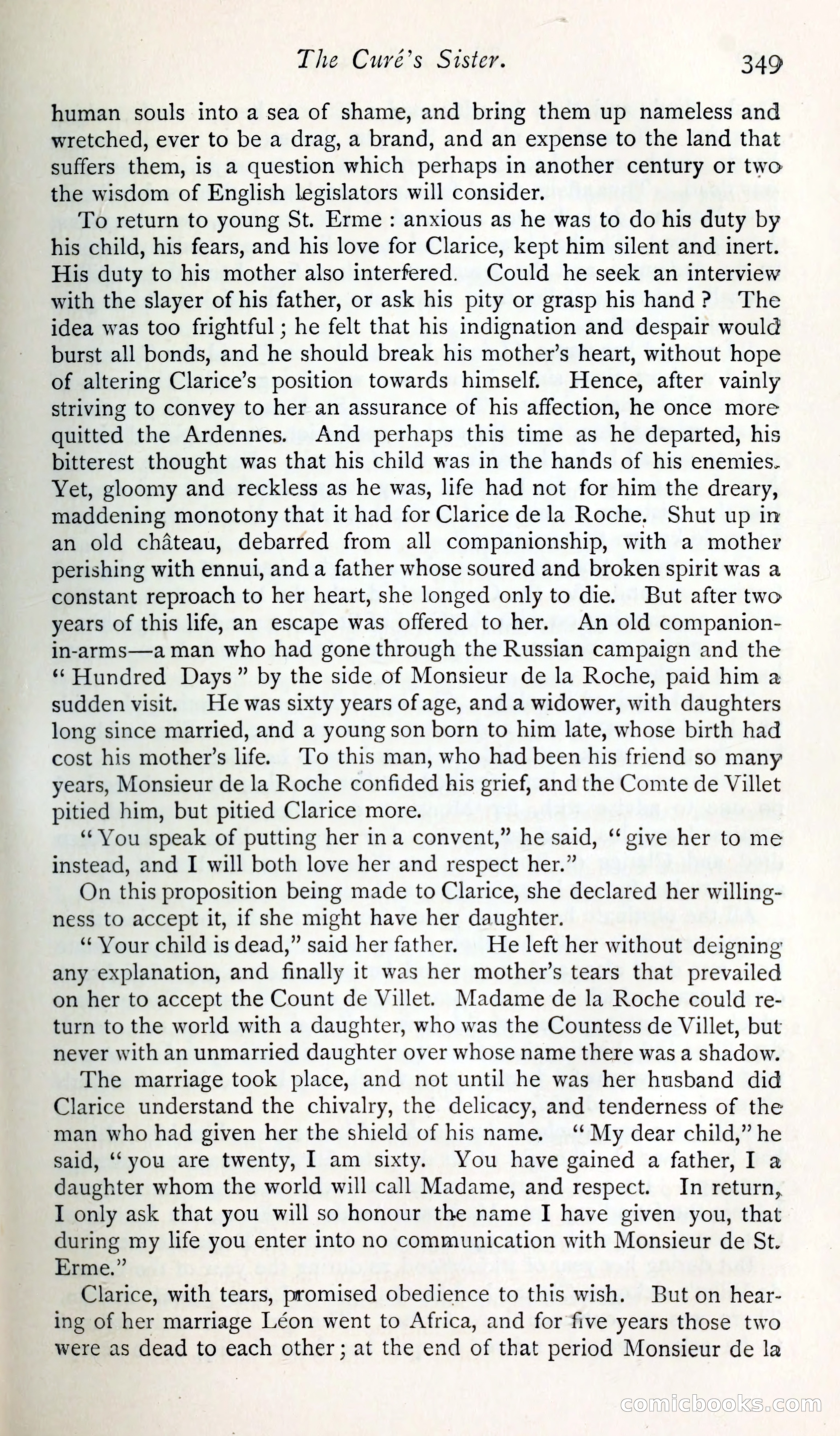
A restored page from Pulp Fiction, 1865. Page through the whole issue in the reader above.
📄 Transcribed text from this page (OCR, searchable)
Machine-transcribed from the original scan — historical spelling and the odd misread are preserved.
The Curé’s Sister. 349 human souls into a sea of shame, and bring them up nameless and wretched, ever to be a drag, a brand, and an expense to the land that suffers them, is a question which perhaps in another century or two the wisdom of English legislators will consider. To return to young St. Erme: anxious as he was to do his duty by his child, his fears, and his love for Clarice, kept him silent and inert. His duty to his mother also interfered. Could he seek an interview with the slayer of his father, or ask his pity or grasp his hand? The idea was too frightful ; he felt that his indignation and despair would burst all bonds, and he should break his mother’s heart, without hope of altering Clarice’s position towards himself. Hence, after vainly striving to convey to her an assurance of his affection, he once more quitted the Ardennes. And perhaps this time as he departed, his bitterest thought was that his child was in the hands of his enemies. Yet, gloomy and reckless as he was, life had not for him the dreary, maddening monotony that it had for Clarice dela Roche. Shut up in an old chateau, debarred from all companionship, with a mother perishing with ennui, and a father whose soured and broken spirit was a constant reproach to her heart, she longed only to die. But after two years of this life, an escape was offered to her. An old companion- in-arms—a man who had gone through the Russian campaign and the ‘‘ Hundred Days” by the side of Monsieur de la Roche, paid him a sudden visit. He was sixty years of age, and a widower, with daughters long since married, and a young son born to him late, whose birth had cost his mother’s life. To this man, who had been his friend so many years, Monsieur de la Roche confided his grief, and the Comte de Villet pitied him, but pitied Clarice more. ‘You speak of putting her ina convent,” he said, “give her to me instead, and I will both love her and respect her.” On this proposition being made to Clarice, she declared her willing- ness to accept it, if she might have her daughter. “Your child is dead,” said her father. He left her without deigning any explanation, and finally it was her mother’s tears that prevailed on her to accept the Count de Villet. Madame de la Roche could re- turn to the world with a daughter, who was the Countess de Villet, but never with an unmarried daughter over whose name there was a shadow. The marriage took place, and not until he was her husband did Clarice understand the chivalry, the delicacy, and tenderness of the man who had given her the shield of his name. ‘‘ My dear child,” he said, “‘you are twenty, I am sixty. You have gained a father, I a daughter whom the world will call Madame, and respect. In return, I only ask that you will so honour the name I have given you, that during my life you enter into no communication with Monsieur de St. Erme.” Clarice, with tears, promised obedience to this wish. But on hear- ing of her marriage Léon went to Africa, and for five years those two were as dead to each other; at the end of that period Monsieur de la CONNICLOOKS.EO