
Pulp Fiction, 1865 · page 373 of 399
The Argosy — page 373: what you’re looking at
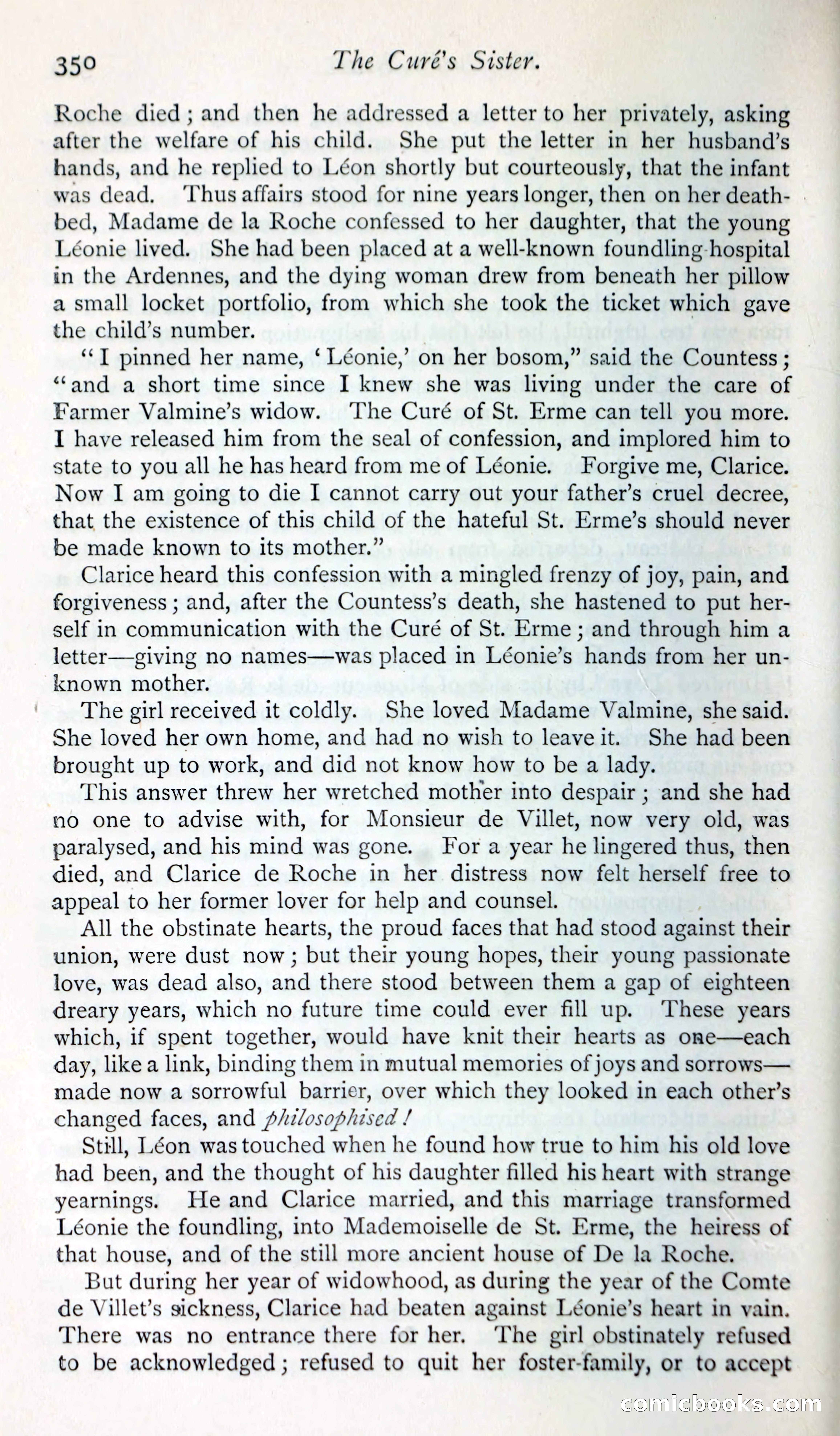
A restored page from Pulp Fiction, 1865. Page through the whole issue in the reader above.
📄 Transcribed text from this page (OCR, searchable)
Machine-transcribed from the original scan — historical spelling and the odd misread are preserved.
350 The Curé’s Sister. Roche died; and then he addressed a letter to her privately, asking after the welfare of his child. She put the letter in her husband’s hands, and he replied to Léon shortly but courteously, that the infant was dead. ‘Thus affairs stood for nine years longer, then on her death- . bed, Madame de la Roche confessed to her daughter, that the young Léonie lived. She had been placed at a well-known foundling-hospital in the Ardennes, and the dying woman drew from beneath her pillow a small locket portfolio, from which she took the ticket which gave the child’s number. ‘‘T pinned her name, ‘ Léonie,’ on her bosom,” said the Countess ; ‘‘and a short time since I knew she was living under the care of Farmer Valmine’s widow. ‘The Curé of St. Erme can tell you more. I have released him from the seal of confession, and implored him to state to you all he has heard from me of Léonie. Forgive me, Clarice. Now I am going to die I cannot carry out your father’s cruel decree, that the existence of this child of the hateful St. Erme’s should never be made known to its mother.” Clarice heard this confession with a mingled frenzy of joy, pain, and forgiveness ; and, after the Countess’s death, she hastened to put her- self in communication with the Curé of St. Erme ; and through him a letter—giving no names—was placed in Léonie’s hands from her un- known mother. The girl received it coldly. She loved Madame Valmine, she said. She loved her own home, and had no wish to leaveit. She had been brought up to work, and did not know how to be a lady. This answer threw her wretched mother into despair ; and she had no one to advise with, for Monsieur de Villet, now very old, was paralysed, and his mind was gone. For a year he lingered thus, then died, and Clarice de Roche in her distress now felt herself free to appeal to her former lover for help and counsel. All the obstinate hearts, the proud faces that had stood against their union, were dust now; but their young hopes, their young passionate love, was dead also, and there stood between them a gap of eighteen dreary years, which no future time could ever fill up. ‘These years which, if spent together, would have knit their hearts as one—each day, like a link, binding them in mutual memories of joys and sorrows— made now a sorrowful barrier, over which they looked in each other’s changed faces, and philosophised / Still, Léon was touched when he found how true to him his old love had been, and the thought of his daughter filled his heart with strange yearnings. Heand Clarice married, and this marriage transformed Léonie the foundling, into Mademoiselle de St. Erme, the heiress of that house, and of the still more ancient house of De la Roche. But during her year of widowhood, as during the year of the Comte de Villet’s sickness, Clarice had beaten against Léonie’s heart in vain. There was no entrance there for her. The girl obstinately refused to be acknowledged ; refused to quit her foster-family, or to accept COMIC LIOO; KS, (EC)