
Pulp Fiction, 1865 · page 325 of 400
The Argosy — page 325: what you’re looking at
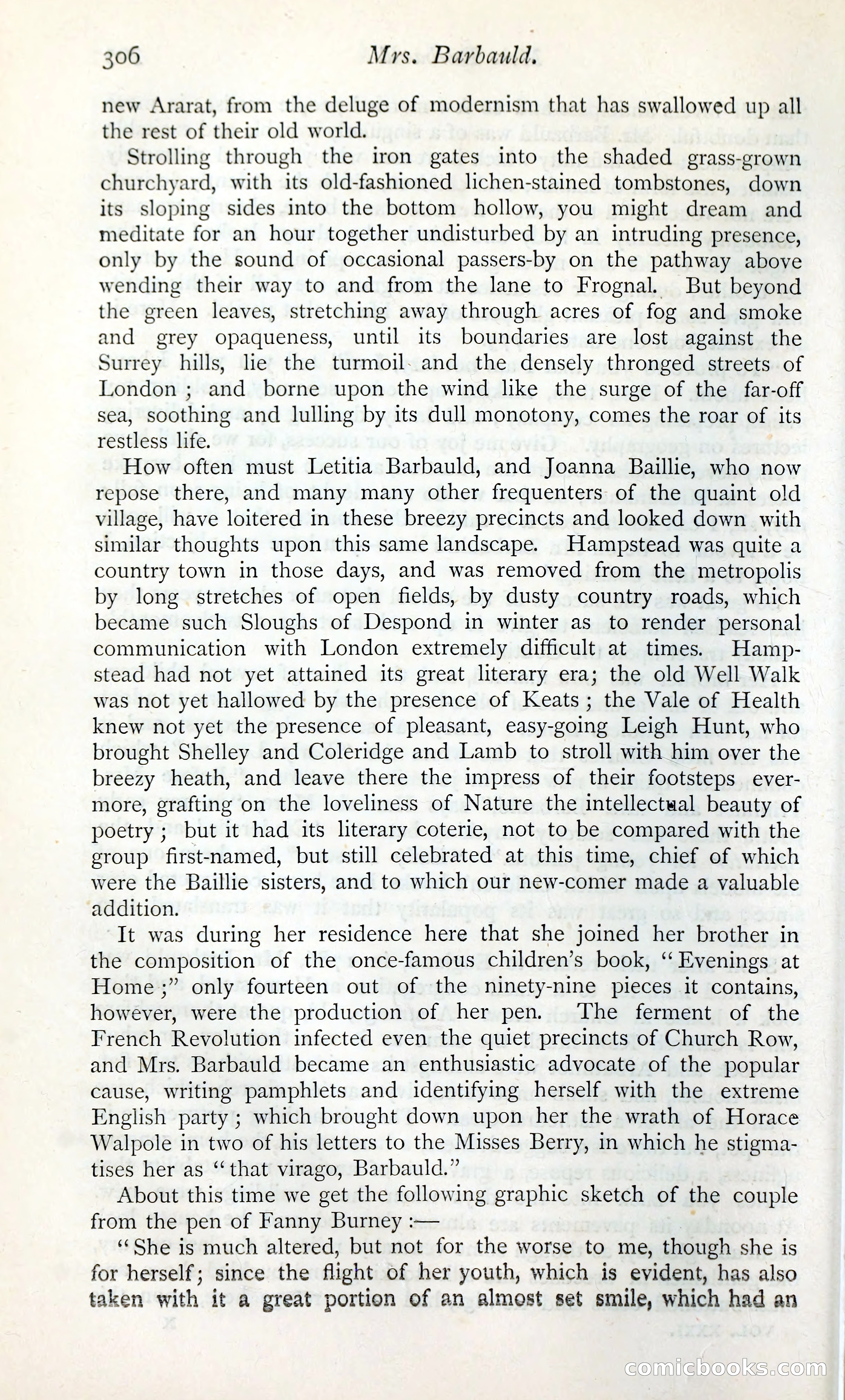
A restored page from Pulp Fiction, 1865. Page through the whole issue in the reader above.
📄 Transcribed text from this page (OCR, searchable)
Machine-transcribed from the original scan — historical spelling and the odd misread are preserved.
306 Mrs. Barbauld. new Ararat, from the deluge of modernism that has swallowed up all the rest of their old world. Strolling through the iron gates into the shaded grass-grown churchyard, with its old-fashioned lichen-stained tombstones, down its sloping sides into the bottom hollow, you might dream and meditate for an hour together undisturbed by an intruding presence, only by the sound of occasional passers-by on the pathway above wending their way to and from the lane to Frognal. But beyond the green leaves, stretching away through acres of fog and smoke and grey opaqueness, until its boundaries are lost against the Surrey hills, le the turmoil. and the densely thronged streets of London ; and borne upon the wind like the surge of the far-off sea, soothing and lulling by its dull monotony, comes the roar of its restless life. How often must Letitia Barbauld, and Joanna Baillie, who now repose there, and many many other frequenters of the quaint old village, have loitered in these breezy precincts and looked down with similar thoughts upon this same landscape. Hampstead was quite a country town in those days, and was removed from the metropolis by long stretches of open fields, by dusty country roads, which became such Sloughs of Despond in winter as to render personal communication with London extremely difficult at times. Hamp- stead had not yet attained its great literary era; the old Well Walk was not yet hallowed by the presence of Keats; the Vale of Health knew not yet the presence of pleasant, easy-going Leigh Hunt, who brought Shelley and Coleridge and Lamb to stroll with him over the breezy heath, and leave there the impress of their footsteps. ever- more, grafting on the loveliness of Nature the intellectual beauty of poetry ; but it had its literary coterie, not to be compared with the sroup first-named, but still celebrated at this time, chief of which were the Baillie sisters, and to which our new-comer made a valuable addition. It was during her residence here that she joined her brother in the composition of the once-famous children’s book, “ Evenings at Home ;” only fourteen out of the ninety-nine pieces it contains, however, were the production of her pen. The ferment of the Trench Revolution infected even the quiet precincts of Church Row, and Mrs. Barbauld became an enthusiastic advocate of the popular cause, writing pamphlets and identifying herself with the extreme English party ; which brought down upon her the wrath of Horace Walpole in two of his letters to the Misses Berry, in which he stigma- tises her as ‘‘that virago, Barbauld.” About this time we get the following graphic sketch of the couple from the pen of Fanny Burney :— | ‘She is much altered, but not for the worse to me, though she is for herself; since the flight of her youth, which is evident, has also taken with it a great portion of an almost set smile, which had an EORNIELIOOKS ~E@