
Pulp Fiction, 1865 · page 114 of 400
The Argosy — page 114: what you’re looking at
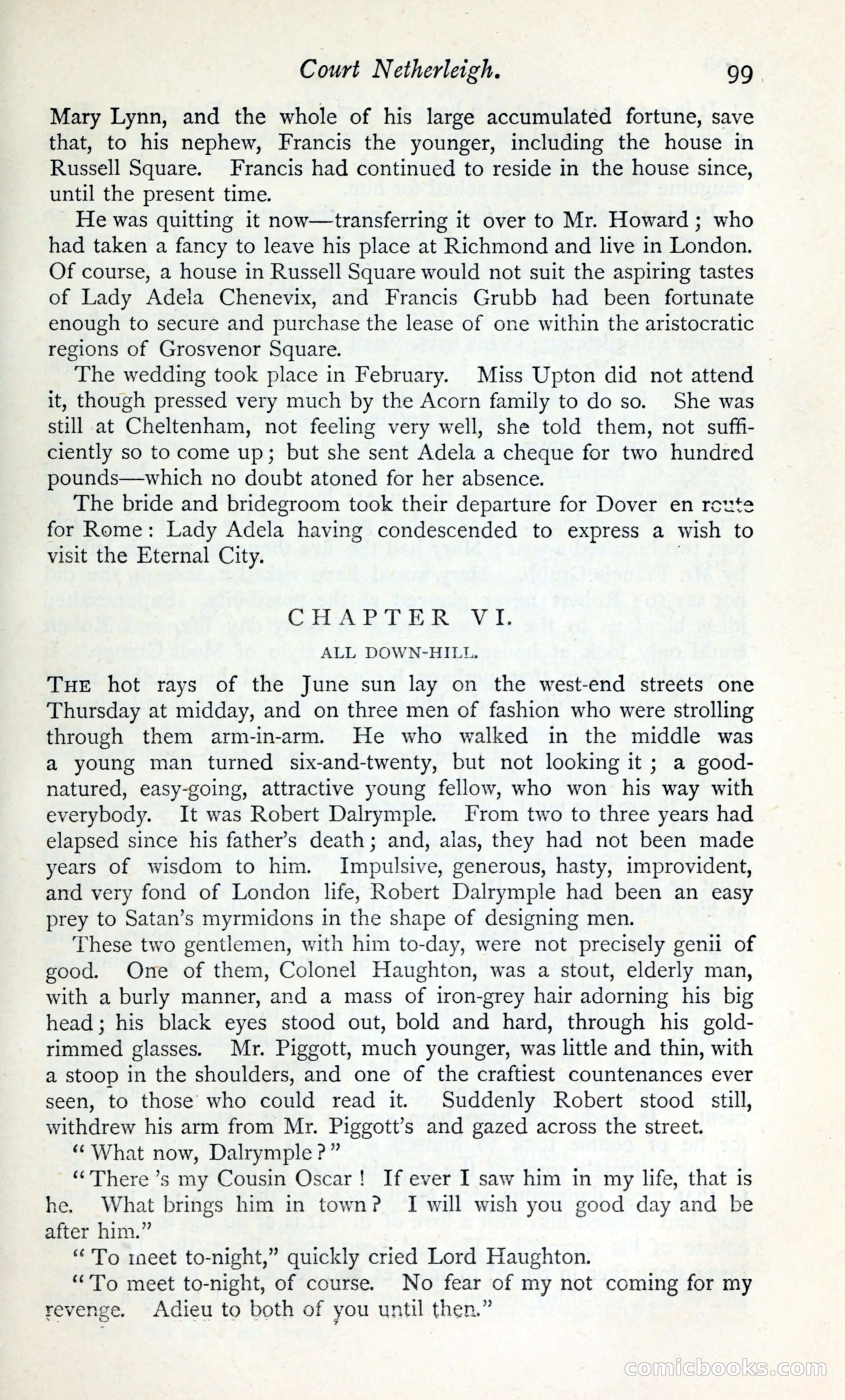
A restored page from Pulp Fiction, 1865. Page through the whole issue in the reader above.
📄 Transcribed text from this page (OCR, searchable)
Machine-transcribed from the original scan — historical spelling and the odd misread are preserved.
Court Netherleigh. 99 | Mary Lynn, and the whole of his large accumulated fortune, save that, to his nephew, Francis the younger, including the house in Russell Square. Francis had continued to reside in the house since, until the present time. He was quitting it now—transferring it over to Mr. Howard; who had taken a fancy to leave his place at Richmond and live in London. Of course, a house in Russell Square would not suit the aspiring tastes of Lady Adela Chenevix, and Francis Grubb had been fortunate enough to secure and purchase the lease of one within the aristocratic regions of Grosvenor Square. The wedding took place in February. Miss Upton did not attend it, though pressed very much by the Acorn family to do so. She was still at Cheltenham, not feeling very well, she told them, not suffi- ciently so to come up; but she sent Adela a cheque for two hundred pounds—which no doubt atoned for her absence. The bride and bridegroom took their departure for Dover en route for Rome: Lady Adela having condescended to express a wish to visit the Eternal City. | fia Boro UWE ALL DOWN-HILL. THE hot rays of the June sun lay on the west-end streets one Thursday at midday, and on three men of fashion who were strolling through them arm-in-arm. He who walked in the middle was a young man turned six-and-twenty, but not looking it ; a good- natured, easy-going, attractive young fellow, who won his way with everybody. It was Robert Dalrymple. From two to three years had elapsed since his father’s death; and, alas, they had not been made years of wisdom to him. Impulsive, generous, hasty, improvident, and very fond of London life, Robert Dalrymple had been an easy prey to Satan’s myrmidons in the shape of designing men. These two gentlemen, with him to-day, were not precisely genu of good. One of them, Colonel Haughton, was a stout, elderly man, with a burly manner, and a mass of iron-grey hair adorning his big head; his black eyes stood out, bold and hard, through his gold- rimmed glasses. Mr. Piggott, much younger, was little and thin, with a stoop in the shoulders, and one of the craftiest countenances ever seen, to those who could read it. Suddenly Robert stood still, withdrew his arm from Mr. Piggott’s and gazed across the street. “What now, Dalrymple ?” “There ’s my Cousin Oscar! If ever I saw him in my life, that is he. What brings him in town? I will wish you good day and be mecer iirh.?” “To ineet to-night,” quickly cried Lord Haughton. “To meet to-night, of course. No fear of my not coming for my revenge. Adieu to both of you until then.” connicloooks (C(O)