
Life, 1922-11-09 · page 5 of 36
Life — November 9, 1922 — page 5: what you’re looking at
What you’re looking at
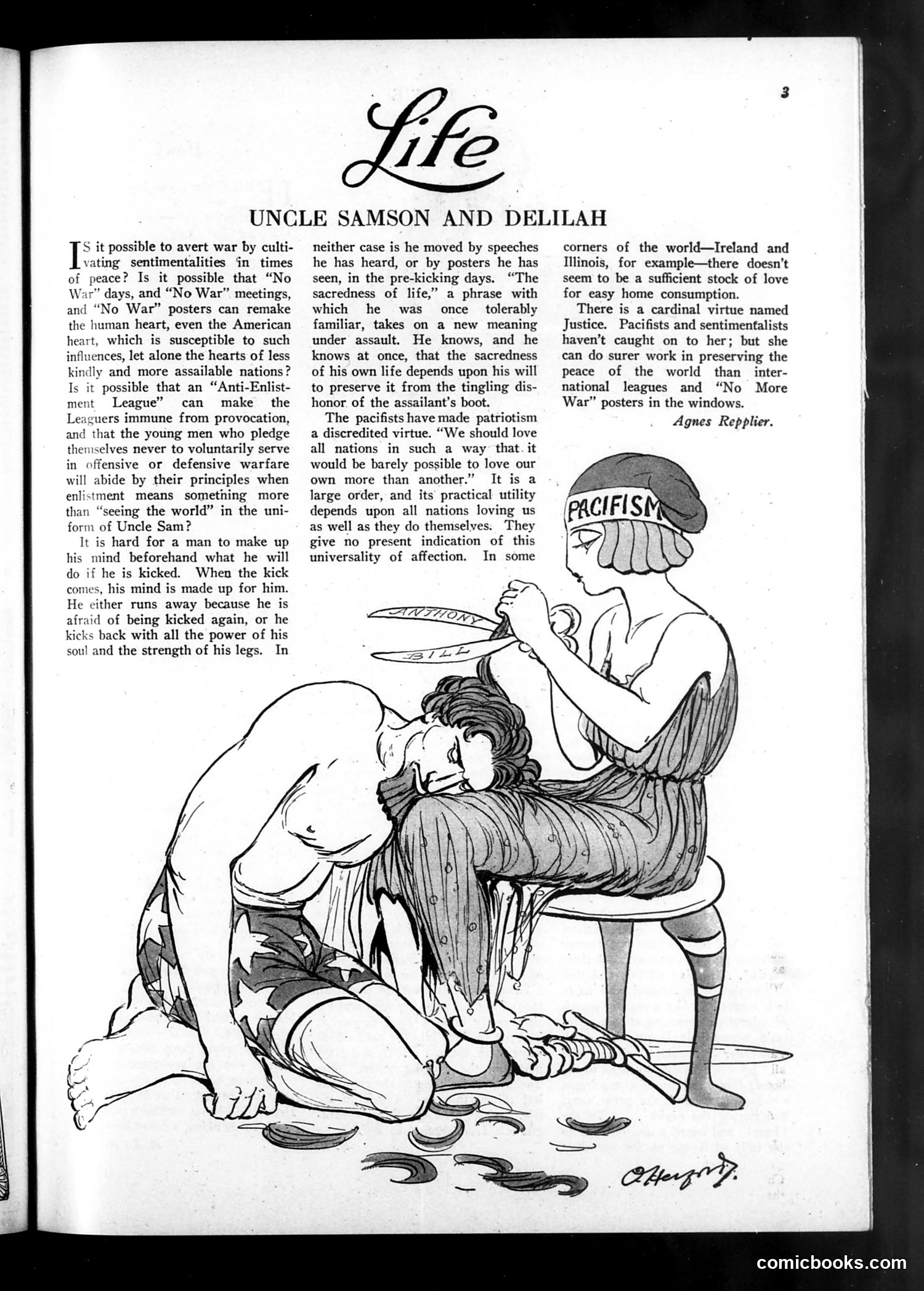
This satirical cartoon depicts **Uncle Sam** (the bearded male figure, representing America) being weakened by **Delilah** (the winged female figure labeled "Pacifism"). The biblical reference is deliberate: just as Delilah betrayed Samson by cutting his hair and sapping his strength, the cartoon warns that pacifism will weaken America's military resolve. The text above argues against "No War" messaging and pacifist sentiments, claiming such ideology makes nations vulnerable. The author (Agnes Repplier) contends that pacifism, while presented as virtue, actually serves enemy interests by undermining national defense. The cartoon satirizes peace advocates as naive or dangerous, equating their message with literal emasculation of American power—a common anti-pacifist argument during the WWI era.
📄 Transcribed text from this page (OCR, searchable)
Machine-transcribed from the original scan — historical spelling and the odd misread are preserved.
UNCLE SAMSON AND DELILAH | it possible to avert war by culti- vating sentimentalities in times of peace? Is it possible that “No War” days, and “No War” meetings, and “No War” posters can remake the human heart, even the American heart, which is susceptible to such influences, let alone the hearts of less kindly and more assailable nations? Is it possible that an “Anti-Enlist- ment League” can make the Leaguers immune from provocation, and that the young men who pledge themselves never to voluntarily serve in offensive or defensive warfare will abide by their principles when enlistment means something more than “seeing the world” in the uni- form of Uncle Sam? It is hard for a man to make up his mind beforehand what he will do if he is kicked. When the kick comes, his mind is made up for him. He either runs away because he is afraid of being kicked again, or he kicks back with all the power of his soul and the strength of his legs. In neither case is he moved by speeches he has heard, or by posters he has seen, in the pre-kicking days. “The sacredness of life,” a phrase with which he was once __ tolerably familiar, takes on a new meaning under assault. He knows, and he knows at once, that the sacredness of his own life depends upon his will to preserve it from the tingling dis- honor of the assailant’s boot. The pacifists have made patriotism a discredited virtue. “We should love all nations in such a way that. it would be barely possible to love our own more than another.” It is a large order, and its’ practical utility depends upon all nations loving us as well as they do themselves. They give no present indication of this universality of affection. In some FTO sl + corners of the world—Ireland and Illinois, for example—there doesn’t seem to be a sufficient stock of love for easy home consumption. There is a cardinal virtue named Justice. Pacifists and sentimentalists haven’t caught on to her; but she can do surer work in preserving the peace of the world than inter- national leagues and “No More War” posters in the windows. Agnes Repplier. comicbooks.com