
Life, 1921-01-27 · page 21 of 36
Life — January 27, 1921 — page 21: what you’re looking at
What you’re looking at
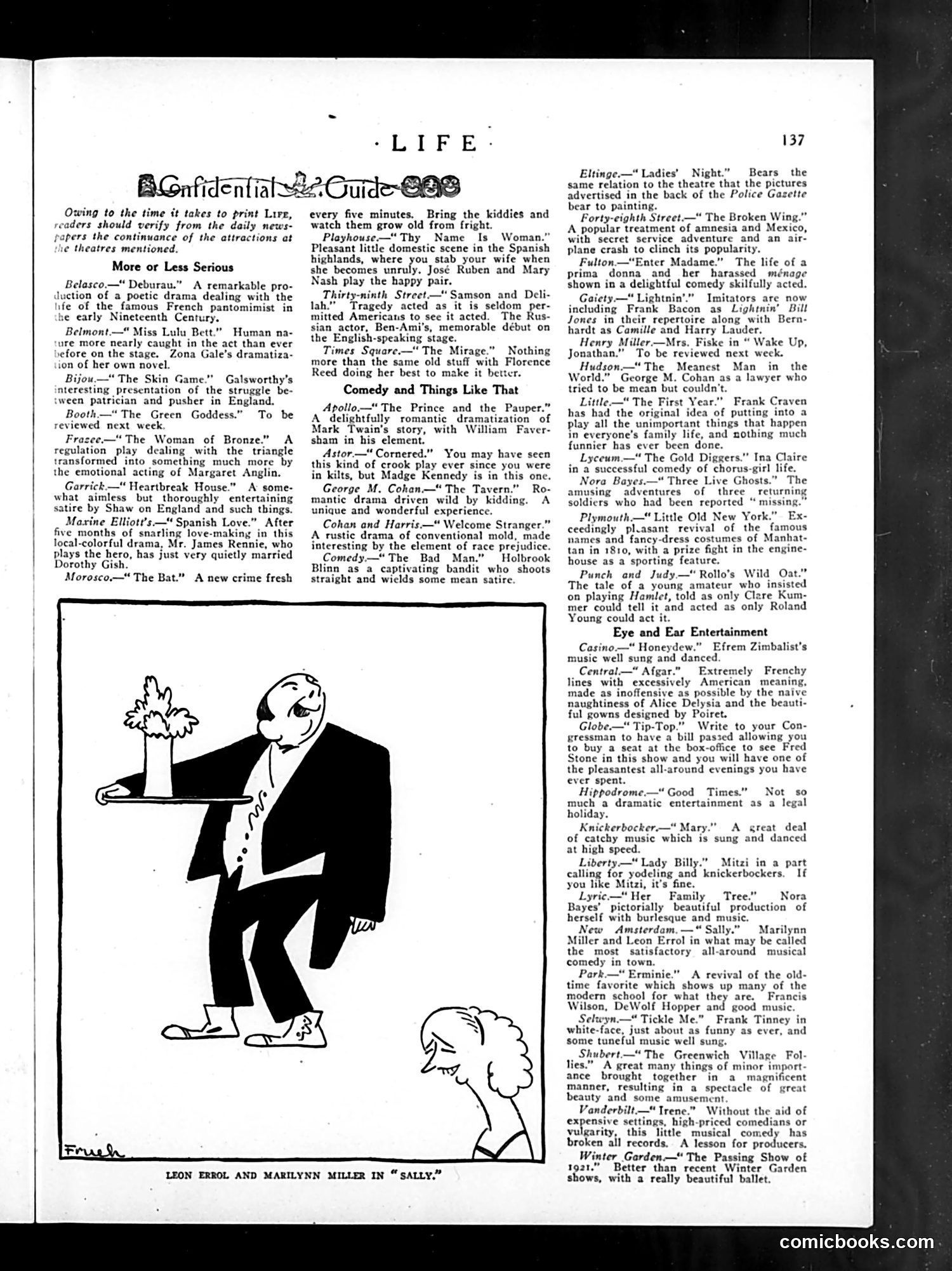
This page from Life magazine (circa 1921, based on the theatrical references) is primarily a **theater guide and review section**, not a political cartoon. The illustration shows a **waiter or server** carrying a tray with a flower, depicted in an exaggerated comic style typical of the era's satirical humor. The main content lists Broadway shows with brief, witty descriptions. Life's commentary is **satirical and snobbish**: it mocks popular entertainment ("Ladies' Night" bears relation to Police Gazette pictures like pornography), dismisses conventional plots, and praises experimental or literary works. The tone reflects an educated, elite perspective judging theatrical taste. The illustration appears to be decorative filler—a generic serving-related cartoon—rather than commentary on any specific show or political issue. This page represents Life's role as a **cultural arbiter** for sophisticated readers, dispensing theatrical criticism with pointed humor about what counted as serious art versus mass entertainment.
📄 Transcribed text from this page (OCR, searchable)
Machine-transcribed from the original scan — historical spelling and the odd misread are preserved.
-LIFE- Owing to the time it takes to print Lire, readers should verify from the daily news- papers the continuance of the attractions at ie theatres mentioned. More or Less Serious Belasco.—" Deburau.” A remarkable pro- Juction of a poetic drama dealing with the fe of the famous French pantomimist in he early Nineteenth Century, Belmont.—* Miss Lulu Bett.” Human na- ure more nearly caught in the act than ever vefore on the stage. Zona Gale's dramatiza- ion of her own novel. Bijou.—" The Skin Game." Galsworthy’s nteresting presentation of the struggle be- tween patrician and pusher in England. Booth—" The Green Goddess.” To be reviewed next week Frazee.—"“ The Woman of Bronze.” A regulation play dealing with the triangle transformed into something much more by the emotional acting of Margaret Anglin. Garrick—" Heartbreak House.” A some- what aimless but thoroughly entertaining satire by Shaw on England and such things. Maxine Elliott's — Spanish Love.” After five months of snarling love-making in this local-colorful drama, Mr. James Rennie, who plays the hero, has just very quietly married Dorothy Gish. Morosco,— The Bat.” A new crime fresh every five minutes. Bring the kiddies and watch them grow old from fright. Playhouse—“ Thy Name Is Woman.” Pleasant little domestic scene in the Spanish highlands, where you stab your wife when she becomes unruly. José Ruben and Mary Nash play the happy pair. Thirty-ninth Street— Samson and Deli- lah.” Tragedy acted as it is seldom per- mitted Americans to see it acted. The Rus- sian actor, Ben-Ami’s, memorable début on the English-speaking stage. Times Square— The Mirage.” Nothing more than the same old stuff with Florence Reed doing her best to make it better. Comedy and Things Like That Apollo— The Prince and the Pauper.” A. delightfully romantic dramatization of Mark Twain's story, with William Faver- sham in his element. Astor—“ Cornered.” You may have seen this kind of crook play ever since you were in kilts, but Madge Kennedy is in this one. George M. Cohan—" The Tavern.” Ro- mantic drama driven wild by kidding. A unique and wonderful experience. Cohan and Harris—* Welcome Stranger.” A rustic drama of conventional mold, made interesting by the element of race prejudice. Comedy.—" The Bad Man.” Holbrook Blinn as a captivating bandit who shoots straight and wields some mean satire. LEON ERROL AND MARILYNN MILLER IN “ SALLY.” 137 Eltinge. Ladies’ Night.” Bears the same relation to the theatre that the pictures advertised in the back of the Police Gazette bear to painting. Forty-eighth Street —" The Broken Wing.” A popular treatment of amnesia and Mexico, with secret service adventure and an air- plane crash to clinch its popularity. Fulton—‘“Enter Madame.” The life of a prima donna and her harassed ménage shown in a delightful comedy skilfully acted. Gaiety—" Lightnin’.” Imitators are now including Frank Bacon as Lightnin’ Bill Jones in their repertoire along with Bern- hardt as Camille and Harry Lauder. Henry Miller—Mrs. Fiske in “ Wake Up, Jonathan.” To be reviewed next week. Hudson.— The Meanest Man in the World.” George M. Cohan as a lawyer who tried to be mean but couldn't. Little—“ The First Year.” Frank Craven has had the original idea of putting into a play all the unimportant things that happen in everyone's family life, and nothing much funnier has ever been done. Lyceum.—“ The Gold Diggers.” Ina Claire in a successful comedy of chorus-girl life. Nora Bayes.—“ Three Live Ghosts.” The amusing adventures of three returning soldiers who had been reported “ missing.” Plymouth. Little Old New York.” Ex- ceedingly pliasant revival of the famous names and fancy-dress costumes of Manhat- tan in 1810, with a prize fight in the engine- house as a ‘sporting feature. Punch and Judy—" Rollo’s Wild Oat.” The tale of a young amateur who insisted on playing Hamlet, told as only Clare Kum- mer could tell it and acted as only Roland Young could act it. Eye and Ear Entertainment Casino" Honeydew.” Efrem Zimbalist’s music well sung and danced. Central—* Afgar.”". Extremely Frenchy lines with excessively American meaning, made as inoffensive as possible by the naive naughtiness of Alice Delysia and the beauti- ful gowns designed by Poiret. Globe—“ Tip-Top.” Write to your Con- gressman to have a paszed allowing you to buy a seat at the box-office to see Fred Stone in this show and you will have one of the pleasantest all-around evenings you have ever spent. ippodrome—“ Good Times.” Not so much a dramatic entertainment as a legal holiday. Knickerbocker-—" Mary.” A great deal of catchy music which is sung and danced at high speed. Liberty —" Lady Billy.” Mitzi in a part calling for yodeling and knickerbockers. If you like Mitzi, it’s fine. Her Family — Tree.” Nora ictorially beautiful production of herself with burlesque and music. New Amsterdam. —“ Sally.” Marilynn Miller and Leon Errol in what may be called the most satisfactory all-around musical comedy in town. Park.— Erminie.” A revival of the old- time favorite which shows up many of the modern school for what they are. Francis Wilson, DeWolf Hopper and good music. Sel “ Tickle Me.” Frank Tinney in white-face, just about as funny as ever, and some tuneful music well sung. , Shubert—* The Greenwich Village Fol- lies.” A great many things of minor import- ance brought together in a magnificent manner, resulting in a spectacle of great beauty and some amusement Vanderbilt. Without the aid of expensive settings, high-priced comedians or vulgarity, this little musical comedy has broken all records. A lesson for producers. Winter Garden—“ The Passing Show of 1921.” Better than recent Winter Garden shows, with a really beautiful ballet. comicbooks.com