
Life, 1917-04-12 · page 11 of 42
Life — April 12, 1917 — page 11: what you’re looking at
What you’re looking at
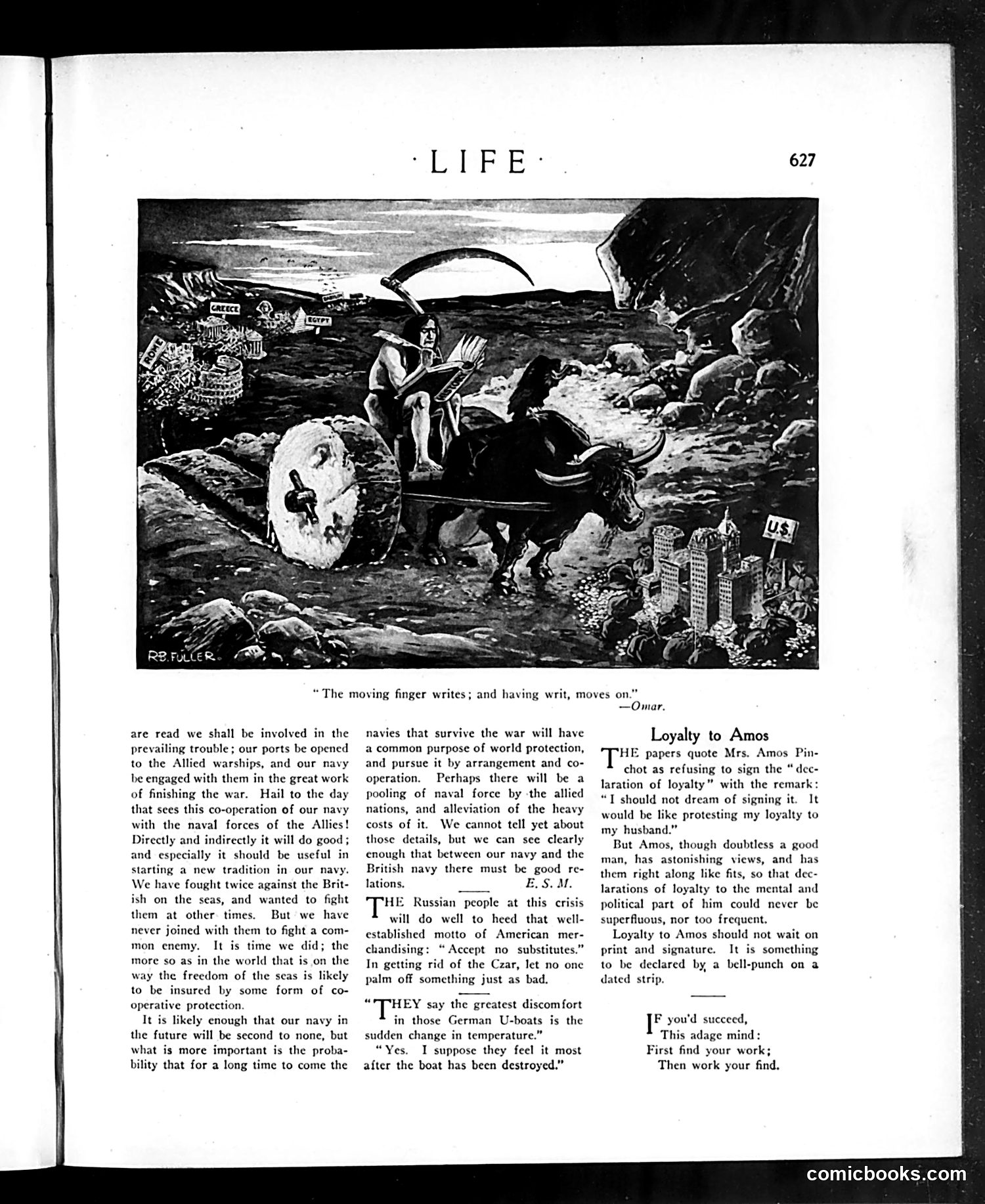
The main artwork is a satirical illustration by R.B. Fuller depicting the famous Omar Khayyam quote: "The moving finger writes; and having writ, moves on." The image shows a hand of fate or destiny writing upon a scroll or tablet, with a chaotic wartime scene below featuring military vessels, fortifications, and destruction. The accompanying text discusses naval cooperation between Allied forces during what appears to be WWI, emphasizing the importance of the British and American navies working together. It references Russian maritime concerns and jokes about German U-boat crews experiencing temperature shock. The satire suggests that historical forces move inevitably forward—war's momentum cannot be stopped, only managed through alliance and cooperation.
📄 Transcribed text from this page (OCR, searchable)
Machine-transcribed from the original scan — historical spelling and the odd misread are preserved.
“The moving finger writes; and having writ, moves on.” are read we shall be involved in the prevailing trouble; our ports be opened to the Allied warships, and our navy be engaged with them in the great work of finishing the war. Hail to the day that sees this co-operation of our navy with the naval forces of the Allies! Directly and indirectly it will do good; and especially it should be useful in starting a new tradition in our navy. We have fought twice against the Brit- ish on the seas, and wanted to fight them at other times. But we have never joined with them to fight a com- mon enemy. It is time we did; the more so as in the world that is on the way the freedom of the seas is likely to be insured by some form of co- operative protection. It is likely enough that our navy in the future will be second to none, but what is more important is the proba- bility that for a long time to come the navies that survive the war will have a common purpose of world protection, and pursue it by arrangement and co- operation. Perhaps there will be a pooling of naval force by -the allied nations, and alleviation of the heavy costs of it. We cannot tell yet about those details, but we can see clearly enough that between our navy and the British navy there must be good re- lations. E.S. M. 'HE Russian people at this crisi will do well to heed that well- established motto of American mer- chandising: “Accept no substitutes.” In getting rid of the Czar, let no one palm off something just as bad. “THEY say the greatest discomfort in those German U-boats is the sudden change in temperature.” “Yes. I suppose they feel it most after the boat has been destroyed.” —Omar. Loyalty to Amos HE papers quote Mrs. Amos Pin- chot as refusing to sign the “dec- laration of loyalty” with the remark: “TI should not dream of signing it. It would be like protesting my loyalty to my husband. But Amos, though doubtless a good man, has astonishing views, and has them right along like fits, so that dec- larations of loyalty to the mental and political part of him could never be superfluous, nor too frequent, Loyalty to Amos should not wait on print and signature. It is something to be declared by a bell-punch on a dated strip. [F201 succeed, This adage mind: First find your work; Then work your find. comicbooks.com