
Life, 1916-09-28 · page 25 of 41
Life — September 28, 1916 — page 25: what you’re looking at
What you’re looking at
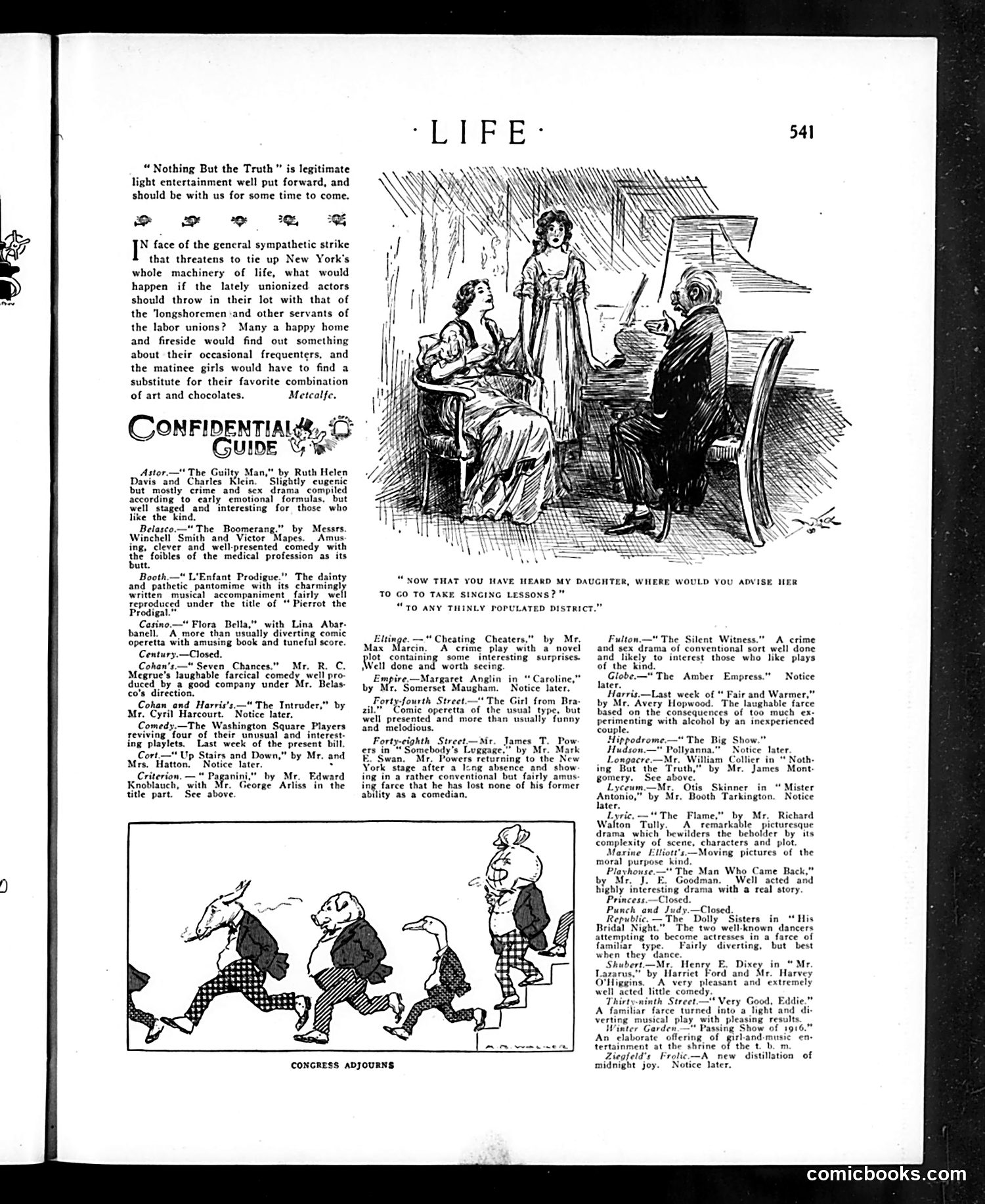
This page from Life magazine contains theater reviews and two cartoons satirizing early 1900s labor unionism and social etiquette. **Top cartoon/text**: Writer Metcalfe jokes that if unionized actors joined a general strike (threatening New York's "machinery of life"), wealthy families would discover uncomfortable truths about their hired help's "occasional frequenters." The satire targets both labor activism and upper-class hypocrisy—suggesting the rich benefit from not knowing their servants' lives too well. **Bottom cartoon ("Congress Adjourns")**: Shows congressmen literally running away, likely satirizing Congress's tendency to adjourn without accomplishing substantive work—a timeless American political complaint. **The page's main content** is a "Confidential Guide" to Broadway theaters, reviewing current productions. One embedded joke mocks a father asking where his daughter should take singing lessons; the answer is "any thinly populated district"—a common vaudeville-era joke about bad singers. The overall tone reflects Life's role as satirical commentary on American politics, society, and entertainment.
📄 Transcribed text from this page (OCR, searchable)
Machine-transcribed from the original scan — historical spelling and the odd misread are preserved.
“Nothing But the Truth” is legitimate light entertainment well put forward, and should be with us for some time to come. SP RG N face of the gencral sympathetic strike that threatens to tie up New York's whole machinery of life, what would happen if the lately unionized actors should throw in their lot with that of the ‘longshoremen:and other servants of the labor unions? Many a happy home and fireside would find out something about their occasional frequenters, and the matinee girls would have to find a substitute for their favorite combination of art and chocolates. Metcalfe, ONFIDENTIALS,, 5 C GUIDE %° ” Astor—* The Guilty Man," by Ruth Helen Davis and Charles Kicin. ‘Slightly eugenic but mostly crime and sex drama compiled according to early emotional formulas, but well staged and interesting for those who like the kind. Belasco.—""The Boomerang.” by Messrs. Winchell Smith and Victor Mapes. | Amus ing, clever and well-presented comedy with the| foibles of the medical profession as its att. Booth —" L’Enfant Prodigue.” ‘The dainty and pathetic pantomime with its charmingl written musical accompaniment, fairly well reproduced under the title of “Pierrot the Prodigal.” Casino.—" Flora Bella,” with Lina Abar- banell. A more than usually diverting comic operetta with amusing book and tuneful score. Century.—Closed. Cohan Seven Chances.” Mr. R. C. Megrue’s laughable farcical comedy, well pro- duced by a good company under Mr. Belas- co's direction. Cohan ond Harris’s.—" The Intruder,” by Mr. Cyril Harcourt. Notice later. Comedy.—The Washington Square Players reviving four of their unusual and interest- ing playlets. Last week of the present bill. Cort.—" Up Stairs and Down,” by Mr. and Mrs. Hatton. Notice later. : Criterion. —" Paganini,” by Mr. Edward Knoblauch, with Mr. George Arliss in the title part.’ See above. “NOW THAT YOU HAVE HEARD MY DAUGHTER, WHERE WOULD YOU ADVISE HER TO GO TO TAKE SINGING LESSONS?” “TO ANY THINLY POPULATED DISTRICT.” Eltinge. —" Cheating Cheaters,” by Mr. Max Marcin. A crime play with a novel Pet containing some interesting surprises. Well done and worth seeing .—Margaret Anglin in‘ Caroline,” by Mr. Somerset Maugham. Notice later. Forty-fourth Street—' The Girl from Bra- zil.” Comic operetta of the usual type, but well presented and more than usually funny and melodious. Forty-eighth Street—Mr. James T. Pow crs in “Somebody's Luggage.” by Mr. Mark E. Swan. Mr. Powers returning to the New York stage after a Izng absence and show ing in a rather conventional but fairly amus: ing farce that he has lost none of his former ability as a comedian, Emp CONGRESS ADJOURNS Fulton.—" The Silent Witness.” A crime and sex drama of conventional sort well done and likely to interest those who like plays of the kind. Globe.—" The later. Harris—Last week of “ Fair and Warmer,” by Mr. Avery Hopwood. The laughable farce based ‘on the consequences of too much ex- perimenting with alcohol by an inexperienced couple. Hippodrome.—" The Big Show." Hudson. —" Pollyanna.” Notice later. Longacre.—Mr. William Collier in“ Noth- ing But the Truth,” by Mr. James Mont. gomery. See above. Lyceum —Mr. Otis Skinner in Antonio,” by Mr. Booth Tarkington, later. Lyric, —"*The Flame,” by Mr. Richard Walton’ Tully, A remarkable picturesque drama which bewilders the beholder by its complexity of scene, characters and plot. Marine Eliott's.—-Moving pictures of the moral purpose kind, Plavhouse.—"* The Man Who Came Back,” Goodman. | Well acted and ng drama with a real story Amber Empress.” Notice “ Mister Notice Princess Punch and Judy.—Closed. Republic, — The Dolly Sisters in * His Bridal Night.” The two well-known dancers attempting to become actresses. in a farce of familiar type. Fairly diverting, but best when they dance. Shubert—Mr. Henry E, Dixey in Mr. "by Harriet Ford and Mr. Harvey A very pleasant and extremely cted little comed: Very Good, Eddie. r farce turned into a light and musical play with pleasing results. Winter Garden.—" Passing Show of 1916.” An elaborate offering of girl-and-music en- tertainment at the shrine of the t. b. m. Ziegfeld’s Frolic—A new distillation of midnight joy. Notice later. comicbooks.com