
Life, 1915-11-11 · page 25 of 44
Life — November 11, 1915 — page 25: what you’re looking at
What you’re looking at
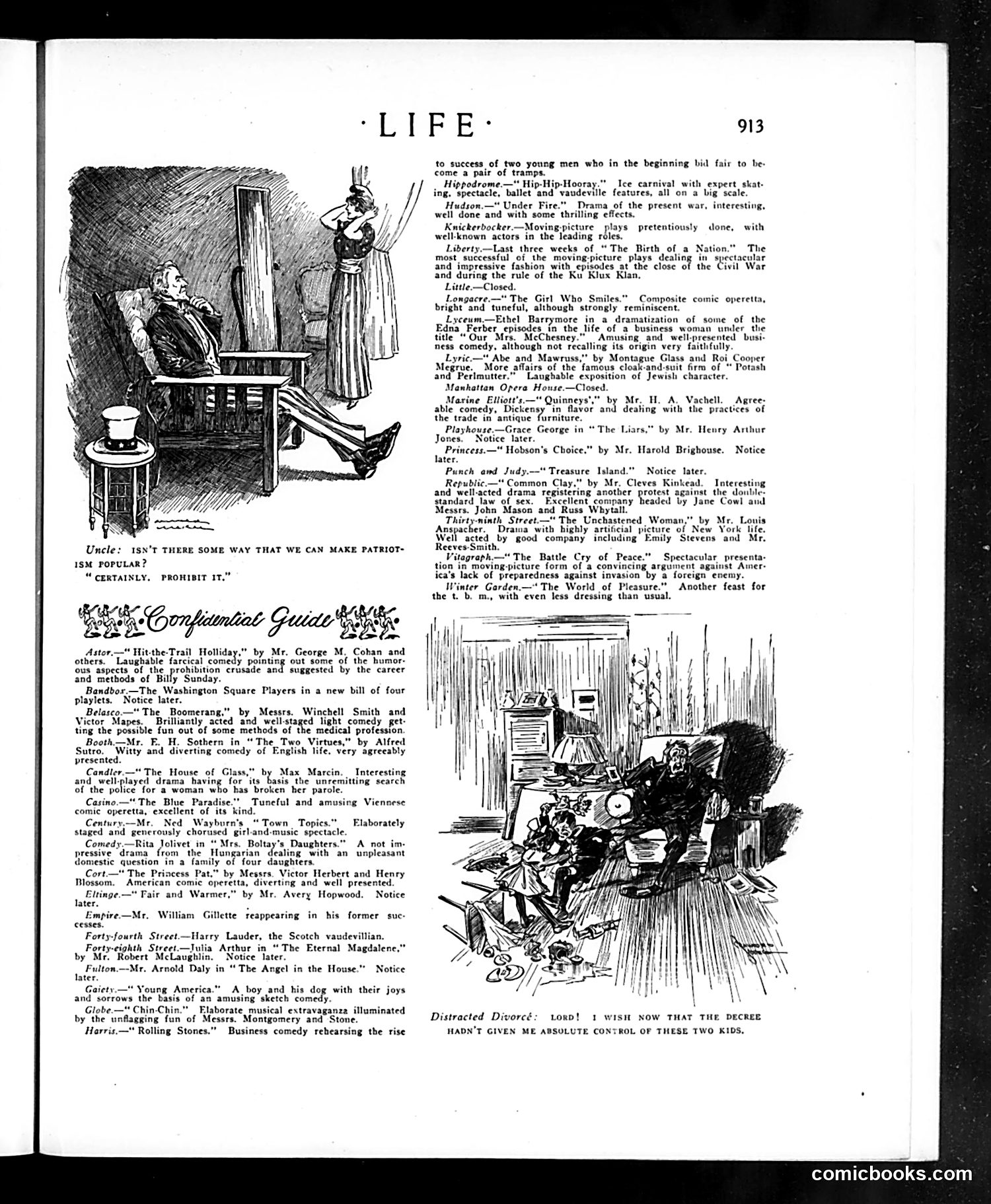
The main cartoon satirizes the prohibition movement. An "Uncle" figure asks how to make patriotism popular, and receives the blunt answer: "Certainly, prohibit it." The joke mocks prohibition advocates—particularly referencing Billy Sunday, the famous evangelical preacher leading temperance crusades—by suggesting that forbidding something makes Americans embrace it as patriotic duty rather than genuine conviction. The accompanying text is a theatrical review listing Broadway productions. Notably, it mentions "The Birth of a Nation," describing it as "the most successful of the moving-picture plays"—this silent film, though now recognized for its racist KKK propaganda, was celebrated at the time. The review also references "Hit-the-Trail Holliday," a comedy mocking the prohibition movement itself, indicating contemporary debate over alcohol regulation. The satire critiques how moral causes become political tools rather than genuine reform movements.
📄 Transcribed text from this page (OCR, searchable)
Machine-transcribed from the original scan — historical spelling and the odd misread are preserved.
LIFE: 913 Uncle: 18x'T THERE SOME WAY THAT WE CAN MAKE PATRIOT~ 1SM POPULAR? “CERTAINLY, PROHIBIT 17,” i Ooryliintat Pasta SA Astor.—" Hit-the-Trail Holliday,” by Mr. George M. Cohan and others. Laughable farcical comedy pointing out some of the humor- ous aspects of the prohibition crusade and suggested by the career and methods of Billy Sunday. Bandbos.—The Washington Square Players in a new bill of four playlets. Notice later. Belasco—" The Boomerang,” by Messrs. Winchell Smith and Victor Mapes. Brilliantly acted and well-staged light comedy fet: ting the possible fun out of some methods of the medical profession. Booth—Mr. FE. H. Sothern in “The Two Virtues,” by Alfred Sutro. Witty and diverting comedy of English life. very agreeably presented. Candler —" The House of Glass,” by Max Marcin. Interesting and well-played drama having for ‘its Basis the unremitting search of the police for a woman who has broken her parole. Casino.—" The Blue Paradise." Tuneful and amusing Viennese comic operetta, excellent of its kind. Century—Mr. Ned Wayburn’s “Town Topics.” staged and generously chorused girl-and-music spectacle. Comedy.—Rita Jolivet in Mrs. Boltay’s Daughters.” A not im- pressive drama from the Hungarian dealing with an unpleasant domestic question in a family of four daughters. Cort.—"* The Princess Pat,” by Messrs. Victor Herbert and Henry Blossom. American comic operetta, diverting and well presented. tattinge—" Pair and Warmer,” by Mr. Avery Hopwood. Notice later. Empire—Mr. William Gillette reappearing in his former suc- cesses. Forty-fourth Street.—Harry Lauder, the Scotch vaudevillian. Forty-eighth Street.—Iulia Arthur in “The Eternal Magdalene,” by Mr. Robert McLaug! Notice later. pagtlton—Mr, Arnotd Daly in “The Angel in the House." Notice later. Gaiety.—" Young America.” A boy and his do and sorrows the basis of aa amusing sketch comedy Globe —* Chin-Chin.” | Flaborate, musical extravaganza illuminated by the unflagging fun of Messrs. Montgomery and Stone. Harris.—" Rolling Stones.” Business comedy rehearsing the rise Elaborately ith their joys to success of two young men who in the beginning bid fair to be- come a pair of tramps. Hippodrome.—" Hip-Hip-Hooray.” Tce carnival with expert skat- ing. spectacle, ballet and vaudeville features, all on a big scale. Hudson.—" Under Fire." Drama of the present war, interesting, well done and with some thrilling effects. Knickerbocker.—Moving-picture plays pretentiously done, with well-known actors in the leading roles. Liberty.—Last three weeks of “The Birth of a Nation.” The most, successful of, the moving:picture plays dealing in spectacular and impressive fashion with episodes at the close of the Civil War and during the rule of the Ku Klux Klan, Little —Closed. Longacre.—" The Girl Who Smiles."” Composite comic operetta, bright and tuneful, although strongly reminiscent. Lyceum—Ethel Barrymore in a dramatization of some of the Edna, Ferber episodes in the life of a business woman under the title “Our Mrs, McChesney.” Amusing and well-presented busi- — comedy, although not recalling its origin very faithfully. Abe and Mawruss,” by Montague Glass and Roi Cooper Megrucs More affairs of the famous cloak-and-suit firm of “ Potash and Perlmutter.” Laughable exposition of Jewish character. Manhattan Opera House.—Closed. Marine Elliott’s.—" Quinneys',” by Mr. H. A. Vachell. Agree: abie comedy, Dickensy in flavor and dealing with the practices of the trade in antique furniture. Playhouse. —Grace George in “ The Liars,” by Mr. Henry Arthur Jones, Notice later. pairincess.—" Hobson's Choice.” by Mr. Harold Brighouse. Notice later. Punch amd Judy.—" Treasure Island.” Notice later. Republic.—* Common Clay.” by Mr. Cleves Kinkead. Interest and wellacted drama registering another protest against the dow standard law of sex. Excellent company headed by Jane Cowl and Messrs. John Mason and Russ Whytall. Thirty-ninth Street.—" The Unchastened Woman,” by Mr. Louis Anspacher. Drama with highly artificial picture of New York life. Well acted by good company including Emily Stevens and Mr. Smith. jagraph.—“ The Battle Cry of Peace." Specta in moving-picture form of a convincing arguine ica's lack of preparedness against invasion by a foreign enemy. Winter Garden.—* The World of Pleasure.” Another feast for the t. b. m., with even less dressing than usual, Distracted Divorcé: oro! 1 wish NOW THAT DECREE HADN'T GIVEN ME ABSOLUTE CONTROL OF THESE TWO KIDS, comicbooks.com