
Life, 1915-04-15 · page 25 of 44
Life — April 15, 1915 — page 25: what you’re looking at
What you’re looking at
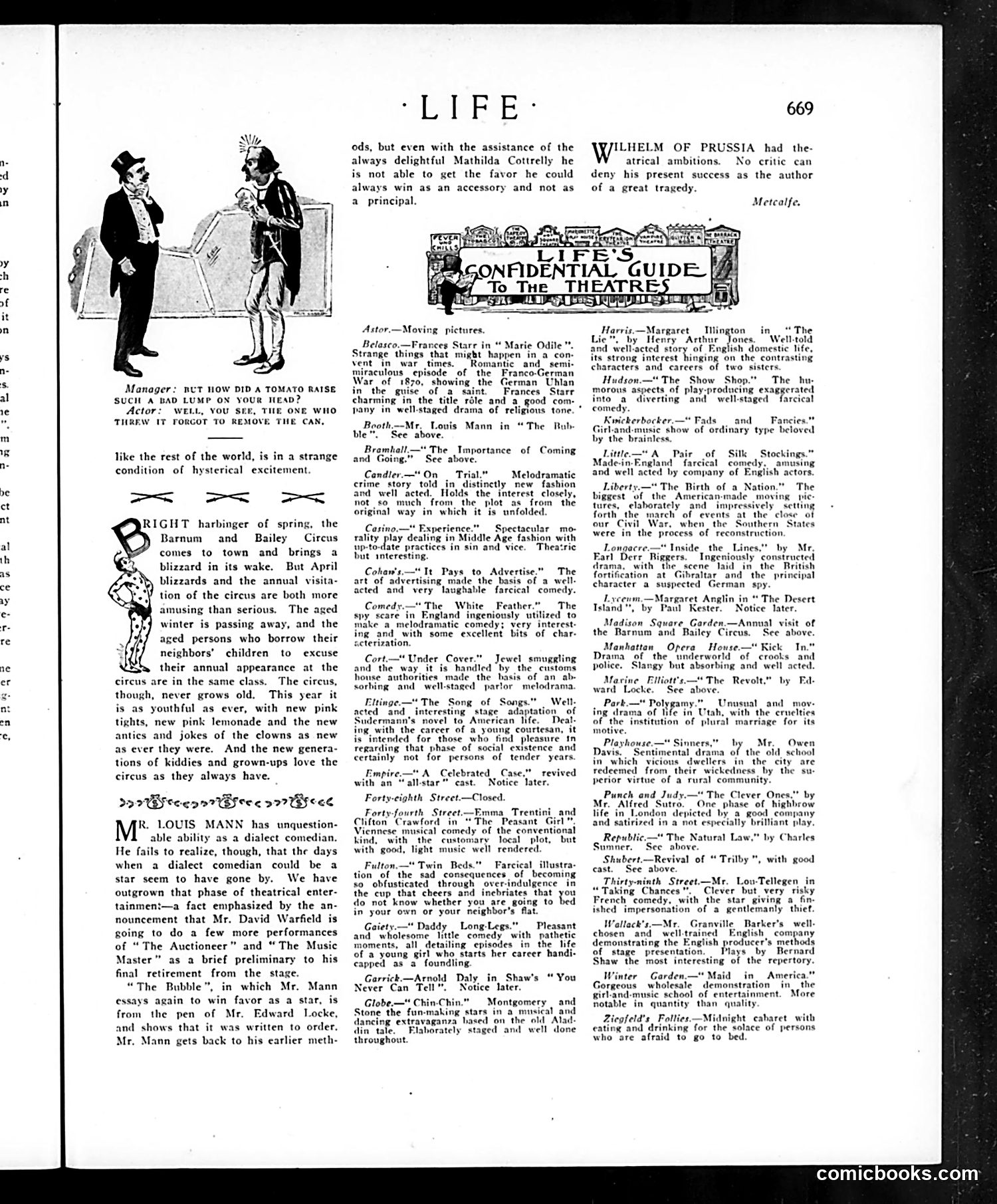
The small cartoon at the top depicts a theatrical exchange: an actor has a large lump on his head, and a manager asks how a tomato caused such injury. The actor replies the person who threw it "forgot to remove the can"—the joke being that the tomato was still in its tin can when thrown, making it a heavy projectile rather than just fruit. This satirizes **audience reactions to poor theatrical performances**. Throwing vegetables at bad actors was a real (if exaggerated) convention of disapproval in early 20th-century theaters. The humor lies in the absurdity of the cause and the actor's deadpan acceptance of this occupational hazard. The rest of the page is a "Confidential Guide to the Theatres"—theater reviews listing current Broadway productions and their merits or flaws. This context shows the cartoon as a lighthearted jab at theater culture during a period when live performance was dominant entertainment and audience participation (including heckling or throwing objects) was an understood, if rowdy, aspect of theater-going.
📄 Transcribed text from this page (OCR, searchable)
Machine-transcribed from the original scan — historical spelling and the odd misread are preserved.
Manager: UT NOW DID A TOMATO RAISE SUCH A BAD LUMP ON YOUR HEAD? Actor: WELL, YOU SEE, THE ONE WHO THREW IT FORGOT TO REMOVE THE CAN, like the rest of the world, is in a strange condition of hysterical excitement a RIGHT harbinger of spring, the Barnum and Bailey Circus comes to town and brings a blizzard in its wake. But April blizzards and the annual visita tion of the circus are both more amusing than serious. The aged winter is passing away, and the aged persons who borrow their neighbors’ children to excuse their annual appearance at the circus are in the same class. The circus, though, never grows old. This year it is as youthful as ever, with new pink tights, new pink lemonade and the new antics and jokes of the clowns as new as ever they were. And the new genera- tions of kiddies and grown-ups love the circus as they always have. D9 2UES Coen 7 UES eee v7 UE Cce M* LOUIS MANN has unquestion- able ability as a dialect comedian. He fails to realize, though, that the days when a dialect comedian could be a star seem to have gone by. We have outgrown that phase of theatrical enter- tainment—a fact emphasized by the an- nouncement that Mr. David Warfield is going to do a few more performances of “The Auctioneer” and “ The Music Master” as a brief preliminary to his final retirement from the stage. “The Bubble”, in which Mr. Mann essays again to win favor as a star, is from the pen of Mr. Edward Locke, and shows that it was written to order. Mr. Mann gets back to his earlier meth- “RAE ods, but even with the assistance of the always delightful Mathilda Cottrelly he is not able to get the favor he could always win as an accessory and not as a. principal. Astor.—Moving pictures. Belasco.—Frances Stare in “ Marie Odile Strange things that might happen in a con: vent in war times, “Romantic and_ semi- culous episode of the Franco-German 1870, showing the German Uhlan the guise’ of a saint. Frances Starr charming in the title réle and a good com- pany in well-staged drama of religious tone. * Booth—-Mr, Louis Mann in “The Rub» ble". See above. Bramhall. “The Importance of Coming and Goi See above. Candler.—"On | Tri Melodramatic crime story told in distinetly new fashion and well acted. Holds the interest closely, not so much from the plot as from the original way in which it is unfolded. Casino.—* Experience.” Spectacular mo- rality play dealing in Middle Age fashion with up-to-date practices in sin and vice. Theatric but interesting. Cohan's.—“'It Pays to. Advertise.” The art of advertising made the basis of a well- acted and very laughable farcical comedy. Comedy. —" The Feather.” The spy scare in England usly utilized to ake a melodramatic comedy; very interest- x and. with some excellent bits of char- acterization, Cort.—" Under Cover." Jewel smuggling and the way it is handled by the customs house authorities made the basis of an ab- sorhing and well-staged parlor melodrama. Ettinge—" The Song of Songs.” _ Well: ted and interesting stage adaptation of udermann’s novel to American life. Deal- ing with the career of a young courtesan, it is intended for those who find pleasure’ tn regarding that phase of social existence and certainly not for persons of tender years. Empire.—" A Celebrated Case," revived with an “allstar” cast. Notice later. Forty-cighth Street-—Closed. Forty-fourth Street-—Emma_Trentini_ and Clifton Crawford in The Peasant Girl". Viennese musical comedy of the conventional kind, with the customary local plot, but with’ good, light music well rendered. Fulton.—" Twin Beds." Farcical, illustra- tion of the sad consequences of becoming so obfusticated through over-indulgence in the cup that cheers and inebriates that you do not know whether you are going to bed in your own or your neighbor's flat. Gaiety.—" Daddy Long-Legs." Pleasant and wholesome little comedy with pathetic moments, all detailing episodes in the life of a young girl who starts her career handi- capped as a foundling. Garrick.—Arnold Daly in Shaw's “ You Never Can Tell". Notice later. Globe.—"Chin-Chin.” Montgomery and Stone the fun-making stars in a musical and dancing extravaganza based on the ol Alad: din tale. Flaborately staged and well done throughout. 669 ILHELM OF PRUSSIA had the- atrical ambitions. No critic can deny his present success as the author of a great tragedy. Metcalfe. Harris.—Margaret_ Mington in. “ The Lie”, by Henry Arthur Jones. Well-told and well-acted story of English domestic lif its strong interest hinging on the contras! characters and careers of two sisters. Hudson.—" The Show Shop." The hu: morous aspects, of play-producing exaggerated into a diverting and well-staged farcical comedy. Kwickerbocker.—" Fads and Fancies."* Girl-and-music show of ordinary type beloved by the brainless. Little" A Pair of Silk Stockings.” Made-in-England farcical comedy, amusing and well acted by company of English actors. Liberty.—* The Birth of a Nation.” The biggest of the American-made moving pic- tures, elaborately and impressively setting forth’ the march of events at the close of our Civil War, when the Southern States were in the process of reconstruction. Longacre.—* Inside. the Lines." by Mr, Farl Derr Riggers. Ingeniously constructed drama, with the scene laid in the British fortification at Gibraltar and the principal character a suspected German sp Lye Margaret Anglin in “ The Desert Island", by Paul Kester. Notice later. Madison Square Garden.—Annual visit of the Rarnam Bailey Circus. See above. Manhattan Opera House.—" Kick In.” Drama of the underworld of crooks and police. Slangy but absorbing and well acted. Marine, Eltiott's—" The Revolt." by Fae ward Locke. See above. _ Park.—" Polygamy.” Unusual and mov- ing drama of Ife in Utah, with the cruelties of the institution of plural marriage for its motive Playhouse. Sinners, by Mr. Owen Davis. Sentimental drama of the old school in which vicious dwellers in the city are redeemed from their wickedness by the su- perior virtue of a rural community. «The Clever One Mr. Alfred $ ‘One phase of hig! life in London depicted by a good company and satirized ina not especially brilliant play, Republic.—" The Natural Law,” by Charles Sumner. See above. Shubert.—Revival of “ Trilby ", with good cast. See above. Thirty-ninth Street-—Mr. Lou-Tellegen in “Taking Chances". Clever but very risky French comedy, with the star giving a fin- ished impersonation of a gentlemanly thief. Wellack’s—Mr. Granville, Barker's well- chosen and well-trained English, company demonstrating the English producer's methods of stage presentation. Plays by Bernard Shaw the most interesting of the repertory. Winter Garden.—" Maid in America.” Gorgeous wholesale demonstration nthe girland-music school of entertainment. More hotable in quantity than quality icofetd’s Follies.— ht caharet with eating and drinking for the solace of persons who are afraid to go to bed. comicbooks.com