
Life, 1915-03-25 · page 25 of 44
Life — March 25, 1915 — page 25: what you’re looking at
What you’re looking at
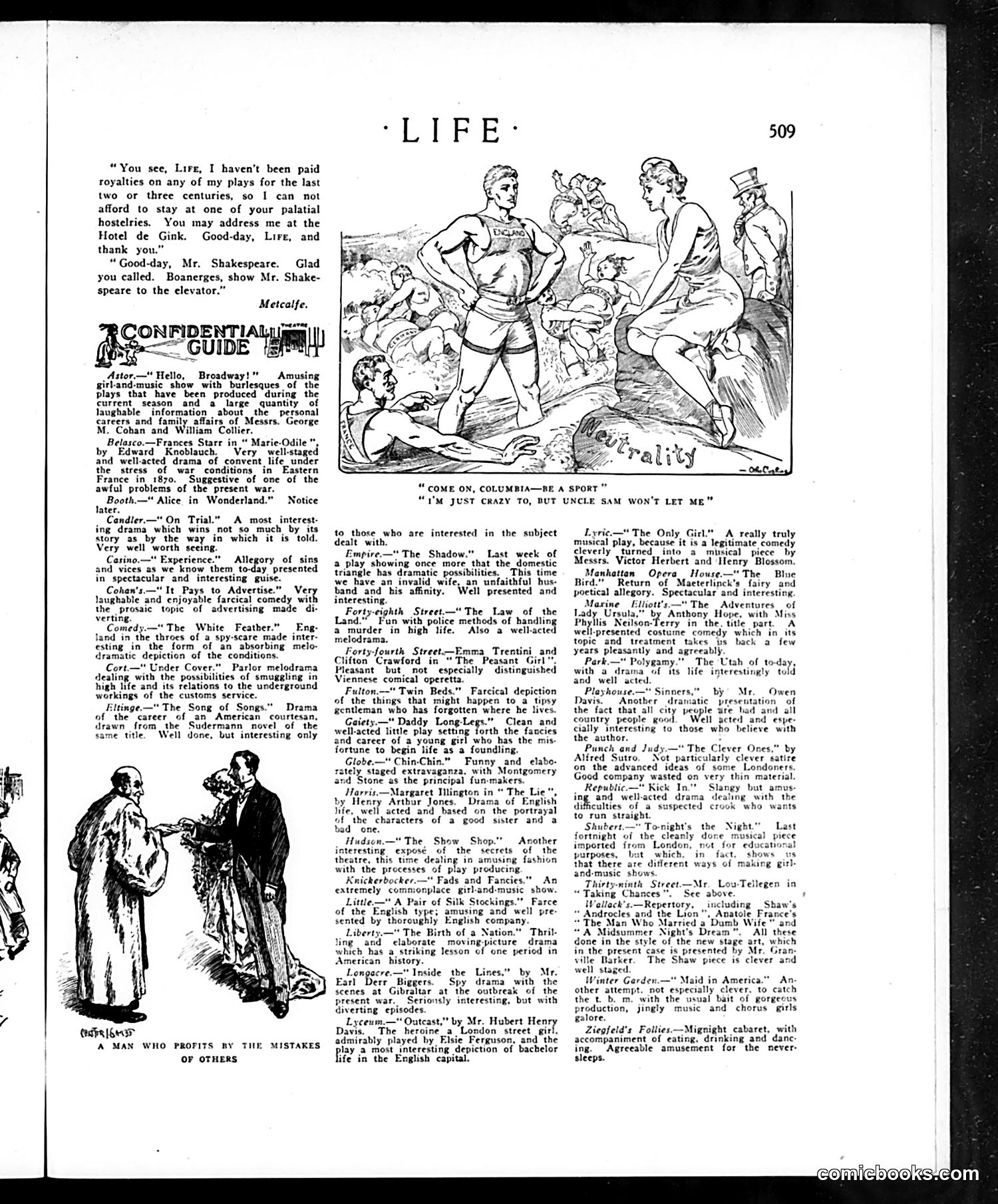
The page contains two distinct elements: **Main Cartoon:** "Come On, Columbia—Be a Sport" depicts a negotiation between two figures. One (labeled "Columbia," representing the United States) appears reluctant while the other (likely representing a European nation during WWI) pleads for participation. The caption reveals Uncle Sam (America) is preventing Columbia from joining what appears to be World War I combat. This reflects the pre-1917 American debate over neutrality versus intervention in the European conflict. **Lower Cartoon:** "A Man Who Profits by the Mistakes of Others" shows two figures in discussion, illustrating a moral lesson about opportunism—though the specific context isn't entirely clear from the visible text. The remainder is a theater review guide ("Confidential Guide") listing Broadway productions with brief critiques, typical of Life's entertainment coverage during this era. The page satirizes American isolationism while documenting contemporary theatrical offerings.
📄 Transcribed text from this page (OCR, searchable)
Machine-transcribed from the original scan — historical spelling and the odd misread are preserved.
“You see, Lire, I haven't been paid royalties on any of my plays for the last two or three centuries, so I can not afford to stay at one of your palatial hostelries. You may address me at the Hotel de Gink. Good-day, Lire, and thank you.” “Good-day, Mr. Shakespeare. Glad you called. Boanerges, show Mr. Shake- speare to the elevator. Metcalfe. ONFIDENTIAL land “GUIDE ‘2 _Astor.—" Hello, Broadway!" — Amusing girland-music show with burlesques of the plays that have been produced during the current season and a large quantity of laughable information about the personal careers and family affairs of Messrs. George M. Cohan and William Collier. Belasco.—Frances Starr in “ Marie-Odile ", by ‘Edward Knoblauch. Very well-staged and well-acted drama of convent life under the stress of war conditions in Eastern France in 1870. Suggestive of one of the awful problems of the present war. Booth.—" Alice in Wonderland.” later. Candler.—" On Trial.” A most interest: ing drama which wins not so much by its story as by the way in which it is told. Very well worth seein Casino. perience.” Allegory of sins and vices as we know them today presented in spectacular and interesting guise. Cohan’s.—"'It Pays to Advertise.” Ve laughable and enjoyable farcical comedy wit the prosaic topic of advertising made. di- verting. Comedy.—" The White Feathe land in the throes of a spy-scare made esting in the form of an absorbing melo- dramatic depiction of the conditions. Cort.—" Under Cover." Parlor melodrama dealing with the possibilities of smuggling in high life and its relations to the underground workings of the customs service. Notice Eltinge.—" The Song of Songs.” Drama of the career of an American courtesan, drawn from the Sudermann novel of the Well done, but interesting only me title. OdFR Gear A MAN WHO PROFITS BY OF OTHERS THE MISTAKES “ COME ON, COLUMBIA—BE A SPORT” “I'm JUST CRAZY TO, BUT UNCLE SAM WON'T LET ME” to those who are interested in the subject dealt with. Empire. The Shadow." Last week of a play showing once more that the domestic triangle has dramatic possibilities, This time we have an invalid wife, an unfaithful bus- band and his affinity. Well presented and interesting Forty-eighth Street—" The Law of the Land.” Fun with police methods of handliny a murder in high life. Also a wellacted melodrama. Forty-fourth Street. Emma Trentini_ and Clifton Crawford in“ The Peasant Girl". Pleasant but, not especially distinguished Viennese comical operetta. Fulton." Twin Beds.” Farcical depi of the things that might happen to a ti gentleman who has forgotten where he lives. Gaiety.—" Daddy Long-Le Clean and well-acted little play setting forth the fancies and career of a young girl who has the mis: fortune to begin life as a foundling. Globe—" Chin-Chin.” Funny and elabo- rately staged extravaganza, with Montgomery and Stone as the principal fun-makers. Harris.—Margaret Mington in “ The Lie", Henry Arthur Jones. Drama of English . well acted arid based on the portrayal ‘the characters of a good sister and a bad one. Hudson.—" The. Show Shop." Another interesting expose, of the secrets of the theatre, this time dealing in amusing fashion with the processes of play producing Knickerbocker.—" Fads and Fancies.” An extremely comnionplace gitland-music show. Little —" A Pair of Sitk Stockings.” Farce of ‘the English type; amusing and well pre: sented by thoroughly English company. Liberty.—" The Birth of a Nation.” Thril- ling and elaborate moving:picture drama which has a striking lesson cf one period in American history. Longacre.—" Inside the Lines.” by Mr. Earl err Biggers. Spy drama with the scenes at Gibraltar at the outbreak of the present war. Serionsly interesting, but with diverting. episodes. Lyceum—" Outcast," by Mr, Hubert Henry Davis. The heroine a London street girl, admirably played by Elsie Ferguson, and the lay a most interesting depiction of bachelor fife in ‘the English capital Lyric." The Only Gi A really truly musical play, because it is a legitimate comedy cleverly turned into a musical piece by Messrs. Victor Herbert and Henry Blossom. Manhattan Opera House.—" The Blue Bird." Return of Maeterlinck's fairy and poetical allegory. Spectacular and interesting. Eliiott’s.—" The Adventures of ." by Anthony Hope, with Miss Phyllis Neilson-Terry in the. title part. A well-presented costu:ne comedy which in its topic and treatment takes us hack a few years pleasantly and agreeably Park.—" Polygamy." The Utah of today, with a drama of its life interestingly told and well acted. Playhouse.—" Sinners," by Mr. Owen Davis, Another dramatic preseutatior the fact that all city peuple are tad and all country people good ell acted and espe: cially interesting to those who believe with the author. Punch and Judy.—" The Clever Ones,” by Alfred Sutro. Not particularly clever satire on the advanced ideas of some Londoners Good company wasted on very thin mate __ Republic.—" Kick In."* difficulties of a suspected crook who wan to run straight. Shubert.—" To-night's the Night.” Last fortnight of the cleanly done musical piece imported from London, not for educational purposes, but which, in fact, shows that there are different ways of making and-music shows. Thirty-ninth Street.—Mr. Low-Tellegen in “Taking Chances". See above. Welleck’s.—Repertory, | including | Shaw’ * Androcles and the Lion”, Anatole France's “The Man Who Married a ‘Dumb Wife” and “A Midsummer Night's Dream". All these done in the style of the new stage art, which in the present case is presented by Mr. Gran- ville Barker. The Shaw piece is clever ar well staged. Winter Garden.—" Maid in America.” An- other attempt, not especially clever. to catch the t. b. m. with the usual bait of gorgeous production, jingly music and chorus. girls galore. Ziegfeld's Follies.—Mignight cabaret, with accompaniment of eating, drinking and’ danc- ing. Agreeable amusement for the never- sleeps.