
Life, 1914-12-17 · page 23 of 40
Life — December 17, 1914 — page 23: what you’re looking at
What you’re looking at
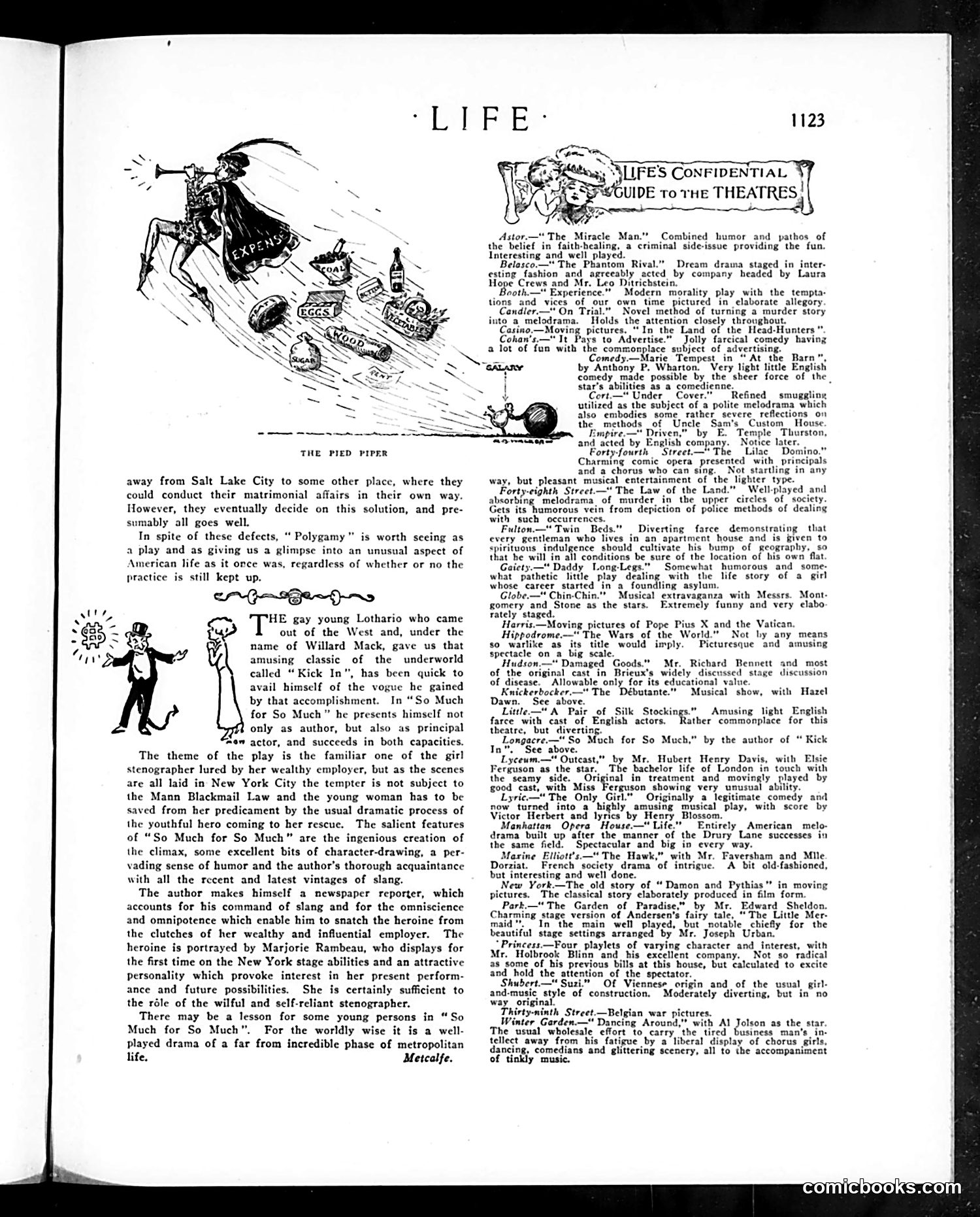
This page from *Life* magazine features a theatrical review section with an illustration titled "The Pied Piper" in the upper left. The cartoon depicts a skeletal, demon-like figure in a cape leading various items (appears to include eggs, bottles, and other objects) down a slope—a visual metaphor for theatrical trends or follies being "led astray." The cartoon likely satirizes how popular theatrical productions seduce audiences and critics into following fashionable but questionable entertainment trends. The "Pied Piper" figure represents either a charismatic performer, a particular theatrical trend, or perhaps theatrical commercialism itself, drawing followers mindlessly downward. The surrounding text reviews contemporary Broadway plays, suggesting the cartoon critiques the theater world's susceptibility to passing fads and the persuasive power of popular but artistically dubious productions—much as the original Pied Piper legend warns of dangerous seduction through charm.
📄 Transcribed text from this page (OCR, searchable)
Machine-transcribed from the original scan — historical spelling and the odd misread are preserved.
THE PIED PIPER away from Salt Lake City to some other place, where they could conduct their matrimonial affairs in their own way. However, they eventually decide on this solution, and pre- sumably all goes well. In spite of these defects, “ Polygamy" is worth sceing as a play and as giving us a glimpse into an unusual aspect of American life as it once was, regardless of whether or no the practice is still kept up. era 2Gemf~o o HE gay young Lothario who came 4d out of the West and, under the name of Willard Mack, gave us that amusing classic of the underworld called “Kick In", has been quick to avail himself of the vogue he gained by that accomplishment. In “So Much for So Much” he presents himself not only as author, but also as principal actor, and succeeds in both capacities. The theme of the play is the familiar one of the girl stenographer lured by her wealthy employer, but as the scenes are all laid in New York City the tempter is not subject to the Mann Blackmail Law and the young woman has to be saved from her predicament by the usual dramatic process of the youthful hero coming to her rescue. The salient features of “So Much for So Much” are the ingenious creation of the climax, some excellent bits of character-drawing, a per- vading sense of humor and the author’s thorough acquaintance with all the recent and latest vintages of slang. The author makes himself a newspaper reporter, which accounts for his command of slang and for the omniscience and omnipotence which enable him to snatch the heroine from the clutches of her wealthy and influential employer. The heroine is portrayed by Marjorie Rambeau, who displays for the first time on the New York stage abilities and an attractive personality which provoke interest in her present perform- ance and future possibilities. She is certainly sufficient to the réle of the wilful and self-reliant stenographer. There may be a lesson for some young persons in “So Much for So Much". For the worldly wise it is a well- played drama of a far from incredible phase of metropolitan life. Metcalfe. a (Garon LIFE'S CONFIDENTIAL “ Vass RYGUIDE to 1HE THEATRES! Combined humor and pathos of ing, a criminal side-issue providing the fun. Interesting and well played. Belasco.—* The Phantom Rival.” Dream drama staged in inter- esting fashion and agreeably acted by company headed by Laura Hope Crews and Mr. Leo Ditrichstein. footh.—" Experience.” Modern morality play with the tempta- tions and vices of our, own time pictured in elaborate allegory Candier.—" On Trial.” Novel method of turning a murder story into a melodrama. Holds the attention closely throughout. Casino.—Moving pictures. “In the Land of the Head-Hunters ”. Cohan’s—" It Pays to Advertise.” Jolly farcical comedy having a lot of fun with the commonplace subject of advertising. Comedy.—Marie Tempest in “At the Barn”, by Anthony P, Wharton. Very light little English $ comedy made possible by the sheer force of the. | star’s abilities as a comedienne. ¥ Cort.—"" Under Cover.” Refined smuggling utilized as the subject of a polite melodrama which also embodies some rather severe reflections on the methods of Uncle Sam's Custom House, "mpire.—" Driven,” by E. Temple Thurston, and acted by English company. Notice later. . Forty-fourth Street—" The Lilac Domino. Charming comic opera presented with principals and a chorus who can sing. Not startling in any way, but pleasant musical entertainment of the lighter type. Forty-eighth Street— The Law of the Land.” Well-played and absorbing melodrama of murder in the upper circles of society. Gets its humorous vein from depiction of police methods of dealing with such occurrences. Fulton.—" Twin Beds." Diverting farce demonstrating that every gentleman who lives in an apartment house and is given to spirituous indulgence should cultivate his bump of geography, so that he will in all conditions be sure of the location of his own flat Gaicty.—" Daddy Long-Legs." Somewhat humorous and some- what pathetic little play dealing with the life story of a girl whose career started in a foundling asylum. Globe.—" Chin-Chin."” Musical extravaganza with Messrs. Mont- gomery and Stone as the stars. Extremely funny and very elabo rately staged. Harris.—Moving pictures of Pope Pius X and the Vatican. Hippodrome.—" The Wars of the World."" Not by any means so warlike as its title would imply. Picturesque and amusing spectacle on a_big scale. Hudson.—" Damaged Goods.” Mr. Richard Bennett and most of the original cast in Brieux's widely discussed stage discussion of disease. Allowable only for its educational value. Knickerbocker.—" The Débutante.” Musical show, with Hazel Dawn. See above. Little—" A Pair of Silk Stockings.” Amusing light English farce with cast of English actors. Rather commonplace for this theatre, but diverting. Longacre.—" So Much for So Much,” by the author of “ Kick In", See above. Lyceum.—" Outcast," by Mr. Hubert Henry Davis, with Elsie Ferguson as the star. The bachelor life of London in touch with the seamy side. Original in treatment and movingly played by good cast, with Miss Ferguson showing very unusual ability. Lyric.—" The Only Girl.” Originally a legitimate comedy and now turned into a highly amusing musical play, with score by Victor Herbert and lyrics by Henry Blossom. Manhattan Opera House.—" Life.” Entirely American melo- drama built up after the manner of the Drury Lane successes in the same field. Spectacular and big in every way. Maxine Elliott’s—" The Hawk,” with Mr. Faversham, and Mlle Dorziat.. French society drama ‘of intrigue. A bit old-fashioned, but interesting and well done. New York—The old story of “Damon and Pythias" in moving i The classical story elaborately produced in film form. “The Garden of Paradise,” by Mr. Edward Sheldon. 1g stage version of Andersen's fairy tale, “The Little Mer- In the main well played, but notable chiefly for the tage settings arranged by Mr. Joseph Urban. Princess.—Four playlets of varying character and interest, with Mr. Holbrook Blinn and his excellent company. Not so radical as some of his previous bills at this house, but calculated to excite and hold th in of the spectato Shuder Of Viennese origin and of the usual girl- and-music style of construction. Moderately diverting, but in no way. original. Thirty-ninth Street.—Belgian war pictures. Winter Garden.—' Dancing Around," with Al Jolson as the star. The usual wholesale effort to carry ‘the tired business man's in- tellect away from his fatigue by a liberal display of chorus girls, dancing, comedians and glittering scenery, all to the accompaniment of tinkly music.