
Life, 1914-09-17 · page 21 of 48
Life — September 17, 1914 — page 21: what you’re looking at
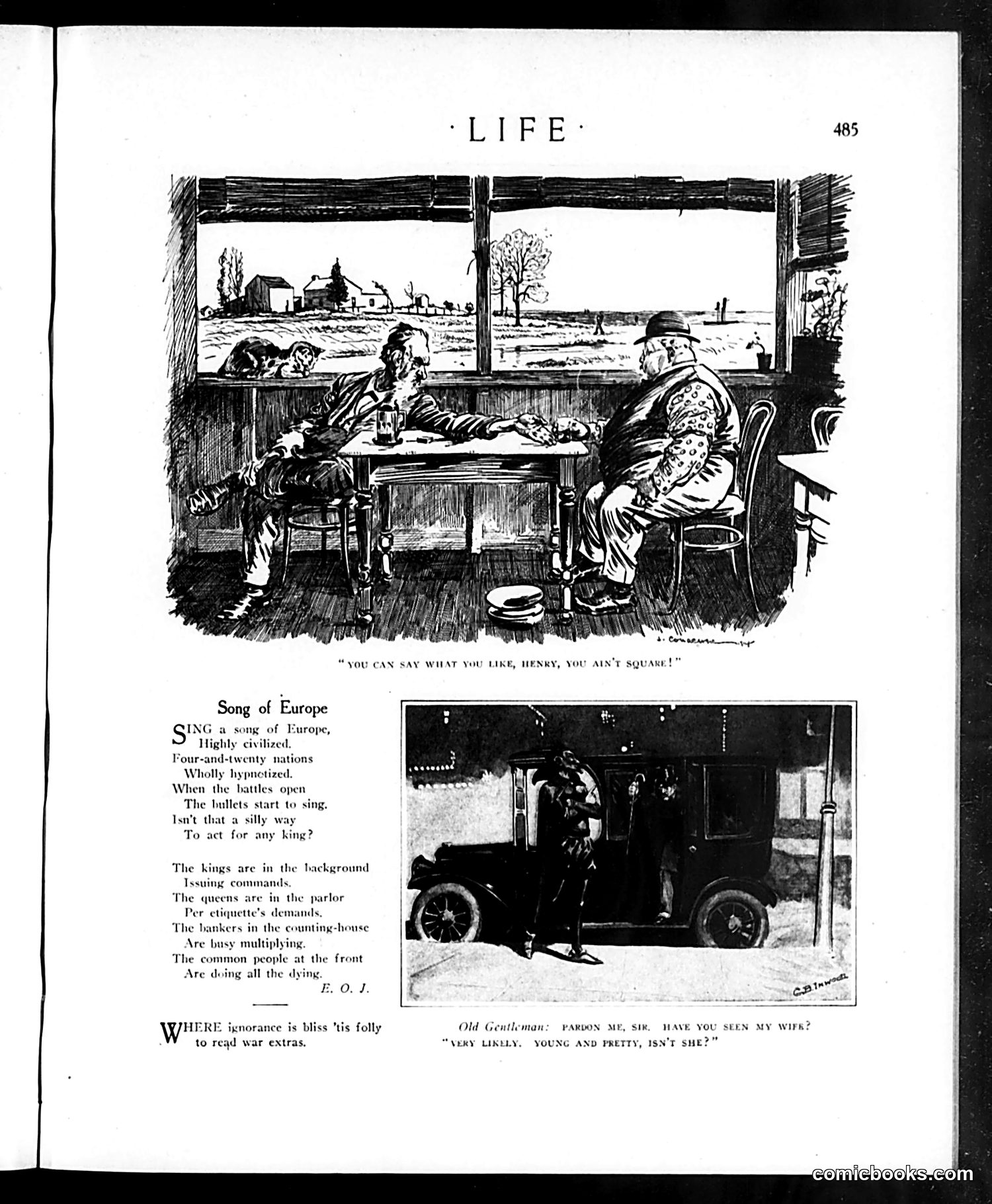
What you’re looking at
This page contains WWI-era satire criticizing the war's social hierarchy and its human cost. **Top cartoon:** Two men in a rural setting discuss the war. The speaker asserts freedom of speech ("You can say what you like, Henry, you ain't square"), suggesting open debate about the conflict was considered patriotic loyalty. **"Song of Europe" poem:** A scathing critique of wartime social order. It mocks how kings command from safety while "common people at the front are doing all the dying." Queens maintain etiquette, bankers profit ("busy multiplying"), and soldiers die—exposing the disparity between rulers and the working-class soldiers bearing the war's actual cost. **Bottom cartoon:** An older gentleman seeks his missing wife; another man assumes she's young and pretty. The caption ironically references the previous poem's theme: while aristocrats and wealthy pursue leisure, ordinary people lose family members to war. Together, the page satirizes the hypocrisy of wealthy leadership profiting from conflict while ordinary citizens suffer the consequences.
📄 Transcribed text from this page (OCR, searchable)
Machine-transcribed from the original scan — historical spelling and the odd misread are preserved.
“YOU CAN SAY WHAT YoU LIKE, HENRY, YOU ALN'T SQUARE!” Song of Europe ING a song of Europe, Hight Four-and-tw Wholly hyp zed. When the battles open The bullets start to sing. Isn't that a silly way To act for any king? The kings are in the background Tssting commands The queens are in the parlor Per etiquette’s demands. The bankers in the counting-house Are busy multiplying. The common people at the front Are doing all the dying. BE. 0.4. HERE ignorance is bliss ‘tis folly Old Gentleman: vARvon ME, SIR HAVE YOU SEEN MY WIFK? to read war extras. “VERY LIKELY, YOUNG AND PRETTY, ISN'T SHE?”