
Life, 1914-07-23 · page 15 of 40
Life — July 23, 1914 — page 15: what you’re looking at
What you’re looking at
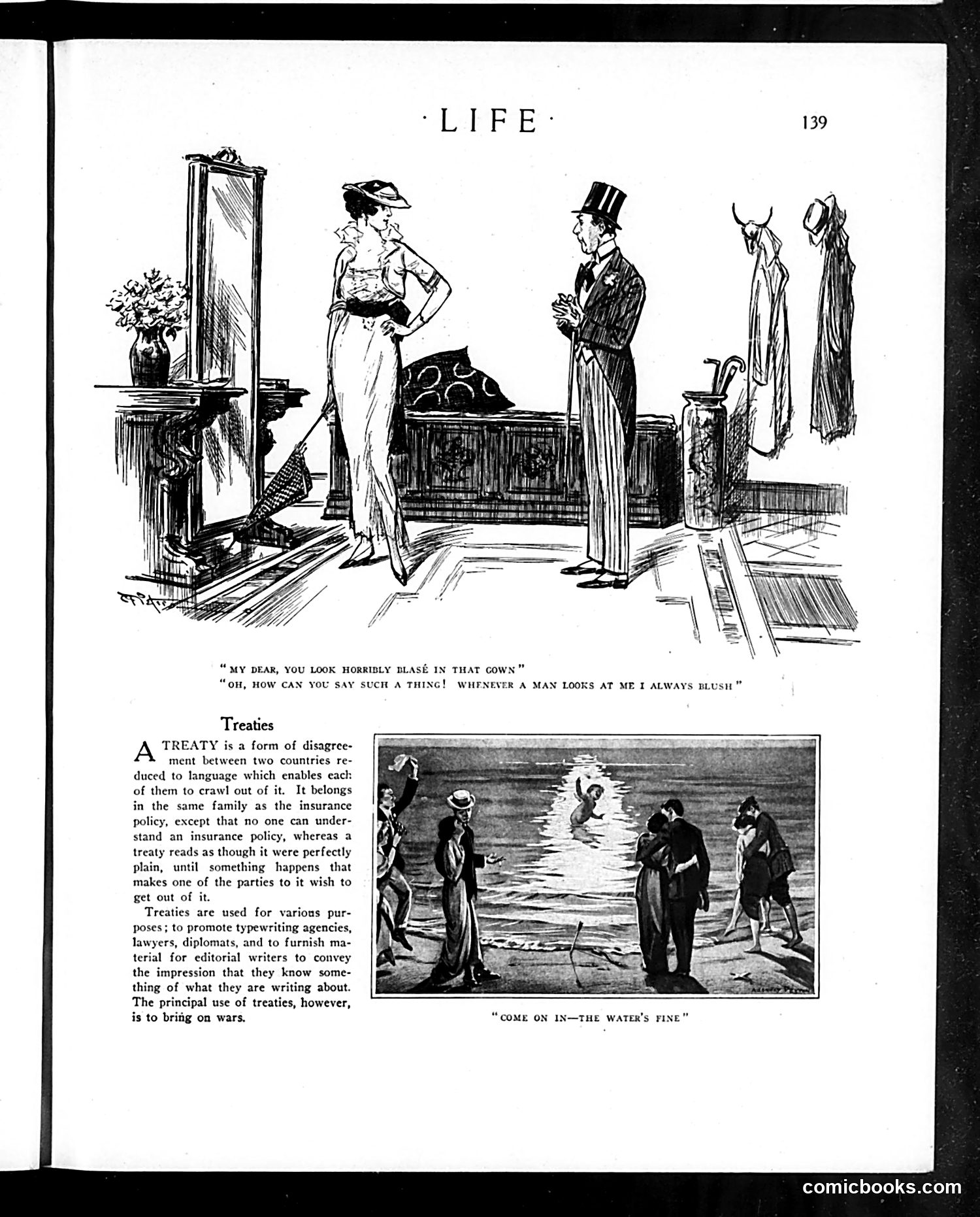
The top cartoon depicts a domestic scene where a man in a top hat confronts a woman about her appearance in an unflattering gown. Her dismissive response—that men always blush when looking at her—represents self-deluded vanity. The main text below offers cynical political satire defining "treaties" as deliberately ambiguous agreements between nations, designed to be misunderstood and easily escaped. Life satirizes treaties as serving primarily to enrich lawyers and diplomats while ultimately leading to war—a darkly humorous critique of diplomatic duplicity. The bottom photograph, captioned "Come on in—the water's fine," shows people at a beach or swimming area, likely illustrating the false reassurance treaties offer, similar to inviting someone into dangerous waters with false promises of safety. The satire reflects early 20th-century American skepticism toward international diplomacy and arms control agreements.
📄 Transcribed text from this page (OCR, searchable)
Machine-transcribed from the original scan — historical spelling and the odd misread are preserved.
“MY DEAR, YOU LOOK HORRIBLY BLAS: “OH, HOW CAN YOU SAY SUCH A TH Treaties TREATY is a form of disagree- ment between two countries re- duced to language which enables each of them to crawl out of it. It belongs in the same family as the insurance policy, except that no one can under- stand an insurance policy, whereas a treaty reads as though it were perfectly plain, until something happens that makes one of the parties to it wish to get out of it. Treaties are used for various pur- poses ; to promote typewriting agencies, lawyers, diplomats, and to furnish ma- terial for editorial writers to convey the impression that they know some- thing of what they are writing about. The principal use of treaties, however, is to bring on wars, “COME ON IN—THE WATER'S FINE” comicbooks.com