
Life, 1914-05-21 · page 29 of 52
Life — May 21, 1914 — page 29: what you’re looking at
What you’re looking at
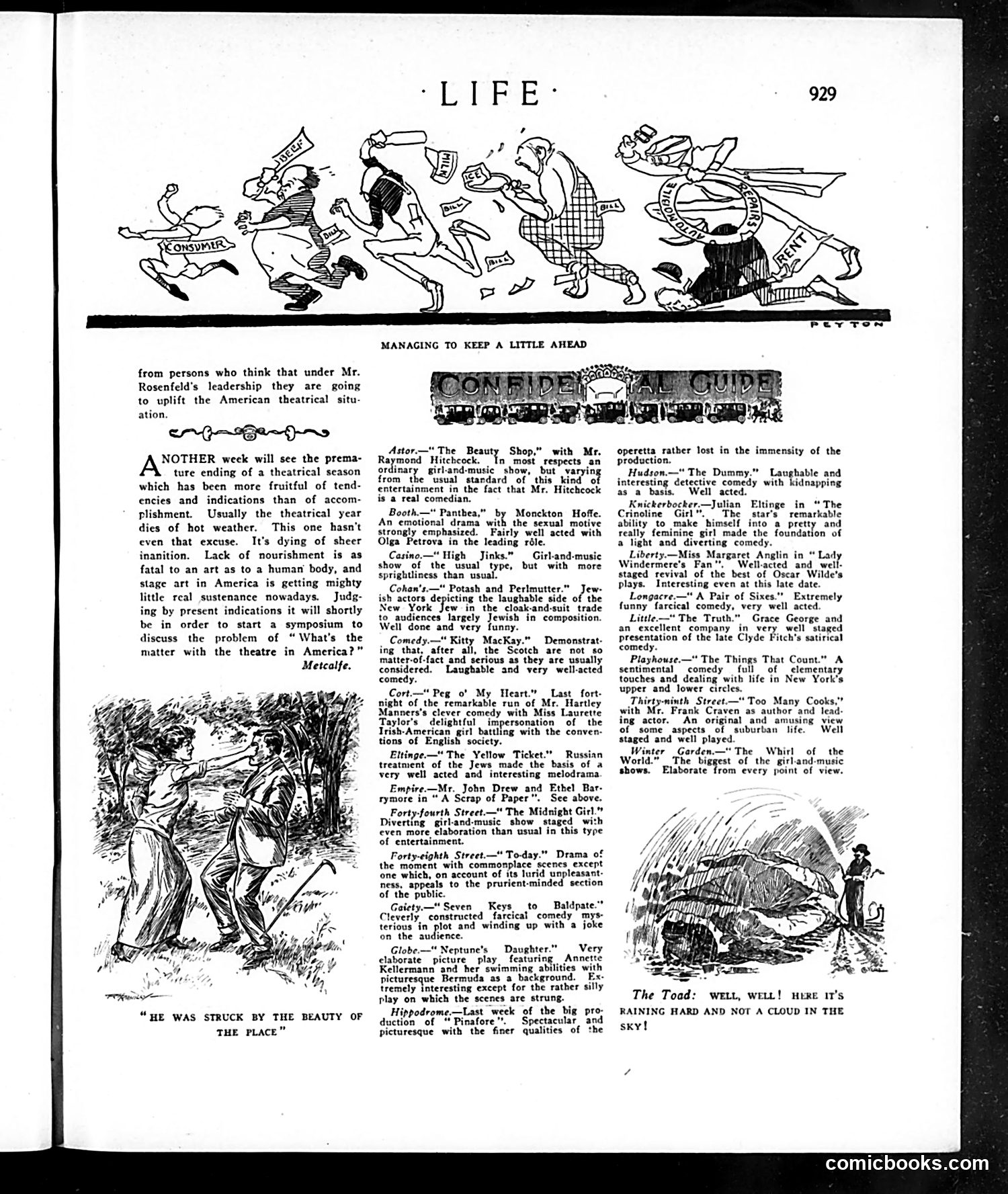
This page from *Life* magazine reviews Broadway theatrical productions, reflecting early 20th-century theater criticism. The top cartoon satirizes American business leadership—specifically referencing Mr. Rosenfeld's theatrical management—showing figures frantically chasing money while labeled "consumer" trails behind. The joke critiques those hoping Rosenfeld would "uplift the American theatrical situation," suggesting financial desperation drives the industry rather than artistic merit. The accompanying essay by Metcalfe laments that American theater is dying from "inanition" (lack of nourishment)—artistic starvation rather than seasonal decline. The theater reviews that follow catalog numerous Broadway shows, many "girl-and-music" productions, with particular note of ethnic humor: "Potash and Perlmutter" depicting New York Jews in the garment trade for largely Jewish audiences. The lower illustrations appear unrelated to the theater content, showing romantic or pastoral scenes.
📄 Transcribed text from this page (OCR, searchable)
Machine-transcribed from the original scan — historical spelling and the odd misread are preserved.
from persons who think that under Mr. Rosenfeld’s leadership they are going to uplift the American theatrical situ- ation, or} 9GA— > NOTHER week will see the prema- ture ending of a theatrical season which has been more fruitful of tend- encies and indications than of accom- plishment. Usually the theatrical year dies of hot weather. This one hasn't even that excuse. It's dying of sheer inanition. Lack of nourishment is as fatal to an art as to a human body, and stage art in America is getting mighty little real sustenance nowadays. Judg- ing by present indications it will shortly be in order to start a symposium to discuss the problem of “ What's the matter with the theatre in America?” Metcalfe. “HE WAS STRUCK BY THE BEAUTY OF THE PLACE” Astor<—" The Beauty Shop," with Mr. Raymond Hitchcock. In most respects an rdinary gitland-music | show, but | varyin from the usual standard of’ this kind. o entertainment in the fact that Mr. Hitchcock is a real comedian. Booth.—" Panthea,” by Monckton Hoffe. An emotional drama with the sexual motive strongly emphasized. Fairly well acted with Olga Petrova in the leading réle. Casino.—" High Jinks.” Girl-and-music show of the usual type, but with more sprightliness than usual. Cohan’s.—" Potash and Perlmutter.” Jew- ish actors depicting the laughable side of the New York Jew in the cloakand-suit trade to audiences largely Je Well done and very funn; Comedy.—“' Kitty MacKay." _ Demonstrat- ing that, after all, the Scotch are not so matter-of-fact and serious as they are usually considered. Laughable and very well-acted comedy. Cort.—" Peg ot My Heart.” Last fort- night of the remarkable run of Mr. Hartley Manners’s clever comedy with Miss Laurette Taylor's delightful impersonation of the Irish-American girl battling with the conven- tions of English society. Eltinge. The Yellow Ticket.” Russian treatment of the Jews made the basis of a very well acted and interesting melodrama. Empire.—Mr. John Drew and Ethel Bar- rymore in “ A Scrap of Paper". See above. Forty-fourth Street—" The Midnight Girl.” Diverting girl-and-music show staged even more elaboration than usual in this type of entertainment. Forty-eighth Street.—" To-day.” Drama of the moment with commonplace scenes except one which, on account of its lurid unpleasant- ness, appeals to the prurient-minded section of the public. Goiety—" Seven Keys. to _Baldpate. Cleverly constructed farcical comedy mys- terious in plot and winding up with a joke on the audience. Globe.—"* Neptune's Daughter." Very elaborate picture play, featuring Annette Kellermann and her swimming abilities with picturesque Bermuda as a background. Ex- tremely interesting except for the rather silly play on which the scenes are strung. Hippodrome.—Last week of the big pro- duction of ‘Pinafore’. Spectacular and picturesque with the finer qualities of the in composition. operetta rather lost in the immensity of the production. Hudson.—" The Dummy.” Laughable and interesting detective comedy with kidnapping as a basis. Well acted. Knickerbocker.—Julian Eltinge in “The Crinoline Girl". ” The star's remarkable ability to make ‘himself into a pretty and really feminine girl made the foundation of a light and diverting comedy. Liberty.—Miss Margaret Anglin in “Lady Windermere’s Fan”. Well-acted and well staged revival of the best of Oscar Wilde’ plays. Interesting even at this late date. Longacre.—" A Pair of Sixes.” Extremely funny farcical comedy, very well acted. Little—" The Truth." Grace George and an excellent company in very well staged presentation of the late Clyde Fitch's satirical comedy. Playhouse.—* The Things That Count sentimental comedy full of elementary touches and dealing with life in New York's upper and lower circles. Thirty-ninth Street—" Too Many Cooks,” with Mr. Frank Craven as author and lead- ing actor. An original and amusing view of some aspects of suburban life. Well staged and well played Winter Garden.—" The Whirl of orld.” The biggest of the girl-and-music shows. Elaborate from every point of view. The Toad: wet, weit! HERE 11's RAINING HARD AND NOT A CLOUD IN THE sky! comicbooks.com