
Life, 1914-04-30 · page 25 of 44
Life — April 30, 1914 — page 25: what you’re looking at
What you’re looking at
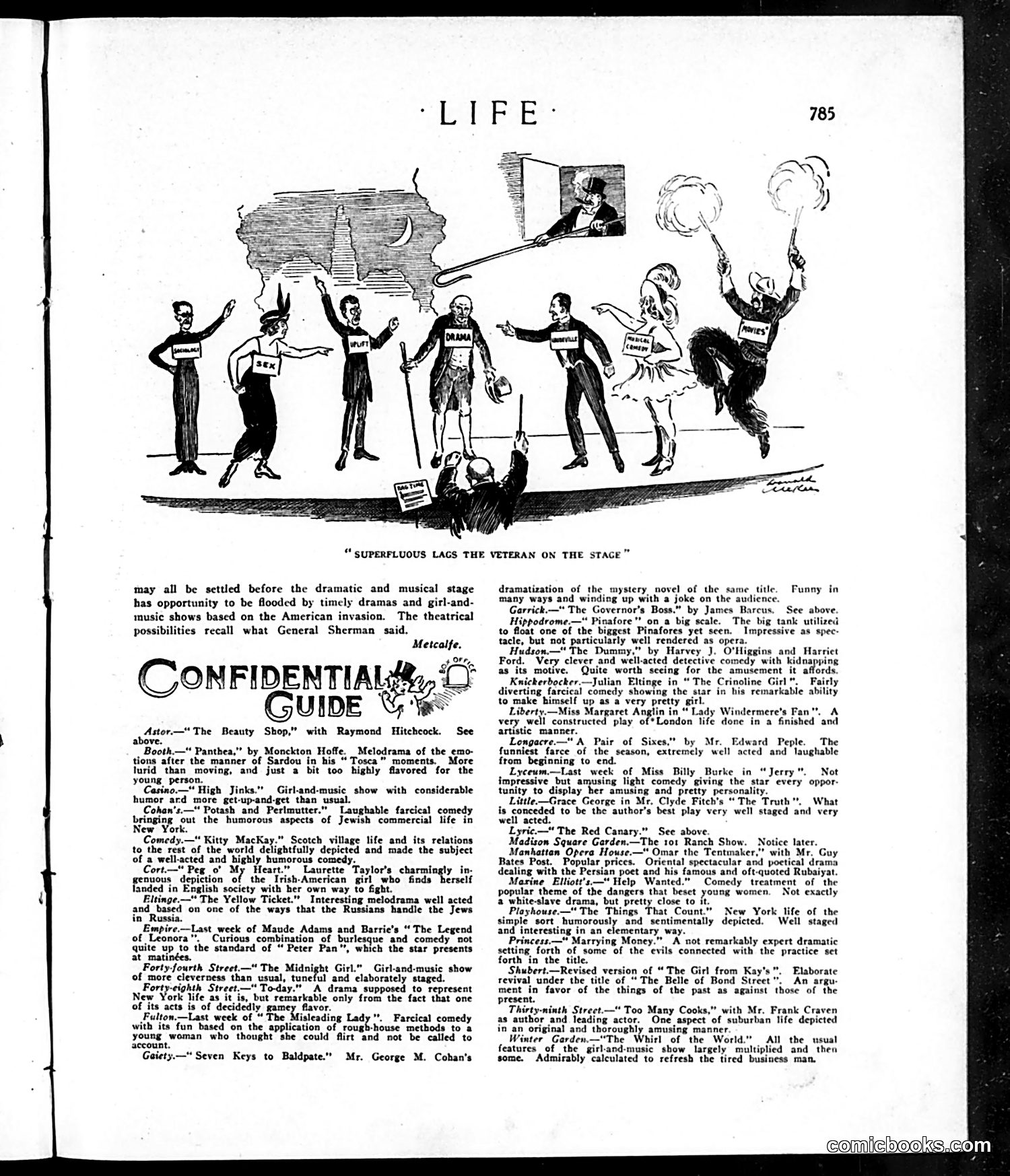
The cartoon's caption quotes Shakespeare ("Superfluous lags the veteran on the stage"), satirizing Broadway's flood of hastily-produced plays about the American military invasion—likely referring to World War I preparations or recent military involvement. The image shows performers in theatrical costumes labeled with show titles, suggesting producers are churning out superficial entertainment rather than quality drama. The caricatured figures appear to represent generic theatrical types rather than specific individuals. The accompanying "Confidential Guide" reviews Broadway shows, establishing context: producers are capitalizing on patriotic fervor by rushing invasion-themed productions to stage before better dramatic works arrive. The satirist (cartoonist Metcalfe) suggests this commercial opportunism is artistically lazy—echoing General Sherman's famous criticism of war itself. The satire targets theatrical producers' cynical exploitation of current events for profit, prioritizing speed and novelty over artistic merit.
📄 Transcribed text from this page (OCR, searchable)
Machine-transcribed from the original scan — historical spelling and the odd misread are preserved.
“ SUPERFLUOUS LAGS THE VETERAN ON THE STAGE” may all be settled before the dramatic and musical stage has opportunity to be ooded by timely dramas and girl-and- music shows based on the American invasion. The theatrical possibilities recall what General Sherman said. Metcalfe. 40rr, ONFIDENTIALS,, 2 C GUIDE ee pftor—"'The Beauty Shop,” with Raymond Hitchcock. See above. Booth.—" Panthea,” by Monckton Hoffe. Melodrama of the emo- tions after the manner of Sardou in his “Tosca” moments. More lurid than moving, and just a bit too highly favored for the young person. Casino.—" High Jinks.” Girl-and-music show with considerable humor ard more get-up-and-get than usual. Cohan's.— Potash and Perlmutter." Laughable farcical comedy bringing a the humorous aspects of Jewish commercial life in jew York. Comedy.—" Kitty MacKay.” Scotch village life and its relations to the rest of the world delightfully depicted and made the subject of a well-acted and highly humorous comedy. Cort.—" Peg o° My. Heart.” Laurette Taylor’s charmi: uous depiction of the Irish-American girl who finds landed in English society with her own way to fight. Eltinge.—" The Yellow Ticket.” Interesting melodrama well acted and based on one of the ways that the Russians handle the Jews in Russia. Empire.—Last week of Maude Adams and Barri of Leonora”, Curious combination of burlesque and comedy not quite up to the standard of “ Peter Pan”, which the star presents at matinées. Forty-fourth Street.—" The Midnight Girl." Girl-and-musie show of more cleverness than usual, tuneful and elaborately staged. Forty-eighth Street — Today." A drama supposed to represent habe ‘ork life as it is, but remarkable only from the fact that one of its acts is of decidedly piney Barer: -Fulton.—Last week of “ The Misleading Lady". Farcical comedy with its fun based on the application of rougt-house methods to a young woman who thought she could flirt and not be called to account. Geiety.—" Seven Keys to Baldpate.” Mr. George M. Cohan’s ly in- jerself dramatization of the mystery novel of the same title, Funny in many ways and winding up with a joke on the audience. Garrick.—"* The Governor’s Boss.” by James Barcus. See above. Hippodrome.—" Pinafore" on a big scale. The big tank utilized to float one of the biggest Pinafores yet scen. Impressive as spec- tacle, but not particularly well rendered as opera. Hudson.—" The Dummy,” by Harvey J. O'Higgins and Harriet Ford. Very clever and well-acted detective comedy with kidnapping as its motive. Quite worth seeing for the amusement it affords. Knickerbocker —Julian Eltinge in “The Crinoline Girl". Fairly diverting farcical comedy showing the star in his remarkabie ability to make himself up as a very pretty girl. Liberty.—Miss Margaret Anglin in Lady Windermere’s Fan". A very well constructed play of*Lendon life done in a finished and artistic manner. Longacre.—" A Pair of Sixes.” by Mr. Edward Peple. The funniest farce of the season, extremely well acted and laughable from beginning to end. Lyceum. ; of Miss Billy Burke in “Jerry”. Not impressive ing light comedy giving the star every oppor- tunity to display her amusing and pretty personality. Little —Grace George in Mr. Clyde Fitch's “The Truth". What is conceded to be the author's best play very well staged and very well acted. Lyric.—" The Red Canary.” See above. Madison Square Garden.—The 101 Ranch Show. Notice later. Manhattan Opera House.—" Omar the Tentmaker,” with Mr, Guy Bates Post. Popular prices. Oriental spectacular and poetical drama dealing with the Persian poet and his famous and oft-quoted Rubaiyat. Marine Elliott's—" Help Wanted.” Comedy treatment of the popular theme of the dangers that beset young women. Not exactly a white-slave drama, but pretty close to it. Playhouse—"'The Things. That Count.” simple sort humorously and sentimentally depicted. and interesting elementary way. Princess.—" Marrying Money.” A not remarkably expert dramatic setting forth of some of the evils connected with the practice set forth in the title. Shubert.—Revised version of “The Girl from Kay's”. Elaborate revival under the title of “The Belle of Bond Street”. An argu: ment in favor of the things of the past as against those of the present. Thirty-ninth Stre Too Many Cooks,” with Mr, Frank Craven as author and leading actor. One aspect of suburban life depicted in an original and thoroughly amusing manner. Winter Garden.—"The Whirl of the World.” All the usual features of the girl-and-music show largely multiplied and then some. Admirably calculated to refresh the tired business man. New York life of the Well staged