
Life, 1914-04-16 · page 11 of 44
Life — April 16, 1914 — page 11: what you’re looking at
What you’re looking at
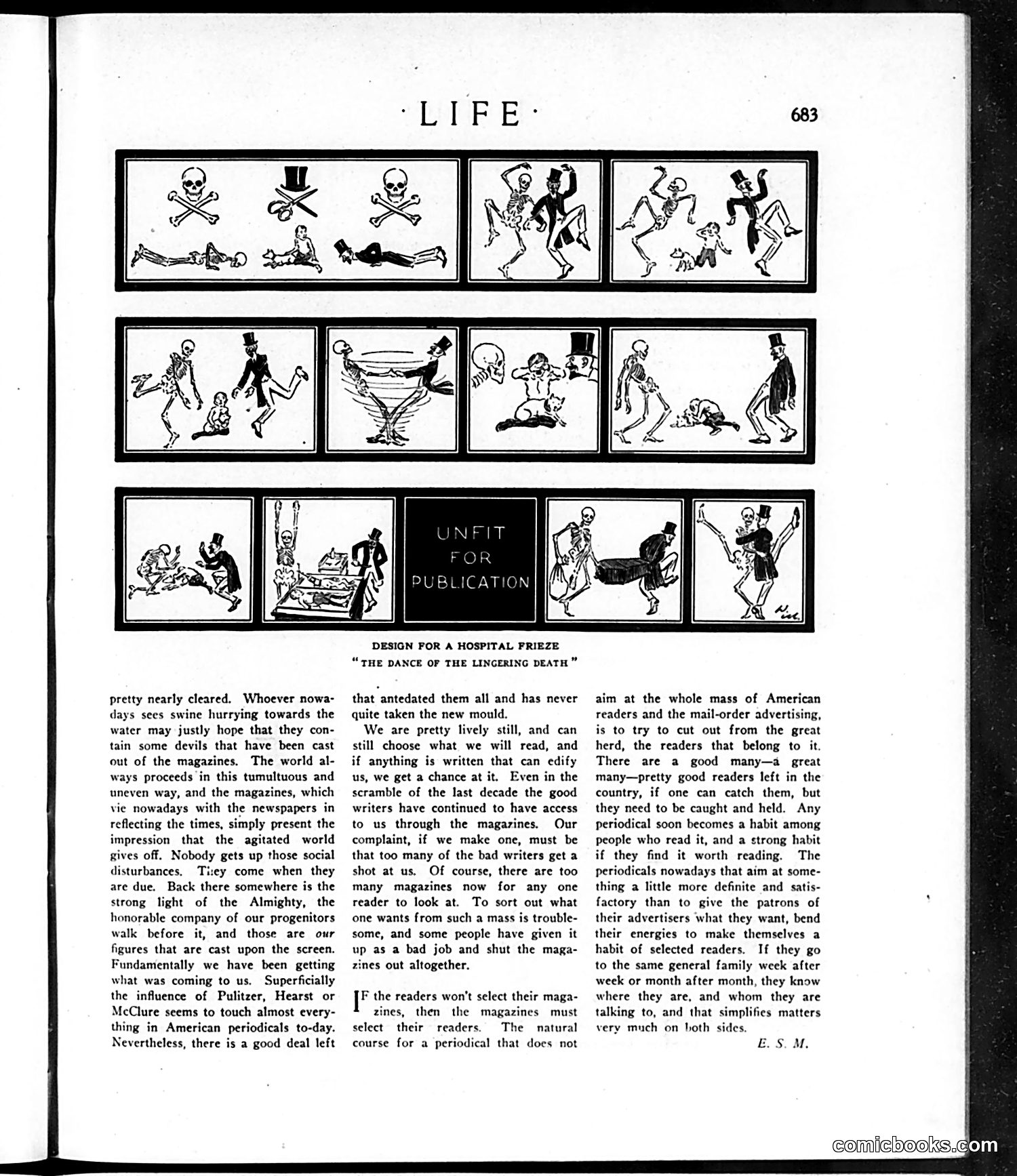
This page presents a macabre cartoon series titled "Design for a Hospital Prize," depicting skeleton figures in various scenes of death and chaos. The skeletal characters wear top hats and formal dress, personifying Death itself engaging in contemporary activities—dancing, drinking, chasing living people, and causing mayhem. The accompanying text discusses American periodicals and magazine quality. The satire appears to critique how magazines sensationalize death, disease, and social disturbance. By showing Death as an elegant, top-hatted gentleman actively participating in modern life, the cartoonist suggests that lurid magazine content treats death and suffering as entertainment rather than serious social concerns. The dark humor reflects early 20th-century anxieties about media influence and sensationalism.
📄 Transcribed text from this page (OCR, searchable)
Machine-transcribed from the original scan — historical spelling and the odd misread are preserved.
pretty nearly cleared. Whoever nowa- days sees swine hurrying towards the water may justly hope that they con- tain some devils that have been cast out of the magazines. The world al- ways proceeds in this tumultuous and uneven way, and the magazines, which vie nowadays with the newspapers in reflecting the times, simply present the impression that the agitated world gives off. Nobody gets up those social disturbances, Tiey come when they are due. Back there somewhere is the strong light of the Almighty, the honorable company of our progenitors walk before it, and those are our figures that are cast upon the screen. Fundamentally we have been getting what was coming to us. Superficially the influence of Pulitzer, Hearst or McClure seems to touch almost every- thing in American periodicals to-day. Nevertheless, there is a good deal left DESIGN FOR A HOSPITAL FRIEZE “THE DANCE OF THE LINGERING DEATH” that antedated them all and has never quite taken the new mould. We are pretty lively still, and can still choose what we will read, and if anything is written that can edify us, we get a chance at it. Even in the scramble of the last decade the good writers have continued to have access to us through the magazines. Our complaint, if we make one, must be that too many of the bad writers get a shot at us. Of course, there are too many magazines now for any one reader to look at. To sort out what one wants from such a mass is trouble- some, and some people have given it up as a bad job and shut the maga- zines out altogether. F the readers won't select their maga- zines, then the magazines must select their readers. The natural course for a periodical that docs not aim at the whole mass of American readers and the mail-order advertising, is to try to cut out from the great herd, the readers that belong to it. There are a good many—a great many—pretty good readers left in the country, if one can catch them, but they need to be caught and held. Any periodical soon becomes a habit among people who read it, and a strong habit if they find it worth reading. The periodicals nowadays that aim at some- thing a little more definite and satis- factory than to give the patrons of their advertisers what they want, bend their energies to make themselves a habit of selected readers. If they go to the same general family week after week or month after month, they know where they are, and whom they are talking to, and that simplifies matters very much on both sides. ELS. M, comicbooks.aely