
Life, 1914-03-12 · page 7 of 44
Life — March 12, 1914 — page 7: what you’re looking at
What you’re looking at
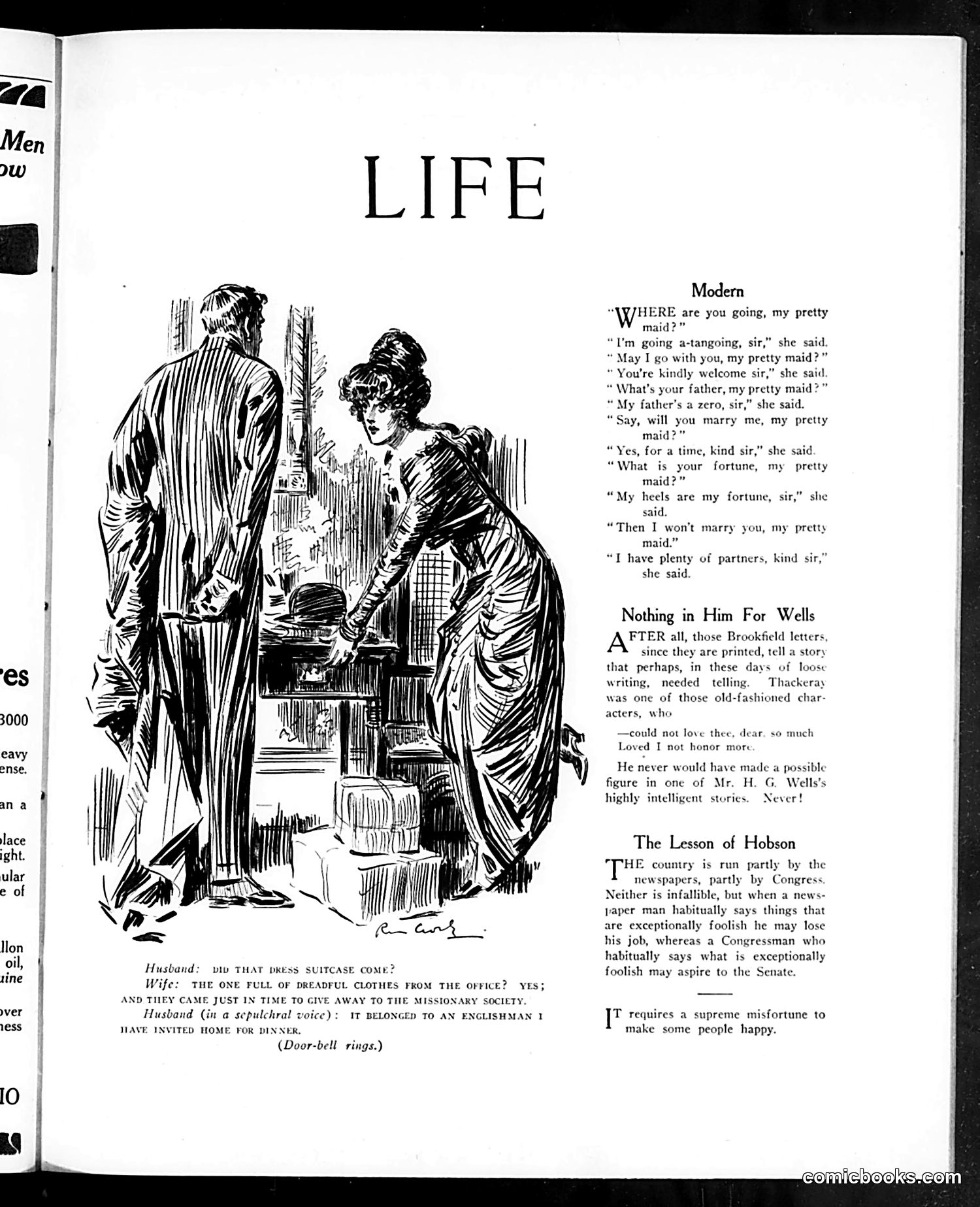
This page contains a satirical cartoon and accompanying short stories. The main illustration depicts a husband and wife with packed suitcases, labeled "Modern." The husband asks about a dress suitcase; the wife explains the clothes are from the office and destined for a missionary society donation, having arrived just in time for a dinner invitation that belonged to an Englishman. The satire targets early 20th-century social hypocrisy: the wife's convenient "donation" is actually repurposing hand-me-downs for personal entertaining. The cartoon mocks both the fashion pretense of the era and the selective charity of the social classes—donating goods for appearance's sake rather than genuine altruism.
📄 Transcribed text from this page (OCR, searchable)
Machine-transcribed from the original scan — historical spelling and the odd misread are preserved.
es 3000 eavy ense. an a lace ight. ular e of lon oil, 1ine ver 1ess Husband: viv THAT pkEsS SUITCASE Come? Wife: THE ONE FULL OF DREADFUL CLOTHES FROM THE OFFICE? YES; AND THEY CAME JUST IN TIME TO GIVE AWAY TO THE MISSIONARY SOCIETY. Husband (in a sepulchral voice): 17 BELONGED TO AN HAVE INVITED HOME FOR DINNER, (Door-bell rings.) NGLISHMAN 1 Modern HERE are you going, my pretty maid?” m going a-tangoing, sir,” she said. May I go with you, my pretty maid?” “You're kindly welcome sir,” she s3 “ What's your father, my pretty maid fy father’s a zero, sir,” she said. “Say, will you marry me, my pretty maid?” “Yes, for a time, kind sir,” she said “What is your fortune, my pretty maid?” “My heels are my fortune, sir,” she said. “Then I won't marry you, my pretty maid.” “T have plenty of partners, kind sir,” she said. Nothing in Him For Wells FTER all, those Brookfield letters, since they are printed, tell a story that perhaps, in these days of loose writing, needed tellin; Thackeray was one of those old-fashioned char- acters, who —could not love thee, dear, so much Loved I not honor morc He never would have made a possible figure in one of Mr. H. G. Wells's highly intelligent stories. Never! The Lesson of Hobson "THE country is run partly by the newspapers, partly by Congress Neither is infallible, but when a news- paper man habitually says things that are exceptionally foolish he may lose his job, whereas a Congressman who habitually says what is exceptionally foolish may aspire to the Senate. T requires a supreme misfortune to make some people happy.