
Life, 1914-02-26 · page 23 of 40
Life — February 26, 1914 — page 23: what you’re looking at
What you’re looking at
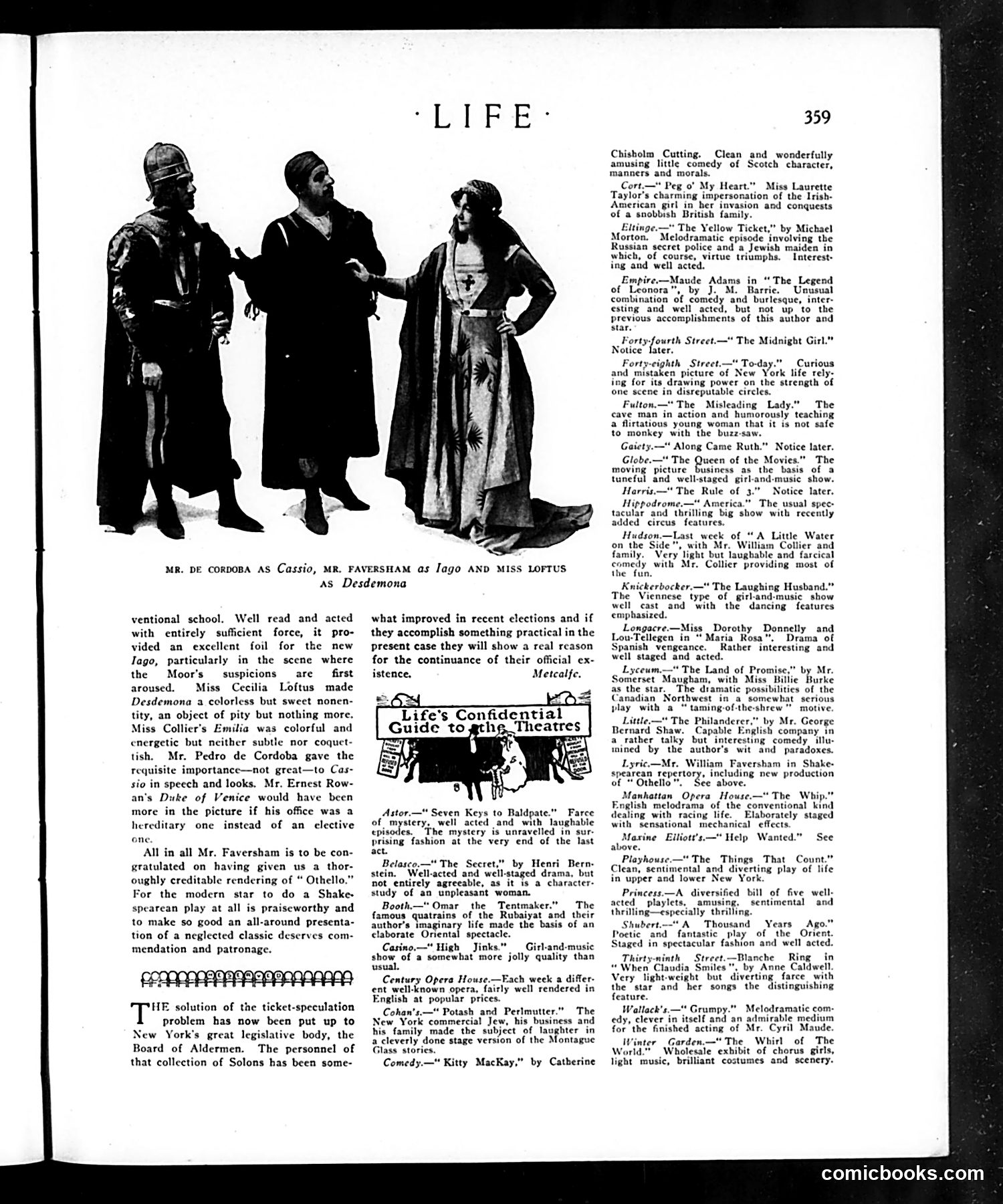
This page reviews Shakespeare's *Othello* and other current Broadway productions. The main image shows three actors in costume from the play: Mr. de Cordoba as Cassio, Mr. Faversham as Iago, and Miss Loftus as Desdemona. The review praises Mr. Faversham's performance as Iago while offering mixed assessments of other cast members—Miss Loftus's Desdemona is dismissed as "colorless," though Miss Collier's Emilia receives credit for energy. The critic commends Faversham for mounting a Shakespearean production at all, noting that modern stage stars rarely attempt classic theater. The page also contains a boxed feature titled "Life's Confidential Guide to the Theatres," followed by brief reviews of contemporary Broadway shows ranging from operetta to melodrama to musical comedy—typical commercial entertainment of the era.
📄 Transcribed text from this page (OCR, searchable)
Machine-transcribed from the original scan — historical spelling and the odd misread are preserved.
MR. DE CORDOBA AS Cassio, MR. FAVERSHAM as Jago AND MISS LOFTUS as Desdemona ventional school. Well read and acted with entirely sufficient force, it pro- vided an excellent foil for the new Tago, particularly in the scene where the Moor’s suspicions are first aroused. Miss Cecilia Loftus made Desdemona a colorless but sweet nonen- tity, an object of pity but nothing more. Miss Collier's Emilia was colorful and energetic but neither subtle nor coquet- tish. Mr. Pedro de Cordoba gave the requisite importance—not great—to Cas- io in speech and looks, Mr, Ernest Row- an's Duke of Venice would have been more in the picture if his office was a hereditary one instead of an clective one. All in all Mr. Faversham is to be con- gratulated on having given us a thor- oughly creditable rendering of “ Othello.” For the modern star to do a Shake- spearean play at all is praiseworthy and to make so good an all-around presenta- tion of a neglected classic deserves com- mendation and patronage. HE solution of the ticket-speculation problem has now been put up to New York's great legislative body, the Board of Aldermen. The personnel of that collection of Solons has been some- what improved in recent elections and if they accomplish something practical in the present case they will show a real reason for the continuance of their official ex- istence, Metcalfe. * Seven Keys to Baldpate.” Farce of’ mystery, well acted and with laughable episodes. The mystery is unravelled in sur- prising fashion at the very end of the last act. Belasco.—" The Secret,” by Henri Bern- stein, Well-acted and well-staged drama, but not entirely agreeable, as it ts a character- study of an unpleasant woman. Booth.—" Omar the Tentmaker.” The famous quatrains of the Rubaiyat and their author's imaginary life made the basis of an elaborate Oriental spectacle. Casino.—" High Jinks." Girl-and-music show of a somewhat more jolly quality than usual. Century Opera House.—Fach week a differ- ent well-known opera, fairly well rendered in English at popular prices. Cohan's.—“ Potash and Perlmutter.” The New York commercial Jew, his business and his family made the subject of laughter in a cleverly done stage version of the Montague Glass stories. Comedy.—" Kitty MacKay,” by Catherine 359 Chisholm Cutting. Clean and wonderfully amusing little comedy of Scotch character, manners and morals. Cort,—" Peg o' My Heart.” Miss Laurette Taylor's charming impersonation of the Irish- American girl in her invasion and conquests of a snobbish British family. Eltinge.—" The Yellow Ticket,” by Michael Morton. Melodramatic episode involving the Russian secret police and a Jewish maiden in which, of course, virtue triumphs. Interest- ing and well acted. Empire-—Maude Adams in “The Legend of Leonora”, by J. M. Barrie, Unusual combination of comedy and burlesque, inter- esting and well acted, but not up ‘to the previous accomplishments of this author and star. Forty-fourth Street.—* The Midnight Girl.” Notice’ later. Forty-cighth Street." To-day.” Curious and mistaken picture of New York life rely- for its drawing power on the strength of one scene in disreputable circles. Fulton.—* The Misleading Lady." The cave man in action and humorously teaching a flirtatious young woman that it is not safe to monkey with the buzz-saw. Gaicty.— Along Came Ruth.” Notice later. Globe.— The Queen of the Movies." The moving picture business as the basis of a tuneful and well-staged girl-and-music show. Harris.—" The Rule of 3.” Notice later. Hippodrome.—" America.” The usual spec: tacular and thrilling big show with recently added circus features. Hudson.—Last_ week of “A Little Water on the Side", with Mr. William Collier and family. Very light but laughable and farcical comedy with Mr. Collier providing most of the fun. Knickerbocker." The Laughing Husband.” The Viennese type of girland-music show well cast and with the dancing features emphasized. Longacre.—Miss Dorothy Donnelly and Low-Tellegen in “ Maria Rosa”, Drama of Spanish vengeance. Rather interesting and well staged and acted. Lyceum.—" The Land of Promise,” by Mr. Somerset Maugham, with Miss Billie Burke as the star, The dramatic possibilities of the Canadian Northwest in a somewhat serious play with a “taming-of-the-shrew "motive. Little. —" The Philanderer,” by Mr. George Bernard Shaw. Capable English company in a rather talky but interesting comedy illu- tnined by the author's wit and paradoxes. Lyric.—Mr. William Faversham in Shake- spearean repertory, including new production of * Othello”. See above. Manhattan Opera House.— The Whip.” English melodrama of the conventional kind dealing with racing life. Elaborately staged with sensational mechanical effects. Maxine Eiliott’s.—" Help Wanted.” above. Playhouse—" The Things That Count. Clean, sentimental and diverting play of life in upper and lower New York. Princess.—A diversified bill of five well- acted playlets, amusing, sentimental and thrilling—especially thrilling. Shubert.—""A Thousand Years Ago.” Poetic and fantastic play of the Orien Staged in spectacular fashion and well acted. Thirty-ninth Street.—Blanche Ring in “ When Claudia Smiles", by Anne Caldwell Very light-weight but diverting farce. with the star and her songs the distinguishing feature. Wallack's.—"* Grumpy." Melodramatic com- edy, clever in itself and an admirable medium for the finished acting of Mr. Cyril Maude. Winter Garden." The Whirl of The World.” Wholesale exbibit of chorus girls, light music, brilliant costumes and scenery. See comicbooks.com