
Life, 1913-12-18 · page 23 of 40
Life — December 18, 1913 — page 23: what you’re looking at
What you’re looking at
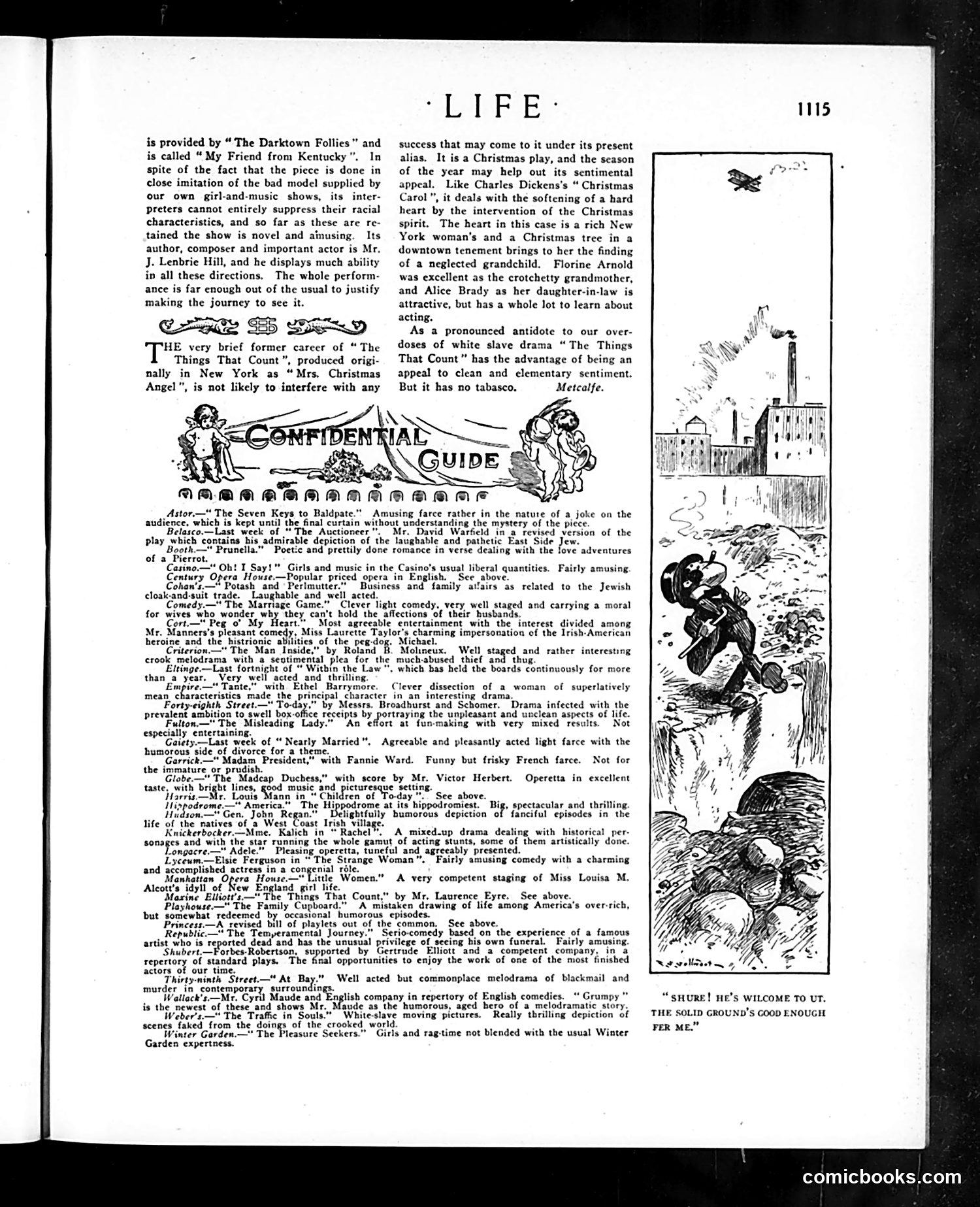
This page is primarily **theater reviews**, not political cartoons. The main content consists of brief critical synopses of Broadway productions, written in the caustic style typical of Life magazine's drama critic (likely identified as "Metcalfe"). The reviews reference several shows with racial or ethnic themes popular in that era: - **"The Darktown Follies"** and **"My Friend from Kentucky"** — minstrel-style productions featuring Black performers. The critic notes these shows, despite imitating "bad model[s]" from mainstream theater, retain authentic "racial characteristics" that make them novel. - **"Potash and Perlmutter"** and **"The Auctioneer"** — plays depicting Jewish immigrant characters (garment trade workers, East Side stereotypes). The reviews are patronizing by modern standards, evaluating these shows primarily by how well they conform to or diverge from white theatrical conventions. The illustration on the right appears unrelated to the text—a sketch of urban tenement housing.
📄 Transcribed text from this page (OCR, searchable)
Machine-transcribed from the original scan — historical spelling and the odd misread are preserved.
is provided by “ The Darktown Follies" and is called “ My Friend from Kentucky”. In spite of the fact that the piece is done in close imitation of the bad model supplied by our own girl-and-music shows, its inter- preters cannot entirely suppress their racial characteristics, and so far as these are re- tained the show is novel and amusing. Its author, composer and important actor is Mr. J. Lenbrie Hill, and he displays much ability ip all these directions. The whole perform- ance is far enough out of the usual to justify making the journey to see it. HE very brief former career of “ The Things That Count”, produced origi- nally in New York as “Mrs. Christmas is not likely to interfere with any vel FE * success that may come to it under its present alias. It is a Christmas play, and the season of the year may help out its sentimental appeal. Like Charles Dickens's “ Christmas Carol”, it deals with the softening of a hard t by the intervention of the Christmas The heart in this case is a rich New York woman's and a Christmas tree in a downtown tenement brings to her the finding of a neglected grandchild. Florine Arnold was excellent as the crotchetty grandmother, and Alice Brady as her daughter-in-law is attractive, but has a whole lot to learn about acting. As a pronounced antidote to our over- doses of white slave drama “The Things That Count” has the advantage of being an appeal to clean and elementary sentiment. But it has no tabasco. Metcalfe. bs oo * ADBDAABAAAANABAAME Astor. The Seven Keys to Baldpate.” Amusing farce rather in the nature of a joke on the audience, which is kept until the final curtain without understanding the mystery of the piece. Belasco.—Last week of “The Auctioneer”. play which acti Mr. David Warfield in a revised version of the tains his admirable depiction of the laughable and pathetic East Side Jew. Booth.—"* Prunella.” Poetic and prettily done romance in verse dealing with the fove adventures of a Pierrot. Casino.—* Oh! I Say!" Girls and music in the Casino's usual liberal quantities. Fairly amusing. Century Opera How. Popular priced opera in English. See above. Cohan’s.—" Potash and Perlmutter.” Business and family atfairs as related to the Jewish cloak-and-suit trade. Laughable and well acted. Comedy.—" The Marriage Game.” Clever light comedy, very well staged and carrying a moral for wives who wonder why they can’t hold the affections of their husbands. Cort.—" Peg o' My Heart.” Most agreeable entertainment with the interest divided among Mr. Manners’s pleasant comedy, Miss Laurette Taylor's charming impersonation of the Irish-American heroine and the histrionic abilities of the peg-dog, Michael. Criterion —" The Man Inside.” by, Roland B. Molineux. | Well staged, and rather interesting crook melodrama with a seotiment I plea for the much-abused thief ani thug. Eltinge—Last fortnight of “ Witbin the Law", which bas held the boards continuously for more than a year. Very well acted and thrilling. Empire.—" Tante,” with Ethel Barrymore. mean ¢ , Clever dissection of a woman of superlatively eteristics made the principal character in an interesting drama, Forty-eighth Street.—" To-day,” by Messrs. Broadhurst and Schomer. Drama infected with the prevalent ambition to swell box-office receipts by ortraying the unpleasant and unclean aspects of life. Fulton.—" The Misleading Lady.” An effort at fun-making with very mixed results. Not especially entertaining. ‘ Gaiety.—Last week of “ Nearly Married ". humorous side of divorce for a theme. Garrick.- the immature or prudish. Agreeable and pleasantly acted light farce with the Madam President,” with Fannie Ward. Funny but frisky French farce. Not for Globe.—" The Madcap Duchess,” with score by Mr. Victor Herbert. Operetta in excellent taste. with bright line: music and pictures Harris—Mr. Louis Mann in “Children of Mizpodro Hadron —" Gen, John Regan? life of the natives of a West Coast I Knickerbocker.—Mme. Kalich in ‘ Rachel sonages and with the st: Longacre.— Adele.’ running the whole gamut of act Pleasing operetta, tuneful and agreeably presented. we setting. ‘o-day".. See above. =“ America” The Hippodrome at its hippodromiest. Big, spectacular and thrilling lightfully humorous depiction o! rish village. fanciful episodes in the A mixed-up drama dealing with historical per- tunts, some of them artistically done. Lycewm.—Elsie Ferguson in “ The Strange Woman”. Fairly amusing comedy with a charming and accomplished actress in a congenial role. Manhattan Opera House.—" Little Women.” Alcott’s idyll_of New England girl life. Maxine Elliott’s—"* A very competent staging of Miss Louisa M. ¢ Things That Count,” by Mr. Laurence Eyre. See above. Playhouse-—" The Family Cupboard.” A mistaken drawing of life among America’s over-rich, but somewhat redeemed by occasional humorous episodes. Princess. A revised bill of playlets out of the common. See above. Republic. The Temyeramertal Journey.” Serio-comedy based on the experience of a famous artist who is rej Shubert. ted dead and has the unusual privilege of seeing his own funeral. Fairly amusing. forbes-Robertson, supported by Gertrude Elliott and a competent company. in a repertory of standard plays. The final opportunities to enjoy the work of one of the most finished actors of our time. Thirty-ninth Street. murder in contemporary surroundin, “At Bay.” Well acted but commonplace melodrama of blackmail and Wallack's.—Mr. Cyl Maude ‘aed Eay lish company in repertory of English comedies. “ Grumpy” is the newest of these and shows Mr. Weber's. aude as the humorous, aged hero of a melodramatic story. The Traffic in Souls.” White-slave moving pictures. Really thrilling depiction of scenes, faked from the, doings of the crooked world. Winter Garden.—* The Pleasure Seekers.” Garden expertness. Girls and rag-time not blended with the usual Winter “SHURE! HE'S WILCOME TO UT. THE SOLID GROUND’S GOOD ENOUGH FER ME.” comicbooks.com