
Life, 1913-10-23 · page 23 of 40
Life — October 23, 1913 — page 23: what you’re looking at
What you’re looking at
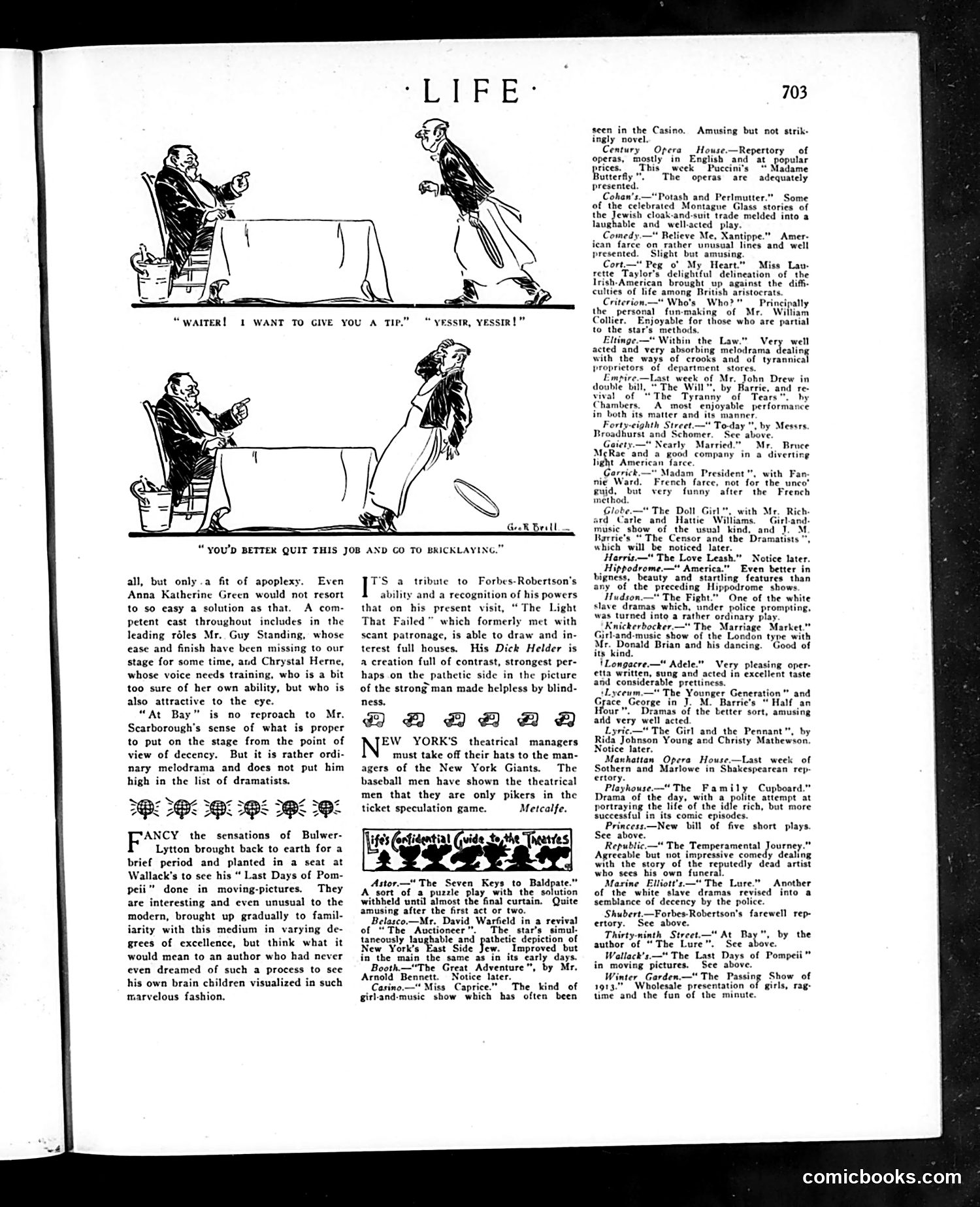
This is a theatrical review page from *Life* magazine (page 703), featuring two cartoon panels at the top that satirize the restaurant tipping custom. **The Cartoons:** The two panels depict a diner attempting to give his waiter a financial tip. In the first panel, the waiter eagerly responds "Yessir, yessir!" In the second, the diner sarcastically suggests the waiter "quit this job and go to bricklaying" instead—implying the tip was insulting or laughably small. The joke mocks the social awkwardness of tipping culture: the diner's embarrassment at offering inadequate compensation, and the waiter's forced politeness despite receiving a pittance. It reflects early-20th-century anxieties about class expectations and wage insufficiency in service work. **Below:** The page continues with theatrical reviews of contemporary Broadway productions, evaluating performances and plays from venues like the Astor, Casino, and Century Opera House.
📄 Transcribed text from this page (OCR, searchable)
Machine-transcribed from the original scan — historical spelling and the odd misread are preserved.
“a “waiter! 1 WANT To GIVE You A TIP.” GK Bell “ you’D BETTEK QUIT THIS JOB AND CO TO BKICKLAYING.” all, but only.a fit of apoplexy. Even Anna Katherine Green would not resort to so easy a solution as that. A com- petent cast throughout includes in the leading réles Mr. Guy Standing, whose ease and finish have been missing to our stage for some time, and Chrystal Herne, whose voice needs training, who is a bit too sure of her own ability, but who is also attractive to the eye. “At Bay” is no reproach to Mr. Scarborough’s sense of what is proper to put on the stage from the point of view of decency. But it is rather ordi- nary melodrama and does not put him high in the list of dramatists. [Bt Nes Tes FR Tw SRE IBC IRE IRE OE ANCY the sensations of Bulwer- Lytton brought back to earth for a brief period and planted in a seat at Wallack’s to see his “ Last Days of Pom- peii” done in moving-pictures. They are interesting and even unusual to the modern, brought up gradually to famil- iarity with this medium in varying de- grees of excellence, but think what it would mean to an author who had never even dreamed of such a process to see his own brain children visualized in such marvelous fashion. bid TS a tribute to Forbes-Robertson’s ability and a recognition of his powers that on his present visit, “The Light That Failed” which formerly met with scant patronage, is able to draw and in- terest full houses. His Dick Helder is a creation full of contrast, strongest per- haps on the pathetic side in the picture of the strong man made helpless by blind- ness. 8A AA AA EW YORK'S theatrical managers must take off their hats to the man- agers of the New York Giants. The baseball men have shown the theatrical men that they are only pikers in the ticket speculation game. Metcalfe. Astor—" The Seven Keys to Baldpate. A‘sort of a puzzle play with the solution withheld until almost the final curtain. Quite amusing after the first act or two. Belasco.—Mr. David, Warfield in a revival of “The Auctioneer”. The. star's si lancously laughable and pathetic de New York’ Side Jew. Improved but in the main the same as in its early days. Booth—"The Great Adventure”, by Mr, Arnold Bennett. Notice later. Casino.—" Miss Caprice.” The kind of girland-music show which has often been 703 seen in the Casino. Amusing but not strik- ingly novel. Century Opera _House.—Repertory of operas, mostly in English and at popular prices. This week Puccini's" Madame utter fly The operas are adequately presented. Cohan’s.—“Potash and Perlmutter." Some of the celebrated Montague Glass stories of the Jewish cloak-and-suit trade melded into a laughable and well-acted play. _ Comedy.— Relieve Me, Xantippe.” Amer- ican farce on rather unusual lines and well presented. Slight but amusing. Cort.— Peg o' My Heart.” Miss Lau- rette Taylor's delightful delineation of the Irish-American brought up against the difh- culties of life among British aristocrats. Criterion.—" Who's Who?" —_ Principally the personal fun-making of Mr. William Collier. Enjoyable for those who are partial to the star's methods. Eltinge.—* Within the Law." Very well acted and very absorbing melodrama dealiny with the ways of crooks and of tyrannical proprietors of department stores. Empire—Last week of Mr. John Drew in double bill, “The Will”, by Harrie, and re- wal of “The Tyranny of Tears”. hy ambers. A most enjoyable performance in both its matter and its manner Forty-eighth Street.—" To-day ", by Messrs. Broadhurst and Schomer. See above. Gaiety.—" Nearly Married." Mr. Bruce MgRae and a good company in a diverting light American farce. Garrick." Madam President", with Fan: nie Ward. French farce, not for the unco™ guid, but very funny ‘after the French method. Globe-—" The Doll Girl". with Mr. Rich ard Carle and Hattie. Williams. | Girland- nusic show of the usual kind, and J. M Rarrie’s “The Censor and the Dramatists", which will be noticed later. Harris.—" The Love Leash.” Notice later. _Hippodrome.—" America.” Even better in bigness, beauty and startling features than any of the preceding Hippodrome shows Hudson.—" The Fight.” One of the white slave dramas which, under police prompting, was turned into a rather ordinary play Knickerbocker —" The Marriage Market.” Gjrland-music show of the London type with Mr. Donald Brian and his dancing. Good of its kind. iLongacre.—" Adele." Very pleasing oper- etta written, sung and acted in excellent taste and considerable prettiness. +Lyceum.—" The Younger Generation” and Grace, George in J. M. Barrie's “Half an Hour". Dramas of the better sort, amusing and very well acted. Lyric —" The Girl and the Pennant”, by Rida Johnson Young and Christy Mathewson. Notice later. Manhattan Opera House—Last week of Sothern and Marlowe in Shakespearean rep- ertory. Playhouse—" The Family Cupboard.” Drama of the day, with a polite attempt at portraying the life ‘of the idle rich, but more successful in its comic episodes. Princess.—New bill of five short plays. See above. Republic—" The Temperamental Journey.” Agreeable but not impressive comedy dealing with the ‘story of the reputedly dead artist who sees his own funeral. Marine Eltiott's—" The Lure.” Another of the white slave dramas revised into a semblance of decency by the police. Shubert.—Forbes-Robertson’s farewell rep- ertory. See above. Thirty-ninth Street.—" At Ray" author of “The Lure”. See above. Wallack's.—" The Last Days of Pompeii” i g pictures. ‘See above. Garden.—" The Passing Show of 1913." Wholesale presentation of girls, rag- time and the fun of the minute, by the comicbooks.com