
Life, 1913-04-03 · page 30 of 52
Life — April 3, 1913 — page 30: what you’re looking at
What you’re looking at
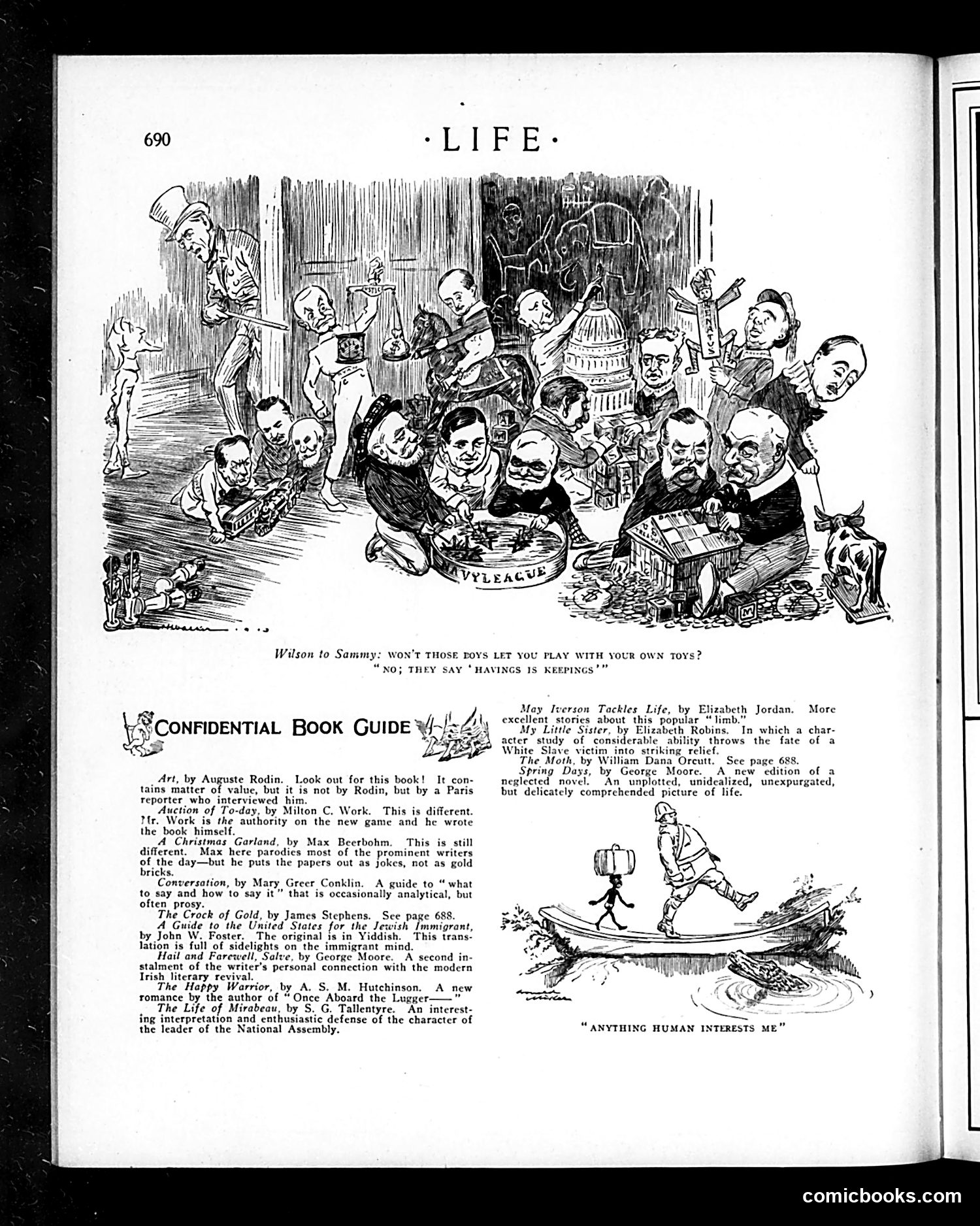
The main cartoon depicts a child ("Sammy") being kept from playing with his toys by older figures. President Wilson addresses the scene, asking why "those boys" won't let the child use his own toys. Sammy responds that they claim "havings is keepings"—a children's phrase meaning possession equals ownership. This appears to satirize **American neutrality and isolationism during World War I**. "Sammy" represents the United States; the "boys" are European powers attempting to control American resources and involvement despite America's desire to remain independent. The joke critiques how foreign nations treat America's neutrality—claiming American goods and support as their own through wartime demands. The page is primarily a book review section ("Confidential Book Guide"), with this cartoon serving as the visual introduction to literary recommendations from the era.
📄 Transcribed text from this page (OCR, searchable)
Machine-transcribed from the original scan — historical spelling and the odd misread are preserved.
\ Wilson to Sammy: Won't THOSE BOYS LET YOU PLAY WITH YOUR OWN TOYS? (i CoNnIDENTIAL Book Guipe Yi) 4 Art, by Auguste Rodin. Look out for this book! It con- tains matter of value, but it is not by Rodin, but by a Paris reporter who interviewed him. Auction of To-day, by Milton C. Work. This is different. Ttr. Work is the authority on the new game and he wrote the book himself. A Christmas Garland, by Max Beerbohm. This is still different. Max here parodies most of the prominent writers of the day—but he puts the papers out as jokes, not as gold ricks. Conversation, by Mary Greer Conklin. A guide to “what to say and how ‘to say it” that is occasionally analytical, but often prosy. The Crock of Gold, by James Stephens. See page 688. A Guide to the United’ States for the Jewish Immigrant, by John W. Foster. The original is in Yiddish. This trans: lation is fuil of sidelights on the immigrant mind. Hail and Farewell, Salve, by George Moore. A second in- stalment of the writer's personal connection with the modern Irish literary revival. The Happy Warrior, by A. S. M. Hutchinson. A new romance by the author of “Once Aboard the Lugger——” The Life of Mirabeau, by S. G. Tallentyre. An interest- ing interpretation and enthusiastic defense of the character of the leader of the National Assembly. NO; THEY SAY ‘HAVINGS IS KEEPINGS’” May Iverson Tackles Life, by Elizabeth Jordan. More excellent stories about this popular “limb.” My Little Sister, by Elizabeth Robins. In which a char- acter study of considerable ability throws the fate of a White Slave victim into striking relief. The Moth, by William Dana Orcutt. See page 688. Spring Days, by George Moore. A new edition of a neglected novel. An unplotted, unidealized, unexpurgated, but delicately comprehended picture of life. “ANYTHING HUMAN INTERESTS ME” comicbooks.com