
Life, 1913-04-03 · page 29 of 52
Life — April 3, 1913 — page 29: what you’re looking at
What you’re looking at
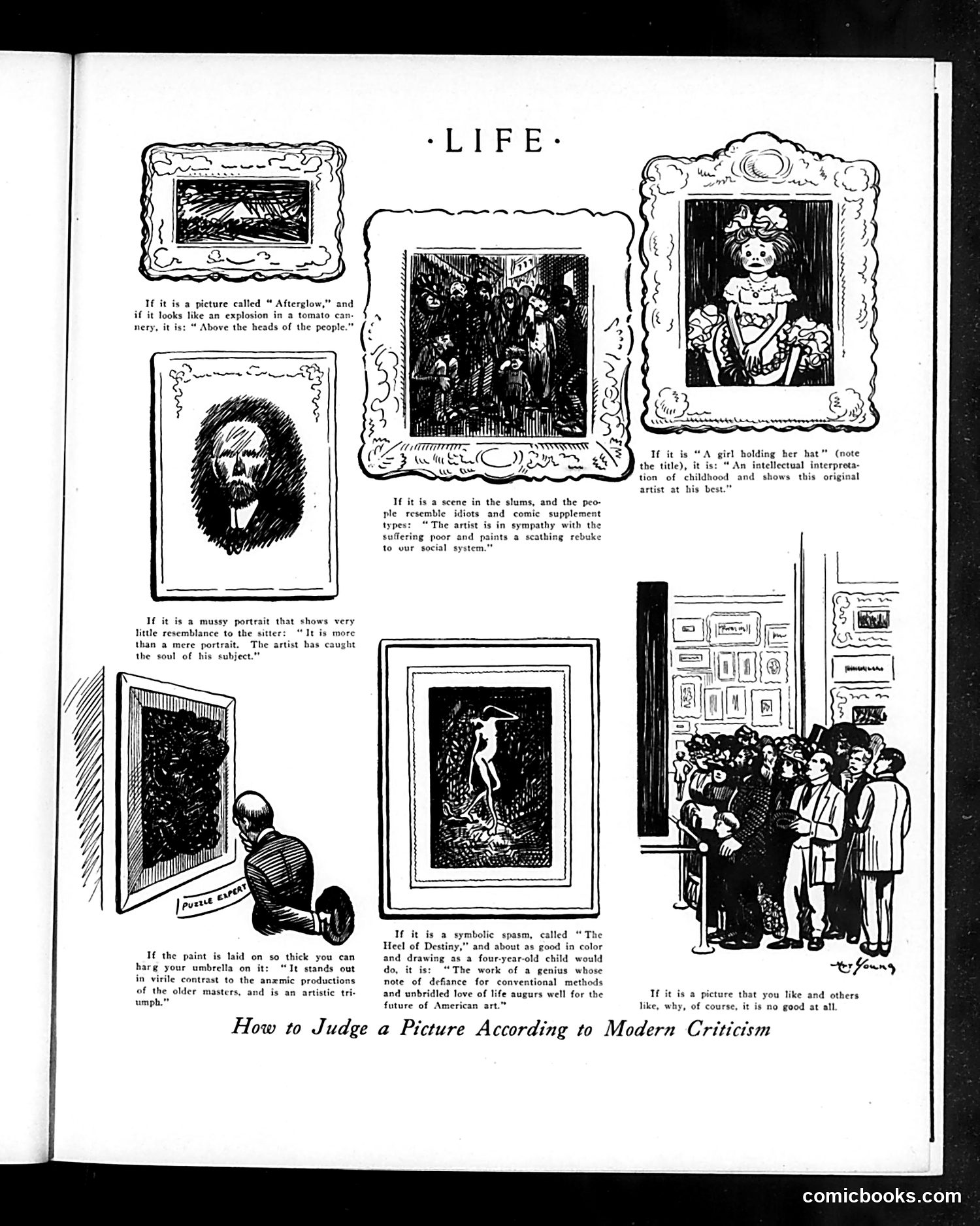
This satirical guide mocks early 20th-century modernist art criticism and its defenders. The page presents a series of tongue-in-cheek "rules" showing how critics praise abstract or poorly-executed work by using pretentious language that obscures lack of actual skill or coherence. The satire targets: - **Abstract/experimental art** disguised as profound ("Afterglow" looking like a tomato-cannery explosion) - **Vague critical jargon** elevating mediocre portraits as capturing "the soul" - **Sympathy claims** where crude depictions of poor people become "scathing social commentary" - **Intentional obscurity** praised as "genius" (the "four-year-old" symbolic work) - **Reverse snobbery** where popular, likable art is deemed worthless The final rule is the punchline: if ordinary people actually *like* a picture, it's automatically "no good at all." Life magazine is satirizing both pretentious modernism and the gatekeeping that dismisses accessible art in favor of bewildering work justified by impenetrable criticism.
📄 Transcribed text from this page (OCR, searchable)
Machine-transcribed from the original scan — historical spelling and the odd misread are preserved.
If it is a picture called “ Afterglow,” and if it looks like an explosion in a tomato can- nery, it is: “ Above the heads of the people." If it is a mussy portrait that shows very little resemblance to the sitter: “It is more than a mere portrait. The artist has caught the soul of his subject.” S| SSE SS \_s If the paint is laid on so thick you can harg your umbrella on it: “It stands out in virile contrast to the anemic productions of the older masters, and is an artistic tri- umph.”” If it is a scene in the slums, and the peo- ple resemble idiots and comic supplement types: “The artist is in sympathy with the suffering poor and paints a scathing rebuke to vur social system.” If it is a symbolic spasm, called “The Heel of Destiny,” and about as good in color and drawing as a four-year-old child would do, it is: “The work of a genius whose note of defiance for conventional methods and unbridled love of life augurs well for the future of American art.” ») me (@) Ud Se 2 If it is “A girl holding her hat" (note the title), it is: “An intellectual interpreta- tion of childhood and shows this original artist at his best.” If it is a picture that you like and others like, why, of course, it is no good at all. How to Judge a Picture According to Modern Criticism comicbooks.com