
Life, 1912-03-14 · page 17 of 44
Life — March 14, 1912 — page 17: what you’re looking at
What you’re looking at
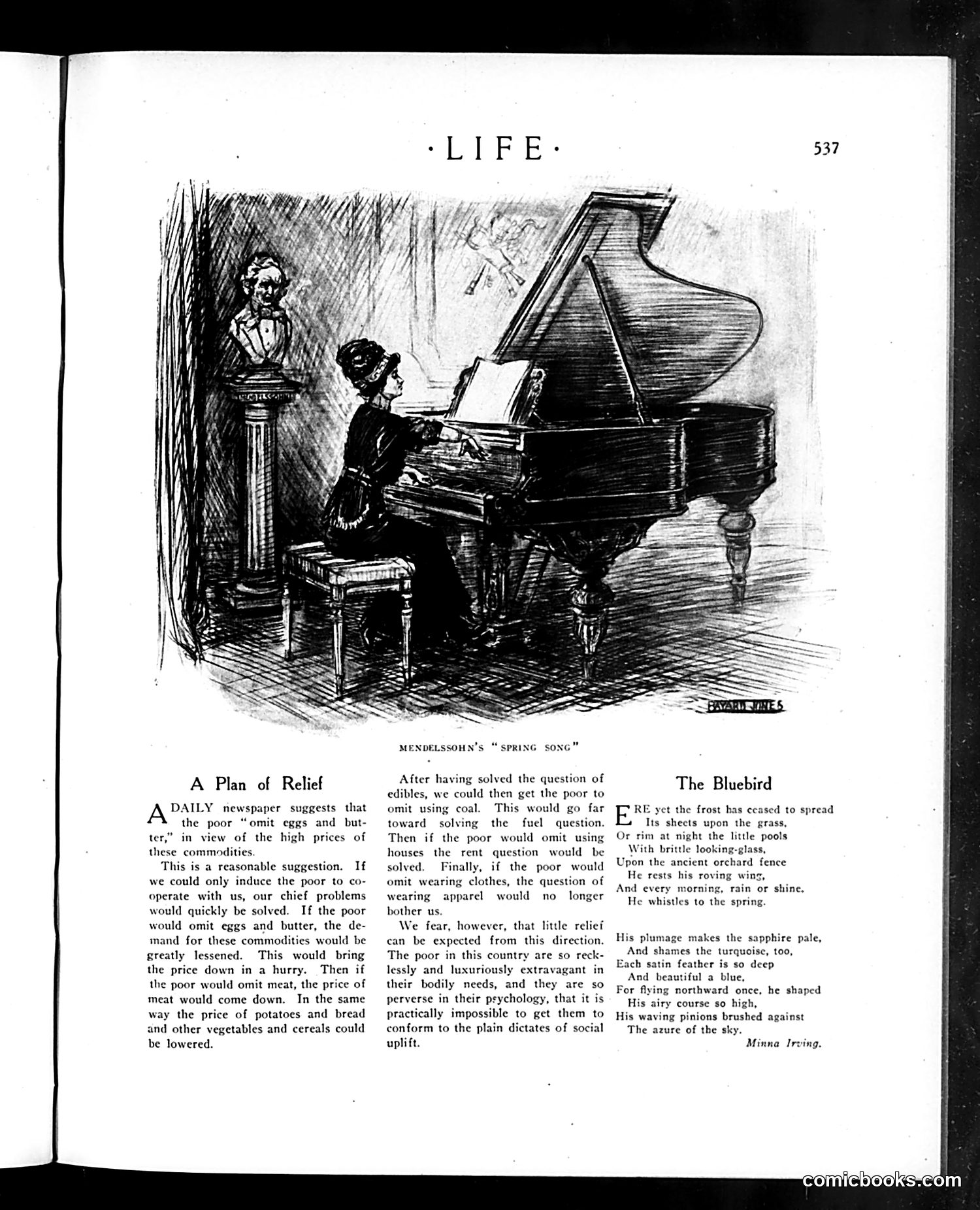
This satirical article mocks proposed solutions to poverty during a period of high commodity prices (likely early 20th century inflation). A newspaper suggests the poor simply "omit eggs and butter" to reduce demand and lower prices. Life's writer sarcastically extends this logic to absurdity: if the poor stop buying meat, potatoes, bread, coal, rent-paying, and clothing, all economic problems solve themselves. The satire targets the callousness of the wealthy and their advisors who blame poverty on the poor's supposed extravagance rather than acknowledging systemic economic inequality. By pushing the suggestion to ridiculous extremes—essentially suggesting the poor should cease existing as consumers—the article exposes how disconnected such proposals are from reality. The phrase "social uplift" is used mockingly, implying that denying oneself necessities constitutes moral improvement. The accompanying illustration of a woman at a grand piano emphasizes the class divide between those offering advice and those suffering economically.
📄 Transcribed text from this page (OCR, searchable)
Machine-transcribed from the original scan — historical spelling and the odd misread are preserved.
A Plan of Relief DAILY newspaper suggests that the poor “omit eggs and but- ter,” in view the high prices of these commodities. This is a reasonable suggestion. If we could only induce the poor to co- operate with us, our chief problems would quickly be solved. If the poor would omit eggs and butter, the de- mand for these commodities would be greatly lessened. This would bring the price down in a hurry. Then if the poor would omit meat, the price of meat would come down. In the same way the price of potatoes and bread and other vegetables and cereals could be lowered. MENDELSSOHN’S “SPRING SONG After having solved the question of edibles, we could then get the poor to omit using coal. This would go far toward solving the fuel question. Then if the poor would omit using houses the rent question would be solved. Finally, if the poor would omit wearing clothes, the question of wearing apparel would no longer bother us. We fear, however, that little relief can be expected from this direction. The poor in this country are so reck- lessly and luxuriously extravagant in their bodily needs, and they are so perverse in their psychology, that it is practically impossible to get them to conform to the plain dictates of social uplift. The Bluebird E" t the frost has ccased to spread Its sheets upon the grass, Or rim at night the little pools With brittle looking-glass, Upon the ancient orchard fence He rests his roving wing, And every morning, rain or shine. He whistles to the spring. His plumage makes the sapphire pale, And shames the turquoise, too, Each satin feather is so deep And beautiful a blue, For flying northward once, he shaped His airy course so high, His waving pinions brushed against The azure of the sky. Minna Irving.