
Life, 1911-09-21 · page 24 of 52
Life — September 21, 1911 — page 24: what you’re looking at
What you’re looking at
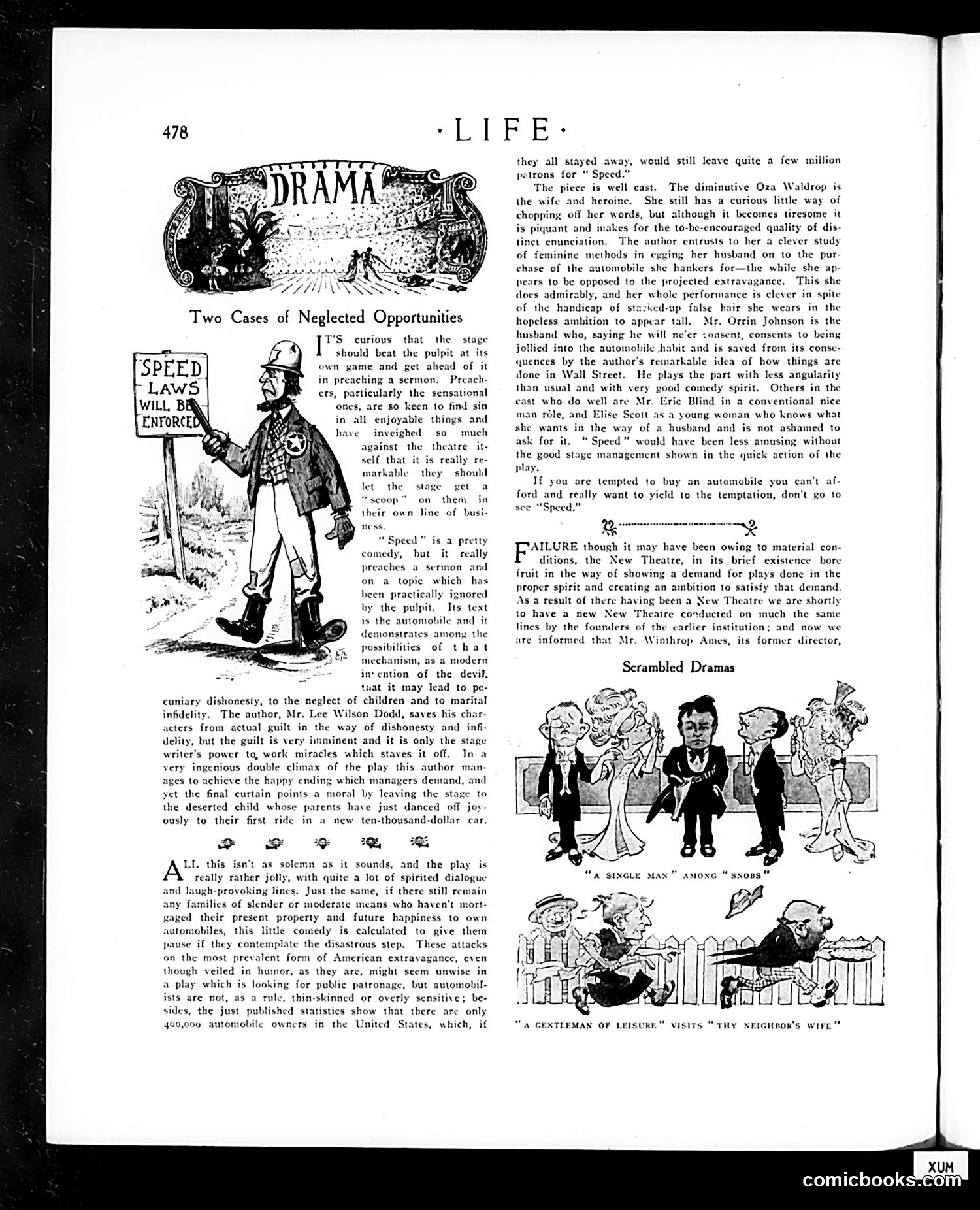
This page reviews the play *"Speed"* by Lee Wilson Dodd, using it to satirize modern consumer excess. The cartoon's central joke: automobiles represent moral danger—specifically tempting people toward dishonesty, infidelity, and financial ruin. The reviewer notes the irony that a *theater* (traditionally condemned by preachers as sinful) is preaching morality better than actual churches, warning audiences against automobiles' seductive appeal. The play's moral point: parents abandon their neglected child to joyride in a new luxury car, illustrating how this "modern invention of the devil" corrupts values. The critic praises the cast, particularly actress Oza Waldrop's clever portrayal of a wife manipulating her reluctant husband into the purchase. The satire targets early-1900s automobile mania among the wealthy—only 400,000 owners existed then—as frivolous extravagance that threatens family stability.
📄 Transcribed text from this page (OCR, searchable)
Machine-transcribed from the original scan — historical spelling and the odd misread are preserved.
» L.1 FE Two Cases of Neglected Opportunities T'S curious that the stage should beat the pulpit at its own game and get ahead of it in preaching a sermon, Preach- crs, particularly the sensational ones, are so keen to find sin in all enjoyable things and have inveighed so much against the theatre self that it is really re- markable they should let the stage get a “scoop” on them in their own line of busi- ness. “Speed” is a pretty comedy, but it really preaches a sermon and on a topic which has heen practically ignored by the pulpit. Its text is the automobile and it demonstrates among the possibilities of that mechanism, as a modern invention of the devil. tuat it may lead to pe- dishonesty, to the neglect of children and to marital infidelity. The author, Mr. Lee Wilson Dodd, saves his char acters from actual guilt in the way of dishonesty and infi delity, but the guilt is very imminent and it is only the stage writer’s power to, work miracles which staves it off. In a very ingenious double climax of the play this author man- s to achieve the happy ending which managers demand, and yet the final curtain points a moral by leaving the stage to the deserted child whose parents have just danced off joy- ously to their first ride in a new ten-thousand-dollar car. » this isn’t as solemn as it sounds, and the play is cally rather jolly, with quite a lot of spirited dialogue ged their present property and future happiness to own automobiles, this lite comedy is calculated to give them pause if they contemplate the disastrous step. These attacks on the most prevalent form of American extravagance, even though veiled in humor, as they are, might seem unwise in a play which is looking for public patronage, but automobil- ists are not, as a rule, thin-skinned or overly sensitive; be- sides, the just published statistics show that there are only 400,000 automobile owners in the United ates, which, if they all stayed away, would still leave quite a few million petrons for “ Speed. The piece is well cast. The diminutive Oza Waldrop is the wife and heroine. She still has a curious little way of chopping off her words, but although it becomes tiresome it 's piquant and makes for the to-be-encouraged quality of dis- tinct enunciation. The author cntrusts to her a clever study of feminine methods in cxging her husband on to the pur- chase of the automobile she hankers for—the while she ap- pears to be opposed to the projected extravagance. This she docs admirably, and her whole performance is clever in spite of the handicap of stacked-up false hair she wears in the hopeless ambition to appear tall, Mr. Orrin Johnson is the husband who, saying he will ne'er consent, consents to being jollied into the automobile habit and is saved from its conse- quences by the author's remarkable idea of how things are done in Wall Street. He plays the part with less angularity than usual and with very good comedy spirit. Others in the cast who do well are Mr. Eric Blind in a conventional nice man rdle, and Elise Scott asa young woman who knows what she wants in the way of a husband and is not ashamed to ask for it. Speed” would have been less amusing without the good stage management shown in the quick action of the play. If you are tempted to buy an automobile you can't af- ford and really want to yield to the temptation, don't go to Prature though it may have been owing to material con- ditions, the New Theatre, in its brief existence bore fruit in the way of showing a demand for plays done in the proper spirit and creating an ambition to satisfy that demand. As a result of there having been a New Theatre we are shortly to have a new New Theatre conducted on much the same lines by the founders of the carlier institution; and now we are informed t Mr. Winthrop Ames, its former director, Scrambled Dramas “A GENTLEMAN OP LEISURE” VISITS “THY NEIGHBOR'S WIFE" comicbook $-COl