
Life, 1911-03-09 · page 15 of 44
Life — March 9, 1911 — page 15: what you’re looking at
What you’re looking at
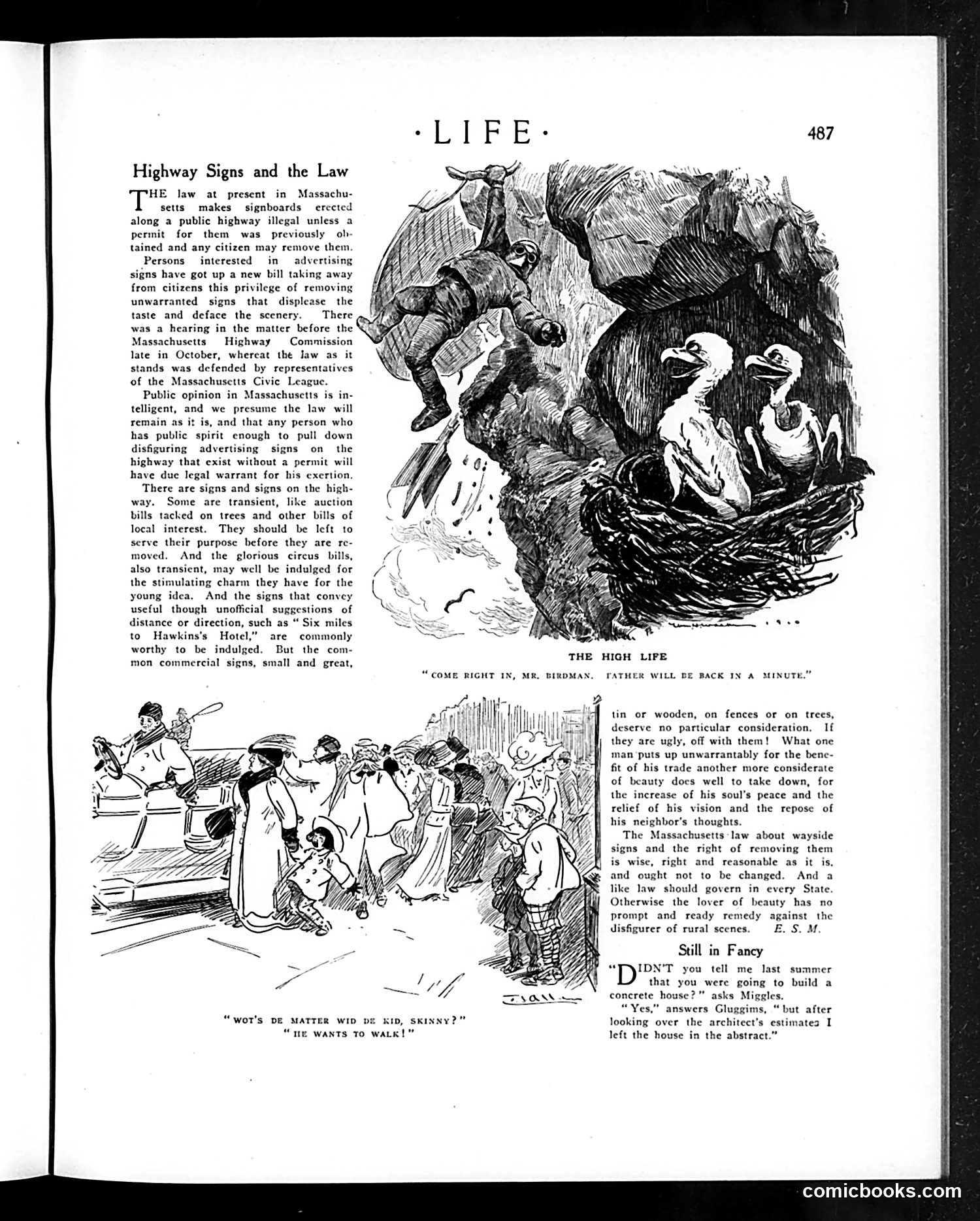
This page presents a serious editorial argument against commercial roadside advertising, defending Massachusetts law allowing citizens to remove unpermitted signs. The author (E.S.M.) distinguishes between acceptable "transient" signs (circus bills, local notices) and objectionable permanent commercial advertisements that deface rural scenery. The piece advocates for the right of beauty-conscious citizens to remove ugly commercial signboards without legal penalty. The cartoons are satirical asides: "The High Life" shows a birdman crashing into a tree (commenting on reckless behavior), while "Still in Fancy" jokes about an architect's estimate so expensive it left the concrete house design "in the abstract"—meaning only theoretical, never built. Both cartoons are social humor unrelated to the main editorial topic.
📄 Transcribed text from this page (OCR, searchable)
Machine-transcribed from the original scan — historical spelling and the odd misread are preserved.
Highway Signs and the Law HE law at present in Massachu- setts makes signboards erected along a public highway illegal unless a permit for them was previously ob- tained and any citizen may remove them. Persons interested in advertising signs have got up a new bill taking away from citizens this privilege of removing unwarranted signs that displease the taste and deface the scenery. There ~ was a hearing in the matter before the Massachusetts Highway Commission late in October, whereat the Jaw as it stands was defended by representatives of the Massachusetts Civic League. Public opinion in Massachusetts is in- telligent, and we presume the law will remain as it is, and that any person who has public spirit enough to pull down disfiguring advertising signs on the highway that exist without a permit will have duc legal warrant for his exertion. There are signs and signs on the high- way. Some are transient, like auction bills tacked on trees and other bills of local interest. They should be left to serve their purpose before they are re- moved. And the glorious circus bills, also transient, may well be indulged for the stimulating charm they have for the young idea, And the signs that convcy useful though unofficial suggestions of distance or direction, such as “ Six miles to Hawkins’s Hotel,” are commonly worthy to be indulged. But the com- wis moa Like mon commercial signs, small and great, “COME RIGHT IN, MR, BIRDMAN, FATHER WILL BE BACK IN A MINUTE.” tin or wooden, on fences or on trees, deserve no particular consideration. If they are ugly, off with them! What one man puts up unwarrantably for the bene- fit of his trade another more considerate of beauty docs well to take down, for the increase of his soul’s peace and the relief of his vision and the repose of his neighbor's thoughts. The Massachusetts law about wayside signs and the right of removing the is wise, right and reasonable as it and ought not to be changed. And a like law should govern in every State. Otherwise the lover of beauty has no prompt and ready remedy against the disfigurer of rural scenes. E. S. M. Still in Fancy IDN'T you tell me last summer that you were going to build a concrete house?" asks Miggles. “Yes,” answers Gluggims, “ but after “wort's DE MATTER WID DE KID, SKINNY?" looking over the architect's estimates I “TIE WANTS TO WALK!" left the house in the abstract.” comicbooks.com