
Life, 1909-11-04 · page 29 of 52
Life — November 4, 1909 — page 29: what you’re looking at
What you’re looking at
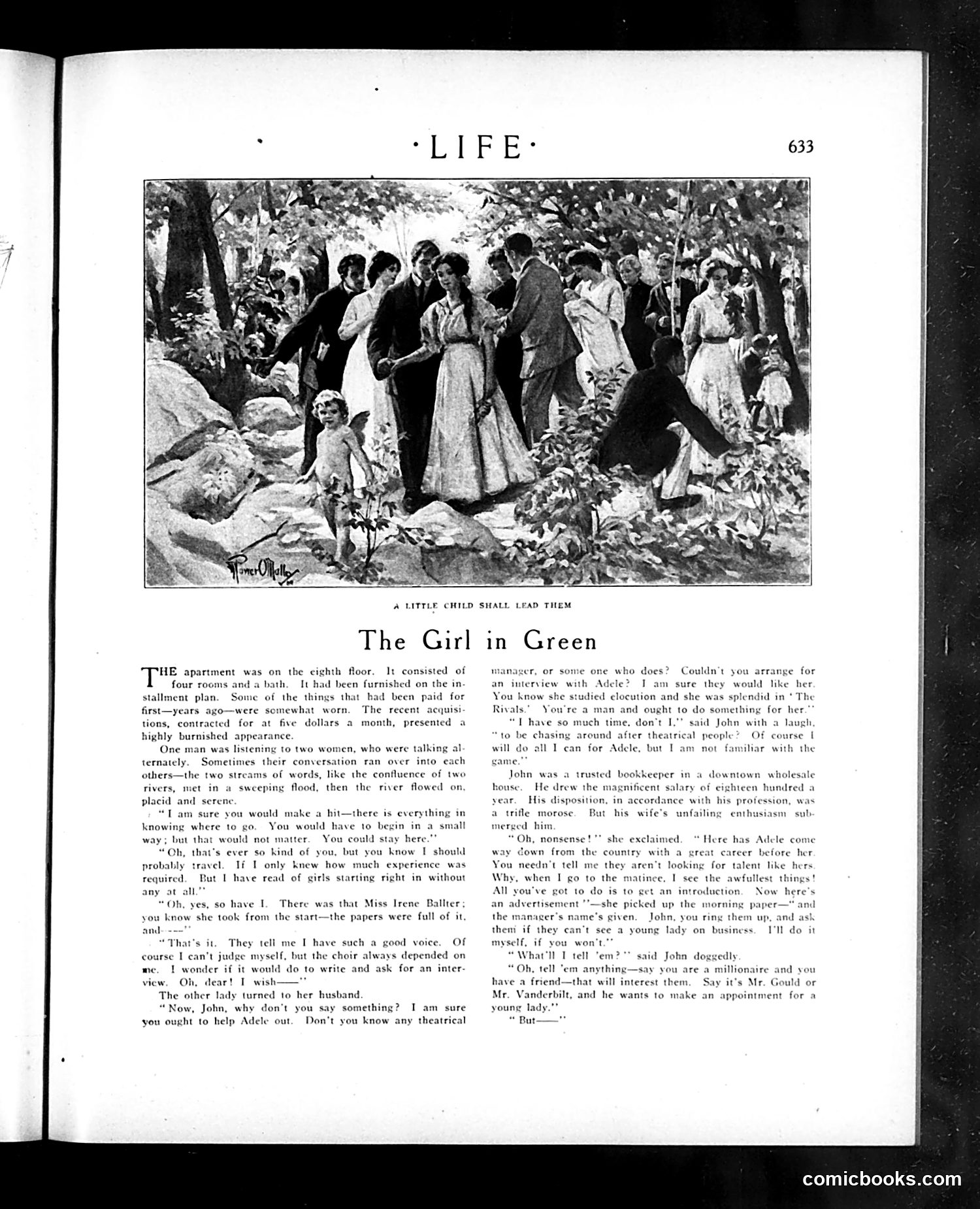
This is a prose fiction piece (not a cartoon), depicting social satire about theatrical ambition and class dynamics in early 20th-century America. The story satirizes the naïve dreams of a country girl named Adele who comes to the city seeking a theatrical career, armed only with elocution training and a good church choir voice. The humor targets both her unrealistic expectations and the well-meaning but ineffectual help of her friend's husband, John—a modest bookkeeper earning $1,800 yearly. The satire cuts multiple ways: it mocks Adele's assumption that talent alone guarantees success; ridicules the wife's breathless name-dropping (Vanderbilt, Gould) and her pressure on John to use nonexistent theatrical connections; and gently portrays John's resigned acceptance that he must now fabricate credentials to help. The title—"A Little Child Shall Lead Them"—suggests ironic innocence leading practical adults astray.
📄 Transcribed text from this page (OCR, searchable)
Machine-transcribed from the original scan — historical spelling and the odd misread are preserved.
A LITTLE CHILD SHALL LEAD THEM The Girl in Green HE apartment was on the eighth floor. It consisted of four rooms and a bath, It had been furnished on the in- stallment plan. Some of the things that bad been paid for first—years ago—were somewhat worn, The recent acquisi tions, contracted for at five dollars a month, presented a highly burnished appearance One man was listening to two women, who were talking al ternately. Sometimes their conversation ran over into each others—the two streams of words, like the confluence of two rivers, met in a sweeping flood, then the river flowed on, placid and serene “Tam sure you would make a hit—there is everything in knowing where to go. You would have to begin in a small way; but that would not matter Oh, that’s ever so kind of you, but you know I should You could stay here." probably travel. Tf I only knew how much experience was required. But I have read of girls starting right in without any ata so have I. There was that Miss Irene Balter; you know she took from the start—the papers were full of it, and. --~" “That's it. They tell me I have such a good voice. Of course I can’t judge myself, but the choir always depended on me. I wonder if it would do to write and ask for an inter: view. Oh, dear! Twi The other lady turned to her husband “Now, John, why don’t you say something? I am sure you ought to help Adele out. Don't you know any theatrical Inager, or some one who does? Couldn't you arrange for iuterview with Adele? IT am sure they would like her You know she studied elocution and she was splendid in * Th Rivals.” You're a man and ought to do something for hi “T have so much time, don’t 1," said John with a laugh “to be chasi ound after theatric MT can for Adele, but I people? Of course t will do not familiar with the me.” John was a trusted bookkeeper in a downtown wholesale house. He drew the magnificent salary of eighteen hundred a year. His disposition, in accordance with his profession, was a trifle morose. But his wife's unfailing enthusiasm sub: do him Oh, nonsense!" she exclaimed. “Here has Adcle come way down from the country with a great career before her You needn't tell me they aren't looking for talent like hers Why, when I go to the matinee, I see the awfullest things! All you've got to do is to get an introduction. Now here's an advertisement ''—she picked up the morning paper—" and the manay themi if they can't see a your myself, if you won't “What‘ll I tell ‘er “Oh, tell ‘em anything—say you are a have a friend—that will interest them. Mr. Vanderbilt, and he wants to make an appointment for a young lady.”* “ But——"" them up, and ask I'l do it r’s name's given. John, you rin lady on business said John doggedly iNionaire and you ay it’s Mr. Gould or comicbooks.com