
Life, 1908-04-09 · page 13 of 20
Life — April 9, 1908 — page 13: what you’re looking at
What you’re looking at
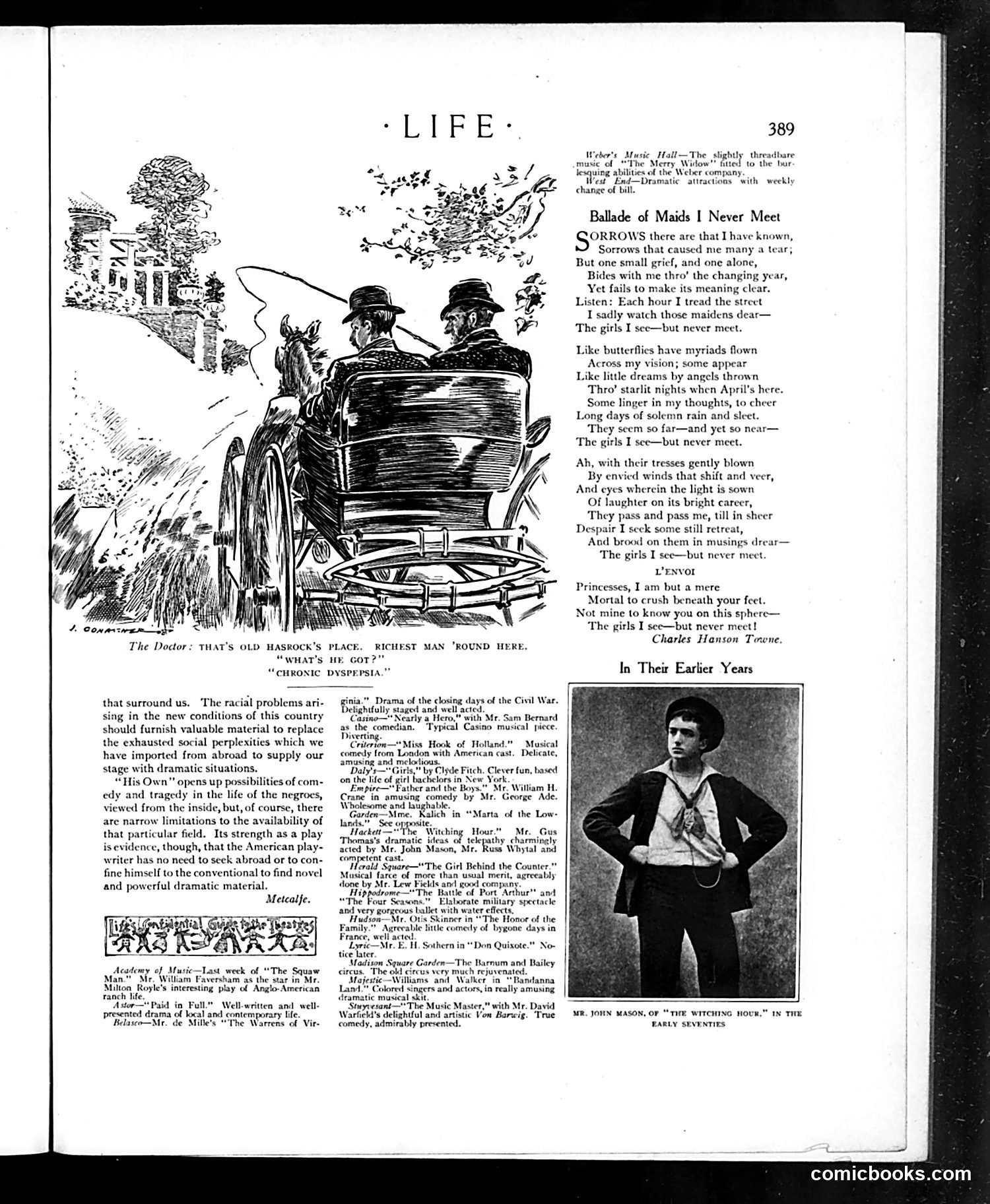
The main cartoon depicts two well-dressed men in a carriage with a horse, captioned "The Doctor: THAT'S OLD HARSOCK'S PLACE. RICHEST MAN 'ROUND HERE. 'WHAT'S HE GOT?' 'CHRONIC DYSPEPSIA.'" **The satire:** The joke mocks wealthy industrialists of the Gilded Age era. Despite possessing material riches and property ("old Harsock's place"), the richest man suffers from chronic dyspepsia (severe indigestion)—suggesting that wealth cannot buy health or happiness. The implication is that the stress of accumulating and maintaining great fortunes creates physical ailments, undermining the supposed benefits of being wealthy. This reflects period anxieties about the health costs of capitalist excess. The page also includes poems and theatrical reviews unrelated to the cartoon.
📄 Transcribed text from this page (OCR, searchable)
Machine-transcribed from the original scan — historical spelling and the odd misread are preserved.
The Doctor: THAT'S OLD HASROCK’S PL. RICHEST MAN "ROUND HERE. “WHAT'S HE ¢ “CHRONIC DYSPEPSIA.”” that surround us. ‘The racial problems ari sing in the new conditions of this count should furnish valuable material to repla the exhausted social perplexities which we have imported from abroad to supply our ‘stage with dramatic situations. “His Own” opens up possibilities of com- edy and tragedy in the life of the negroes, viewed from the inside, but, of course, there are narrow limitations to the availability of that particular field. Its strength as a play is evidence, though, that the American play- writer has no need to seek abroad or to con- fine himself to the conventional to find novel and powerful dramatic material. Metcalfe. E — AOA Last week of “The Squaw Academy of Music Man.” Mr. William Faversham as the star in Mr. Milton Royle's interesting play of Anglo-American, ranch life. Astor—"Paid in Full.” Well-written and well- presented drama of local and contemporary life. Belasco—Mr. de Mille's “The Warrens of Vit ginia.” Drama of the closing lays of the Civil War. Delightfully staged and well acted. ‘Casino—" Nearly a Hero,” with Mr. Sam Bernard as the comedian. ‘Typical Casino musical piece. Diverting. Criterion—" Miss Hook of Holland.” Musical comedy from London with American cast. Delicate, amusing and melodious. Daly's—" Girls,” by Clyde Fitch. Clever fun, based on the life of gitl bachelors in New York Em pire—"Father and the Boys.” Mr. William H. Crane in amusing comedy by Mr. George Ade. Wholesome and laughable. Garden—Mme. Kalich in “Marta of the Low- lands.” See opposite. Hackett —"" The ing Hour.” Mr. Thomas's dramatic ideas of, telepathy charmingly acted by Mr. John Mason, Mr. Russ Whytal and competent cast. Herald Square—"The Girl Behind the Counter.” Musical farce of more than usual merit, agreeably done by Mr. Lew Fields aryl good company Hippodrome—"*The Battle of Port Arthur" and “The Four Seasons.” Elaborate military spectacle and very gorgeous ballet with water effects, Hudson—Mr. Otis Skinner in “The Honor of the Family.” Agrecable little comely of bygone days in France, well acted Lyric—Mr. E. 1. Sothern ia “Don Quixote.” No- tice later Madison Square Garden—The Barnum and Bailey circus, ‘The old circus very much rejuvenated. Mojestic—Williams and Walker in "Bandana Colored singers and actors, ia really amusing ic musical skit. Stuyvesant—*The Music Master,” with Mr. David Warfield’s delightful and artistic Von Barwig. ‘True comedy, admirably presented. Weber's Music Hall—The music of Merry Widow’ lesquing abilities of the Weber company West End—Dramatic attractions with change of bill. Ballade of Maids I Never Meet Sorrows there are that Ihave known, Sorrows that caused me many a tear; But one small grief, and one alone, Bides with me thro’ the changing year, Yet fails to make its meaning clear. Listen: Each hour I tread the street I sadly watch those maidens dear— The girls I seo—but never meet. weekly Like butterflies have myriads flown Across my vision; some appear Like little dreams by angels thrown Thro’ starlit nights when April's here. Some linger in my thoughts, to cheer Long days of solemn rain and sleet. ‘They seem so far—and yet so near— The girls I see—but never meet. Ah, with their tresses gently blown By envied winds that shift and veer, And eyes whercin the light is sown Of laughter on its bright career, ‘They pass and pass me, till in sheer Despair I seck some still retreat, And brood on them in musings drear— The girls I sce—but never meet. L’ENVOL Princesses, I am but a mere Mortal to crush beneath your feet. Not mine to know you on this sphere— The girls I seo—but never mect! Charles Hanson Towne. In Their Earlier Years MR. JON MASON, OF “THE WITCHING NOUR. BARLY SEVENTIES, comicbooks.com