
Life, 1906-12-20 · page 25 of 46
Life — December 20, 1906 — page 25: what you’re looking at
What you’re looking at
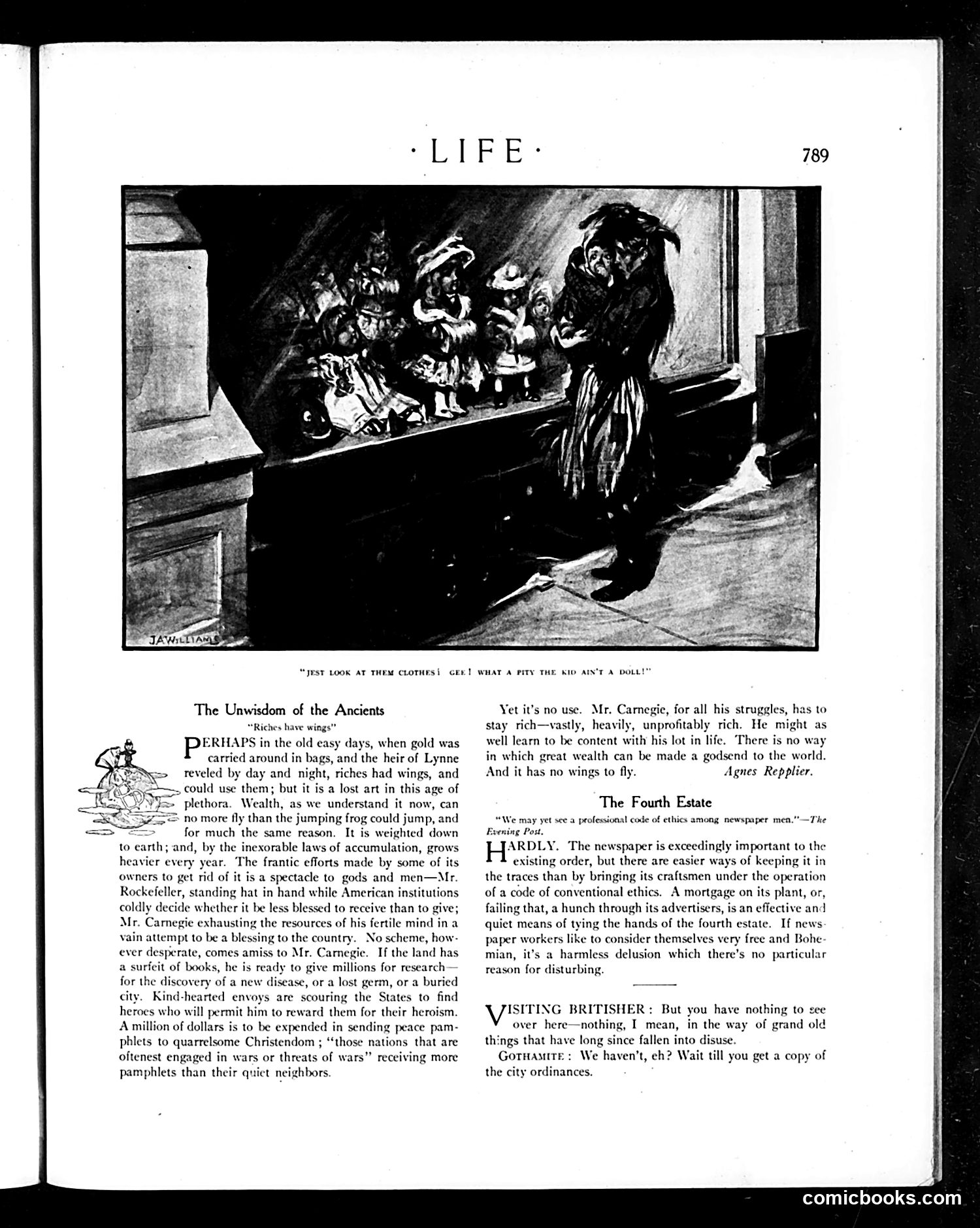
The page contains two satirical pieces: **"The Unwisdom of the Ancients"** attacks the philanthropic efforts of wealthy industrialists, particularly Andrew Carnegie. The article mocks Carnegie's desperate attempts to give away his fortune—funding libraries, disease research, peace pamphlets—arguing that massive wealth cannot be "made a godsend to the world" and has become immobilized by its own accumulation. The satire suggests that despite his charitable schemes, Carnegie remains "vastly, heavily, unprofitably rich." **"The Fourth Estate"** cynically dismisses hopes for ethical standards among newspaper workers, arguing that wealth controls the press more effectively than any code of ethics—through mortgages on property, control of advertisers, and other financial leverage. It suggests newspapermen's self-image as "free and Bohemian" is merely a "harmless delusion." The cartoon caption about clothing appears unrelated to the text below it—likely a separate joke or illustration about fashion rather than wealth.
📄 Transcribed text from this page (OCR, searchable)
Machine-transcribed from the original scan — historical spelling and the odd misread are preserved.
“JEST LOOK AT THEM CLOTHES | GEE] WHAT A PITY THE KID AIN'T A DOLL!” The Unwisdom of the Ancients “Riches have wings” ERHAPS in the old easy days, when gold was carried around in bags, and the heir of Lynne reveled by day and night, riches had wings, and =» could use them; but it is a lost art in this age of plethora. Wealth, as we understand it now, can = no more fly than the jumping frog could jump, and for much the same reason. It is weighted down nd, by the inexorable laws of accumulation, grows heavier every year. The frantic efforts made by some of its owners to get rid of it is a spectacle to gods and men—Mr. Rockefeller, standing hat in hand while American institutions coldly decide whether it be less blessed to receive than to give; ‘arnegie exhausting the resources of his fertile mind in a vain attempt to be a blessing to the count No scheme, how- ever desperate, comes amiss to Mr. Carne Tf the land has a surfeit of books, he ¢ millions for research for the discovery of a new disease, or a lost germ, or a buried city. Kind-hearted envoys are scouring the States to find heroes who will permit him to reward them for their heroism. A million of dollars is to be expended in sending peace pam- phlets to quarrelsome Christendom ; ‘those nations that are oftenest engaged in wars or threats of wars” receiving more pamphlets than their quict neighbors. Yet it’s no use. Mr. Camegie, for all his struggles, ha stay rich—vastly, heavily, unprofitably rich. He might well learn to be content with his lot in life. There is no way in which great wealth can be made a godsend to the world. And it has no wings to fly. Agnes Repplier. The Fourth Estate “We may yet sce a professional code of ethics among newspaper men."—The Evening Post, ARDLY. The newspaper is exceedingly important to the existing order, but there are easier ways of keeping it in the traces than by bringing its craftsmen under the operation of a code of conventional ethics. A mortgage on its pl: failing that, a hunch through its advertisers, is an effective and quiet means of tying the hands of the fourth estate. If news paper workers like to consider themselves very free and Bohe mian, it’s a harmless delusion which there’s no particular reason for disturbing VISITING BRITISHER: But you have nothing to see over here—nothing, I mean, in the way of grand old things that have long since fallen into disuse. Gornamtte : We haven't, eh? Wait till you get a copy of the city ordinances. comicbooks.com