
Life, 1906-02-15 · page 19 of 32
Life — February 15, 1906 — page 19: what you’re looking at
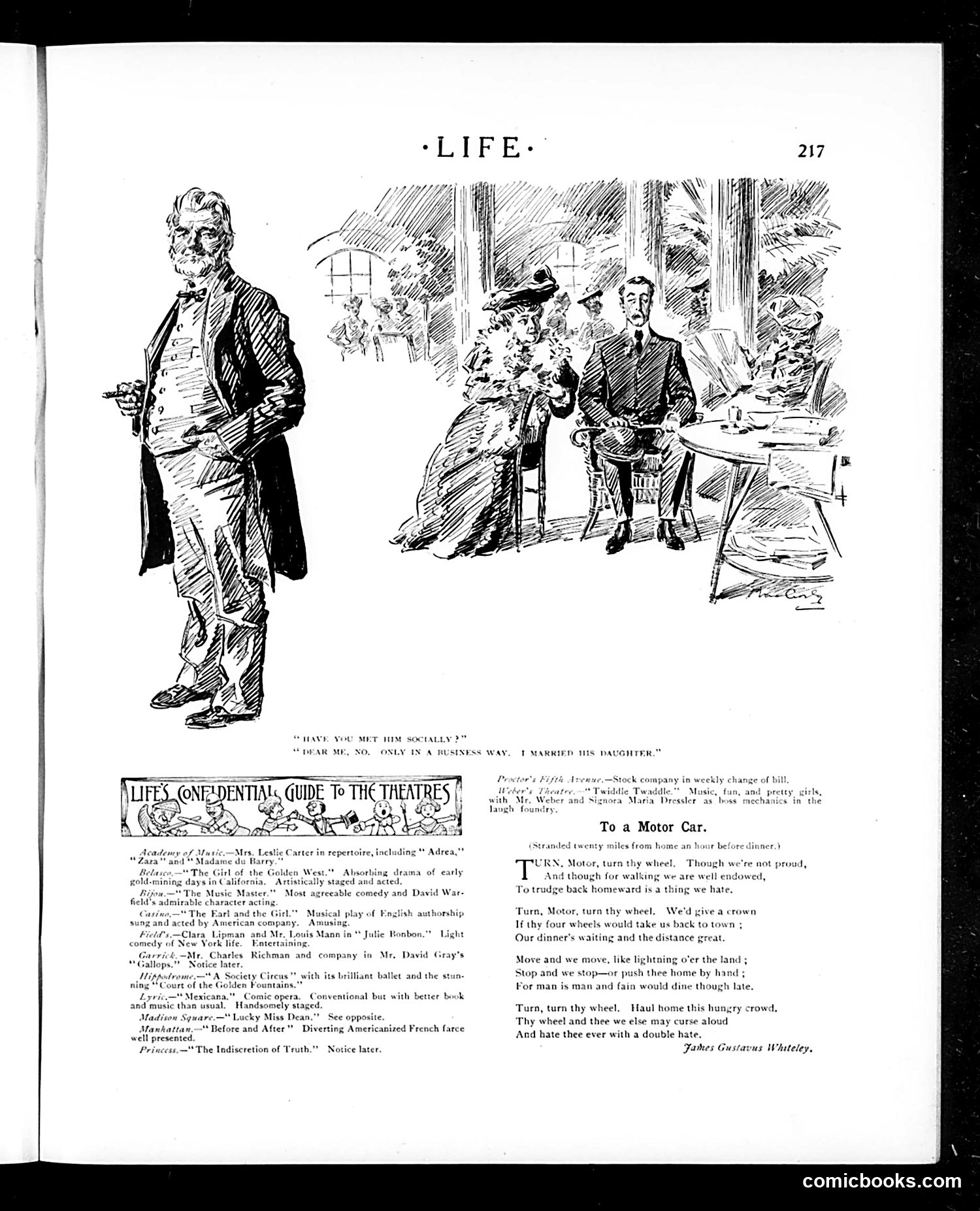
What you’re looking at
This page contains two distinct pieces of social satire from early 20th-century American life. **The Main Cartoon** (top) depicts a gentleman meeting socially with a woman and her companions. The dialogue joke plays on class divisions: when asked if he's met "Tim" socially, the man responds he knows him only "in a business way"—then reveals he married Tim's daughter, suggesting that marriage across business relationships was socially awkward or that business acquaintance didn't constitute proper social standing. **"To a Motor Car"** (bottom) is a poem by James Gustavus Whiteley satirizing the automobile's role in modern life. It humorously addresses the motor car as if it were a deity, pleading with it to transport tired diners home after evening outings. The poem mocks how dependent wealthy people have become on automobiles for leisure and convenience, treating the car almost religiously ("Turn, turn thy wheel"). The exaggerated language ("hate thee ever with a double hate") mocks both automotive frustration and automobiles' transforming effect on social habits.
📄 Transcribed text from this page (OCR, searchable)
Machine-transcribed from the original scan — historical spelling and the odd misread are preserved.
SHAVE YOU MET TIM SOCIALLY 2 “DEAR ME, NO. ONLY IN A RUSINESS WAY. T MARRIED IS DAUGHTER.” hn OG) of 1 2¢ To a Motor Car. wenty miles from hom Mrs. Lestie s Barry Motor, turn thy wheel gh for walking we are well endowed, To trudge back homeward is a thing we hate, tor, turn thy wheel, heel * Julie Bonbon.” Light company in Mr, David Gray's slitiing o'er the lands silbet asd ewe ativas Stop and we stop—or push thee home by hand ; For man is man and fain would dine though late. but with better book . Turn, turn thy wheel, Haul home this hungry crowd, Seeoppeslie: Thy wheel and thee we else may curse aloud Awericanlied Prehen farce And hate thee ever with a double hate. Princess.—* The Indiscretion of Truth.” Notice later. James Gustavus Whiteley, comicbooks.com