
Life, 1900-04-12 · page 15 of 20
Life — April 12, 1900 — page 15: what you’re looking at
What you’re looking at
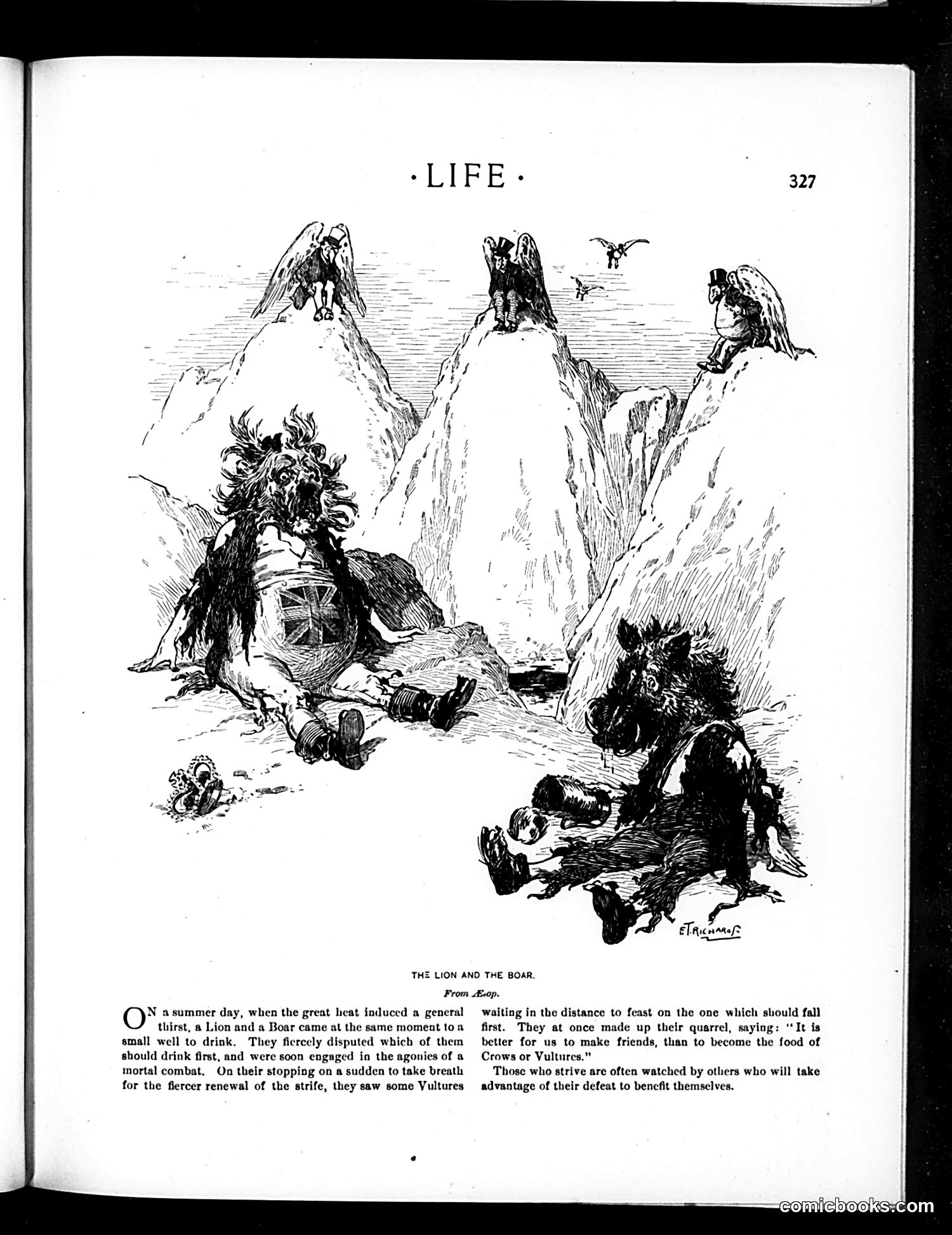
This is an illustrated Aesop's Fable about conflict and self-interest. A lion and boar fight over drinking rights at a well, but pause when they notice vultures circling overhead—waiting to scavenge whichever animal falls. Recognizing their mutual danger, they make peace. The moral applies universally: **rivals who fight each other may be exploited by opportunistic third parties**. The fable suggests that enemies should recognize when external threats make cooperation preferable to conflict. In historical context, this likely resonated as political commentary during periods of international tension or domestic conflict, implying that fighting parties risk being devoured by outside powers or interests. The "vultures" represent those who profit from others' misfortune—a timeless satirical warning about unintended consequences of prolonged disputes.
📄 Transcribed text from this page (OCR, searchable)
Machine-transcribed from the original scan — historical spelling and the odd misread are preserved.
THE LION AND THE BOAR. From Azop. N a summer day, when the great heat induced a general thirst, a Lion and a Boar came at the same moment toa small well to drink. They fiercely disputed which of them should drink first, and were soon engaged in the agonies of a mortal combat. On their stopping on a sudden to take breath for the fiercer renewal of the strife, they saw some Vultures waiting in the distance to feast on the one which should fall first. They at once made up their quarrel, saying: ‘It is better for us to make friends, than to become the food of Crows or Vultures.” Those who strive are often watched by others who will take advantage of their defeat to bencfit themselves.