
Life, 1891-01-29 · page 5 of 14
Life — January 29, 1891 — page 5: what you’re looking at
What you’re looking at
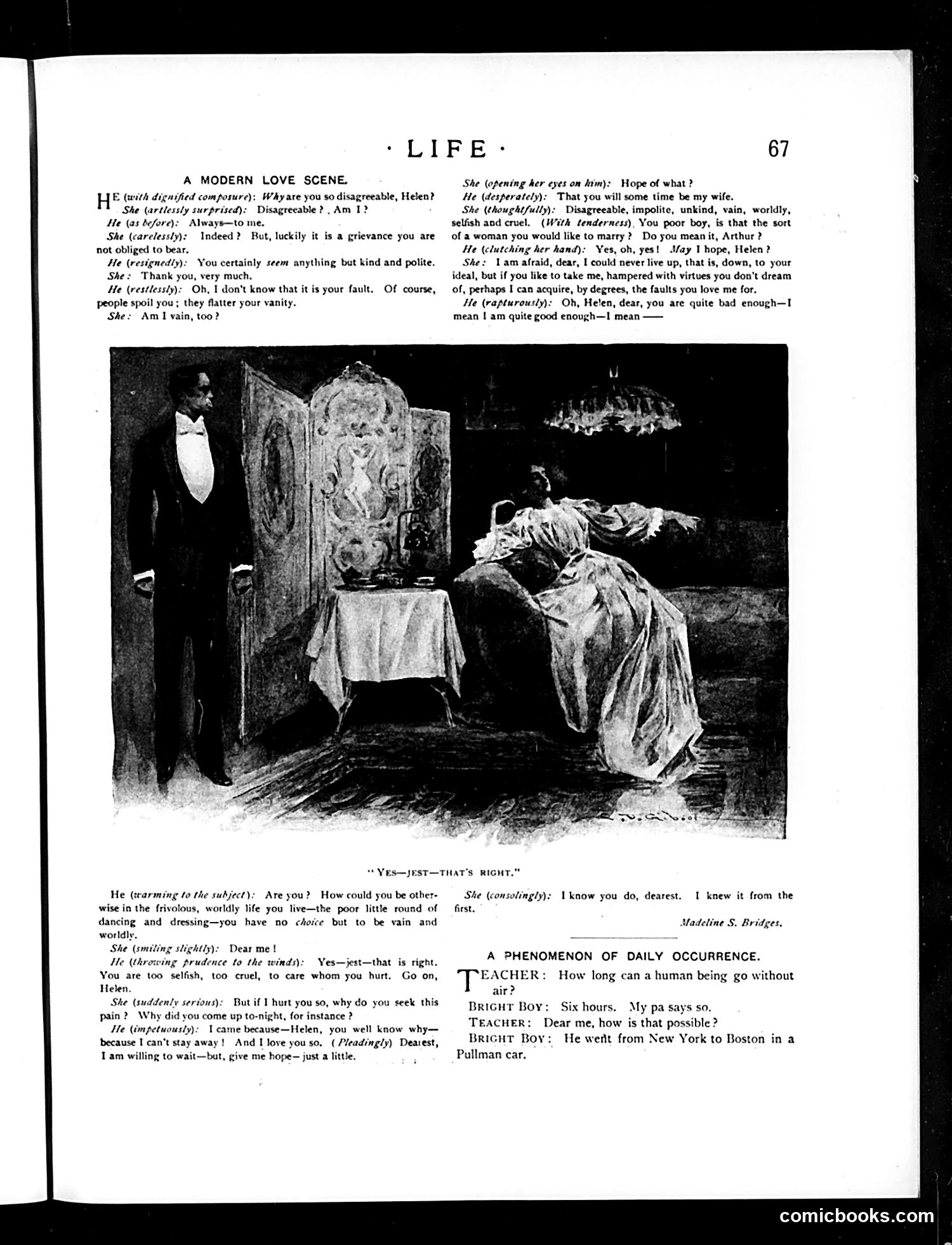
This page contains two distinct pieces: **"A Modern Love Scene"** (top): A dramatic dialogue between a couple, with an accompanying photograph showing a man in formal attire and a woman in a negligée in an intimate bedroom setting. The conversation depicts a woman refusing a marriage proposal, claiming she's unworthy—"selfish and cruel"—while the man insists she's "quite good enough." This appears to satirize contemporary romantic melodrama and the performative emotional negotiations between courting couples, poking fun at both overwrought sentimentality and self-deprecating female modesty conventions of the era. **"A Phenomenon of Daily Occurrence"** (bottom): A brief comic dialogue about a boy claiming his father traveled from New York to Boston without air. The joke plays on the impossibility of surviving without oxygen, seemingly mocking either the boy's logical reasoning or advertising claims about rapid travel. Both pieces use dialogue-driven humor typical of Life's satirical approach.
📄 Transcribed text from this page (OCR, searchable)
Machine-transcribed from the original scan — historical spelling and the odd misread are preserved.
‘LIFE: A MODERN LOVE SCENE. HE (itt dignified composure): Why are you so disagreeable, Helen? She (artlessly surprised): Disagreeable?, Am 1? He (as before): Always—to me. She (carelessly): Indeed? But, luckily it is a grievance you are not obliged to bear. He (resignedly): You certainly seem anything but kind and polite. She: Thank you, very much. He (restlessly): Oh, 1 don't know that it is your fault, people spoil you; they flatter your vanity. She: Am 1 vain, too? Of course, She (opening her eyes on kim): He (desperately): Hope of what ? That you will some time be my wife. She (thoughtfully): Disagreeable, impolite, unkind, vain, worldly, selfish and cruel. (With tenderness), You poor boy, is that the sort of a woman you would like to marry ?- Do you mean it, Arthur ? He (clutching her hand): Yes, oh, yes! May V hope, Helen ? She: Lam afraid, dear, I could never live up, that is, down, to your ideal, but if you like to take me, hampered with virtues you don’t dream of, perhaps I can acquire, by degrees, the faults you love me for. He (rapturously): Oh, Helen, dear, you are quite bad enough: mean [ am quite good enough—I mean — S—JEST—THAT'S RIGHT,” He (warming to the subject): Are you? How could you be other- wise in the frivolous, worldly life you live—the poor little round of dancing and dressing—you have no choice but to be vain and worldly, She (smiling stightls): Dear me | He (throwing prudence to the winds): Yes—jest—that is right. You are too selfish, too cruel, to care whom you hurt, Go on, Helen. She (suddenly serious): But if | hurt you so, why do you seek this pain? Why did you come up to-night, for instance ? He (impetuously): \ came because—Helen, you well know why— because I can't stay away! And I love you so. ( Pleadingly) Dearest, Tam willing to wait—but, give me hope— just a little. She (consolingly): first. I know you do, dearest. I knew it from the Madeline S. Bridges. A PHENOMENON OF DAILY OCCURRENCE. ACHER: air? Bricut Boy: Six hours. My pa says so, TEACHER: Dear me, how is that possible ? BricuT Boy: He went from New York to Boston in a Pullman car. How long can a human being go without comicbooks.com