
Life, 1885-12-24 · page 5 of 19
Life — December 24, 1885 — page 5: what you’re looking at
What you’re looking at
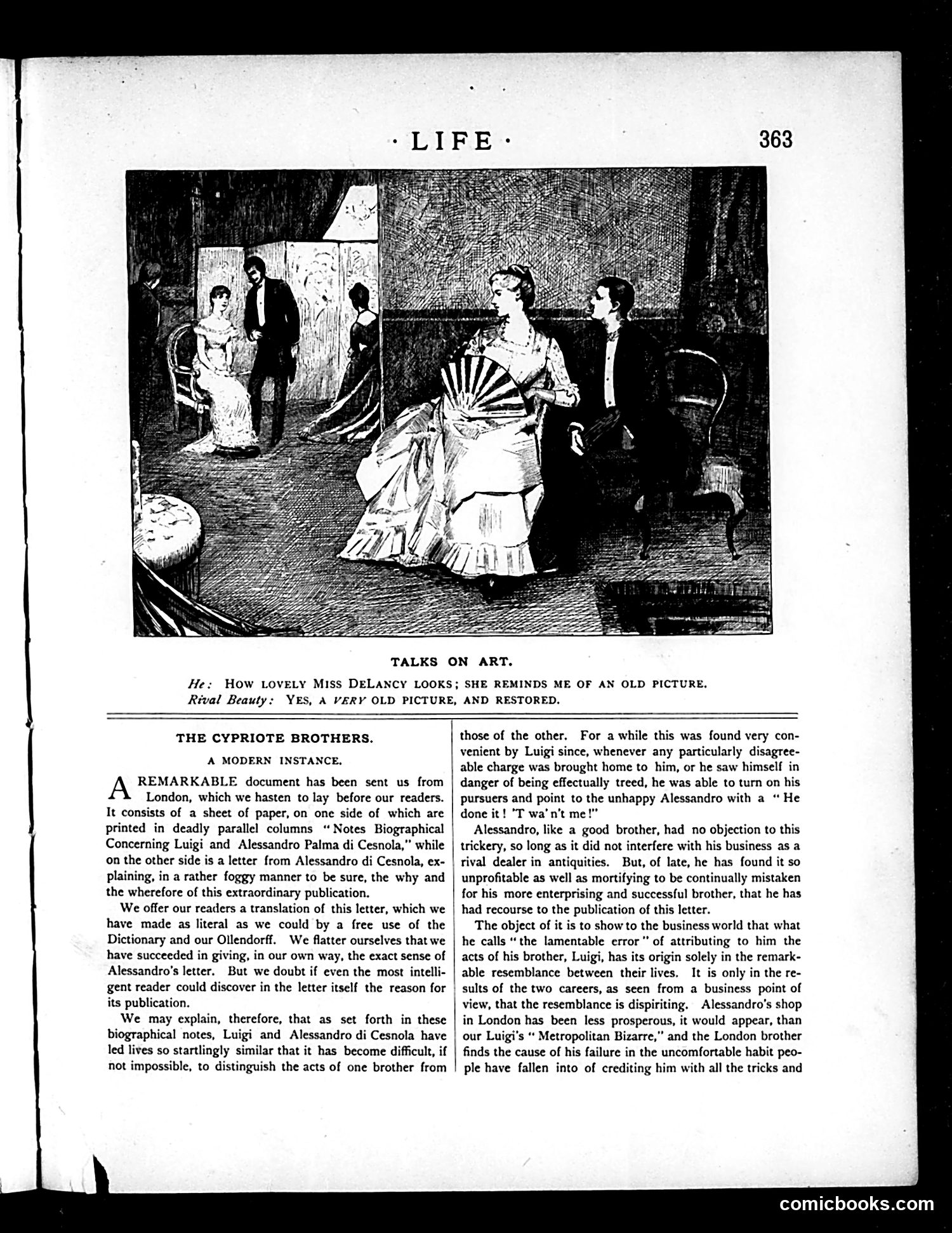
The cartoon depicts a social scene where a man compliments a woman's appearance, saying she resembles "an old picture." The woman replies dismissively that yes, it's "a very old picture, and restored." This is a joke about aging and cosmetic enhancement. The satire targets the woman's use of makeup, hair styling, or other beauty treatments to maintain a youthful appearance. The reference to a painting being "restored" suggests her face requires significant artificial work to appear presentable—comparing cosmetic enhancement to art restoration implies the original has deteriorated and requires professional intervention to look acceptable. The humor relies on the era's attitude toward women's vanity and appearance maintenance, presenting beauty treatments as deceptive artifice rather than legitimate self-care.
📄 Transcribed text from this page (OCR, searchable)
Machine-transcribed from the original scan — historical spelling and the odd misread are preserved.
TALKS ON ART. He: How LOVELY Miss DELANCY LOOKS; SHE REMINDS ME OF AN OLD PICTURE, Rival Beauty: YES, A VERY OLD PICTURE, AND RESTORED. THE CYPRIOTE BROTHERS. A MODERN INSTANCE, REMARKABLE document has been sent us from London, which we hasten to lay before our readers. It consists of a sheet of paper, on one side of which are printed in deadly parallel columns “Notes Biographical | Concerning Luigi and Alessandro Palma di Cesnola,” while on the other side is a letter from Alessandro di Cesnola, ex- plaining, in a rather foggy manner to be sure, the why and the wherefore of this extraordinary publication. We offer our readers a translation of this letter, which we have made as literal as we could by a free use of the | Dictionary and our Ollendorff. We flatter ourselves that we have succeeded in giving, in our own way, the exact sense of Alessandro’s letter. But we doubt if even the most intelli- gent reader could discover in the letter itself the reason for its publication. We may explain, therefore, that as set forth in these biographical notes, Luigi and Alessandro di Cesnola have led lives so startlingly similar that it has become difficult, if not impossible, to distinguish the acts of one brother from those of the other. For a while this was found very con- venient by Luigi since, whenever any particularly disagree- | able charge was brought home to him, or he saw himself in danger of being effectually treed, he was able to turn on his pursuers and point to the unhappy Alessandro with a “ He done it! ‘T wa’n’t me!” Alessandro, like a good brother, had no objection to this trickery, so long as it did not interfere with his business as a rival dealer in antiquities. But, of late, he has found it so unprofitable as well as mortifying to be continually mistaken for his more enterprising and successful brother, that he has had recourse to the publication of this letter. The object of it is to show to the business world that what he calls “the lamentable error" of attributing to him the acts of his brother, Luigi, has its origin solely in the remark- able resemblance between their lives. It is only in the re- sults of the two careers, as seen from a business point of view, that the resemblance is dispiriting. Alessandro's shop in London has been less prosperous, it would appear, than our Luigi’s “ Metropolitan Bizarre,” and the London brother finds the cause of his failure in the uncomfortable habit peo- ple have fallen into of crediting him with all the tricks and comicbooks.com