
Life, 1883-11-22 · page 5 of 16
Life — November 22, 1883 — page 5: what you’re looking at
What you’re looking at
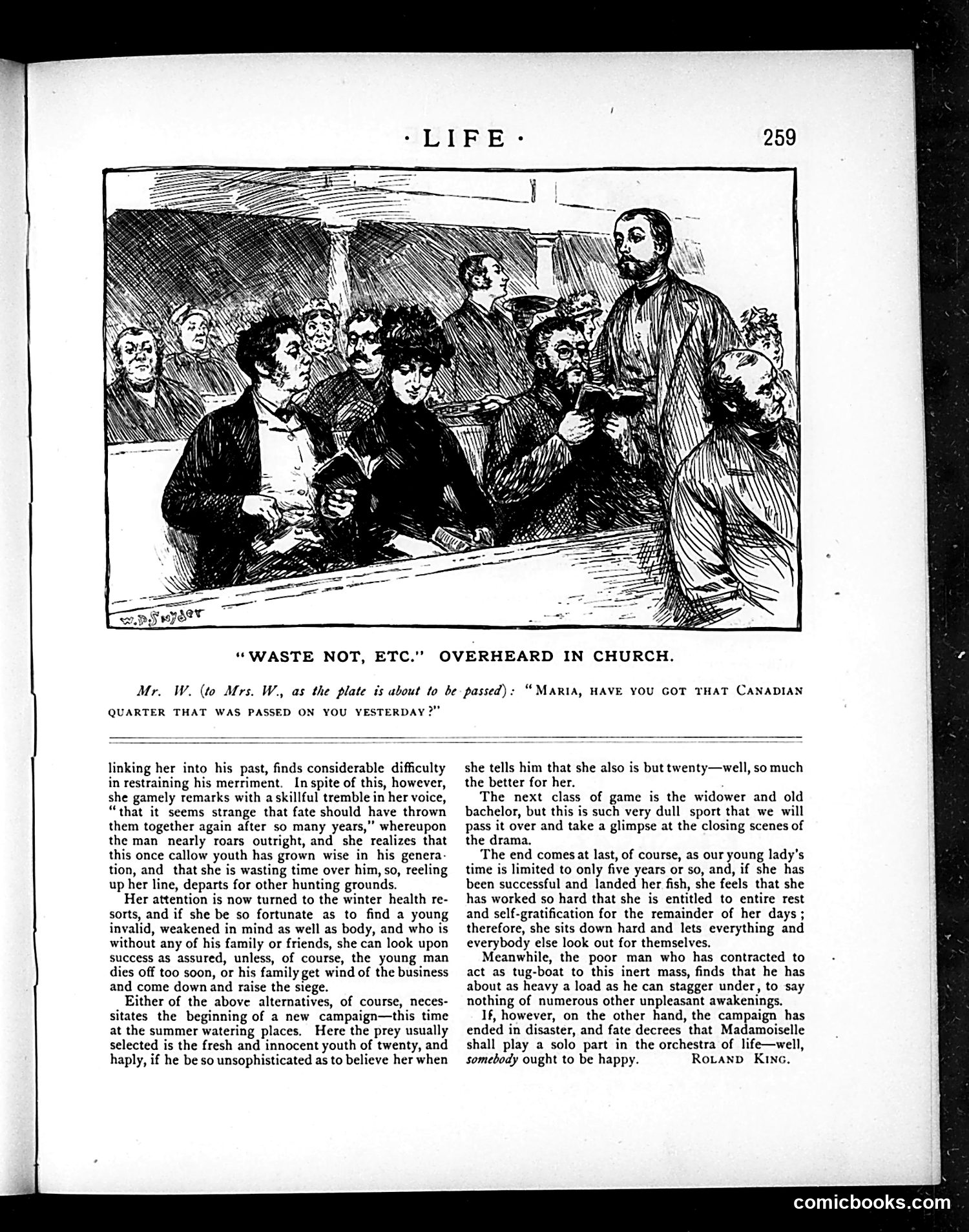
This single-panel cartoon satirizes financial penny-pinching among the wealthy during wartime (likely WWI-era, based on the "Life" publication style). The scene depicts church attendees, with one man audibly asking his wife Maria if she's recovered a Canadian quarter passed to her the previous day. The humor targets hypocrisy: these apparently well-to-do churchgoers worry obsessively about retrieving a single quarter—small change—despite their evident means. The "waste not" reference suggests wartime conservation rhetoric that the wealthy supposedly embrace publicly while remaining petty about personal finances. The church setting amplifies the satire: such miserliness contradicts Christian charitable values these worshippers ostensibly practice.
📄 Transcribed text from this page (OCR, searchable)
Machine-transcribed from the original scan — historical spelling and the odd misread are preserved.
“WASTE NOT, ETC.” Mr. QUARTER THAT WAS PASSED ON YOU YESTERDAY?” OVERHEARD IN CHURCH. W. (to Mrs. W., as the plate is about to be passed): “MARIA, HAVE YOU GOT THAT CANADIAN linking her into his past, finds considerable difficulty in restraining his merriment. In spite of this, however, she gamely remarks with a skillful tremble in her voice, “that it seems strange that fate should have thrown them together again after so many years,” whereupon the man nearly roars outright, and she realizes that this once callow youth has grown wise in his genera- tion, and that she is wasting time over him, so, reeling up her line, departs for other hunting grounds. Her attention is now turned to the winter health re- sorts, and if she be so fortunate as to find a young invalid, weakened in mind as well as body, and who is without any of his family or friends, she can look upon success as assured, unless, of course, the young man dies off too soon, or his family get wind of the business and come down and raise the siege. Either of the above alternatives, of course, neces- sitates the beginning of a new campaign—this time at the summer watering places. Here the prey usually selected is the fresh and innocent youth of twenty, and haply, if he be so unsophisticated as to believe her when she tells him that she also is but twenty—well, so much the better for her. The next class of game is the widower and old bachelor, but this is such very dull sport that we will pass it over and take a glimpse at the closing scenes of the drama, The end comes at last, of course, as our young lady's time is limited to only five years or so, and, if she has been successful and landed her fish, she feels that she has worked so hard that she is entitled to entire rest and self-gratification for the remainder of her days ; therefore, she sits down hard and lets everything and everybody else look out for themselves. Meanwhile, the poor man who has contracted to act as tug-boat to this inert mass, finds that he has about as heavy a load as he can stagger under, to say nothing of numerous other unpleasant awakenings. If, however, on the other hand, the campaign has ended in disaster, and fate decrees that Madamoiselle shall play a solo part in the orchestra of life—well, somebody ought to be happy. Roranp Kino. comicbooks.com