
Life, 1883-10-18 · page 5 of 16
Life — October 18, 1883 — page 5: what you’re looking at
What you’re looking at
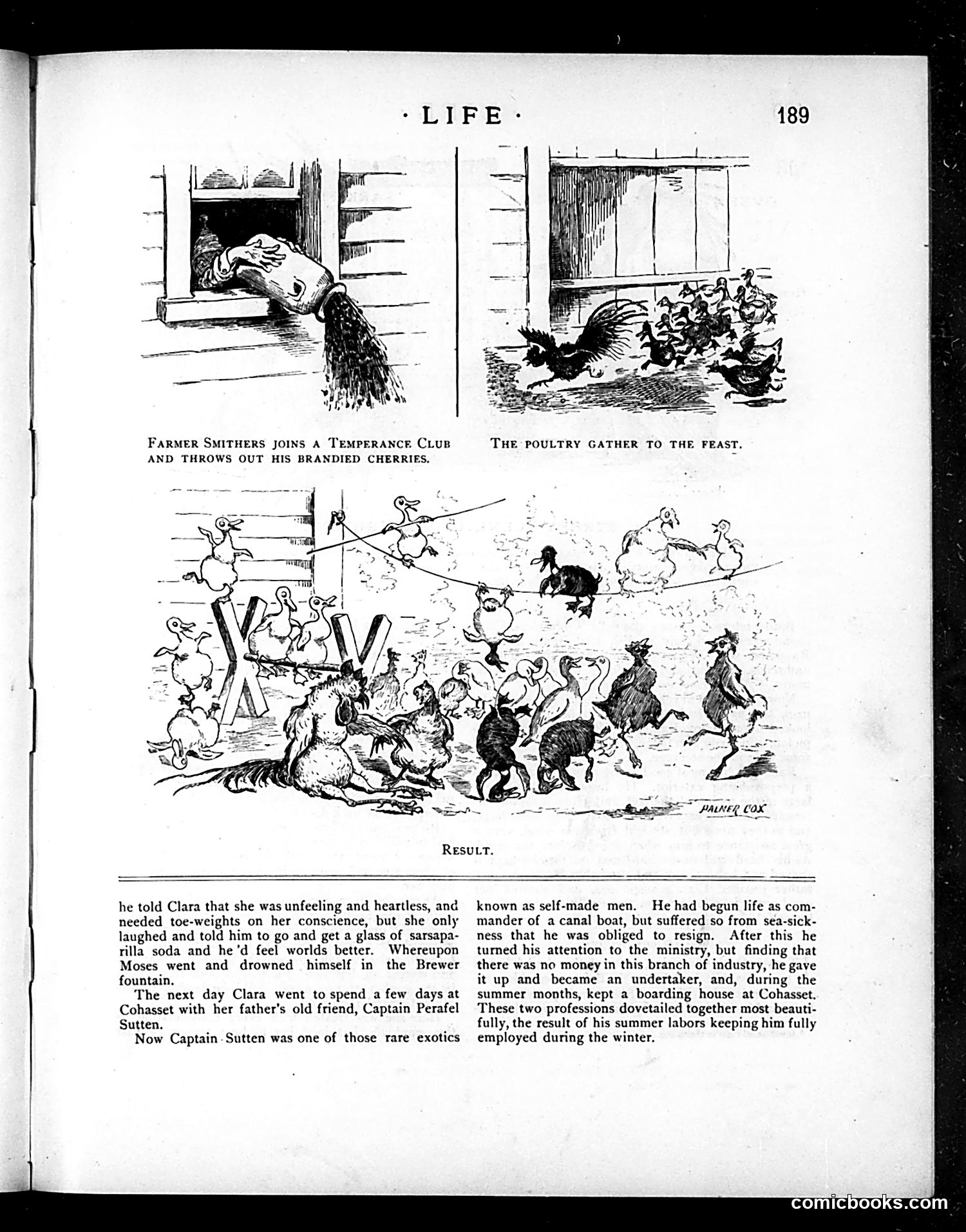
This page contains three illustrations satirizing temperance movements and rural life, likely from the early 1900s. The top two panels mock Farmer Smithers joining a temperance club and discarding alcohol ("brandied cherries"), while poultry gather to feast on the discarded food—a visual joke about unintended consequences. The bottom panel, titled "Result," depicts chaos among the farmer's animals (chickens appearing drunk or intoxicated from consuming the cherries). The satire targets temperance advocates by suggesting their moral crusades create absurd, uncontrollable outcomes. The humor relies on depicting animals behaving wildly, implying that removing alcohol creates disorder rather than improvement. This reflects common anti-temperance sentiment in early 20th-century American satire, mocking reformers as naive idealists whose policies backfire comically.
📄 Transcribed text from this page (OCR, searchable)
Machine-transcribed from the original scan — historical spelling and the odd misread are preserved.
FARMER SMITHERS JOINS A TEMPERANCE CLUB AND THROWS OUT HIS BRANDIED CHERRIES. eee ina Peg Cox he told Clara that she was unfeeling and heartless, and needed toe-weights on her conscience, but she only laughed and told him to go and get a glass of sarsapa- rilla soda and he'd feel worlds better. Whereupon Moses went and drowned himself in the Brewer fountain, The next day Clara went to spend a few days at Cohasset with her father’s old friend, Captain Perafel Sutten. Now Captain -Sutten was one of those rare exotics known as self-made men. He had begun life as com- mander of a canal boat, but suffered so from séa-sick- ness that he was obliged to resign. After this he turned his attention to the ministry, but finding that there was no money in this branch of industry, he gave it up and became an undertaker, and, during the summer months, kept a boarding house at Cohasset. These two professions dovetailed together most beauti- fully, the result of his summer labors keeping him fully employed during the winter.