
Judge, 1923-12-01 · page 26 of 36
Judge — December 1, 1923 — page 26: what you’re looking at
What you’re looking at
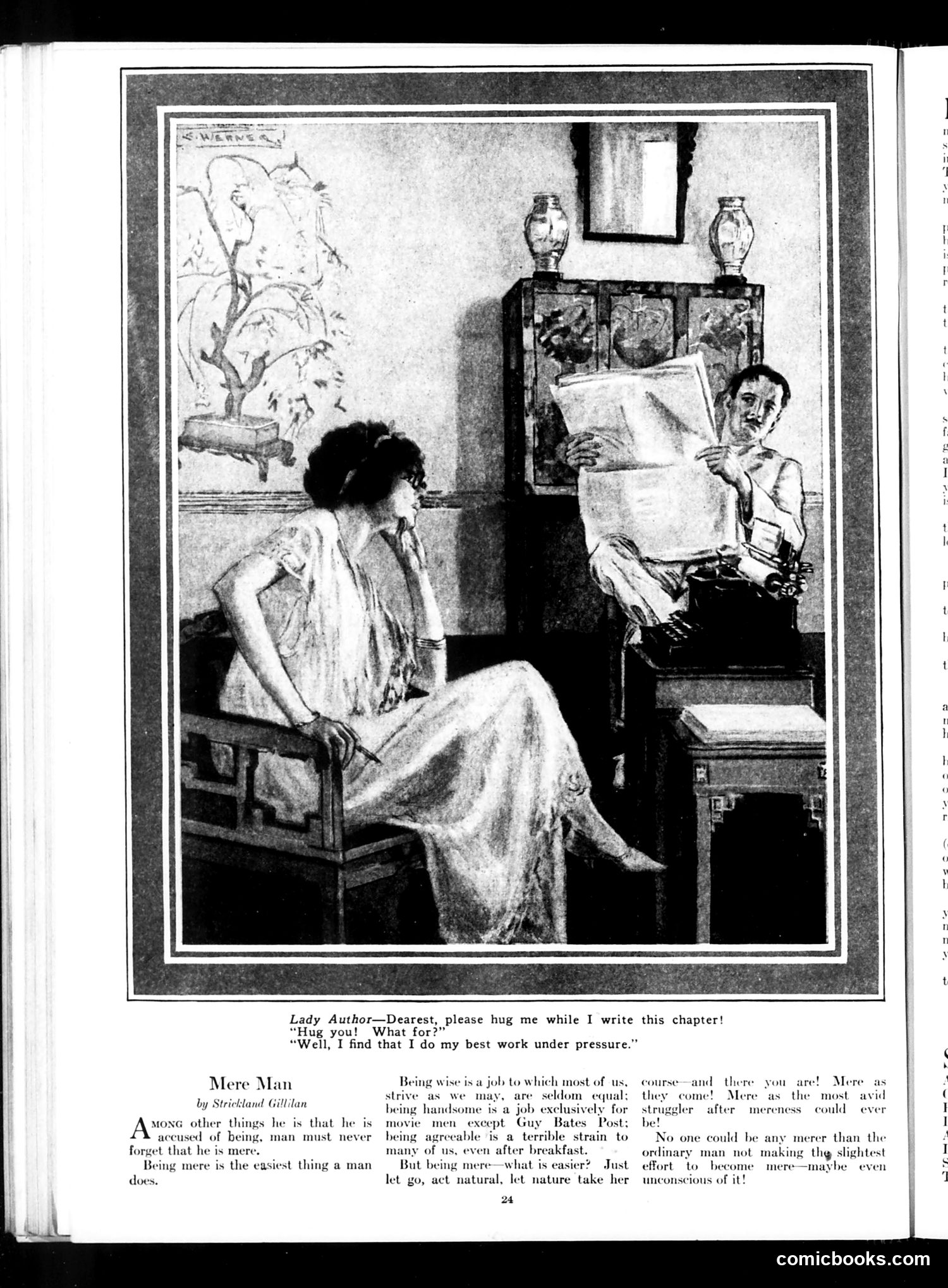
This page satirizes gender dynamics and male passivity in early 20th-century relationships. The top cartoon depicts a woman writer asking her husband to embrace her while she works, claiming she does "best work under pressure"—a double entendre suggesting she needs physical affection/distraction to write. The article below, by Strickland Gillilan, defines "mere man" as a male who is passive, naturally lazy, and requires no effort to remain so. The satire argues that ordinariness in men is effortless—they needn't strive to be "mere" because inaction and lack of ambition come naturally. The broader point mocks male complacency: while women are expected to accomplish multiple roles, men can simply exist without striving. The humor targets masculine passivity as both inevitable and somewhat contemptible, reflecting early 1900s anxieties about gender roles as women increasingly entered the workforce and intellectual spheres.
📄 Transcribed text from this page (OCR, searchable)
Machine-transcribed from the original scan — historical spelling and the odd misread are preserved.
Lady Author—Dearest, please hug me while I write this chapter! “Hug you! What for?” “Well, I find that I do my best work under pressure.” Mere Man course—and there you are! Mere . ; i may, are seldom equal: they come! Mere ‘as the most by Strickland Gillilan being hasiddotie aca job exclusively, for -strugéler: caller’ merestess Axess other things he is that he is movie men except Guy Bates Post: be! accused of being, man must never being agreeable is a terrible strain to forget that he is mere. many of us, even after breakfast Being mere is the easiest thing a man But being mere does. could No one could be any merer than the reakfast. ordinary man not making thg slightest what is easier? Just’ effort to become mere—maybe even let_go, act natural, let nature take her unconscious of it! 24 comicbooks.com