
Judge, 1922-07-29 · page 5 of 36
Judge — July 29, 1922 — page 5: what you’re looking at
What you’re looking at
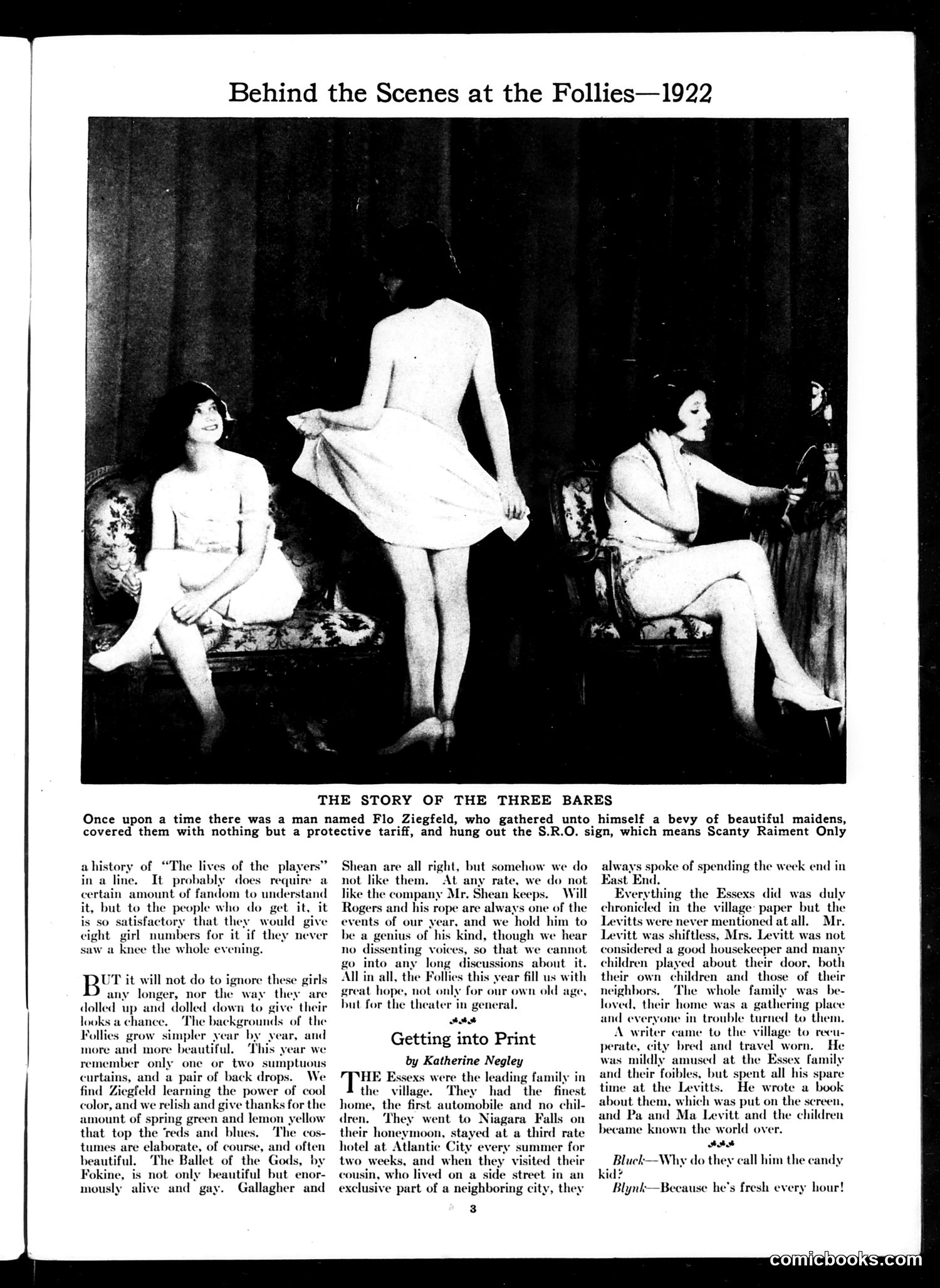
This page features a theatrical photograph titled "The Story of the Three Bares," depicting three women in various states of undress backstage at the Follies, a famous Broadway revue known for elaborate musical productions. The accompanying article discusses Flo Ziegfeld, the real impresario who ran the Follies, and his practice of hiring beautiful women as performers. The text humorously describes these dancers as "S.R.O." (Standing Room Only) attractions, playing on the theatrical term. The joke relies on 1920s audiences' fascination with Broadway entertainment and the scandalous appeal of the Follies' famous chorus girls. The satire gently mocks both Ziegfeld's star-making reputation and contemporary entertainment culture's focus on female beauty as spectacle.
📄 Transcribed text from this page (OCR, searchable)
Machine-transcribed from the original scan — historical spelling and the odd misread are preserved.
Behind the Scenes at the Follies—1922 THE STORY OF THE THREE BARES Once upon a time there was a man named Flo Ziegfeld, who gathered unto himself a bevy of beautiful maidens, covered them with nothing but a protective tariff, and hung out the S.R.O. sign, which means Scanty Raiment Only Shean are all right, but somehow we do always spoke of spending the week end in not like them, At any rate, we do not East End. certain amount of fandom to unde like the company Mr. Shean keeps. Will Everything the Essexs did was duly it, but to the people who do get Rogers and his rope are always one of the chronicled in the village: paper but the is so s actory that they would give events of our year, and we hold him to Levitts were never mentioned atall. Mr. ahistory of “The lives of the play in a line. It probably does req eight girl numbers for it if they never be a genius of his kind, though we hear Levitt was shiftless, Mrs. Levitt was not saw a knee the whole evening. no dissenting voices, so that we cannot considered a good housekeeper and many go into any long discussions about it. children played about their door, both UT it will not do to ignore these girls All in all, the Follies this year fill us with — their own dren and those of their any longer, nor the way they are great hope, not only for our own ol neighbors. The whole family was be- dolled up and dolled down to give their but for the theater in general. loved, their home was a gathering place looks a chance. The backgrounds of the sas and everyone in trouble turned to them. Follies grow simpler year by year, and wae § : A writer came to the village to recu- more and more beautiful. ‘This year we Getting into Print perate, city bred and travel worn, He remember only one or two sumptuous by Katherine Negley was mildly amused at the Essex family curtains, and a pair of back drops. We HE Essexs were the leading family in 2nd their foibles, but spent all his spare find Ziegfeld learning the power of cool the village. They had the finest time at the Levitts. He wrote a book color, and we relish and give thanks for the home, the first automobile and no chil- @bout them, which was put on the screen, non yellow dren, ‘They went to Niagara Falls on and Pa and Ma Levitt and the children The cos- their honey tayed at a third rate became known the world over. t are elaborate, of course, and often hotel at / Yity every summer for GIS tiful. The Ballet of the Gods, by two weeks, and when they visited their Bluck—Why do they Fokine, is not only beautiful but enor- cousin, wl reet in an kid? mously alive and gay. Gallagher and exclusive part of a neighboring city, they Blynk—Because he’s fresh every hour! 3 amount of spring green and le that top the ‘reds and blu all him the candy