
Judge, 1922-04-01 · page 10 of 36
Judge — April 1, 1922 — page 10: what you’re looking at
What you’re looking at
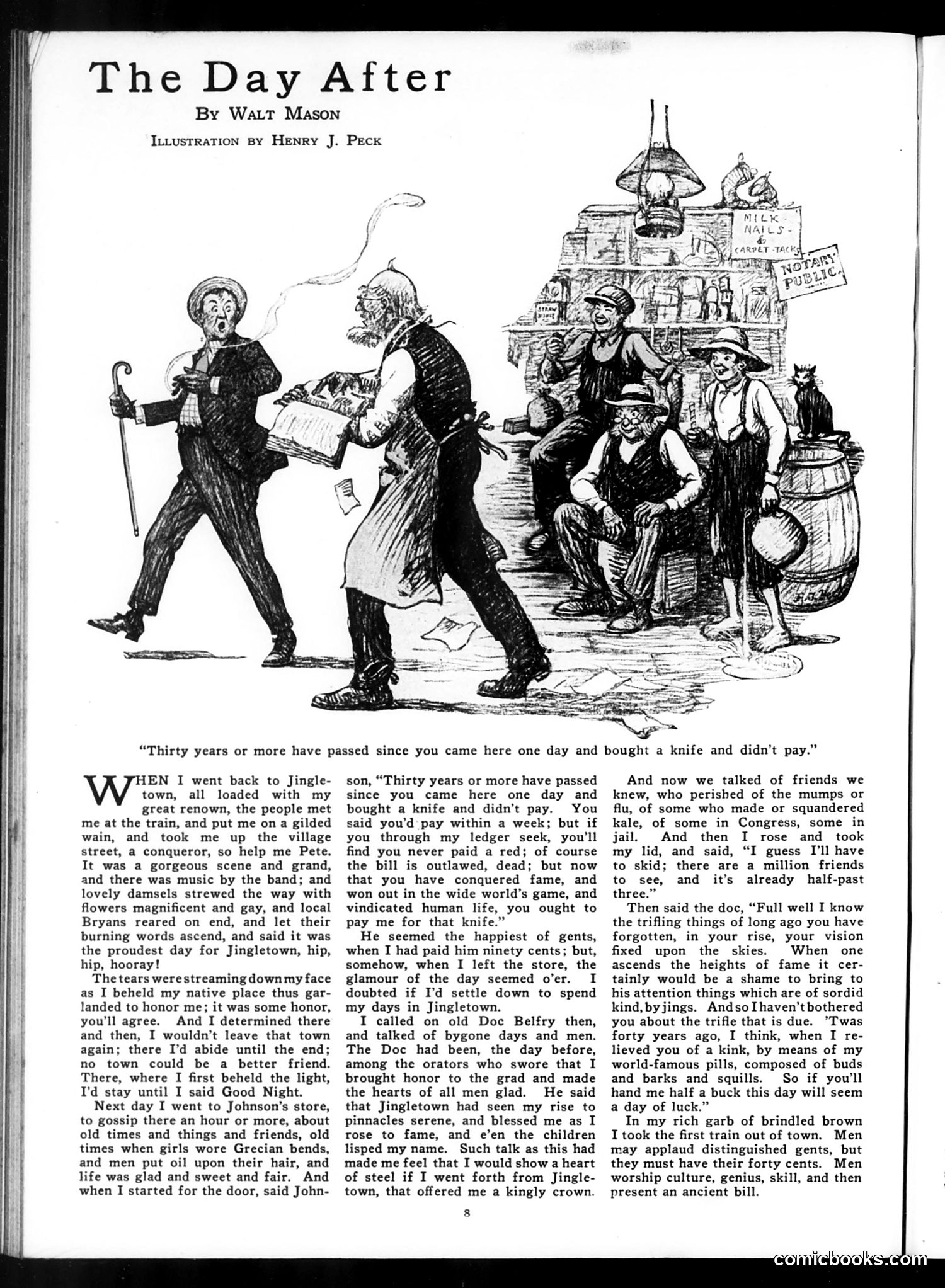
This story-cartoon satirizes the gap between hometown adulation and petty reality. A man returns to his small town of Jingletown as a celebrated success, greeted with parades and flowery speeches. However, his triumphant homecoming crumbles as old acquaintances immediately present unpaid bills: a storekeeper demands payment for a knife purchased thirty years prior, and a doctor extracts fifty cents for ancient medical services. The satire's point is clear: small-town people worship successful natives publicly while privately viewing them as debtors to exploit. Despite the protagonist's newfound wealth and status, locals reduce him to settling trivial old accounts. The final moral—"Men worship culture, genius, skill, and then present an ancient bill"—reveals the hypocrisy: communities celebrate distinguished citizens' achievements while greedily demanding forgotten debts. It's commentary on small-town commercialism and ingratitude masquerading as pride.
📄 Transcribed text from this page (OCR, searchable)
Machine-transcribed from the original scan — historical spelling and the odd misread are preserved.
The Day After By Watt Mason ILLustraTION BY Henry J. Peck “Thirty years or more have passed since you came here one day and bought a knife and didn’t pay.” EN I went back to Jingle- town, all loaded with my great renown, the people met me at the train, and put me ona gilded wain, and took me up the village street, a conqueror, so help me Pete. It was a gorgeous scene and grand, and there was music by the band; and lovely damsels strewed the way with flowers magnificent and gay, and local Bryans reared on end, and let their burning words ascend, and said it was the proudest day for Jingletown, hip, hip, hooray! The tears werestreaming down my face as I beheld my native place thus gar- landed to honor me; it was some honor, you'll agree. And I determined there and then, I wouldn’t leave that town again; there I’d abide until the end; no town could be a better friend. There, where I first beheld the light, I'd stay until I said Good Night. Next day I went to Johnson’s store, to gossip there an hour or more, about old times and things and friends, old times when girls wore Grecian bends, and men put oil upon their hair, and life was glad and sweet and fair. And when I started for the door, said John- son, “Thirty years or more have passed since you came here one day and bought a knife and didn’t pay. You said you’d pay within a week; but if you through my ledger seek, you'll find you never paid a red; of course the bill is outlawed, dead; but now that you have conquered fame, and won out in the wide world’s game, and vindicated human life, you ought to pay me for that knife.” He seemed the happiest of gents, when I had paid him ninety cents; but, somehow, when I left the store, the glamour of the day seemed o’er. I doubted if I’d settle down to spend my days in Jingletown. I called on old Doc Belfry then, and talked of bygone days and men. The Doc had been, the day before, among the orators who swore that I brought honor to the grad and made the hearts of all men glad. He said that Jingletown had seen my rise to pinnacles serene, and blessed me as I rose to fame, and e’en the children lisped my name. Such talk as this had made me feel that I would show a heart of steel if I went forth from Jingle- town, that offered me a kingly crown. 8 And now we talked of friends we knew, who perished of the mumps or flu, of some who made or squandered kale, of some in Congress, some in jail. And then I rose and took my lid, and said, “I guess I'll have to skid; there are a million friends to see, and it’s already half-past three.” Then said the doc, “Full well I know the trifling things of long ago you have forgotten, in your rise, your vision fixed upon the skies. When one ascends the heights of fame it cer- tainly would be a shame to bring to his attention things which are of sordid kind, byjings. AndsoIhaven’t bothered you about the trifle that is due. "Twas forty years ago, I think, when I re- lieved you of a kink, by means of my world-famous pills, composed of buds and barks and squills. So if you'll hand me half a buck this day will seem a day of luck.” In my rich garb of brindled brown I took the first train out of town. Men may applaud distinguished gents, but they must have their forty cents. Men worship culture, genius, skill, and then present an ancient bill.