
Judge, 1921-12-24 · page 8 of 36
Judge — December 24, 1921 — page 8: what you’re looking at
What you’re looking at
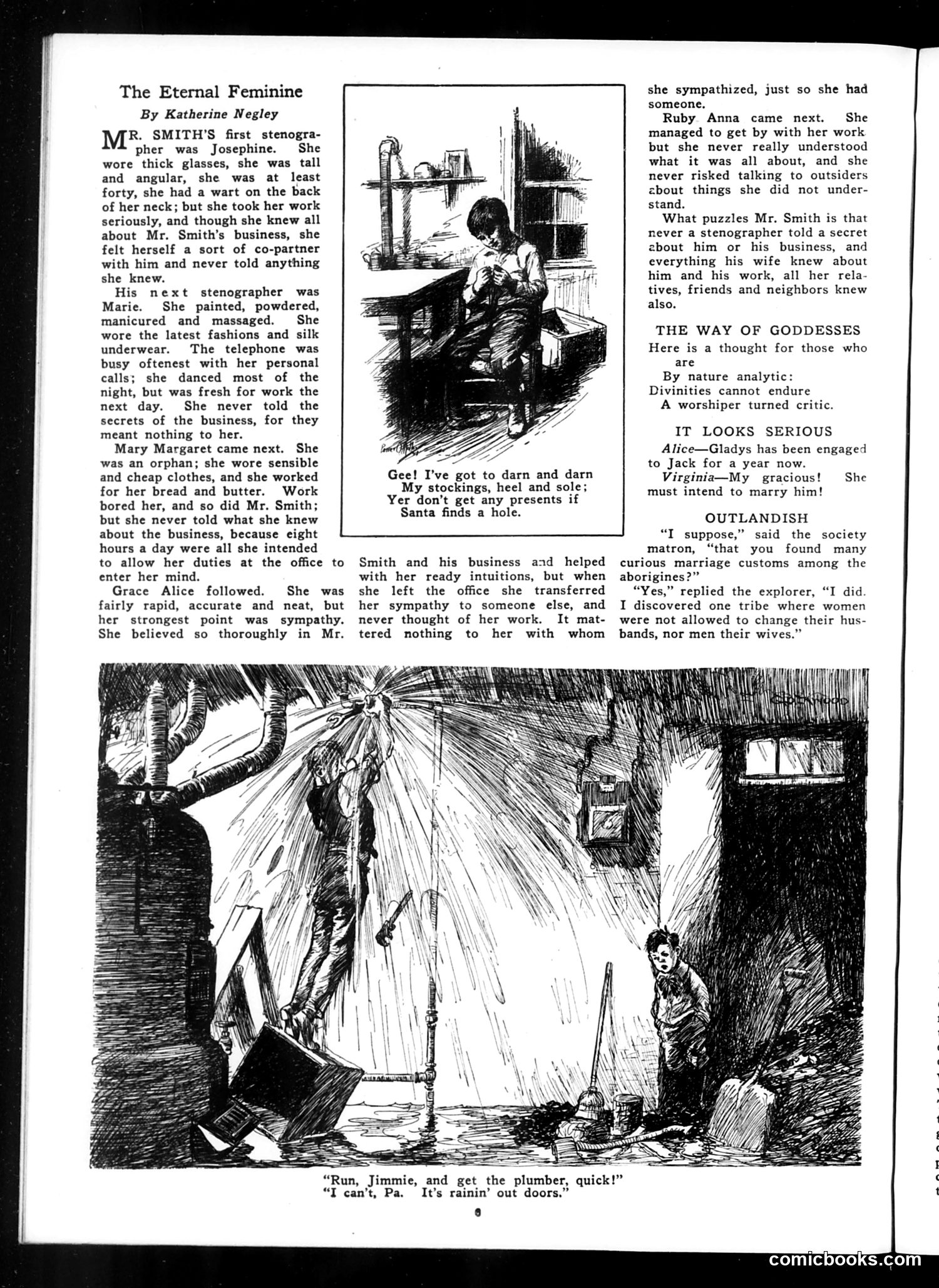
This page contains a short story by Katherine Negley satirizing workplace dynamics and gender stereotypes in the early 20th century. The narrative contrasts five stenographers hired by Mr. Smith, each representing different female "types": the plain, serious worker; the fashionable but frivolous one; the practical orphan; the emotionally sympathetic woman; and the incompetent one. The satire's point: despite their vastly different personalities and values, none of these women breach confidentiality about Smith's business—yet his wife, who should theoretically be most trustworthy, gossips everything to relatives and neighbors. This inverts contemporary assumptions about female loyalty and discretion, suggesting that professional obligation transcends personality, while personal relationships undermine it. The page includes unrelated humor: a children's verse about darned stockings, an aphorism about goddesses, and a joke about explorer customs mocking prudish Victorian marriage attitudes.
📄 Transcribed text from this page (OCR, searchable)
Machine-transcribed from the original scan — historical spelling and the odd misread are preserved.
The Eternal Feminine By Katherine Negley R. SMITH’S first stenogra- pher was Josephine. She wore thick glasses, she was tall and angular, she was at least forty, she had a wart on the back of her neck; but she took her work seriously, and though she knew all about Mr. Smith’s business, she felt herself a sort of co-partner with him and never told anything she knew. His next stenographer was Marie. She painted, powdered, manicured and massaged. She wore the latest fashions and silk underwear. The telephone was busy oftenest with her personal calls; she danced most of the night, but was fresh for work the next day. She never told the secrets of the business, for they meant nothing to her. Mary Margaret came next. She was an orphan; she wore sensible and cheap clothes, and she worked for her bread and butter. Work bored her, and so did Mr. Smith; but she never told what she knew about the business, because eight hours a day were all she intended to allow her duties at the office to enter her mind. Grace Alice followed. She was fairly rapid, accurate and neat, but her strongest point was sympathy. She believed so thoroughly in Mr. Gee! I’ve got to darn and darn My stockings, heel and sole; Yer don’t get any presents if Santa finds a hole. Smith and his business and helped with her ready intuitions, but when she left the office she transferred her sympathy to someone else, and never thought of her work. It mat- tered nothing to her with whom she sympathized, just so she had someone, Ruby Anna came next. She managed to get by with her work but she never really understood what it was all about, and she never risked talking to outsiders zbout things she did not under- stand. What puzzles Mr. Smith is that never a stenographer told a secret zbout him or his business, and everything his wife knew about him and his work, all her rela- tives, friends and neighbors knew also. THE WAY OF GODDESSES Here is a thought for those who are By nature analytic: Divinities cannot endure A worshiper turned critic. IT LOOKS SERIOUS Alice—Gladys has been engaged to Jack for a year now. Virginia—My gracious! must intend to marry him! OUTLANDISH “TI suppose,” said the society matron, “that you found many curious marriage customs among the aborigines?” “Yes,” replied the explorer, “I did. I discovered one tribe where women were not allowed to change their hus- bands, nor men their wives.” She Nit HAM} \ “Run, Jimmie, and get the plumber, quick!” “T can’t, Pa. It’s rainin’ out doors, 8 comicbooks.com